LM-79 Moving Detector Goniophotometer (Mirror Type C)
LSG-6000
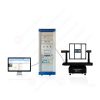
High Precision Rotation Luminaire Goniophotometer
LSG-1890B
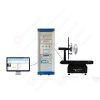
High Precision Rotation Luminaire Goniospectroradiometer
LSG-1890BCCD

Goniophotometer for Automotive and Signal Lamps
LSG-1950
Goniophotometer for Traffic Signal Lamps (Economical Model)
LSG-1950S
VAD Fire Alarm Visual Alert Device Goniophotometer
LSG-1930
Goniophotometer for Airfield Lighting
LSG-1940
Compact Goniophotometer
LSG-1200A
LED Goniophotometer
LSG-1100
Near Field Moving Detector Goniophotometer
LSG-1900B
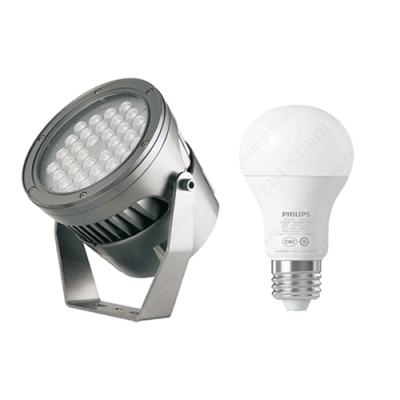 LEDs and Luminaire Test Solutions
 LM-79 and LM-80 Test Solutions
 LED Driver Test Solutions
 Household Appliances Test Solutions
 Mobile and Network Test Solutions
 Automotive Electronics Test Solutions
 Audio-Video and IT Test Solutions
 Cable and Wire Test Solutions
 Plugs and Sockets Test Solutions
 Power Switch Test Solutions
 Transformer Test Solutions
 Electric Toys Test Solutions
 Energy Meter Test Solutions
 Motor-Operated Tool Test Solutions
Select an organization
to browse standards
Abstract
In the safety design of electrical and electronic products, preventing the ignition of surrounding materials due to overheating of internal heating elements (such as resistance wires, motor windings) is a crucial issue. The Hot Wire Ignition (HWI) test, as a standardized method simulating such overheating fault scenarios, provides key data for evaluating the resistance to ignition of solid insulating and combustible materials. This article aims to explore in depth the question “Why is an HWI tester needed?” It systematically explains the principles of the hot wire ignition test, the international standards it is based on (such as IEC 60695-2-20), and its core value in preventing electrical fires. Using the LISUN RSY-LT Hot Wire Ignition Tester as a technical example, the article details how it achieves reliable measurement of a material’s Hot Wire Ignition Temperature (HWIT) and Hot Wire Flammability Index (HWFI) through precise control of temperature, pressure, and time. This provides indispensable technical support for product safety design, material selection, and compliance certification in industries such as home appliances, new energy, and insulating materials.
1. Introduction: The Overheating Risk – A Potential Fire Hazard in Electrical Products
The widespread use of electrical equipment has greatly facilitated modern life. However, the overheating caused by internal circuits and components under abnormal conditions (such as overload, short circuit, poor contact) is a significant trigger for fires. Particularly when the temperature of heating elements (e.g., heating wires, transformer coils, power resistors) rises abnormally, it may directly ignite organic materials in contact with or adjacent to them, such as plastics, rubber, and insulating paper. Traditional flame resistance tests (like the vertical burn test) struggle to accurately simulate this specific hazard caused by continuous heating from an internal heat source. Therefore, the fundamental answer to “Why is an HWI tester needed?” is: A standardized, repeatable testing method is required to simulate the thermal impact of an “overheating element” on surrounding materials, thereby quantitatively evaluating a material’s resistance to hot wire ignition and preventing fire incidents caused by electrical overheating at the source. This is not only a necessary step in product safety design but also a key requirement for complying with a series of mandatory domestic and international safety standards such as IEC, UL, and GB.
2. HWI Testing: Principles, Standards, and Key Parameters
The Hot Wire Ignition test evaluates the fire ignition hazard of a material by heating a resistance wire of specified material and size to a specific temperature, applying it to the sample surface with standardized pressure and duration, and observing whether the sample ignites.
2.1 Testing Principles and Standard Basis
The core concept is to simulate the effect of an overheating resistive element on adjacent materials. The primary international standard, IEC 60695-2-20, has undergone multiple revisions: the 2021 edition (IEC TS 60695-2-20:2021) originally titled “Hot Wire Coil Test Method” and recorded both ignition time and dripping time of specimens; the 2024 edition (IEC/TS 60695-2-20:2024) – a technical revision – renames the method to “Hot Wire Ignition (HWI) Test Method,” removes all content related to dripping (only ignition is considered for classification), and further optimizes test repeatability. Corresponding national standards (e.g., China’s GB/T 14048.1-2023 Annex M, US’s UL 746A:2023 Clause 32) are technically consistent or principle-aligned with this IEC standard. All versions detail the test apparatus, hot wire parameters, sample preparation, test procedure, and result evaluation methods. The test primarily yields two key indicators:
• Hot Wire Ignition Temperature (HWIT): The highest hot wire temperature at which the material does not ignite within 30 seconds of contact under specified test conditions.
• Hot Wire Flammability Index (HWFI): Determined through a series of temperature tests, this index identifies the highest temperature range of the hot wire at which the material does not ignite within 120 seconds of contact.
2.2 Core Control Elements of the Test Process
To ensure comparability and accuracy of results, the standards impose strict requirements on test conditions:
• Hot Wire Characteristics: A specific nickel-chromium alloy wire (Ni80/Cr20) with defined dimensions (φ0.5mm in diameter, 250mm±5mm in length) is typically used. Its cold resistance is 5.28Ω/m, and heating power must be precisely calibrated to 0.26W/mm±4%.
• Temperature Control: The hot wire temperature must be accurately set and remain stable (e.g., ±10°C) within an adjustable range, usually from 500°C to 1000°C. The 2021 edition of IEC 60695-2-20 recommends changing the power source from AC to DC (constant current output) to improve test repeatability and reproducibility.
• Contact Pressure and Time: For coil winding tests, the hot wire is wound 5 full turns on the specimen with a winding tension of 5.4N±0.2N and a winding spacing of 6.35mm±0.2mm (within 31.5mm±0.5mm); the contact time is typically set at 30±1 seconds (for HWIT test) or 120 seconds (for HWFI test), simulating stable thermal contact.
• Sample Condition: Sample dimensions must adhere to standards – common sizes include (125±5)mm×(13.0±0.5)mm×(0.75/1.5/3.0)mm (with tolerances like ±0.075mm for 0.75mm thickness); preconditioning (e.g., temperature and humidity conditioning) is also required to eliminate additional variables.
• Test Environment: A combustion chamber with a volume of ≥0.5m³ (customizable to 0.75m³ or 1m³) is mandatory, featuring a dark background, draft-proof design, and built-in exhaust fan to ensure safety and observation clarity.
| Standard Number | Standard Name | Core Test Items | Key Updates & Test Conditions |
|---|---|---|---|
| IEC/TS 60695-2-20:2024 | Fire hazard testing – Part 2-20: Glowing/hot-wire based test methods – Hot-wire ignition (HWI) test method | HWIT, HWFI | Renamed from “coil test”; removed dripping records; Hot wire temp: 500-1000°C, Contact pressure: 5.4N±0.2N, Contact time: 30s (HWIT)/120s (HWFI) |
| IEC 60695-2-20:2021 | Fire hazard testing – Part 2-20: Glowing/hot-wire based test methods – Hot wire coil test method | HWIT, HWFI (with dripping record) | Recommended AC→DC power; recorded dripping time; same temp/pressure range as 2024 edition |
| UL 746A:2023 (Clause 32) | Standard for Polymeric Materials – Short Term Property Evaluations | Hot Wire Ignition Test | US market access standard; aligned with IEC principle; specific tolerance requirements differ slightly |
| GB/T 14048.1-2023 (Annex M) | Low-voltage switchgear and controlgear – Part 1: General rules | Hot wire ignition test | Technically identical to IEC 60695-2-20; sample thickness tolerance: 0.75±0.1mm, 1.5±0.1mm |

3. The RSY-LT Hot Wire Ignition Tester: Achieving Precision and Reliability
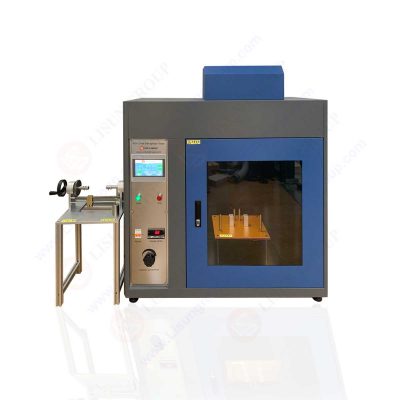
The LISUN RSY-LT Hot Wire Ignition Tester is a professional instrument designed to meet the stringent requirements of IEC 60695-2-20 (2021/2024 editions) and other related standards. Its integrated and automated design directly addresses the core demands for test consistency and accuracy inherent in the question “Why is an HWI tester needed?”.
3.1 High-Precision Heating and Pressure Control System
The instrument employs an advanced DC constant current heating control module (aligning with the 2021 IEC recommendation), ensuring the nickel-chromium alloy wire (Ni80/Cr20, φ0.5±0.01mm, 250mm±5mm) maintains a heating power of 0.26W/mm±4% and a temperature range of 500~1000°C with stability of ≤±10°C. The cold resistance of the hot wire is calibrated to 5.28Ω/m to avoid heat source deviation. Its precise mechanical winding structure guarantees a constant winding tension of 5.4N±0.2N and a winding spacing of 6.3mm±0.2mm (5 turns within 31.5mm±0.5mm), while the application time is programmable (0~999.9 seconds), fundamentally eliminating pressure and timing errors associated with manual operation.
3.2 Automated Process and Safety Design
The RSY-LT features an integrated structure combining the hot wire heating system, sample clamping device, automatic winding mechanism, and combustion monitoring module. Users can set all parameters (annealing time, test time, power) and initiate tests via a self-developed large LCD touchscreen, enabling “one-button operation” – the instrument automatically completes hot wire annealing (8~12s), sample winding, and heating testing, with acoustic and optical prompts upon completion. The equipped combustion chamber (volume ≥0.5m³, customizable) adopts a dark, draft-proof design with a transparent front glass door for observing specimen behavior (e.g., ignition, flame duration). It also has a built-in exhaust fan that activates automatically when powered on and runs for 2 minutes after power-off to discharge toxic gases, ensuring operator safety.
3.3 Comprehensive Testing Functionality and Compatibility
This device supports two test modes: 1) Standard flat sample test (hot wire contact) and 2) Coil winding test (simulating motor windings, transformers) with a dedicated sample holder. It fully meets the HWIT and HWFI test requirements of IEC 60695-2-20 (2021/2024 editions) and is compatible with relevant clauses in IEC 60950, UL 746A, ASTM D3874, GB 4943-2022, and GB/T 14048.1-2023. It accommodates multiple sample sizes (e.g., 125×13×0.75mm, 125×13×3.0mm) and can be customized for larger combustion chambers (0.75m³/1m³) to meet diverse industry needs.
| Parameter Category | Technical Specifications & Functions | Corresponding Standard Requirements & Design Significance |
|---|---|---|
| Core Test Functions | Hot Wire Ignition Temperature (HWIT), Hot Wire Flammability Index (HWFI) tests; coil winding simulation | Covers 2021/2024 IEC 60695-2-20 core requirements; adapts to motor winding scenarios |
| Hot Wire System | Material: Ni80/Cr20; Diameter: φ0.5±0.01mm; Length: 250mm±5mm; Cold resistance: 5.28Ω/m; Power: 0.26W/mm±4% | Standardized heat source parameters; ensures test repeatability (matches IEC 60695-2-20) |
| Winding & Time Control | Tension: 5.4N±0.2N; Spacing: 6.3mm±0.2mm (5 turns); Annealing time: 8~12s; Test time: 0~999.9s (default 120s) | Precisely simulates IEC-specified winding conditions; eliminates manual operation errors |
| Sample Specifications | Supports (125±5)×(13.0±0.5)×(0.75/1.5/3.0)mm; thickness tolerance: ±0.075~±0.3mm | Adapts to diverse sample requirements of IEC/GB/UL standards |
| Test Chamber | Volume: ≥0.5m³ (customizable 0.75/1m³); Dark background; Auto exhaust fan | Meets safety and observation needs; compliant with IEC 60695-2-20 environmental requirements |
| Compliant Standards | IEC 60695-2-20 (2021/2024), IEC 60950, UL 746A, GB 4943-2022, GB/T 14048.1-2023 | Ensures global recognition of test data; supports multi-market access |
4. Industry Application Value of the HWI Tester
The answer to “Why is an HWI tester needed?” ultimately lies in its specific value across different industries:
• Electrical, Electronics & Home Appliance Industry: Used to evaluate the resistance to ignition from overheating for switch housings, connectors, motor insulation materials (e.g., wire enamel, slot liners), and plastic components. It prevents component fault overheating from causing a full appliance fire and is a mandatory test item for certifications like CCC (China), CE (EU), and UL (US).
• New Energy Industry: Within power battery packs, it tests insulation barriers between modules, wire sleeving, and battery case materials, assessing their resistance to ignition when exposed to high-temperature heat sources from cell thermal runaway. This is a key verification step in battery pack safety design to avoid chain reactions of fire and explosion.
• Material R&D and Production: Provides data for plastic, rubber, and composite material manufacturers to optimize flame-retardant formulations (e.g., adjusting additive ratios to improve HWIT) and develop safer materials. It also helps supply customers with product data sheets meeting specific HWIT/HWFI requirements, enhancing market competitiveness.
• Third-Party Testing & Certification Bodies: Serves as an authoritative testing tool to issue HWI test reports compliant with international standards (e.g., IEC 60695-2-20:2024) for various electronic products and materials. It supports market access verification and supply chain quality control for enterprises.
5. Conclusion
In summary, the reason “Why is an HWI tester needed?” is because, within the safety ecosystem of modern electrical products, it serves as an indispensable bridge connecting “potential overheating risks” with “quantitative safety assessment.” It goes beyond traditional flame tests, directly addressing the more concealed and specific fire risk scenario of internal electrical heating element failure – a scenario that is widespread in appliances, new energy, and industrial equipment but difficult to simulate with conventional methods.
Adopting a professional, high-precision, fully automated test instrument like the LISUN RSY-LT means an enterprise can obtain test data recognized by global standards (including the latest IEC 60695-2-20:2024) in the most efficient and reliable way. This not only significantly enhances the scientific and forward-looking nature of product safety design, reducing the fire hazards and recall risks associated with improper material selection, but also provides solid assurance for products to break through international technical barriers and win consumer trust in safety. In an era of increasingly stringent safety regulations (e.g., EU’s CE, China’s GB 4943-2022) and growing consumer safety awareness, investing in and effectively utilizing HWI testing technology is undoubtedly a wise decision for responsible companies practicing the philosophy that “safety originates from design.”
Tags:RSY-LTYour email address will not be published. Required fields are marked *

 English
 中文简体
中文简体 English
 Русский
 Español
 Português
 Türkçe
 العربية
 Deutsch
 Polski
 Italiano
 Français
 한국어
한국어 ไทย
ไทย Tiếng Việt
 日本語
日本語