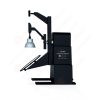
LM-79 Moving Detector Goniophotometer (Mirror Type C)
LSG-6000
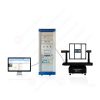
High Precision Rotation Luminaire Goniophotometer
LSG-1890B
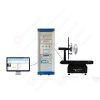
High Precision Rotation Luminaire Goniospectroradiometer
LSG-1890BCCD

Goniophotometer for Automotive and Signal Lamps
LSG-1950
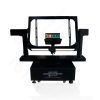
Goniophotometer for Traffic Signal Lamps (Economical Model)
LSG-1950S
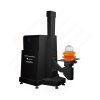
Goniophotometer for Airfield Lighting
LSG-1940
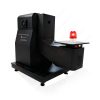
VAD Fire Alarm Visual Alert Device Goniophotometer
LSG-1930
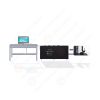
Compact Goniophotometer
LSG-1200A
LED Goniophotometer
LSG-1100
Near Field Moving Detector Goniophotometer
LSG-1900B
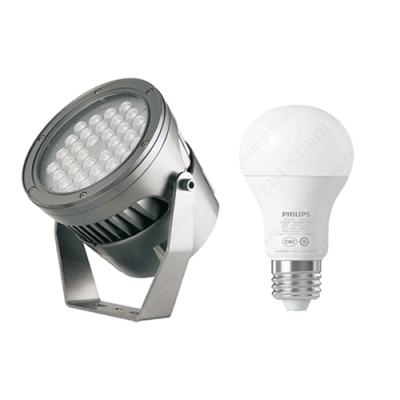 LEDs and Luminaire Test Solutions
 LM-79 and LM-80 Test Solutions
 LED Driver Test Solutions
 Household Appliances Test Solutions
 Mobile and Network Test Solutions
 Automotive Electronics Test Solutions
 Audio-Video and IT Test Solutions
 Cable and Wire Test Solutions
 Plugs and Sockets Test Solutions
 Power Switch Test Solutions
 Transformer Test Solutions
 Electric Toys Test Solutions
 Energy Meter Test Solutions
 Motor-Operated Tool Test Solutions
Select an organization
to browse standards
The surge tester manufacturers are in a highly controlled technical arena that the equipment meets various international standards related to EMC at the same time. IEC standards including IEC 61000-4-5 with regional variations cited by EN standards in Europe GB standards in China and ANSI/ IEEE practices in North America are the main standards outlining global surge immunity requirements. They are also documents which outline peak voltage and current, waveform shape polarity repetition rate source impedance and coupling techniques. Creating a surge tester that is compliant between jurisdictions implies that the system would have to be capable of the accurate reproduction of standardized transients under a very broad performance in load-controlled conditions and be capable of process repeatability and traceability of safety.
Contrary to simple high voltage generators EMC surge systems are required to provide combination waves that are able to simulate indirect lightning effects and power line switching transient quantities. Adherence is not determined solely by headline voltage capability but also by the extent to which the generator adheres to the parameters of the waveforms when it is coupled with real equipment via coupling networks to the items under test. This is one of the key engineering requirements that guide numerous engineering choices of surge tester manufacturers.
Waveform synthesis architecture is at the center of any compliant surge system. Standards specify 1.2 microsecond increase and 50 microseconds decrease waveform of the open circuit voltage and short circuit current at 8 microsecond and 20 microsecond respectively. To accomplish this manufacturers design, pulse forming networks made of high stability capacitors inductances and resistive elements are designed to be carefully tuned. The element tolerance of thermal drift and aging characteristics are important since a minor variation can shift the waveform beyond the acceptable range.
Another characteristic is switching technology. Conventional spark gap switches can also handle high energy, but provide timing jitter and wear. Controlled solid state or hybrid switching is being applied to achieve better repetition and service life in modern systems. The manufacturers of surge tester need to strike a balance between the switching speed energy capability and electromagnetic cleanliness in a manner that the switching process does not cause parasitic ringing or spectral invalidity as a part of the test.
The internal impedance control is aimed at allowing an assurance that the generator can provide appropriate voltage and current relationship to the standardized loads. It is especially difficult since actual equipment at test may contain surge protection equipment which becomes clamping and which responds dynamically to the pulse by changing impedance.
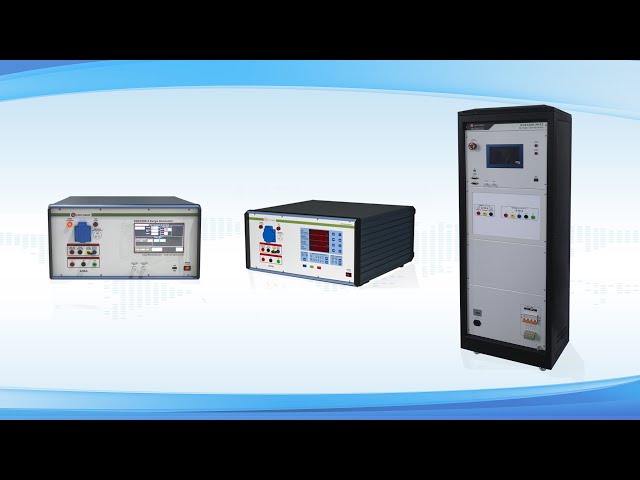
To meet global standards the surge tester must be able to not only reproduce the right waveforms when the circuit is open but also provide adequate load energy. The rating of the generator energy is what defines whether the given waveform is collapsing under the receipt of the current. To achieve this, surgeon tester manufacturers dimension capacitor banks and charging circuits in ways determined to maintain the pulse through the characteristic impedance of the equipment under test despite presenting a low impedance line.
Compliance credibility is related to energy design. A tester capable of giving correct open circuit waveforms but is weak when loaded can seem to be complying on paper but when under load provide less severity. Arguably, manufacturers confirm designs by testing on worst case loads as specified in the standards, and by confirming waveform conformance at decoupling and coupling network outputs. These testing procedures are required to be certified and also to get the trust of the customer.
The power of energy also influences business placement. Increased energy design adds size cost and complexity which affects directly the price of the surge generators. Manufacturers will thus tend to provide product lines of tiered capability as the energy capability and automation-related features increase with the purpose of use or intention as screening of development or accredited compliance testing.
A surge standard defines the application of transients on power and signal ports. This may demand both coupling and decoupling networks that inject the surge and also decouple auxiliary equipment and the mains supply. This means that the manufacturers of surge tester are required to design these networks such that they have a set impedance behavior with frequency and voltage.
The property of connecting the generator with the coupling networks is not straight forward. The mismatch of reflections impedances and parasitic inductance may distort the pulse provided. To verify that the system of combination has tolerances in waveforms, manufacturers put much effort in the mechanical layout grounding strategy and design of interconnection. Making the system have modular designs gives users the opportunity to configure the system to fit alternative port types without loss of compliance.
There is also the level of automation and safety. Communicating interlocks release circuits and values that monitor operators or equipment keep the operators and equipment out of the picture as well as making sure that the safety mechanisms will not clip or distort the surge waveform. This is one of the main engineering issues to balance.
Measurement is as much as generation of compliance. Surge tester manufacturers incorporate high bandwidth voltage dividers and current monitors into the system to communicate received pulses. The monitors, themselves, need to be traceable, and have external measurements since documentation on compliance is often dependent on internal measurements.
The higher-level systems offer the ability to capture the waveform and check the conformance with the standard tolerance automatically. Such an ability will enable laboratories to show compliance during an audit process as well as during routine checking. Manufacturers design software platforms that record polarities series of pulse parameters and environmental conditions producing a defensible data trail.
Traceability goes up to calibration support. International consumers demand that services of calibration be in accordance with the national metrology agencies. Manufacturers then develop systems that have open contact points that are stable reference components as well as documented processes that facilitate long term accuracy.
Market wise surge tester manufactures have to be able to match the technical capacity to the expectations and the budget of the customers. May be during the development the laboratories should focus on flexibility and diagnostics access whereas the certification laboratories demand strict conformance automation and documentation. These variations define hardware modularity software features and service offerings.
Surge generator price does not just indicate their voltage rating. It includes waveform fidelity as under load energy capacity measurement accurateness automation level and long term support. Manufacturers who have invested in strong engineering and compliance validation tend to charge more but minimize customer risk as they are providing trustworthy defensible outcomes.
Surge testing systems available in the market like LISUN have to position themselves to offer a platform of cohesiveness in monitoring and reporting of generator coupling networks. This method will be attractive to laboratories that would require uniformity in the EMC disciplines and simplified compliance processes.
Meeting international EMC standards in designing surge test systems is a multi-dimensional engineering issue. The surge tester manufacturers have to strike a balance between wave form accuracy energy delivery in safety and traceability and market requirements on size cost and usability. This leads to the production not of a single high voltage source but of a well-thought-out system the functionality of which has been confirmed under real conditions.
Tags:SG61000-5Your email address will not be published. Required fields are marked *

 English
 中文简体
中文简体 English
 Русский
 Español
 Português
 Türkçe
 العربية
 Deutsch
 Polski
 Italiano
 Français
 한국어
한국어 ไทย
ไทย Tiếng Việt
 日本語
日本語