LM-79 Moving Detector Goniophotometer (Mirror Type C)
LSG-6000
High Precision Rotation Luminaire Goniophotometer
LSG-1890B
High Precision Rotation Luminaire Goniospectroradiometer
LSG-1890BCCD

Goniophotometer for Automotive and Signal Lamps
LSG-1950
Goniophotometer for Traffic Signal Lamps (Economical Model)
LSG-1950S
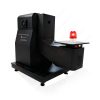
VAD Fire Alarm Visual Alert Device Goniophotometer
LSG-1930
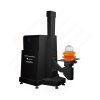
Goniophotometer for Airfield Lighting
LSG-1940
Compact Goniophotometer
LSG-1200A
LED Goniophotometer
LSG-1100
Near Field Moving Detector Goniophotometer
LSG-1900B
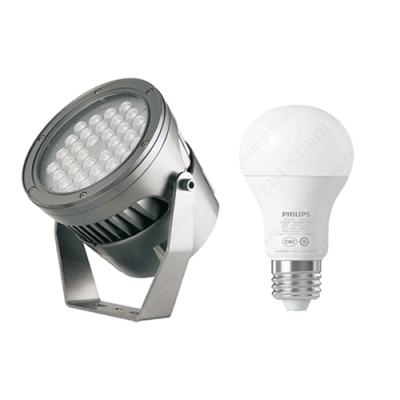 LEDs and Luminaire Test Solutions
 LM-79 and LM-80 Test Solutions
 LED Driver Test Solutions
 Household Appliances Test Solutions
 Mobile and Network Test Solutions
 Automotive Electronics Test Solutions
 Audio-Video and IT Test Solutions
 Cable and Wire Test Solutions
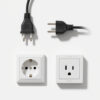 Plugs and Sockets Test Solutions
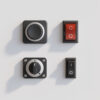 Power Switch Test Solutions
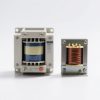 Transformer Test Solutions
 Electric Toys Test Solutions
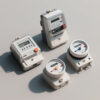 Energy Meter Test Solutions
 Motor-Operated Tool Test Solutions
Select an organization
to browse standards
Industrial luminaires with high power output would provide high quality and reliable luminance in harsh conditions like factories, warehouses, airports, tunnels and outdoor infrastructure. To determine the actual optical performance of their devices, one will need more than just the fundamental photometer. An integrating sphere offers a controlled and homogenous environment of measurement which is able to measure total luminous output independent of beam shape and intensity. A 3-meter integrating sphere is of particular interest to large and powerful fixtures, as it can use large sources of lumen without affecting the measuring procedure and allowing them to be stable without overheating.
In contrast to residential or ornamenting lighting, industrial luminaires frequently generate very high luminous flux and complicated light distributions. Such attributes render directional measures vulnerable to misalignment and range measures. The solution to these challenges is the incorporation of sphere systems that diffuse light by internal reflection, and thus engineers have confidence upon real performance results.
The industrial luminaires are far more powered than traditional lighting products. Some go into the tens of thousands of lumens and include large arrays of LEDs and complex optics, and massive thermal management. Traditional photometric setups are of no use in measuring such output, because of the space limitation, safety factor and accuracy.
The light of an object is simultaneously reflected by an integrating sphere that encloses it, and there is no longer a dependence on the beam angle, or the distance or orientation of the mounting. This suitably qualifies it in the assessment of the presentation of high output luminaires, whose beam patterns can alter based on the application. The sphere makes sure that each photon is added to the final measurement leading to an actual depiction of total luminous flux.
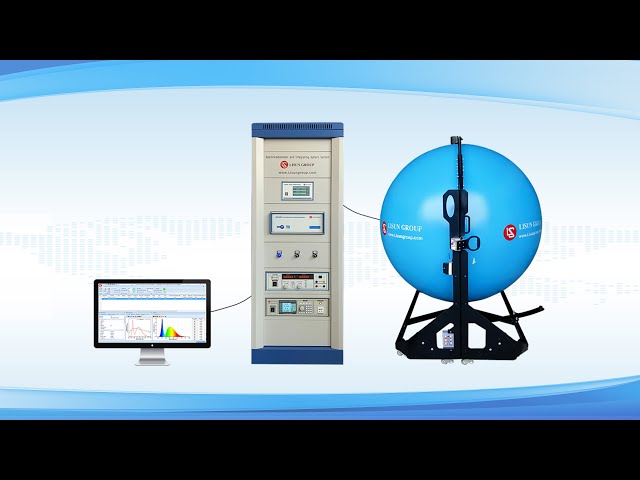
The size of a sphere is a critical issue as luminous flux rises. The internal volume of a 3-meter integrating sphere is adequate to avoid the limitations of detector saturation, thermal accumulation, and spatial non-uniformity problems when industrial fixtures are being investigated. Smaller spheres can undergo too much wall loading resulting in a drift in the measurement or coating loss.
The large spheres can be more spatially averaged and this enhances uniformity of internal light field. This is especially significant with the asymmetric-optics luminaires or multi-module layouts of LED. The further spacing of the light source and detector is an advantage since it eliminates the effects of direct illumination the measurements will be proportional to integrated light, rather than the local brightness.
Luminaires that yield high output exude high amount of heat. High temperature in the attenuation area may change LED output, influence detector response and destroy sphere coatings. The incorporation of sphere systems meant to test the industrial sphere includes ventification, heat resistant paint and time-controlled measurements to control temperature loading.
The 3-meter integrating sphere is more voluminous in surface area and volume of air in which the heat can dissipate evenly. This makes the internal environment to be stable and enhances its repeatability particularly in longer test cycles. Thermal stability To measure lumens correctly, LED output is dependent on junction temperature.
Manufacturers like LISUN develop a concept of integrating sphere systems together with large thermal management capabilities, so that the same outcomes could be obtained even with the test of industrial luminaires of high wattage.
It is one of the main uses of integrating spheres with the use of industrial lighting of measuring the total luminous flux. This value (a direct measure of the amount of usable light a luminaire can generate) forms a major parameter in calculating energy efficiency.
This data is used to optimize products, guarantee compliance with the regulations and performance claims by clients. Since the integrating sphere records all emitted light, the attained values of efficiencies are more correct compared to the ones obtained through partial measurements.
There is strict performance and regulation of industrial luminaires. Compliance documentation in most of the areas is based on photometric data obtained with the use of integrating spheres. The correct measurement of the lumen contributes to the information about the energy saving, the safety and the impact on the environment.
The meeting of these expectations by integrating sphere systems are the provision of geometry independent standardized results. In the high output production products, large spheres provide that measurements are confined to detector and coating limits required by test standards.
Aesthetic consistency is important in the manufacturing of industrial lighting. Every luminaire shipped is required to perform the same by the customers. Incorporation of sphere testing enables manufacturers to check inter-batch consistency by revealing the amount of consistency in luminous flux values and efficiency values in the same circumstances.
Since integration of sphere measurements are not sensitive to the beam shape and mounting variations, they offer an effective quality control foundation. One can attribute any variation on output to a component variation or assembly problems or thermal performance variations.
The large integrating spheres are particularly popular in testing complete luminaires as opposed to testing single light engines to ensure that end product(s) are in line with design requirements.
Luminaires used in industry are commonly supposed to run over a long period of years. Combining sphere testing will help in testing the long-term reliability by determining the degrading output with time. Coupled with testing the same luminaire at identical conditions on a regular basis, engineers are able to monitor lumen maintenance and detect the initial development of performance losses.
Through this data, lifetime claims are supported and thermal management plans could be refined. Since integration measurements of the spheres are reproducible and constant, they give confidence locations across the aging research.
The areas of industrial lighting widen to a great deal such as high-bay fixtures, floodlights, tunnel lights and street luminaires. Integrating sphere systems support this diversity by providing flexible mount systems and configurable ports.
The large housings and atypical geometries of A 3-meter integrating sphere will not affect measurement accuracy. Such flexibility saves the necessity of various test configurations and makes laboratory operations easier.
Besides Luminous flux, industrial luminaires are also considered in terms of spectral characteristics, and color stability. Sphere integration can be used with spectroradiometers to measure the correlated color temperature, color rendering measures, and spectral power distribution.
These are measurements used to maintain visual quality and application specific requirements. Equality of internal illumination assures that spectral data of the full light output is taken as opposed to localized emission.
The testing of the high-output luminaire requires a lot of demands on measurement equipment. The incorporation of sphere systems that are applied to industrial purposes should be able to sustain performance after repeated high-intensity tests. Long-term reliability is achieved by the use of durable coating, stable detectors, and reinforced structures.
LISUN integrating sphere systems are designed to accommodate long-term environments of industrial testing, to strike a balance between the accuracy of measurements and maintenance durability and convenience.
An integrating sphere is a vital instrument in test accuracy of high-output industrial lamps, to offer geometry-free measurement of overall luminous flux and efficiency. A 3-meter integrating sphere provides the space, thermal stability and uniformity needed to provide a reliable result of one of the large-scale and powerful fixtures. Taking into account all the emitted light and low alignment sensitivity, integrating sphere systems provide the same data to support product development, certification of compliance and quality assurance.
Having the additional design features and solid construction provided by the manufacturers including LISUN, the use of the sphere technology makes it possible to be sure about the effectiveness of the industrial lights. Integrating spheres are a fundamental component of the professional photometric testing in an industry where accuracy, consistency and durability are the key features to be considered.
Your email address will not be published. Required fields are marked *

 English
 中文简体
中文简体 English
 Русский
 Español
 Português
 Türkçe
 العربية
 Deutsch
 Polski
 Italiano
 Français
 한국어
한국어 ไทย
ไทย Tiếng Việt
 日本語
日本語