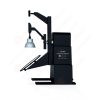
LM-79 Moving Detector Goniophotometer (Mirror Type C)
LSG-6000
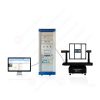
High Precision Rotation Luminaire Goniophotometer
LSG-1890B
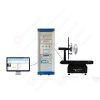
High Precision Rotation Luminaire Goniospectroradiometer
LSG-1890BCCD

Goniophotometer for Automotive and Signal Lamps
LSG-1950
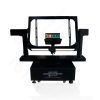
Goniophotometer for Traffic Signal Lamps (Economical Model)
LSG-1950S
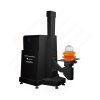
Goniophotometer for Airfield Lighting
LSG-1940
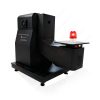
VAD Fire Alarm Visual Alert Device Goniophotometer
LSG-1930
Compact Goniophotometer
LSG-1200A
LED Goniophotometer
LSG-1100
Near Field Moving Detector Goniophotometer
LSG-1900B
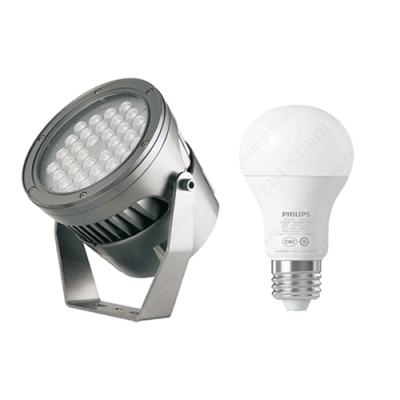 LEDs and Luminaire Test Solutions
 LM-79 and LM-80 Test Solutions
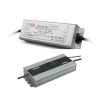 LED Driver Test Solutions
 Household Appliances Test Solutions
 Mobile and Network Test Solutions
 Automotive Electronics Test Solutions
 Audio-Video and IT Test Solutions
 Cable and Wire Test Solutions
 Plugs and Sockets Test Solutions
 Power Switch Test Solutions
 Transformer Test Solutions
 Electric Toys Test Solutions
 Energy Meter Test Solutions
 Motor-Operated Tool Test Solutions
Select an organization
to browse standards
Photometric testing is still a critical need to light manufacturers, LED modules manufacturers, automotive lamp manufacturers, display manufacturers, and architectural lighting manufacturers. The possibility of defining luminous flux and even measuring spectral power distribution would not be possible without a space in which light is uniform across the board irrespective of emission pattern. The integrating sphere was created with this purpose in mind. Rather than only measuring the light in the direction that it travels in, the sphere measures the light in all directions enabling total flux analysis without respect to beam shape, lens orientation, or figure-of-fixture geometry.
The contemporary lighting systems present a very directional beam, finite optical shape and multi-chip structures. In cases where light is detected through a direct forward method, the results are different depending on the location of the detector.
Any source of light has a spatial distribution. Just as with traditional lamps, light is given out in all directions, although even their reflector geometry changes the luminous output. Equalization of these varying patterns of output results in no longer reliable information. This is particularly an issue in comparison between different lighting technologies.
Uniformity also provides the ability of the measurement values to reflect the total emitted light and not directional strength. Scientifically, the integrating sphere forms a Lambertian distribution such that the radiance covering the detector surface does not depend on the location of the source being mounted on. In the absence of a uniform scatter plot, detector output would vary providing inaccurate flux values.
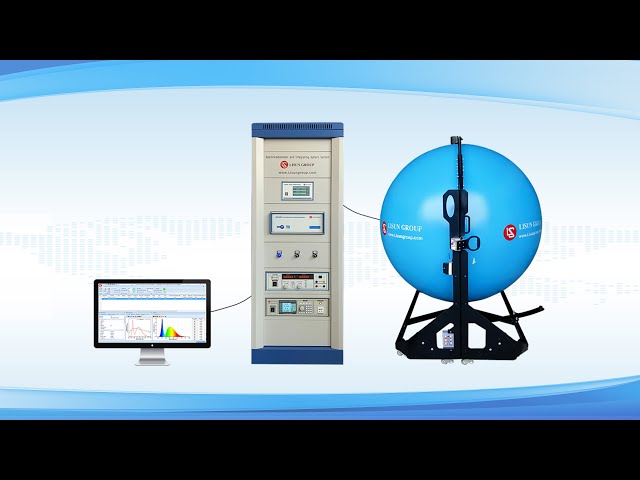
The surface of the interior of an integrating sphere is diffusively coated with a material that is very reflective. The coating is not simply bright; it has to reflect the rays several times such that there should be no directional behavior. Micro-structured particles incorporated into special reflective coatings are not unevenly absorbing of spectral energy. Directional reflection is produced by any coating defect or smoky area and distorts the results.
An ideal sphere implies that when reflected radiation incident equal all directions statistically. As the light enters the cavity it recurs until the changes in the intensity go away. When light gets to the detector, the direction of the original emission is no longer of importance.
Radiometric averaging is succeeded by an integrating sphere. When light enters the interior part, some part is lost through absorption. This means that when repeated multiple times the energy becomes evenly distributed. Mathematically, such repeated scattering is a geometrical attenuation sequence. The detector measures a weakened yet completely smoothed out distribution.
It is this averaging that renders optical integrating sphere useful. A strong forward beam processor with weak side emission of an LED can still be counted as one with full output. As opposed to angular distribution, the integrating sphere accumulates the total emission.
The source may not be able to light the detector directly although an integrating sphere should seek uniformity. In the absence of this shield, part of the light would reach the detector before dispersing and record greater than genuine readings.
The position of the baffle is dependent on the dimension of detectors, the size of port opening and geometry of the source. Poor configuration of the baffle causes the appearance of local hotspots and destroys the uniformity. Modernized systems have adjustable shielding rings to suit different sample sizes.
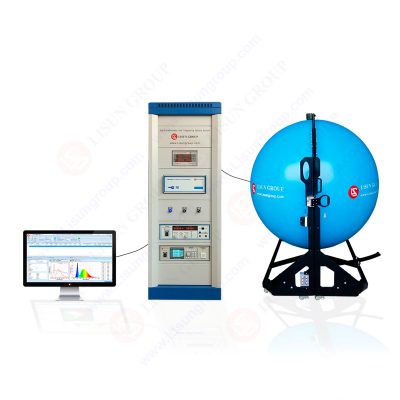
LPCE-2(LMS-9000)High Precision Spectroradiometer Integrated Sphere System
The location of the insertion of the source is important. Openings that are too large produce high energy loss and this diminishes uniform distribution.
The detector port and port of entry should be directed, yet not face to face because then direction transmission is realized. Only in the case when ports are spatially separate, internal scattering is optimal. LISUN constructs balls on the principle of polar alignment rules such that detector receives only scattered radiation.
The spheres should be large since it generates a higher degree of uniformity due to the numerous reflections made prior to the exposure of the detector. Small spheres are sufficient in case of small LED packages. Sphere size is an important factor that affects accuracy of large luminaires because reflector-based lamps develop longer beam paths.
At 3000-10000 lumens, under 1000 lumens a lighting assembly, the walls, moistures collect, and coating discoloration may be observed when using smaller spheres. Large diameter designs have greater dissipation of heat meaning they safeguard performance of coating.
Exposure distribution is determined by the reflectance of reflective coating. An increase in reflectance results in an increase in scattering cycles. The normal sphere finishes are over 95 per cent reflective in the visible frequencies. When the spectral response is changed by the selective absorption of a coating, the correlated color temperature evaluation is affected. This is the reason coating aging is an issue of calibration-based maintenance parameter.
The purely coating integrity defines the degree to which the integrating sphere will simulate the uniform field behavior on a long-term basis. In case moisture, dust, or scratches are deposited, the reflectance reduces and uniformity declines.
When the source is switched ON the interior does not stabilize at once. That period of stabilisation is also important during the measurement of LEDs which are operated in PWM-based mode. Stable integration is needed so that an average luminous output is measured, and not a onetime change.
Circumscribing spheres have a number of detectors to hasten stabilizing and decrease position reliance. Calibration is however required to correlate the outputs of the detector in order to maintain aggregated response consistency.
Light sources Photometric calibration needs light sources (might be other systems) with the output of their flux traceable to certified values in the laboratory. The compensation of coating reflectivity decay, port, and insertion losses, detector drift, and scattering changes is provided by calibration. Several spectral regions are considered during the calibration process since the optical integrating sphere is not only applied in luminous flux but correlated color temperature prediction.
The systems used today use the automated spectral calibration in which the detector takes reference illumination traces. In spite of spectral distributions across different types of LEDs, the product testing is still reliable after calibration.
Flux grading is done with spheres that are used by LED package manufacturers. Each unit of the LED is measured by the system and then bins it based on performance. This is essential since the light output, chromaticity and spectral signature of LEDs are all matched in their batches.
Manufacturers of large lamps employ the use of spheres to test the results of assembly at the stage of integrating reflectors. Diffuser, optical lens and prismatic covers can be used in concentrated protectors. Sphere testing ascertains that optical diffusion does not reduce the sum of efficient flux.
Light in architectural work utilizes spheres to ratify decorative fixtures due to the change in light escape by designs. Automotive lighting modules are sphere-based analyzed to measure the total luminous emission and the beam control is evaluated independently.
The manufacturers of medical devices are measuring the illumination of the surgical systems and handheld detectors. Optical accuracy is a way of assuring safe levels of illumination in medical use.
Modern integrating sphere In a modern integrating area, light is distributed uniformly by scattering rays multiple times through a well-defined highly reflective cavity that is spherical. The resultant data gives true overall flux rather than directional intensity thus enabling efficient efficiency analysis, chromatic study, spectral aging forecast, and a division of packages and bins. Directional bias is an unwanted quality in optical integrating spheres, making it essential to the manufacture of LEDs, photometric laboratories, and the certification of regulated products, and in sophisticated research facilities where small measurement changes affect the decision-making process of an engineer.
Lisun Instruments Limited was found by LISUN GROUP in 2003. LISUN quality system has been strictly certified by ISO9001:2015. As a CIE Membership, LISUN products are designed based on CIE, IEC and other international or national standards. All products passed CE certificate and authenticated by the third party lab.
Our main products are Goniophotometer, Integrating Sphere, Spectroradiometer, Surge Generator, ESD Simulator Guns, EMI Receiver, EMC Test Equipment, Electrical Safety Tester, Environmental Chamber, Temperature Chamber, Climate Chamber, Thermal Chamber, Salt Spray Test, Dust Test Chamber, Waterproof Test, RoHS Test (EDXRF), Glow Wire Test and Needle Flame Test.
Please feel free to contact us if you need any support.
Tech Dep: Service@Lisungroup.com, Cell/WhatsApp:+8615317907381
Sales Dep: Sales@Lisungroup.com, Cell/WhatsApp:+8618117273997
Your email address will not be published. Required fields are marked *

 English
 中文简体
中文简体 English
 Русский
 Español
 Português
 Türkçe
 العربية
 Deutsch
 Polski
 Italiano
 Français
 한국어
한국어 ไทย
ไทย Tiếng Việt
 日本語
日本語