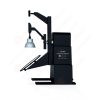
LM-79 Moving Detector Goniophotometer (Mirror Type C)
LSG-6000
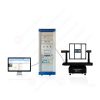
High Precision Rotation Luminaire Goniophotometer
LSG-1890B
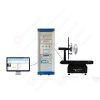
High Precision Rotation Luminaire Goniospectroradiometer
LSG-1890BCCD

Goniophotometer for Automotive and Signal Lamps
LSG-1950
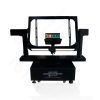
Goniophotometer for Traffic Signal Lamps (Economical Model)
LSG-1950S
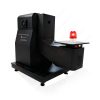
VAD Fire Alarm Visual Alert Device Goniophotometer
LSG-1930
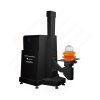
Goniophotometer for Airfield Lighting
LSG-1940
Compact Goniophotometer
LSG-1200A
LED Goniophotometer
LSG-1100
Near Field Moving Detector Goniophotometer
LSG-1900B
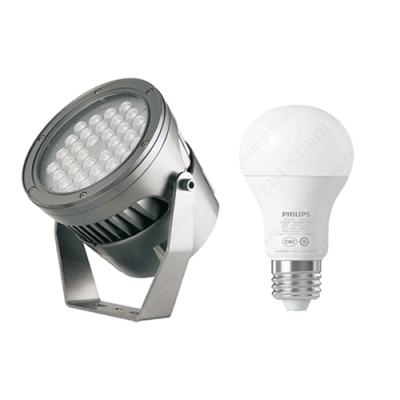 LEDs and Luminaire Test Solutions
 LM-79 and LM-80 Test Solutions
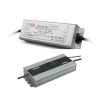 LED Driver Test Solutions
 Household Appliances Test Solutions
 Mobile and Network Test Solutions
 Automotive Electronics Test Solutions
 Audio-Video and IT Test Solutions
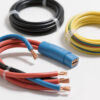 Cable and Wire Test Solutions
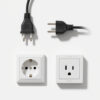 Plugs and Sockets Test Solutions
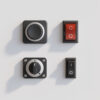 Power Switch Test Solutions
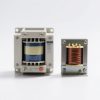 Transformer Test Solutions
 Electric Toys Test Solutions
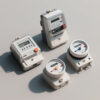 Energy Meter Test Solutions
 Motor-Operated Tool Test Solutions
Select an organization
to browse standards
Safety inspection of electrical and electronic products in regard to fire safety is a prerequisite in the world-wide industries. As devices get smaller and denser and thermally, internal components are closer to their material constraints, and the probability of ignition in the event of electrical fault goes up. The glow wire test was created in order to mimic realistic fire-initiating scenarios as a result of overheated elements, loose terminal contacts or internal short circuits. This process is an example of controlled heating, which is applied in place of subjecting the material to an open flame to simulate the thermal strain imposed by heating components within faulty circuits.
It offers a valid way of testing ignition behavior, flame development, melting behavior and post-heating behavior. Testing standards specify the temperature used but also the duration of contact of the heated element with the sample, the way the flame duration is determined and the dripping or melting behaviour will affect the safety classification.
Components that are electrical are hardly ever lit by outside flame but rather by inside overheating. A connector which becomes loose as a result of mechanical vibration may become hot and ignite other polymer housings nearby. Likewise, resistors which work close to overload or which have poor terminals can produce hotspots. These hot spots become hot enough to either melt or burn polymer insulation.
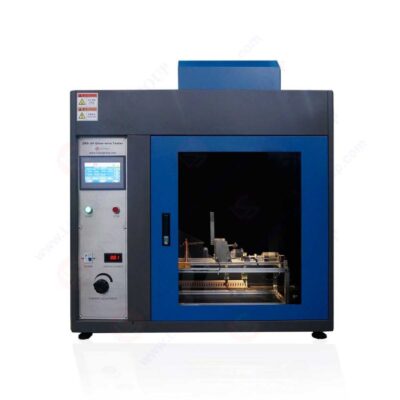
The glow wire technique is an imitation of this source of ignition, measuring a standardized electrically heated source. A hot wire tester heats a nickel-chromium wire to a specified temperature say 550°C, 650°C or higher temperature and is then subjected to the material over a set period of time. This is to find out whether the material will ignite or not and in cases where it does, that it self-extinguishes in time without causing much other fire.
In modern laboratories that use the equipment produced by LISUN, severe standardization is necessary since the slightest difference in heating rate or contact pressure can alter the results. That is why, international standards were invented to regulate all the testing variables.

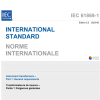
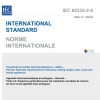
IEC 60695 is the most popular standard which is used to govern glow-wire assessment. This framework deals with various sections touching on ignition temperature, flame propagation and flammability index. The standard provides the required way of the test apparatus construction, the way the temperatures should be measured and how the material samples should be located.
Specifically, the IEC 60695-2-10 specifies test conditions of various applications. These records stipulate the temperature increase time, the force on the contact between the heated glow element and the specimen, test time and post-ignition test. Standardization of these parameters is meant to make comparisons between materials. The same type of polymer formulation can ignite at 550°C and not even ignite at 650°C. Such comparisons would be useless without a regular methodology.
The criterion takes into account actual failure cases: not only should the material not be easily ignited, but it should not be able to ignite other substances. Thus, dripping of molten material is the source of further hazards depending on the presence of cotton or indicator paper below the specimen.
Two significant outcomes are brought out through glow wire testing, GWIT and GWFI. Glow -Wire Ignition Temperature (GWIT) is used to measure maximum temperature required to not ignite a material of a certain duration. Glow-Wire Flammability Index (GWFI) is used to determine how quickly the material goes out. The two indicators give us an idea of the behavior of a material at thermal stress.
GWIT and GWFI ratings allow manufacturers to categorize the plastics that they use in enclosures, connectors and internal components. An integrated circuit that is chosen and has not been verified against such ratings can pass electrical tests and fail during a thermal runaway. With materials developing in the light formulations and recyclability, glow-wire ratings can be used to keep the performance of fire safety intact.
Whereas the world standard is given by IEC standards, similar documents are released by regional agencies. EN 60695 is a reflection of IEC advice on the European markets. The standard UL 746A has certain flammability assessment provisions to test polymeric materials in the North American settings. Glow-wire principles are also mentioned in ISO standards when it comes to the use that relates to global supply chain.
Various industries have varied levels. Automobile interior parts provide an example whereby self-extinguishing behavior is valued, whereas in appliance manufacturing; ignition temperature is as well a point of concern. The glow-wire equipment should thus be able to withstand very broad range of temperatures and provide constant heating cycles.
To achieve valid results, the equipment should have strict control over heating parameters in order to use a glow wire test. A hot wire tester is a tester that holds a heating loop designed to bring up to specified temperatures within a specified time and hold them within a specified range. Thermocouple precision This is pivotal when gauging the temperature of wire due to differences in ignitions occurring at temperatures less than 20°C.
The equipment also has force-controlled placement. Excessive pressure disturbs the heat transfer rate whereas insufficient pressure results in lack of full contact. Automated positioning controls guarantee repeatability which does not depend upon operator effects.
Also, those chambers that are used to perform glow-wire tests should be well-ventilated so that the combustion fumes do not build up without interfering with the heating conditions. LISUN construct their equipment’s in insulated forms that reduce heat dissipation and maintain accuracy of the measurements.
Internal temperatures go up as product miniaturization goes up. The recent chargers, LED drivers and power supply modules create heat densities previously unreachable by materials. Polymer rated as a glow-wire may inhibit ignition even in the event of the device malfunctioning, giving vital time to allow it to auto shut down, or to activate a fuse.
In automotive control units, glow-wire testing is used to ensure that enclosures do not ignite in case the harnesses of the wiring undergo localized overheating. Internal plastics are subjected to prolonged heat in the appliance like ovens and dryers. Such materials can melt away, spurt or even burn with no appropriate glow-wire assessment, resulting in secondary fires.
Battery operated devices are also emerging challenges. A protection circuit of Li/ion cell can be faulty and create severe temperatures under non-normal condition. Internal structures are made glow-wire-rated to minimize the chances of ignition occurrence in such rare yet dangerous events.
Any results of glow-wire are utilized by engineering teams to optimize the use of polymer. High GWIT but low GWFI material could be difficult to ignite and burn excessively once ignited. On the other hand, a material, which ignites readily and also goes out fast, can be used in some low-risk uses. The results of glow-wire lead design teams therefore to balanced fire rescuing choices.
Flame retardants, mineral fillers and stabilizers are some of the material additives that affect the glow wire performance. Various formulations are tried by the manufacturers to obtain the most adequate compromise between mechanical strength, cost, environmental compliance and fire resistance.
The glow wire test offers a compulsory technique of the assessment of ignition vulnerability and flame development under the conditions of controlled and realistic thermal loads. Standards like IEC 60695 protect all details of the manner, in which a test is carried out, providing similar, and significant results among all the industries. Movable flame-resistant enclosures Protective equipment housings, appliance enclosures, connectors, and automotive modules and electronic assemblies utilize glow-wire-rated materials to operate safely under fire.
When designed by a responsible manufacturer such as LISUN, a hot wire tester allows the laboratory to conduct exceptionally accurate and reproducible analysis which can be directly connected to real world overheating conditions. Using these key testing standards, engineers can make sure that the modern electrical products are safe even when it is the internal fault that may cause them to work beyond the normal operating limits.
Your email address will not be published. Required fields are marked *

 English
 中文简体
中文简体 English
 Русский
 Español
 Português
 Türkçe
 العربية
 Deutsch
 Polski
 Italiano
 Français
 한국어
한국어 ไทย
ไทย Tiếng Việt
 日本語
日本語