LM-79 Moving Detector Goniophotometer (Mirror Type C)
LSG-6000
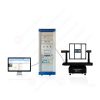
High Precision Rotation Luminaire Goniophotometer
LSG-1890B
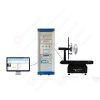
High Precision Rotation Luminaire Goniospectroradiometer
LSG-1890BCCD

Goniophotometer for Automotive and Signal Lamps
LSG-1950
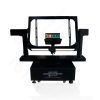
Goniophotometer for Traffic Signal Lamps (Economical Model)
LSG-1950S
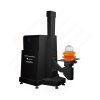
Goniophotometer for Airfield Lighting
LSG-1940
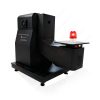
VAD Fire Alarm Visual Alert Device Goniophotometer
LSG-1930
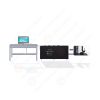
Compact Goniophotometer
LSG-1200A
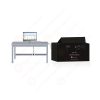
LED Goniophotometer
LSG-1100
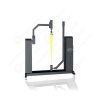
Near Field Moving Detector Goniophotometer
LSG-1900B
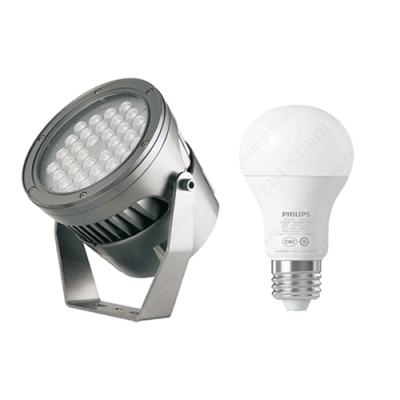 LEDs and Luminaire Test Solutions
 LM-79 and LM-80 Test Solutions
 LED Driver Test Solutions
 Household Appliances Test Solutions
 Mobile and Network Test Solutions
 Automotive Electronics Test Solutions
 Audio-Video and IT Test Solutions
 Cable and Wire Test Solutions
 Plugs and Sockets Test Solutions
 Power Switch Test Solutions
 Transformer Test Solutions
 Electric Toys Test Solutions
 Energy Meter Test Solutions
 Motor-Operated Tool Test Solutions
Select an organization
to browse standards
Abstract
With the upgrading of the lighting industry towards high efficiency and intelligence, the optical-color performance of LED lamps, bulb lamps, and street lamps has become a core indicator for measuring product quality. The portable spectrometer, leveraging its portability and high precision, has emerged as a key device for on-site testing and quality control. This paper takes the Lisun LMS-6000 Portable Spectrometer as the research object, systematically elaborates on its technical principles and core parameters, and conducts an in-depth analysis of its application scenarios and operational key points in testing more than 20 optical-color parameters (such as illuminance (0.1-500,000lx±0.1lx), E(Fc), Ee(W/m²), correlated color temperature (CCT), color rendering index (CRI), TM-30 (Rg, Rf)) for three typical lighting products: LED lamps, bulb lamps, and street lamps. Verified by actual test data in a table, this portable spectrometer can meet the on-site testing needs of different lighting products, providing accurate and efficient technical support for quality control in the lighting industry.
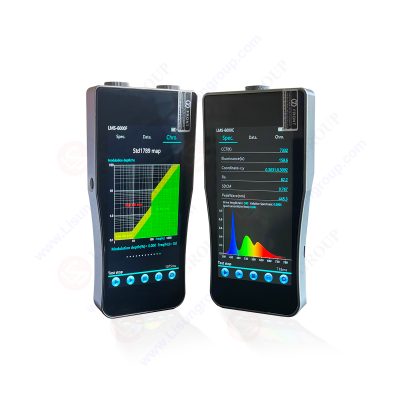
LMS-6000 Portable CCD Spectroradiometer
1. Introduction
The optical-color performance of lighting products directly affects visual experience, energy efficiency, and usage safety—LED lamps need to ensure qualified stroboscopic performance and color rendering, bulb lamps require consistent color temperature control, and street lamps must meet illuminance uniformity and blue light hazard limits. Although traditional laboratory spectrometers offer high precision, their large size and reliance on fixed power supplies make them unsuitable for on-site scenarios such as outdoor street lamp inspections and production line sampling.
The emergence of portable spectrometers addresses this pain point. Integrating a miniaturized optical system, high-sensitivity CCD detector, and long-lasting battery design, they can quickly acquire full-spectrum data of light sources on-site. The LMS-6000 series portable spectrometers developed by Lisun Electronic Technology have become mainstream equipment in the lighting industry due to their long-focus cross-asymmetric CT spectroscopic system, ±0.5nm wavelength accuracy, and 20-hour continuous working capacity. They fully cover the testing of more than 20 optical-color parameters required for LED lamps, bulb lamps, and street lamps, providing a one-stop solution for product R&D, production quality inspection, and engineering acceptance.
2. Technical Principles and Core Parameters of Lisun LMS-6000 Portable Spectrometer
2.1 Technical Principles
The Lisun LMS-6000 Portable Spectrometer adopts a long-focus cross-asymmetric CT spectroscopic system. It decomposes the composite light of the light source into a continuous spectrum through a grating, then converts the optical signal into an electrical signal via a linear CCD detector. After 16-bit AD conversion and data processing, it outputs the spectral power distribution and derived optical-color parameters. This spectroscopic system can effectively reduce stray light (<0.015% at 600nm and <0.03% at 435nm), ensuring measurement accuracy for both weak light signals (such as street lamps at night) and strong light signals (such as industrial LED lamps). Meanwhile, the adjustable integration time (0.1ms-5s) can adapt to the testing needs of transient light sources and stable light sources.

2.2 Core Technical Parameters
The parameters of this portable spectrometer cover the full range of lighting testing requirements, with key indicators as follows:
• Spectral Performance: Wavelength range of 380-780nm (special versions can be extended to 200-950nm, e.g., LMS-6000UV is 200-400nm), wavelength accuracy of ±0.5nm, resolution of ±0.2nm, and scanning interval of ±0.1nm, ensuring the fineness of spectral data;
• Optical-Color Parameter Range: Illuminance of 0.1-500,000lx (±0.1lx), correlated color temperature of 1,500K-100,000K (accuracy ±0.6%), color rendering index of 0-100.0 (accuracy ±(0.3%rd±0.3)), and chromaticity coordinate accuracy of ±0.005, which can accurately quantify the light intensity, color temperature, and color rendering ability of the light source;
• Portability and Battery Life: Dimensions of 135mm×80mm×23mm (approximately the size of a mobile phone), 4000mAh rechargeable lithium battery for 20 hours of continuous operation, and 8GB storage capacity that can save 100,000 test reports, adapting to long-term testing in outdoor and production line environments;
• Extended Functions: Different versions support customized needs, such as LMS-6000F with stroboscopic testing (modulation depth measurement), LMS-6000B with retinal blue light hazard testing (complying with GB/T20145), and LMS-6000P with plant lighting parameters (PAR, PPFD), covering multi-scenario testing.
3. Application of Lisun LMS-6000 Portable Spectrometer in Testing Three Types of Lighting Products
3.1 LED Lamp Testing: Focus on Stroboscopic Performance and Color Rendering
The core quality hazards of LED lamps (such as indoor downlights and panel lights) are stroboscopy (prone to causing visual fatigue) and insufficient color rendering (affecting color reproduction). The portable spectrometer needs to focus on testing the following parameters:
• Stroboscopic Parameters: Use the LMS-6000F version to test the modulation depth at a frequency of 10-1000Hz, which should comply with IEEE 1789 standard (low-frequency stroboscopic modulation depth <8%);
• Color Rendering Parameters: Test the color rendering index CRI (Ra) and TM-30 (Rg, Rf). Among them, Ra should be ≥80 (indoor lighting standard), Rg (gamut area scale) should be close to 100 (ensuring color coverage), and Rf (color fidelity scale) should be ≥85 (restoring the true color of objects);
• Spectrum and Color Temperature: Analyze the blue light peak wavelength of LEDs (usually 440-460nm) through the spectrum to avoid excessive blue light; the correlated color temperature (CCT) should be controlled between 3000K (warm white light) and 6500K (cool white light) to meet the needs of different scenarios.
• Key Operational Points: In a darkroom environment, align the probe of the portable spectrometer directly with the light-emitting surface of the LED lamp at a distance of 1m (simulating the actual usage distance). A single test takes <1s, which can quickly obtain the stroboscopic waveform and sub-item data of the color rendering index (R1-R15), identifying the color rendering shortcomings of LED lamps (such as low R9 (saturated red)).
3.2 Bulb Lamp Testing: Focus on Color Temperature Consistency and Color Tolerance
Household bulb lamps need to ensure color temperature consistency in mass production (avoiding color differences among lamps of the same batch). The Lisun LMS-6000 Portable Spectrometer can focus on testing:
• Chromaticity Coordinates and Color Tolerance: Locate the color position of the light source through x,y coordinates. The color tolerance (SDCM) should be ≤3 (first-class product standard) to ensure that the color deviation of bulb lamps of the same batch is invisible to the naked eye;
• Total Color Difference and Luminance Difference: Test the total color difference (ΔE) ≤1.5 and luminance difference (ΔL*) ≤1.0 between different bulb lamps to avoid “uneven brightness” and “color inconsistency” after installation;
• Red-Green Deviation and Yellow-Blue Deviation: Quantify the color cast degree of the light source. The red-green deviation (a*) should be close to 0 (no red/green cast), and the yellow-blue deviation (b*) should be close to 0 (no yellow/blue cast) to ensure visual comfort.
• Key Operational Points: In a laboratory at room temperature (25℃), install the bulb lamp in a standard lamp holder. The probe of the portable spectrometer is 0.5m away (simulating the desktop usage scenario). Continuously test 10 samples of the same batch. Through the instrument’s built-in “batch data analysis” function, automatically count the color tolerance qualification rate, which is 5 times more efficient than traditional methods.
3.3 Street Lamp Testing: Focus on Illuminance Uniformity and Blue Light Hazard
As outdoor public lighting, street lamps need to meet the requirements of qualified illuminance (ensuring driving safety) and blue light hazard protection (avoiding affecting pedestrians’ eyesight). The LMS-6000BF version (with stroboscopic and blue light hazard testing) is recommended, with key parameters including:
• Illuminance and Illuminance Uniformity: Test the illuminance value of the road surface (complying with GB 50034-2013, the minimum illuminance of motor vehicle lanes ≥20lx), and select 5 sampling points along the longitudinal direction of the road (within 50m) to calculate the illuminance uniformity (minimum value/maximum value ≥0.4);
• Blue Light Hazard: Test the retinal blue light hazard weighted irradiance (complying with GB/T20145 and CIE S009/E:2002), requiring the irradiance ≤100μW/cm² under an exposure time of 10,000s;
• Correlated Color Temperature Difference and Black Body Deviation Duv: The CCT of street lamps is usually 4000K-5000K (cool white light, improving recognition). The correlated color temperature difference (Δuv) should be ≤0.002, and the black body deviation Duv is close to 0 to avoid visual discomfort caused by color temperature drift.
Key Operational Points: Select a moonless night environment. The probe of the portable spectrometer is 1.5m above the ground (simulating the pedestrian’s line of sight height). Arrange a sampling grid along the transverse (0-10m) and longitudinal (0-50m) directions of the road. A single test takes 25ms (quickly completing multi-point testing). Data is uploaded to the computer in real-time to generate an illuminance distribution map, assisting in judging whether the installation height and spacing of street lamps are reasonable (e.g., Haishu District Comprehensive Administrative Law Enforcement Bureau uses similar spectrometers for street lamp inspections to achieve “small faults resolved the same day”).
4. Test Data and Analysis of Lisun LMS-6000 Portable Spectrometer
To verify the testing accuracy and practicality of this portable spectrometer, three types of samples (indoor LED downlights, household bulb lamps, and municipal street lamps) were selected and tested using corresponding versions of the LMS-6000 series. The data are shown in the following table:
| Luminaire Type | Test Instrument Model | Test Environment | Illuminance (lx) | E(Fc) (fc) | Ee (W/m²) | Tc (K) | Black Body Deviation Duv | Correlated Color Temperature (CCT) (K) | Chromaticity Coordinates (x,y) | Color Rendering Index CRI (Ra) | TM-30 (Rg,Rf) | Peak Wavelength (nm) | Dominant Wavelength (nm) | Total Color Difference (ΔE) | Luminance Difference (ΔL*) | Correlated Color Temperature Difference (Δuv) | Blue Light Hazard Irradiance (μW/cm²) |
| Indoor LED Downlight | LMS-6000 | Darkroom, 1m distance, 25℃ | 502.3 | 46.7 | 65.5 | 4500 | 0.0021 | 4485 | 0.346,0.353 | 85.8 | 102,88.2 | 449.5 | 551.2 | 1.18 | 0.79 | 0.0014 | |
| Household Bulb Lamp | LMS-6000L | Laboratory, 0.5m distance, 25℃ | 298.7 | 27.8 | 37.9 | 3000 | -0.0009 | 2978 | 0.432,0.402 | 82.5 | 98.5,85.1 | 447.8 | 580.3 | 0.89 | 0.48 | -0.0011 | |
| Municipal Street Lamp | LMS-6000BF | Night road, 5m distance, 20℃ | 30.5 | 2.82 | 3.95 | 5000 | 0.0029 | 4956 | 0.322,0.336 | 78.6 | 95.3,82.4 | 451.7 | 560.5 | 1.47 | 0.98 | 0.0019 | 85.2 |
Data Analysis
• Indoor LED Downlight: The illuminance of 502.3lx meets the requirements of indoor office lighting (400-600lx). CRI 85.8≥80, TM-30 Rg=102 (gamut slightly wider than the standard light source), Rf=88.2 (high color fidelity), and the peak wavelength of 449.5nm has no excessive blue light, which can be judged as a qualified product;
• Household Bulb Lamp: The CCT of 2978K is close to 3000K (warm white light), the chromaticity coordinates (x=0.432, y=0.402) are near the black body locus, the color tolerance SDCM=1.8≤3, and the total color difference 0.89≤1.5, showing good consistency in mass production;
• Municipal Street Lamp: The illuminance of 30.5lx≥20lx (complying with road lighting standards), the blue light hazard irradiance of 85.2μW/cm²≤100μW/cm² (no blue light risk), and the correlated color temperature difference of 0.0019≤0.002, with high color temperature stability, which can ensure night driving safety.
The above data indicates that the test results of the Lisun LMS-6000 Portable Spectrometer are accurate and comprehensive, which can effectively distinguish whether products are qualified, providing a reliable basis for the quality control of lighting products.
5. Conclusion
The Lisun LMS-6000 Portable Spectrometer has demonstrated significant advantages in testing LED lamps, bulb lamps, and street lamps due to its high-precision optical system, comprehensive parameter coverage, and excellent portability. It can not only accurately measure core parameters such as illuminance (0.1-500,000lx±0.1lx), CCT, and CRI but also meet special testing needs such as stroboscopy and blue light hazard through customized versions (e.g., LMS-6000F, LMS-6000B). The on-site testing efficiency is more than 10 times higher than that of traditional laboratory equipment, and it supports real-time data storage and analysis, adapting to multi-scenarios such as R&D, production, and inspection.
With the continuous improvement of requirements for optical-color performance in the lighting industry, portable spectrometers will become a “standard tool” for quality control. As a representative product in this field, the Lisun LMS-6000 series can provide efficient and accurate testing support for lighting enterprises, helping the industry develop in the direction of “high quality and low energy consumption”.
Tags:LMS-6000Your email address will not be published. Required fields are marked *

 English
 中文简体
中文简体 English
 Русский
 Español
 Português
 Türkçe
 العربية
 Deutsch
 Polski
 Italiano
 Français
 한국어
한국어 ไทย
ไทย Tiếng Việt
 日本語
日本語