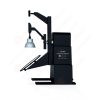
LM-79 Moving Detector Goniophotometer (Mirror Type C)
LSG-6000
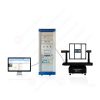
High Precision Rotation Luminaire Goniophotometer
LSG-1890B
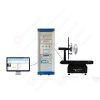
High Precision Rotation Luminaire Goniospectroradiometer
LSG-1890BCCD

Goniophotometer for Automotive and Signal Lamps
LSG-1950
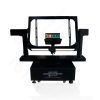
Goniophotometer for Traffic Signal Lamps
LSG-1950S
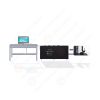
Compact Goniophotometer
LSG-1200A
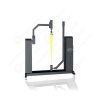
Near Field Moving Detector Goniophotometer
LSG-1900B
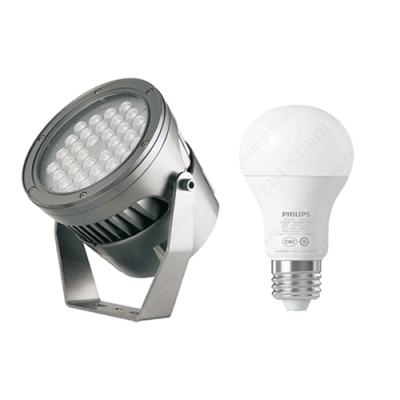 LEDs and Luminaire Test Solutions
 LM-79 and LM-80 Test Solutions
 LED Driver Test Solutions
 Household Appliances Test Solutions
 Mobile and Network Test Solutions
 Automotive Electronics Test Solutions
 Audio-Video and IT Test Solutions
 Cable and Wire Test Solutions
 Plugs and Sockets Test Solutions
 Power Switch Test Solutions
 Transformer Test Solutions
 Electric Toys Test Solutions
 Energy Meter Test Solutions
 Motor-Operated Tool Test Solutions
Select an organization
to browse standards
Abstract
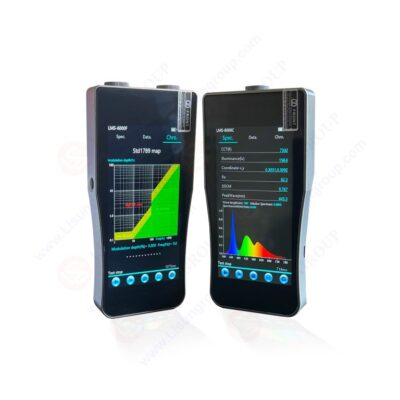
In lighting quality assessment, display device calibration, and various light source R&D, color temperature, as a core parameter describing the chromatic characteristics of a light source, is crucial for accurate measurement. The traditional colorimeter offers limited functionality, whereas modern optical measurement technology integrates its capabilities into more powerful portable spectroradiometers. This article aims to systematically explain the principles and importance of color temperature measurement and related standards, and to explore in depth why modern devices integrating spectral analysis capabilities have become the superior solution. Using the LISUN LMS-6000 series Portable CCD Spectroradiometer as a central example, the article provides a detailed analysis of how it achieves not only precise color temperature measurement across a range of 1,500K to 100,000K via a high-precision optical system but also simultaneous comprehensive analysis of dozens of key photometric and colorimetric parameters. These include Color Rendering Index (CRI), chromaticity coordinates, spectral distribution, as well as TM-30 metrics, blue light hazard assessment, and flicker analysis. It serves as an all-in-one, efficient measurement tool for lighting engineering, display manufacturing, plant factories, and healthy light environment evaluation.
1. Introduction: Beyond the Reading – The Modern Significance of Color Temperature Measurement
Color temperature, measured in Kelvins, quantifies the color appearance of light emitted by a source. It serves as a bridge connecting the physical properties of a light source to human visual perception, directly influencing environmental ambiance, object color rendition, and human circadian rhythms. Therefore, accurate color temperature measurement is indispensable in interior lighting design, film/TV lighting setup, display white balance calibration, and LED light source production quality control.
However, with the rapid advancement of lighting technology, particularly the widespread adoption of LEDs, evaluating a light source now extends far beyond just its color temperature. Two light sources with identical color temperatures can have vastly different spectral power distributions, leading to significant differences in color rendering, color saturation, and even biological effects. Traditional filter-based colorimeters, while convenient, provide only limited data on color temperature and illuminance. They cannot reveal spectral details or assess critical quality metrics like CRI or gamut saturation. Thus, modern industrial and R&D demands call for a more comprehensive and transparent measurement tool – exemplified by high-performance Portable CCD Spectroradiometers like the LISUN LMS-6000 series. It is not merely an upgrade to a “colorimeter” but a complete “optical fingerprint analyzer” for light sources.
2. Color Temperature and Spectral Measurement: Analysis of Core Parameters
To understand the value of modern spectroradiometers, it is essential to first clarify the key parameters they measure and their significance.
2.1 Core Colorimetric Parameters
• Correlated Color Temperature (CCT): The absolute temperature of a Planckian (black body) radiator whose chromaticity most closely resembles that of the light source. It is the direct indicator describing the “warm” or “cool” feel of a light source.
• Chromaticity Coordinates and Duv: Precise coordinates plotting the color of a light source on the CIE chromaticity diagram. The Duv value indicates the deviation of this point from the Planckian locus (positive is greenish, negative is purplish), serving as an important supplement for evaluating white light quality.
• Color Rendering Metrics:
Color Rendering Index (CRI): Describes a light source’s ability to reveal the true colors of objects. Ra (general CRI) is the most commonly used.
TM-30 (Rf, Rg): A more advanced color rendition evaluation system. Rf, similar to CRI, measures color fidelity; Rg measures gamut saturation, where a value greater than 100 indicates more vivid colors.
2.2 Extended Photometric and Specialized Parameters
• Photometric Quantities: Illuminance and luminance are fundamental for assessing light intensity.
• Spectral Power Distribution (SPD): The graph of a light source’s radiant power versus wavelength. It is the fundamental data from which all colorimetric parameters are calculated, used for in-depth spectral analysis and problem diagnosis.
• Health and Safety Parameters: Such as retinal blue light hazard weighted irradiance based on standards like GB/T20145, assessing potential photobiological safety risks.
• Dynamic Parameters: Flicker measurement evaluates the temporal light modulation of a source, related to visual comfort and health.
• Specialized Field Parameters: Such as PPFD for horticultural lighting or the TLCI index for film/TV lighting.

| Model | Core Functional Features | Key Test Parameters (Beyond basic CCT & color coordinates) | Typical Application Scenarios |
|---|---|---|---|
| LMS-6000 | Basic All-Round Version | Illuminance, CRI, TM-30, Color Tolerance, Full Spectrum Graph | General lighting QC, R&D labs, light source performance evaluation |
| LMS-6000L | Includes Luminance Testing | Luminance, Screen Uniformity Testing | Display screens, panels, illuminated sign brightness measurement |
| LMS-6000F | Includes Flicker Analysis | Flicker Percentage, Frequency, Modulation Depth | Evaluating LED driver quality, healthy lighting, classroom/office lighting |
| LMS-6000B | Includes Blue Light Hazard Assessment | Retinal Blue Light Hazard Weighted Irradiance | Luminaire photobiological safety certification, children’s product lighting inspection |
| LMS-6000P | Horticultural Lighting Specialized | PAR, PPFD, YPFD, Red/Blue Radiation Ratio | Plant factories, greenhouse supplemental lighting, agricultural research |
| LMS-6000SF | Full-Function Flagship Version | Includes all functions: Horticultural, TM-30, Blue Light Hazard, and Flicker | Third-party testing labs, high-end lighting R&D, comprehensive light quality labs |
3. The LMS-6000 Portable CCD Spectroradiometer: Technical Implementation and Accuracy Assurance
The LMS-6000 series employs an advanced long-focus crossed asymmetric CT optical system and a high-sensitivity CCD detector, forming the physical foundation for its high-precision measurements.
3.1 Exceptional Spectral Performance
• High Accuracy and Resolution: Wavelength accuracy of ±0.5nm and resolution of ±0.2nm ensure the accuracy of spectral data acquisition, which is the cornerstone for precisely calculating CCT, CRI, and all other derived parameters.
• Wide Dynamic Range: Illuminance measurement covers 0.1 to 500,000 lux, and luminance measurement reaches 500,000 cd/m², enabling it to measure faint indicator lights as well as high-brightness direct light sources or displays.
• Excellent Linearity and Low Stray Light: Photometric linearity of ±0.6% and stray light below 0.015% ensure measurement stability and reliability across the entire range, offering particular advantages when measuring low CCT or narrow-band spectrum sources.
3.2 Intelligent Design and Human-Machine Interaction
• Integrated Portable Platform: The device integrates a 5-inch high-definition IPS touchscreen. Its built-in high-capacity battery supports up to 20 hours of continuous operation, and it features 8GB of storage, enabling true on-site measurement and data storage independent of a computer.
• Rich Model Ecosystem: As shown in the functional comparison table, through modular functional design, users can select the model that best matches their core needs (e.g., focused on displays, plant lights, or health/safety) to maximize return on investment.
• Professional Software Support: Companion PC software supports in-depth data analysis, report generation, and data management, complying with international standards like CIE and IEEE to meet certification and R&D needs.
| Parameter Category | Technical Specification | Performance Significance |
|---|---|---|
| Spectral Range | 380-780nm (Visible) / 200-400nm (UV) / 350-950nm (Extended) | Covers visible, UV, and NIR, adapting to different applications |
| Wavelength Accuracy | ±0.5nm | Fundamental for accurate calculation of color coordinates, peak wavelength, etc. |
| Chromaticity Accuracy | Δx, Δy: ±0.005 | Meets high industry standards, suitable for precise color analysis and matching |
| CCT Range | 1,500K ~ 100,000K | Encompasses all common and extreme CCTs from ultra-warm to ultra-cool |
| CCT Accuracy | ±0.6% | Provides highly reliable color temperature measurement results |
| CRI Accuracy | ±(0.3% rd±0.3) | Enables precise quantitative evaluation of a light source’s color rendition capability |
| Photometric Linearity | ±0.6% | Ensures measurement consistency across the high and low ends of the range, ensuring high data credibility |
4. Application Scenarios: From Quality Control to Cutting-Edge Research
The application of the multi-functional LISUN LMS-6000 series Portable CCD Spectroradiometers spans the entire industry chain:
• LED Lighting Manufacturing & QC: Rapid color temperature BIN sorting on production lines; measuring CRI and color tolerance (SDCM) to ensure product consistency; conducting flicker tests to optimize driver design.
• Display Device Industry: Used for display white balance calibration, brightness uniformity testing, and color gamut evaluation to ensure visual experience.
• Health & Safety Compliance: Detecting the retinal blue light hazard value of luminaires to ensure compliance with safety standards like GB/T 20145, providing basis for educational and healthcare lighting projects.
• Horticultural Lighting & Agricultural Research: Precisely measuring photosynthetically active radiation parameters to optimize light recipes and improve cultivation efficiency.
• Third-Party Testing & Certification: Issuing authoritative test reports for products like luminaires and displays, covering multi-dimensional aspects of photometric/colorimetric performance, safety, and flicker, facilitating market access.
5. Conclusion
In summary, in today’s context of increasingly stringent requirements for light quality, a single-function colorimeter can no longer meet the needs of multi-dimensional evaluation. Represented by the LISUN LMS-6000 series, modern Portable CCD Spectroradiometers have condensed laboratory-grade spectral analysis capabilities into handheld devices, achieving a leap from “measuring a color temperature value” to “deconstructing the full spectral information of a light source.”
It is not only a powerful assistant for quality control personnel but also a robust tool for R&D engineers exploring light source performance and for lighting designers creating healthy light environments. Choosing a comprehensive, accurate, reliable, and user-friendly spectroradiometer like the LMS-6000 means equipping an organization with future-oriented photometric and colorimetric measurement capabilities. It enables a confident response to various challenges, from basic production to innovative R&D, and from product compliance to shaping market competitiveness. In the world of light, data is the only language, and the LMS-6000 is precisely the advanced instrument that helps you clearly “listen to” and “interpret” this language.
Tags:LMS-6000Your email address will not be published. Required fields are marked *

 English
 中文简体
中文简体 English
 Русский
 Español
 Português
 Türkçe
 العربية
 Deutsch
 Polski
 Italiano
 Français
 한국어
한국어 ไทย
ไทย Tiếng Việt
 日本語
日本語