LM-79 Moving Detector Goniophotometer (Mirror Type C)
LSG-6000
High Precision Rotation Luminaire Goniophotometer
LSG-1890B
High Precision Rotation Luminaire Goniospectroradiometer
LSG-1890BCCD

Goniophotometer for Automotive and Signal Lamps
LSG-1950
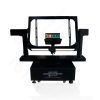
Goniophotometer for Traffic Signal Lamps (Economical Model)
LSG-1950S
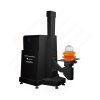
Goniophotometer for Airfield Lighting
LSG-1940
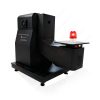
VAD Fire Alarm Visual Alert Device Goniophotometer
LSG-1930
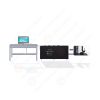
Compact Goniophotometer
LSG-1200A
LED Goniophotometer
LSG-1100
Near Field Moving Detector Goniophotometer
LSG-1900B
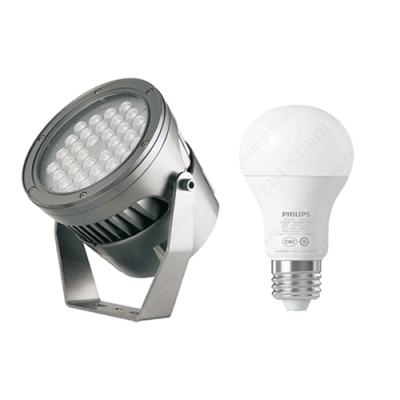 LEDs and Luminaire Test Solutions
 LM-79 and LM-80 Test Solutions
 LED Driver Test Solutions
 Household Appliances Test Solutions
 Mobile and Network Test Solutions
 Automotive Electronics Test Solutions
 Audio-Video and IT Test Solutions
 Cable and Wire Test Solutions
 Plugs and Sockets Test Solutions
 Power Switch Test Solutions
 Transformer Test Solutions
 Electric Toys Test Solutions
 Energy Meter Test Solutions
 Motor-Operated Tool Test Solutions
Select an organization
to browse standards
Abstract:Understanding what is artificial network in EMC testing is fundamental to conducting reproducible conducted electromagnetic interference (EMI) measurements. An artificial network, also known as a line impedance stabilization network (LISN), provides a standardized impedance interface between the power mains and the equipment under test (EUT).
This paper presents a technical analysis of artificial networks, covering operational principles, regulatory standards (CISPR 16-1-2, CISPR 15, EN55022), and engineering design considerations. The discussion includes impedance stabilization, isolation requirements, and coupling mechanisms. Furthermore, the LISUN LISN series is examined as a practical implementation, with models ranging from 5 A to 200 A, covering both single-phase and three-phase applications across the 9 kHz to 30 MHz frequency range. The paper concludes with selection guidelines for EMC test laboratories.
Conducted emissions testing is a critical part of electromagnetic compatibility (EMC) compliance for electronic products. However, the impedance of real-world power lines varies with location and time, making direct measurements unrepeatable. The artificial network—often referred to as a line impedance stabilization network (LISN)—solves this problem by presenting a defined, stable impedance to the EUT across the frequency range of interest (typically 9 kHz to 30 MHz). It also isolates the measurement from mains-borne noise and couples the interference signals to the EMI receiver. This paper explores the technical foundations of artificial networks, the relevant international standards, and the engineering considerations that ensure accurate and repeatable conducted emission measurements.
CISPR 16-1-2 is the basic standard that defines the performance requirements for artificial networks. It specifies the nominal impedance (50 Ω), impedance tolerance, isolation (insertion loss), and coupling characteristics. All compliant LISNs must meet these requirements over the designated frequency range. The standard also covers asymmetric artificial networks (AANs) and coupling/decoupling networks for emissions (CDNE) for higher frequencies.
Product families reference CISPR 16-1-2 for the measurement apparatus while setting their own emission limits. For example:
Artificial networks used for compliance testing must be validated against these standards; the LISUN LISN series explicitly states compliance with CISPR 16-1-2, FCC, EN55015, and EN55022.
The artificial network presents a 50 Ω impedance to the EUT across the measurement band. This is achieved by a V-network topology consisting of a series inductor (typically 50 μH or 250 μH) and shunt capacitors, terminated by a 50 Ω resistor at the measurement port. The inductor blocks RF noise from the mains while passing power frequency current; the capacitors provide a low-impedance path to ground for RF signals. The LISUN LISN series implements a 50 Ω/50 μH network (with an additional 5 Ω in single-phase models) to meet CISPR 16-1-2 requirements.
Isolation (or insertion loss) quantifies how well the network attenuates noise coming from the mains side. CISPR 16-1-2 mandates minimum isolation values (e.g., >60 dB above 150 kHz). High isolation ensures that ambient mains noise does not affect the measurement of EUT emissions. The filter network within the LISN, combining the series inductor and shunt capacitors, provides this isolation. Professional LISNs use carefully designed inductors (often air-core) to maintain linearity and avoid saturation at high currents.
The interference voltage generated by the EUT is coupled to the 50 Ω measurement port via a capacitive divider. The port must maintain precise 50 Ω impedance to match the EMI receiver input and prevent reflections. Coupling capacitors must have low equivalent series resistance (ESR) and inductance (ESL) to ensure flat frequency response. The LISUN LISN series is designed with high-quality components to preserve signal integrity across the 9 kHz–30 MHz band.
Designing a precision artificial network requires careful attention to component selection, mechanical layout, and grounding.
Inductors: Air-core inductors are preferred to avoid saturation and non-linearities, especially at high currents. Multi-layer air-core designs must minimize inter-winding capacitance to keep self-resonance above 30 MHz.
Capacitors: Metallized polypropylene film capacitors are commonly used for mains blocking due to low ESR and high insulation resistance. Coupling capacitors require stable dielectric materials (e.g., ceramic) with low voltage coefficient.
Grounding: Low-inductance bonding to the ground plane is essential. Chassis should have multiple ground studs, and braided straps are used instead of wire for connections.
Thermal management: High-current models (e.g., 100 A, 200 A) require adequate heat dissipation to prevent drift in component values.
The LISUN LISN series offers a range of artificial networks covering diverse testing needs, from low-power single-phase equipment to high-power three-phase industrial machinery. Table 1 summarizes the key specifications of the series, as provided in the product documentation.
Table 1. LISUN LISN Series Specifications
| Model | Max Current | Max Voltage | Phase Configuration | Frequency Range | Impedance Network |
| LISN-A | 5 A | AC/DC 250 V | Single-phase L/N/PE | 9 kHz – 30 MHz | 50 Ω / 50 μH + 5 Ω |
| LISN-C | 16 A | AC/DC 250 V | Single-phase L/N/PE | 9 kHz – 30 MHz | 50 Ω / 50 μH + 5 Ω |
| LISN-H | 36 A | AC/DC 250 V | Single-phase L/N/PE | 9 kHz – 30 MHz | 50 Ω / 50 μH + 5 Ω |
| LISN50A-T | 50 A*4 | AC 400 V / DC 600 V | Three-phase L1/L2/L3/N | 150 kHz – 30 MHz | 50 Ω / 50 μH |
| LISN100A-T | 100 A*4 | AC 400 V / DC 600 V | Three-phase L1/L2/L3/N | 150 kHz – 30 MHz | 50 Ω / 50 μH |
| LISN200A-T | 200 A*4 | AC 400 V / DC 600 V | Three-phase L1/L2/L3/N | 150 kHz – 30 MHz | 50 Ω / 50 μH |
All models comply with CISPR 16-1-2, CISPR 15, EN55015, EN55022, and FCC requirements. The LISN-C (16 A single-phase) is a common choice for general consumer electronics, while the LISN-T series addresses three-phase equipment such as industrial drives and large lighting systems. The frequency range for three-phase models starts at 150 kHz, consistent with typical conducted emission limits for such equipment. Each unit is supplied with a calibration certificate verifying its impedance and isolation characteristics.
When selecting an artificial network, engineers should consider:
The LISUN series provides a comprehensive portfolio, allowing laboratories to select the appropriate model based on these criteria. For example, a lab testing primarily single-phase IT equipment would find the LISN-C suitable, while a lab testing three-phase industrial products would opt for the LISN100A-T or LISN200A-T.
For those seeking clarity on what is artificial network in EMC, it serves as an essential tool for reproducible conducted emissions testing, providing a standardized impedance interface, isolation from mains noise, and proper coupling to the measurement receiver. Compliance with CISPR 16-1-2 and product-specific standards such as CISPR 15 and EN55022 is mandatory for valid test results. Engineering considerations—including inductor linearity, capacitor quality, grounding, and thermal management—directly impact measurement accuracy. The LISUN LISN series exemplifies a well-engineered product line that meets these requirements across a wide range of currents and phase configurations, supporting EMC laboratories in achieving reliable compliance data.
Tags:LISN-CYour email address will not be published. Required fields are marked *

 English
 中文简体
中文简体 English
 Русский
 Español
 Português
 Türkçe
 العربية
 Deutsch
 Polski
 Italiano
 Français
 한국어
한국어 ไทย
ไทย Tiếng Việt
 日本語
日本語