LM-79 Moving Detector Goniophotometer (Mirror Type C)
LSG-6000
High Precision Rotation Luminaire Goniophotometer
LSG-1890B
High Precision Rotation Luminaire Goniospectroradiometer
LSG-1890BCCD

Goniophotometer for Automotive and Signal Lamps
LSG-1950
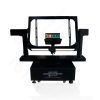
Goniophotometer for Traffic Signal Lamps (Economical Model)
LSG-1950S
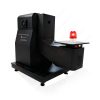
VAD Fire Alarm Visual Alert Device Goniophotometer
LSG-1930
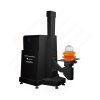
Goniophotometer for Airfield Lighting
LSG-1940
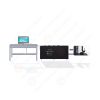
Compact Goniophotometer
LSG-1200A
LED Goniophotometer
LSG-1100
Near Field Moving Detector Goniophotometer
LSG-1900B
 LEDs and Luminaire Test Solutions
 LM-79 and LM-80 Test Solutions
 LED Driver Test Solutions
 Household Appliances Test Solutions
 Mobile and Network Test Solutions
 Automotive Electronics Test Solutions
 Audio-Video and IT Test Solutions
 Cable and Wire Test Solutions
 Plugs and Sockets Test Solutions
 Power Switch Test Solutions
 Transformer Test Solutions
 Electric Toys Test Solutions
 Energy Meter Test Solutions
 Motor-Operated Tool Test Solutions
Select an organization
to browse standards
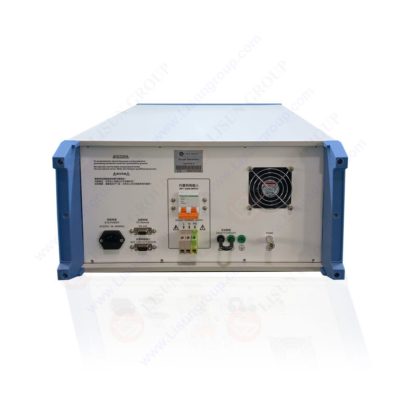
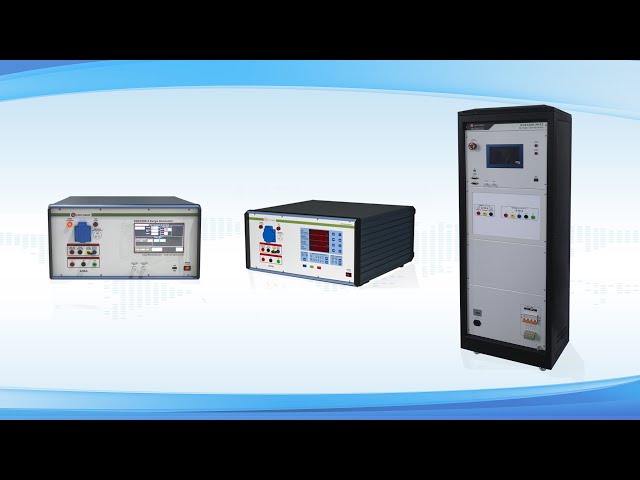
A recurrent surge generator is a device meant to repeat that pulses of a standardized surge consistently over sustained periods in order to test how the equipment performs during cumulative electrical stress. In contrast to single shot or low count immunity tests long length exposure to low count surges demonstrates degradation processes which are not apparent after hundreds or thousands of exposures. Such mechanisms are thermal fatigue of protection devices due to contact erosion insulation aging and control circuit latch up that cannot occur during short-term testing. To the laboratories and manufacturers with interest in endurance reliability, a recurrent method offers an informative result that would not be offered by the traditional surge test generator in the manual or low repetition mode.
Recurrent testing aims at consistency with time. The individual pulses need to take the desired amplitude and timing of the waveform when the system is still under way and operating in a safe and predictable way. To balance this, it is important that the generator architecture robust control systems, thermal and energy management have been accomplished.
Continuous pulse delivery commences with the charging subsystem. A recurrent surge generator should be able to fill up its energy storage items rapidly and reliably and without overheating and drifting. High voltage power supply has controlled ramp profiles to charge the capacitor banks in a controlled way without overstraining the components. Accuracy in regulation is very important as the accuracy builds up with long series of tests and results in a decrease in repeatability.
Strategies of energy recovery enhance stability and efficiency. Following every discharge residual power is damped using damping networks and controlled bleed paths in order to avoid uncontrolled oscillation. In sophisticated designs the part of energy that is not utilized is diverted in order to lessen the burden on the charging supply. The cycle time in this method is stabilized and it allows greater repetition rates without loss of fidelity of the wave forms.
It makes a difference in component selection. Capacitors should be able to withstand high current discharges frequently without capacitance loss or high equivalent series resistances. The pulse forming network has resistors and inductors which are designed to operate in continuous duty with thermal stability. Such decisions make the difference between a recurrent surge generator and a simple surge test generator which is planned to be used at intermittency only.
The quality of pulse has to be tolerated between the first pulse to the final pulse. Operations Recurrent operation perturbs the pulse shaping network by forces as heating and electromagnetic. Increase in temperature can cause a change in component values that changes rise time decay and crest factor. To combat this effect repeated generators use temperature compensated parts and designs with a low level of parasitic inductance and coupling.
Closed circuit surveillance increases permanence. A voltage and current sensors record every pulse that is delivered and compare it to the desired parameters. The system of controlling regulates the charging voltage timing or triggering conditions to overcome drift. The adaptive behavior also makes sure that long-duration tests do not need personnel intervention on a regular basis.
There is also the effect of switching technology on stability. Solid state or hybrid switching elements give high precision and repeatability in comparison to mechanical or spark based devices that wear out as they are used. In case of frequent use the capability to maintain billions of transactions without ruin in performance will be necessary.
Long duration surge testing is centered on automation. Repetition rate pulse count polarity sequencing and dwell intervals are determined by the control system. It has to be able to control duty cycle so that it does not overheat but still sustain throughput. Genius overscheduling injects rest periods in accordance with internal temperature responsiveness and component overrides.
A user defined profile enables the tests to be run overnight or during working days. Records within logging functions count parameters of the waveforms and any deviation. In case the limits are violated the system is able to halt in a safe manner and notify operators instead of passing on the out of tolerance pulses. This control level safeguards the equipment being tested as well as the generator.
Automation cannot be said to be independent of safety integration. Interlocks releasing monitoring and fault detection should operate continuously without interruption of delivering waveforms. The issue is to make sure that protective measures are not clipping or distorting pulses. A logic of recurrent generators Well designed recurrent generators execute the logic of safety in conjunction with pulse timing in such a way that protection is not visible to the test.
Continuous performance is supported by thermal management. Repeated chute produces heat in capacity device switches resistors and power supplies. During cooling, effective cooling techniques are integrated through forced air or liquid cooling and thermal zoning whereby the sensitive elements of measurements are not exposed to hot power areas. The sensor spread over the temperature all over the generator gives a feedback to the control system that allows proactive adjustment of duty cycle.
Mechanical endurance is not an exception. Electromagnetic forces are generated by high current pulses and strain conductors and joints. Mounting and vibration resistant connections are rigid bus structures that ensure alignment and minimize fatigue. These mechanical considerations avoid intermittent faults which would otherwise disrupt testing over long test campaigns.
Endurance is assisted by maintenance planning. Recurrent generators are fitted to that of the service intervals that are predictable and wearable elements can be replaced. The component health tracked diagnostics enable the laboratories to plan maintenance before the performance levels deteriorate.
The surge testing is performed over a long duration seldom in isolation. Recurrent generators are supplied with monitoring equipment that monitors the functional behavior of the equipment under test under exposure. By synchronizing the pulse delivery and the acquisition of data, the engineers can relate the failure or parameter drift to a particular number of surges or sequences.
The reliability analysis is aided by data management. Distribution of amplified magnitude of delivered amplitude versus time and current versus time trend plots ensure the stability of the generators. These records together with product performance records offer a basis on which to demonstrate endurance claims as well as certification or customer demands.
Laboratories tend to prefer systems that are able to blend with the existing EMC infrastructure. The recurrent surge generators and coupling networks track along with the accessories and software are designed by the suppliers like LISUN as matching long duration testing workflow. This compatibility at a system level ensures that there is less variability in the setup and confidence in results is increased.
A programmed charge pulse shaping smart control and efficient thermal control enable a recurrent surge generator to continuously deliver pulses over long periods of duration. It has these characteristics, which enable it to support compliant waveforms during thousands of cycles and safeguard the generator, as well as the equipment under test. Relative to a typical surge test generator that is optimized to be used on an intermittent basis recurrent systems offer a better understanding of endurance behavior and cumulative stress effects. When properly structured and used, they are an effective reliability-testing tool as well as a long time immunity guarantee.
Tags:SG61000-5Your email address will not be published. Required fields are marked *

 English
 中文简体
中文简体 English
 Русский
 Español
 Português
 Türkçe
 العربية
 Deutsch
 Polski
 Italiano
 Français
 한국어
한국어 ไทย
ไทย Tiếng Việt
 日本語
日本語