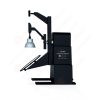
LM-79 Moving Detector Goniophotometer (Mirror Type C)
LSG-6000
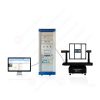
High Precision Rotation Luminaire Goniophotometer
LSG-1890B
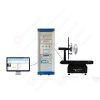
High Precision Rotation Luminaire Goniospectroradiometer
LSG-1890BCCD

Goniophotometer for Automotive and Signal Lamps
LSG-1950
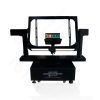
Goniophotometer for Traffic Signal Lamps (Economical Model)
LSG-1950S
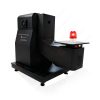
VAD Fire Alarm Visual Alert Device Goniophotometer
LSG-1930
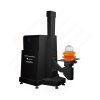
Goniophotometer for Airfield Lighting
LSG-1940
Compact Goniophotometer
LSG-1200A
LED Goniophotometer
LSG-1100
Near Field Moving Detector Goniophotometer
LSG-1900B
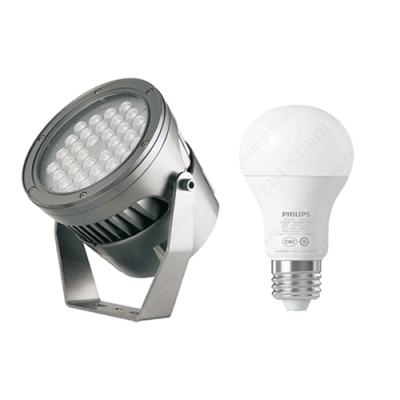 LEDs and Luminaire Test Solutions
 LM-79 and LM-80 Test Solutions
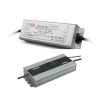 LED Driver Test Solutions
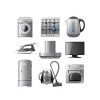 Household Appliances Test Solutions
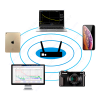 Mobile and Network Test Solutions
 Automotive Electronics Test Solutions
 Audio-Video and IT Test Solutions
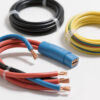 Cable and Wire Test Solutions
 Plugs and Sockets Test Solutions
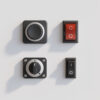 Power Switch Test Solutions
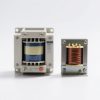 Transformer Test Solutions
 Electric Toys Test Solutions
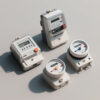 Energy Meter Test Solutions
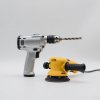 Motor-Operated Tool Test Solutions
Select an organization
to browse standards
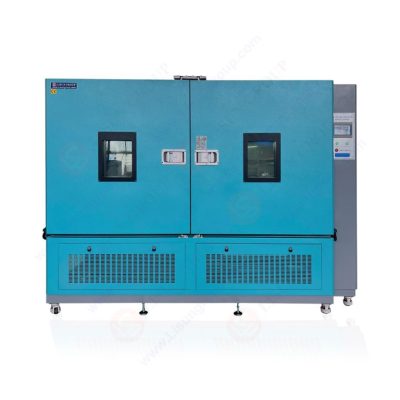
A mini temperature chamber has proved to be a necessity in laboratories requiring accurate thermal regulation and is less costly in footprint and at the same time consumes less power than a large system. During early validation, products are rapidly shrinking and the time taken to develop a product is bringing about faster product development due to the fact that engineers are testing modules more and not the complete product. Small scale environmental testing permits a tighter control of variables in a rapid iteration and parallel experiment in a small scale environmental chamber that would have been impractical in a full size environmental chamber. Reduction of size is not mere value proposition. It is the capability of taking the environmental stress much near the design-decision bench.
Mini chambers favour the transition between late stage qualification and early discovery. The early exposure to temperature extremes during the initial stages of the study exposes the component tolerance to drift thresholds and material incompatibilities prior to spreading to system level failures. It is rigorous and minimizes the time to market and rework.
The most widespread application is electronics development. Semiconductor packages Sensors oscillators batteries and connectors have temperature dependent characteristics which have to be characterized well. A mini temperature chamber can be used to assess the time stability of parametric drift leakage and cold start behavior with low stabilization times. Since the set point change is rapid due to low thermal mass which facilitates stepped stress experiment and finely grained mapping of performance to temperature.
Another area is the material testing. A screen can be done on polymers adhesives and elastomers to display embrittlement glass transition or creep when exposed to temperature. Mini chambers can be used in a manner that is very convenient in coupon testing where the volume is not really the best factor. Small coated panels are also used in coating and finishing labs to recycle the cycles to see a loss of adhesion due to cracking, or a change in color, before proceeding to do larger tests.
Mini chambers are utilized in calibration and metrology labs to test instruments and sensors dependencies of temperature. Conditioning of reference probes is done at fixed temperatures with measurements being performed in the external feedthrough. This use case enjoys the ability to have control stability and low spatial gradients that can be easily realized in a small enclosure.
This also benefits the education and research setting. Controlled experiments can be performed by students and researchers with minimal utilities involved in a safe way. The small size makes it easy to get into and includes professional quality control.
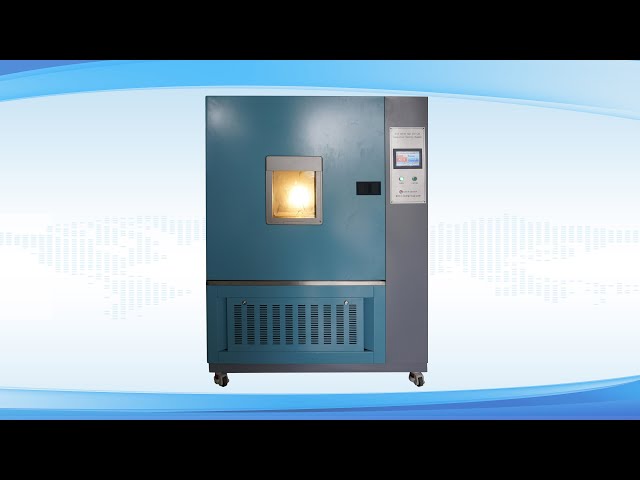
Small scale testing relies on control fidelity to discover its credibility. Small temperature chamber should provide setvalue fidel, consistent dwell and reliable ramp characteristics. Since it is small airflow design and positioning of the sensors is crucial. Poor circulation might give it local hot spots that would give false results. Quality designs incorporates streamlined airflow routes and several sensors to make uniformity in the utilizable space.
A characteristic strength is the stabilization time. An example is a specimen with low thermal inertia that can attain equilibrium rapidly thus reducing time of test and increasing throughput. Nonetheless, high speed changes may cause temperature shock accidentally. The test plans are to indicate ramp limits and stabilization criteria to ensure that the exposure is representative of the desired mechanism.
The quality of data enhances when the environmental records are differentiated with the measurements of the specimen. Newer mini chambers offer digital multimeters to record temperature profiles and electrical data or mechanical data. This concurrence enhances repetition and causality. It is also important that it is calibration ready. Sensors are to be available to be checked and managed in the long run.
One of the strengths of the mini temperature chamber is that it can be connected with bench top instruments. Insulated feedthroughs have the ability to connect oscilloscopes to power analyzers power impedance meters and data acquisition systems. This setup excludes sensitive electronics in the thermal envelope, and the specimen is under controlled stress.
Modularity is helpful to workflow performance. Engineers would be able to allocate a mini chamber to a project or group of components and carry out its testing 24 hours without sharing with large common chambers. A parallel testing will be possible that will speed up decision making. In cases where currently-operating organizations have a full size environmental chamber mini units, the mini units do not substitute it, but they see it as a complement in terms of screening and characterization tasks.
Productivity is improved also by software integration. Programmable profiles can be installed so that they can be left to run all night, or even for the weekend. Deviations are indicated through alarms. Normalized templates help in ensuring that the tests are performed at all sites and across teams.
A balance should be made in selecting a mini temperature chamber based on the control volume on range control and its service. Excessive specifications make it more expensive and at the same time, insufficient specification reduces utility. Before the procurement of cassettes, engineers must specify temperature extremes ramp requirements in terms of specimen size and interfaces needed. Even minor systems should be paid attention to safety (over temperature protection, and interlocks).
Maintenance and training is the key to long term operation. It is necessary to check seals fans and sensors on a regular basis. There is uniformity that is maintained by operator discipline in loading and design of the fixtures. Methods and layouts are documented to ensure repeatability and readiness to auditing.
Application support suppliers allow risk reduction. As an example, LISUN provides small temperature and environmental systems focused on integrating with the laboratory work process and control stable components-level testing. Selecting equipment that has the easily available calibration and service with responsive service assists in maintaining performance throughout years of service.
A mini temperature chamber permits suitable efficient and easy to access miniature scale environments testing in electronics materials calibration testing and research. Its strengths are rapid stabilization close control and easy association with bench instrumentation. Applied together in full size environmental chamber it moves testing in the earlier phases of the development cycle when knowledge can be most useful. Considering choice disciplined processes and trusted assistance, mini chambers produce high quality information which provides design consideration and enhances product strength.
Tags:GDJS-015BYour email address will not be published. Required fields are marked *

 English
 中文简体
中文简体 English
 Русский
 Español
 Português
 Türkçe
 العربية
 Deutsch
 Polski
 Italiano
 Français
 한국어
한국어 ไทย
ไทย Tiếng Việt
 日本語
日本語