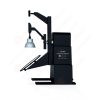
LM-79 Moving Detector Goniophotometer (Mirror Type C)
LSG-6000
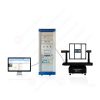
High Precision Rotation Luminaire Goniophotometer
LSG-1890B
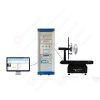
High Precision Rotation Luminaire Goniospectroradiometer
LSG-1890BCCD

Goniophotometer for Automotive and Signal Lamps
LSG-1950
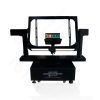
Goniophotometer for Traffic Signal Lamps (Economical Model)
LSG-1950S
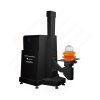
Goniophotometer for Airfield Lighting
LSG-1940
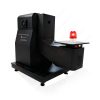
VAD Fire Alarm Visual Alert Device Goniophotometer
LSG-1930
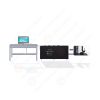
Compact Goniophotometer
LSG-1200A
LED Goniophotometer
LSG-1100
Near Field Moving Detector Goniophotometer
LSG-1900B
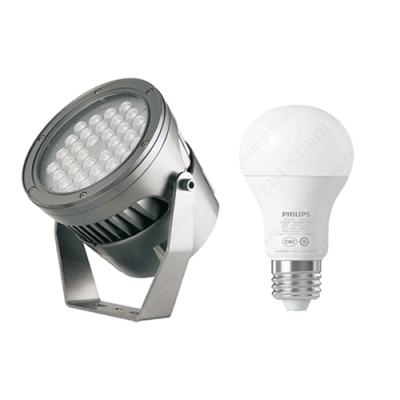 LEDs and Luminaire Test Solutions
 LM-79 and LM-80 Test Solutions
 LED Driver Test Solutions
 Household Appliances Test Solutions
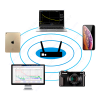 Mobile and Network Test Solutions
 Automotive Electronics Test Solutions
 Audio-Video and IT Test Solutions
 Cable and Wire Test Solutions
 Plugs and Sockets Test Solutions
 Power Switch Test Solutions
 Transformer Test Solutions
 Electric Toys Test Solutions
 Energy Meter Test Solutions
 Motor-Operated Tool Test Solutions
Select an organization
to browse standards
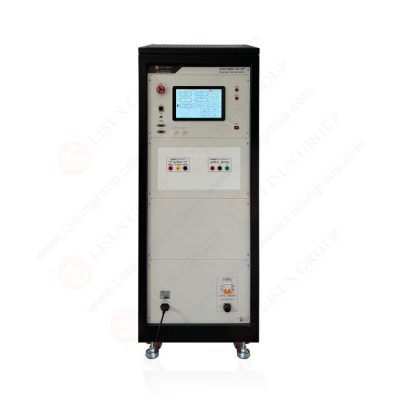
A lighting surge generator has characteristics that are intended to replicate high power transient overvoltage’s that take place as a result of lightning hits and extreme switching activities on power and signal lines. Although most generators declare equally high peak voltage ratings, the actual distinction between them is control system capability and the frequency of support of test waveforms. These considerations are what would define the ability of the generator to produce repeatable compliant pulses under varying loads and coupling factors of the standards. The buying process tends to be preoccupied with headline specifications or surge comparison tester price when in reality the accuracy of usability and flexibility is dictated by more in-depth design decisions.
The modern EMC and immunity laboratories need generators capable of more than just firing a specific pulse. They will have to switch to various product categories regulatory regimes and development processes. The knowledge of control features and range of waveforms differing across systems aids engineers in choosing equipment that will be pertinent as test specifications change.
The working component of a lightning surge generator is the control system. Low level units will use a rudimentary microcontroller logic with hard coded parameter input. Such systems are able to produce compliant pulses, although they need operator intervention and are only partially shielded against the possibility of setup errors. High resolution timing control and closed loop monitoring of current and voltage are added to advanced generators as well as industrial controllers.
The rise time, its amplitude polarity and repetition rate can be set accurately due to precise control. It also permits automated consequences of pulses based on standard established procedure. This brings about operator variability and enhance repetitiveness that is extremely regarded of comparative testing and compliance documentation. Feedback controlled control systems monitor the delivered waveform and change charging or triggering parameters to tolerate variation as uploading components become hot or load conditions vary.
The efficiency of testing is also related to the design of user interface. Touchscreen guided workflows save set-ups and prevent errors in configuration. Profiles on various standards are implemented using software and can be easily changed between test regimes without requiring reprogramming. This flexibility is faster in development environments and aids in the uniform implementation of approved methods in certification labs.
The other control system is safety integration. High energy surge testing is necessitated by interlocks monitoring of discharges and fault detection. These functions are coordinated by advanced controllers that do not modify the integrity of waveforms. This level of safety versus performance has become synonymous with a high end lightning surge generator.
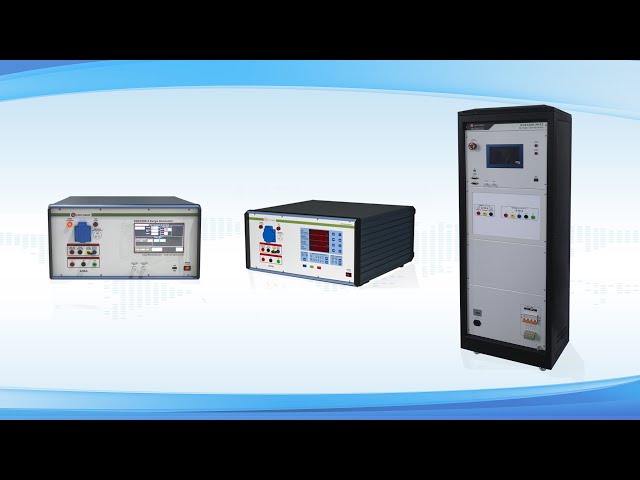
The scope of useful lightning surge generator can be defined by a variety of supported waveforms. To have representations of various phenomena, international standards define various shapes of surges. The most widespread one is the integration wave that has the rapid voltage front and a specified current tail. Other applications need the duration switching surges or reduced energy pulse to be repeated.
Legally Generators of narrow waveform range can meet one standard, but fail in tests which require variation. Broad waveform is a capability that needs a flexible pulse forming networks and configurable impedance paths. This increases the complexity but allows to test without extra equipment at power ports signal lines and at special interfaces.
Amplitude resolution and minimum step size are also encompassed in the waveform range. Fine resolution lets one do detailed margin testing as opposed to pass fail assessment. This capability is appreciated by laboratories that are involved in designing an optimization, as it shows sensitivity thresholds and is used to direct protection measures.
Research or customer specific applications are found and require the customization of waveforms. The complicated generators also allow managing rise time or tail duration within a range of acceptable values. The ability should be executed in a cautious manner to prevent non compliant deliverables. This is simplified by the manufacturers offering waveform validation tools and real time monitoring which help to ensure they are confident of the results.
Control features and range of the waveforms only make sense when the generator is able to maintain them when being loaded. The test equipment of the actual circuit has a complicated impedance which varies during the surge, owing to protective apparatus including nonlinear components and components. When a generator has poor energy capacity, a waveform will collapse or even become distorted upon being operated.
Monitoring control systems of delivered current and voltage assist with dealing with this difficulty. The generator checks the output performance by not using open circuit specifications and hence the desired stress reaches the device. This is particularly significant in high current applications when the protection devices bite.
Repetition rate and endurance are also dependent on energy capability. Intense high energy pulses generate stress and heat internal components. Long term accuracy is maintained by using control systems that regulate the cooling and duty cycle to protect the generator. These factors influence the cost hence they influence the surge comparison tester price but these factors also decide whether to have them to be used in continuous laboratory operation.
In contemporary testing settings, integrated systems are more acceptable as opposed to individual instruments. Lightning surge generators have an increasing interconnection to a data acquisition platform power analyzer and automated reporting tools. External communication protocols are supported by control systems that can be used to synchronize surge application and ensure that functional monitoring of the equipment under test.
It enhances the diagnostic value with this integration. Specific surge parameters can be associated with performance degradation or failure events by the engineers. Waveform Data and test sequence Automated, waveform data and test sequences are logged, audit ready, and automated, thereby simplifying report generation.
Equipment eco systems are also important. The complementary EMC equipment is frequently also provided by an identical supplier to laboratories so as to provide compatibility and uniform control philosophy. The suppliers like LISUN construct surge generators and also the coupling network monitors and software, which are integrated to form a single system. This minimizes risk of integration and accelerates configuration.
Price of a systems surge comparison tester When comparing systems surge comparison tester price is commonly referred to as a shorthand, meaning capability. Price however is not just reflection of peak voltage. It embraces control sophistication waveform bendability energy capacity gauge accuracy automation and support foundation. The low priced units might be adequate to provide basic screening, but in many cases, the control features are not provided that will result in repeatability and compliance under varying conditions.
Value assessment must hence take into account total cost of ownership. The time saved in automation led to retesting that was caused by the stability of control and confidence during the audit process all are long term value. A well-equipped (advanced control and wide waveform range) generator is frequently a productive and credibility dividend.
A lightning surge generator understands itself greatly in abilities based upon its features of control system and range of waveforms it can assist. High control accuracy allows repeatable testing with fine control and wide waveform coverage allows us to be relevant between standards and applications. Makes these features become real world deliveries in terms of stress delivery in terms of load and energy capacity. Although the surge comparison tester price effects buying behavior it ought to be balanced with the prospect of control sophistication integration and sustainability within the indefinite operational value. The knowledge of these differentiators will enable the laboratories to be able to choose to use surge generators that will help them abide by the existing requirements of compliance but also stay prepared to meet the testing requirements that might arise in the future.
Tags:SG61000-5Your email address will not be published. Required fields are marked *

 English
 中文简体
中文简体 English
 Русский
 Español
 Português
 Türkçe
 العربية
 Deutsch
 Polski
 Italiano
 Français
 한국어
한국어 ไทย
ไทย Tiếng Việt
 日本語
日本語