LM-79 Moving Detector Goniophotometer (Mirror Type C)
LSG-6000
High Precision Rotation Luminaire Goniophotometer
LSG-1890B
High Precision Rotation Luminaire Goniospectroradiometer
LSG-1890BCCD

Goniophotometer for Automotive and Signal Lamps
LSG-1950

Goniophotometer for Traffic Signal Lamps
LSG-1950S

VAD Fire Alarm Visual Alert Device Goniophotometer
LSG-1930

Compact Goniophotometer
LSG-1200A
LED Goniophotometer
LSG-1100
 LEDs and Luminaire Test Solutions
 LM-79 and LM-80 Test Solutions
 LED Driver Test Solutions
 Household Appliances Test Solutions
 Mobile and Network Test Solutions
 Automotive Electronics Test Solutions
 Audio-Video and IT Test Solutions
 Cable and Wire Test Solutions
 Plugs and Sockets Test Solutions
 Power Switch Test Solutions
 Transformer Test Solutions
 Electric Toys Test Solutions
 Energy Meter Test Solutions
 Motor-Operated Tool Test Solutions
Select an organization
to browse standards
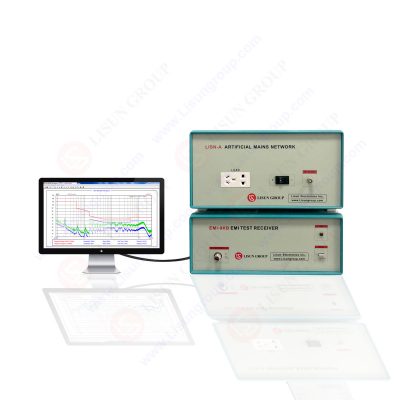
Instrumentation alone does not give an accurate EMI EMC measurement. It is the sum total of a well-adjusted arrangement with the electromagnetic environment working jointly with the test configuration and operator discipline. Minor differences in grounding cable routing or placing equipment can change the results by several decibels that is usually the difference separating a pass and a failure. Electronics products are increasingly faster, becoming smaller, becoming more integrated and this means that the error margin in EMC measurements is reduced.
There are also several types of tests done in modern laboratories in the same area such as conducted emissions radiated emissions immunity and ESD testing. Both fields have special types of stressors and background sources of noise that will pollute any other measurements without careful management of the entire set-up. The first step to enhance accuracy and repeatability is to have a clear understanding of the source of measurement uncertainty.
The basis of stable EMI EMC measure is grounding. Imprecisely defined ground reference has uncontrolled current paths which directly relate to measured noise levels. All significant test elements such as the equipment under test measurement receivers LISN units transient limiters and other auxiliary test equipment should have a common plane of reference.
The reference ground plane The reference ground plane is a continuous conductive surface that is bonded to protective earth at one defined point. This reduces the ground currents which corrupt measurements. Bonding connections are to be large with low inductance with straps of copper and not thin wires. The contact points need to be clean and mechanically fastened since oxidation or loose elements raise high-frequency impedance.
In ESD testing, grounding is even more important since discharge currents are going to find the most low impedance route to earth. In case of the ground plane being uneasy, ESD can introduce noise to the surrounding EMI measuring devices either to cause drift or short-term harm. Isolation of ESD test conditions or performance of strict sequencing in ESD and EMI measurements can help maintain accuracy.
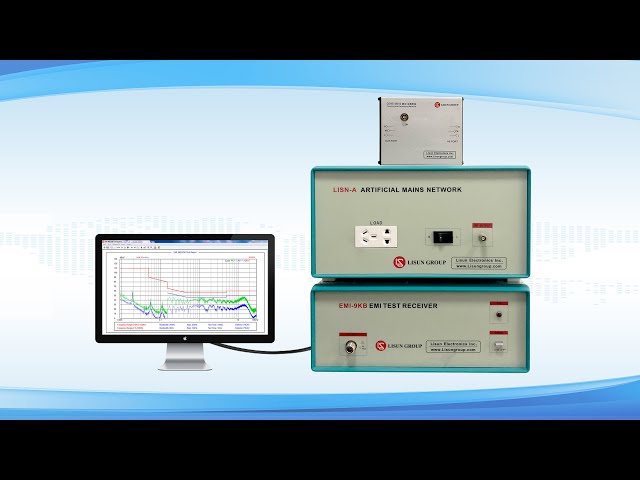
One of the most overlooked aspects in the accuracy of EMC is cable routing. Each cable is an antenna and a path of couple. Cables that are not handled properly add randomness which hides the true product behavior. To measure EMI EMC cables may be as short as is practicable and must be taken as nearest to a reference ground plane as practicable and laid neatly between tests.
The power leads and control lines are to be segregated in order to decrease cross coupling. In case there is some inevitable crossing, it must be made at right angles. Coiled cable length must never be made loose since they induce inductive loops. These are to be folded in small shapes and laid flat on the ground plane when there is any slack that is needed.
The integrity of connectors does count as well. Connectors that are worn, oxidized or both, elevate contact resistance and permit leakage of high frequency energy. Maintain accuracy in measurements by ensuring to inspect and replace important cables on a regular basis. It is a topic of particular concern to this field when the same laboratory is used to measure EMI EMC, as well as ESD, since connector degradation accelerates due to ESD phenomena.
The physical layout of the equipment has a strong influence on the stability of measurements. Computers that power supplies and governments of measurement receivers emit a specific amount of electromagnetic noise. When such devices are placed too near the test set up, they enhance noise picking up and increase the actual noise floor.
Where possible sensitive receiver should be away of high current equipment, shielded. Metal racks attached to the ground plane are used as partial shields and decreasing the coupling. Lighting systems particularly those involving electronic ballasts or LED drivers can seek noise into this and is best considered environment in the test.
The political climate like temperature and humidity also affect accuracy. Temperature drift influences receiver stability and cable impedance whereas humidity influences surface conductivity and behavior of the statical charges. Constant environmental conditions decrease variation especially when measurements are carried out over a long period or days.
Calibration is important to ensure that the instruments report the right values and verification to determine that the whole chain of measurements acts like it is assumed to act in the actual test environment. Calibration of receiver LISN units antennas and probes should be done regularly but they should be accompanied by periodic checking of the systems.
Background noise scans are a background of the laboratory. These scans are to be compared by same equipment with the device under test disconnected and scanned after some time. An increased background noise floor may be a good indication that grounding degradation cable may be damaged or that a new noise source has been added to the lab.
The other good verification technique is reference signal injection. Introduction of a known signal into the measurement chain can ensure that amplitude accuracy and detector behavior is correct. This check could be done prior to and after major test campaigns to enhance the confidence in reported results.
Application guidance and reference accessories are frequently supplied by the suppliers like LISUN to maintain uniform calibration and verification of different setups of EMI EMC measurements.
Today, most EMC laboratories do not do a single type of test. ESD testing and conducted and radiated emissions immunity testing commonly have common infrastructure. The degradation of accuracy due to these tests undermining precautionary interactions between tests.
The residual charge and disturbed grounding conditions occurring after ESD testing may still persist. The ground plane and connections must be checked previous to going back to EMI EMC measurements setups and background noise must be reevaluated. Similarly, immunity tests which place RF fields with high power can place stress on the cables and connector to change their behavior.
These risks are reduced through scheduling and procedural separation. There should be clear established configuration of the setup of each type of test with documented layouts so that transitions do not provide a hidden variability. Photographic documentation and checklists can be used to restore the proper configuration with certainty by operators.
It requires repeatability in accurate EMI EMC measurement. Recording set up information such as types of cables used, length of cables used, location where the routing equipment is installed and the grounding points enables duplicate measurements after weeks or even years have passed. This has been of great significance especially in compliance testing where auditability is needed.
The uniformity is enhanced by operator training. The reason behind each rule of setup will lead to compliance and not experimentation. When failed or borderline cases are regularly reviewed, an institutional knowledge is formed and the most frequent sources of error are identified.
Automation also increases repeatability where necessary. Scans are automated and test scripts are standardized such that operator induced variability is minimized, dwell times and detector settings are uniform.
Enhancing the precision of EMI EMC measurement is a systems level endeavor as opposed to a one-off adjustment. Solid grounding regulated equipment location and severe calibration contributes to reliable outcomes. Consciousness to the communication with ESD testing and other EMCs operations also safeguard measurement integrity. Through these setup principles used throughout and with sound equipment and advise of providers such as LISUN laboratories stand a good chance of greater confidence repeatability and credibility of their EMC measurement.
Tags:EMI-9KBYour email address will not be published. Required fields are marked *

 English
 中文简体
中文简体 English
 Русский
 Español
 Português
 Türkçe
 العربية
 Deutsch
 Polski
 Italiano
 Français
 한국어
한국어 ไทย
ไทย Tiếng Việt
 日本語
日本語