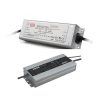
LM-79 Moving Detector Goniophotometer (Mirror Type C)
LSG-6000
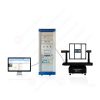
High Precision Rotation Luminaire Goniophotometer
LSG-1890B
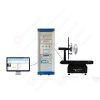
High Precision Rotation Luminaire Goniospectroradiometer
LSG-1890BCCD

Goniophotometer for Automotive and Signal Lamps
LSG-1950
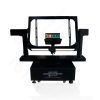
Goniophotometer for Traffic Signal Lamps
LSG-1950S
VAD Fire Alarm Visual Alert Device Goniophotometer
LSG-1930
Compact Goniophotometer
LSG-1200A
LED Goniophotometer
LSG-1100
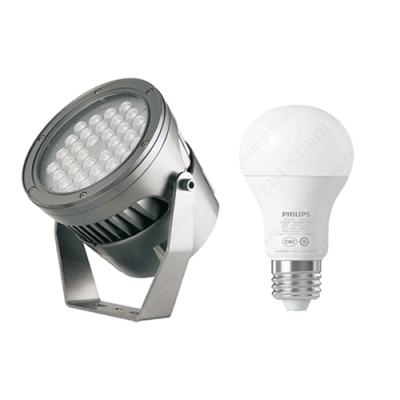 LEDs and Luminaire Test Solutions
 LM-79 and LM-80 Test Solutions
 LED Driver Test Solutions
 Household Appliances Test Solutions
 Mobile and Network Test Solutions
 Automotive Electronics Test Solutions
 Audio-Video and IT Test Solutions
 Cable and Wire Test Solutions
 Plugs and Sockets Test Solutions
 Power Switch Test Solutions
 Transformer Test Solutions
 Electric Toys Test Solutions
 Energy Meter Test Solutions
 Motor-Operated Tool Test Solutions
Select an organization
to browse standards
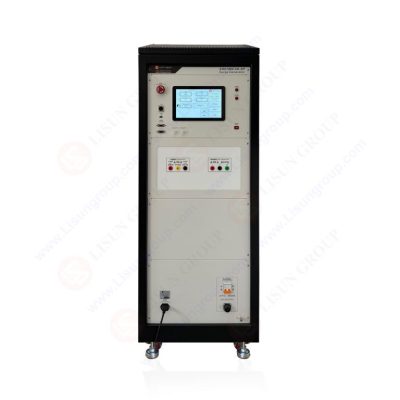
An EM Test surge generator is special equipment which replicates the high-energy transient overvoltage’s a product is likely to experience in the field enabling engineers to conduct consistent surge immunity testing. These generators are intended to model two physically different types of transient events, the high-voltage combination wave, which is fast, short lived and high-voltage and the high-current short-duration pulse, which is one-second time scale of direct lightning strikes or heavy switching transients on power lines. The EM Test surge generator by generating standardized pulses with very well-regulated amplitude, rise time and decay properties allows the laboratory to load components and complete electrical component or system under conditions that closely resembles real-world electrical hazards but still maintains traceability and repeatability.
The core part of the surge generator is a pulse form/discharge architecture that transforms a stored electrostatic energy into the desired transient waveform. The energy is stored in a high-voltage charging step which charges a combination of capacitor banks up to an exact voltage. When the charge stored is discharged by driving a controlled switching element, historical spark-gated, and solid-state high-voltage switch, the charge is delivered into a pulse-shaping network. That network represented a carefully crafted network of capacitances, inductances and resistances which determines the time response of the output. Photometric representation of the waveform as defined by industry standard is typically the waveform of open-circuit voltage, often given as 1.2/50 µs (rise time 1.2 µs to crest and 50 µs to half-value decline) or the waveform of short-circuit current, often given as 8/20 µs. The time constants are not arbitrary but were set to provide a representation of the physics of lightning induced and switching transients and form a basis on which behavior of various devices in individual test laboratories and products could be compared.
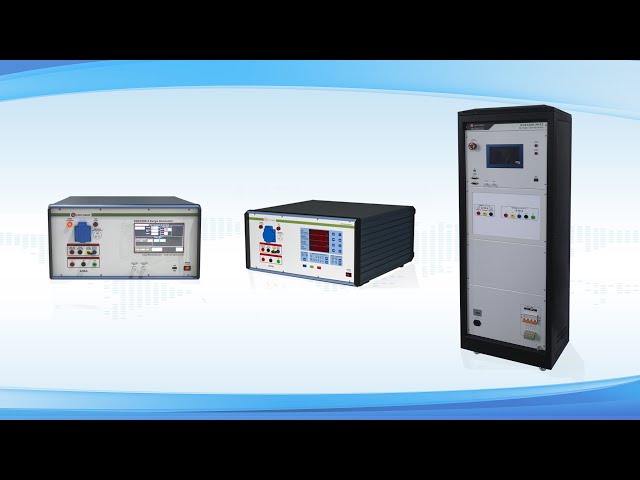
To produce an attenuated combination wave, two connected pulses are needed; the high-voltage open-circuit step, necessary to stress insulation and junctions of semiconductors, and a high-current component, which simulates the discharge path of a lightning stroke. The internal impedance of the surge generator and the network of external coupling are the two factors that determine how the stored energy will be divided between voltage and current at the equipment under test (EUT). Coupling networks (either coupling/decoupling networks, or mains coupling line coupling modules) offer the desired application route to the surge and isolate the generator of other wiring, of the test region. The reference return path of the surge also gets established by these networks, thus, having a significant impact on the test reproducibility. Adequately designed coupling networks eliminate unwanted reflections or the ground-loop artifacts which would otherwise cause a change in stress on the EUT.
The operation of the generator includes measure and monitor accuracy. Higher dV/dt, high peak current voltage dividers and current probes are used to measure the true waveform that flows to the EUT. The generator offers metrology channels, which match trigger timer, amplitude dispatched, polarity and energy to the available device reactions. Current EM Test equipment usually incorporates inboard digitizing oscilloscopes and programs that capture waveforms, verify compliance to the target (target) 1.2 /50 and 8 /20 envelopes, and generate test reports that can be used as quality compliance evidence. Such measurement systems also assist repeatability checks and uncertainty study, and therefore, engineers possess a chance to separate hardware failures due to inherent weakness in the device and issues with the test arrangement.
The topology of the test set-up is significant in the degree of the simulated transient representativeness. In the case of power ports, surge is typically inducted between conductors and earth and between conductors; in case of signal and data port, special, specially configured networks are required to induce common-mode and differential-mode surge. Grounding straps schemes and return path The reference ground plane, grounding straps and the real physical path of the cables constitute a portion of the return path and may radically change the localized electric and magnetic fields that the EUT is exposed to. It would follow that certified laboratories pay much attention to layout, cable run length, and continuity of grounding when setting up. Discharge paths and safety interlocks are used to get rid of residual charge in the system between pulses to keep the operators and instrumentation safe.
Surge testing also indicates realistic time and polarity variations in addition to the naked physics. Standards are prescriptions of the application of negative and positive polarity surges and they are prescriptions of the repetition rate, pulses, and the number of intervals between the pulses in order to mirror realistic exposure in a profile. The importance of each of these parameters lies in the tendency of semiconductor devices as well as gas discharge elements to be sensitive to polarity or cumulative energy in an asymmetric manner. Engineers test degradation when there is a repeated surge of devices in production and development to know not only instantaneous failure modes but also the wear out processes as a result of age.
An alternative factor that has been complementary of modern surge generators is that they can be tested to a variety of energy levels and waveforms. Although standardized 1.2/50 and 8/20 envelopes continue to serve as the reference point to compliance testing based on IEC-type standards, more advanced test requirements may demand custom waveforms or more energetic pulses in order to study resilience or model atypical installation configurations. The pulse-forming network and switching technology of the generator can ascertain its ease of configuration to such variations. The rise time, amplitude and repetition can be controlled with high-fidelity, allowing researchers to explore this relationship between failure threshold and surge protection devices, validate surge protection devices, and create better surge arresters and filter networks.
Some surges generator systems are often used in conjunction with other EMC and environmental test systems in labs to investigate system-level interactions. As an example, where surge tests are concerned, a couple of cycles on temperature or vibration are used to reveal complex chains of failures that may otherwise be unseen when using single-stressor testing. Complementary products- Suppliers of complementary equipment, e.g. coupling networks, data acquisition systems, current probes, etc. Equipment manufacturers and test houses have been known to procure complementary equipment, usually via specialised suppliers. One of such suppliers is LISUN, which offers numerous photometric and electrical test accessories, which when combined with surge generators form a complete test cycle; their measurement devices and mounts can assist in mounting, measuring and recording experimentation of surge immunity. Reliable peripheral equipment is a method used to improve the consistency in set up as well as quickens the way towards a certified product like prototype.
Finally, an EM Test surge generator models transient overvoltages with a high level of energy, transforming stored electrostatic energy into carefully shaped impulse waveforms, and delivering those impulses to engineered coupling networks and return paths and providing accurate measurement and monitoring to ensure that desired stress is achieved. The seriousness of the design of the generator and the attention used in testing arrangement determine the degree to which the laboratory situational recreates what can be found in the real aspect of a threat. To product designers, data on the surge immunity tests are used to make protective topology decisions, select surge arrestors, enhance filter design and layout, all leading to the minimization of field failures and long life span.
Tags:SG61000-5Your email address will not be published. Required fields are marked *

 English
 中文简体
中文简体 English
 Русский
 Español
 Português
 Türkçe
 العربية
 Deutsch
 Polski
 Italiano
 Français
 한국어
한국어 ไทย
ไทย Tiếng Việt
 日本語
日本語