LM-79 Moving Detector Goniophotometer (Mirror Type C)
LSG-6000
High Precision Rotation Luminaire Goniophotometer
LSG-1890B
High Precision Rotation Luminaire Goniospectroradiometer
LSG-1890BCCD

Goniophotometer for Automotive and Signal Lamps
LSG-1950
Goniophotometer for Traffic Signal Lamps
LSG-1950S
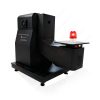
VAD Fire Alarm Visual Alert Device Goniophotometer
LSG-1930
Compact Goniophotometer
LSG-1200A
LED Goniophotometer
LSG-1100
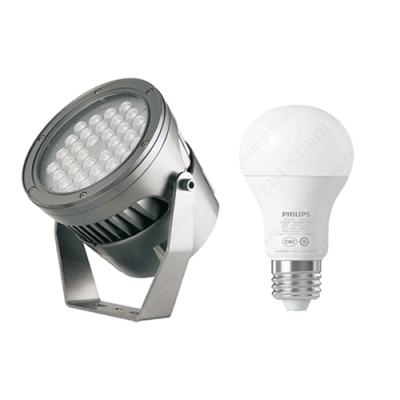 LEDs and Luminaire Test Solutions
 LM-79 and LM-80 Test Solutions
 LED Driver Test Solutions
 Household Appliances Test Solutions
 Mobile and Network Test Solutions
 Automotive Electronics Test Solutions
 Audio-Video and IT Test Solutions
 Cable and Wire Test Solutions
 Plugs and Sockets Test Solutions
 Power Switch Test Solutions
 Transformer Test Solutions
 Electric Toys Test Solutions
 Energy Meter Test Solutions
 Motor-Operated Tool Test Solutions
Select an organization
to browse standards
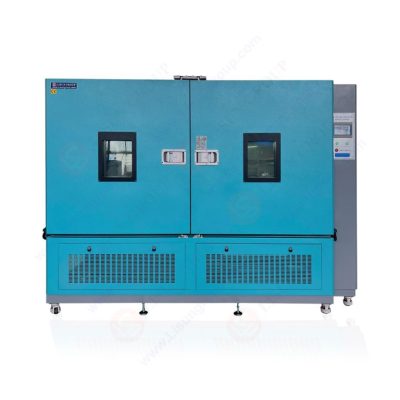
Knowledge of the behavior of materials to repetitive temperature variations is vital in the design of durable products used in electronics, automobile, aerospace, and manufacturing industries. A temperature test chamber gives a controlled condition to expose materials to cyclic thermal stress and show the variation of mechanical, electrical, and structural characteristics over a period of time. A high temperature test chamber is essential when in a set up being tested with a high level of exposure to determine the degradation mechanisms that would not manifest themselves at a different level of thermal extremes. These tests enable engineers to make predictions on long term material performance in real operating environments as opposed to using assumptions which are based on theory only.
The thermal cycling tests mimic the expansion and contraction processes that happen during the daily operation, season and on-off power processes. Unless thermal cycling studies are under controlled conditions, concealed failure modes including cracking, delamination and degradation of mechanical strength may go unnoticed until products are put in the field.
Thermal cycling is aimed at increasing the aging of materials by exposing specimen to temperature extremes in a repeated manner. In contrast to steady-state exposure, cycling produces mechanical stress due to the disparity in how the materials with various thermal coefficients expand.
The temperature test chamber allows regulating the lowest and the highest temperatures, dwell times, and transition rates carefully. Such parameters are used to recreate real-life temperature changes that occur during the operation, transportation or storage of a product.
Since thermal cycling usually involves very different behavior of materials compared to behavior at constant temperature. There are those materials that retain their stability at high temperature yet fail when subject to expansion and contraction.
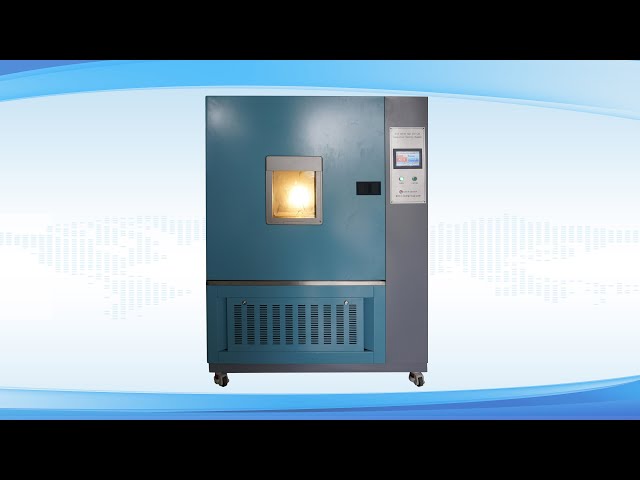
Thermal cycling tests rely on proper temperature regulation. Even slight variations of target temperatures can cause modification of material response and invalid results. A temperature test chamber should be able to operate with a tight control of setpoints and homogenous temperature distribution over the test volume.
Stability is particularly valued when dwell periods become involved where materials are maintained at a certain temperature so as to enable the redistribution of internal stress. When temperature varies between these stages the stress patterns will not necessarily be identical with actual operating conditions.
Chamber insulation and heating system design are significant factors in keeping the stability in the case of high temperatures. A high temperature test chamber should be able to provide sustained heat but not with too much overshoot or materials should have controlled and repeatable exposure.
Temperature test chambers made by manufacturers like LISUN have an elaborate control system that facilitates accurate thermal cycling outline, even in prolonged test cycles.
Ramp rate is used to describe how our temperature rises or falls between the high and low temperature levels. This is a direct influence of material stress. Quick transitions cause stiffer transitions, whereas slower transitions offer the resemblance of gradual environmental changes.
Application-specific ramp rates are applied in the thermal cycling. Moderate ramp rates might be used to model power cycling behaviour in electronics, and more aggressive transitions may be another model to aerospace materials to model the behaviour at altitude.
A temperature test chamber should be able to perform programmed ramp rates correctly and repeatably. Change in transition speed may drastically change the distribution of stress in the materials hence resulting in poor or inaccurate results.
With Thermal cycling, one can see various behaviors in material that cannot be enjoyed in a static test. Fatigue cracking is a phenomenon that may occur to metals as a result of repeated expansion and contraction of metal. Polymers can become soft, hard or they can lose their elasticity with time. Composite materials can form internal delamination where the layers do not react to temperature variations.
The materials of electrical systems like insulation, solder joint and adhesives are very sensitive to thermal cycling. Variations in conductivity, insulation resistance, and bond strength are not only usually progressive in nature, but also do not manifest themselves until numerous cycles.
Engineers can track material performance during intervals in cycling to determine trends in degradation and provide better estimates of service life.
Correct thermal cycling will be the product of proper specimen preparation. Materials shall be representative of the actual conditions of application such as surface finish, thickness and assembly configuration.
The positioning within the temperature test room should expose evenly. Sample specimen should not act as an obstacle to the flow of air or to protection against changes in temperature. Misalignment may cause a localized hot or cold area that causes distortion of result.
In high temperature testing fixtures and supports must be able to sustain heat at elevated temperatures and not affect the behavior of the specimen. Contamination or thermal interference is usually avoided using non-reactive materials.
The thermo-cycling research is based on the constant (or periodical) observation of material characteristics. Measurements will be possible in dimensional changes, mechanical strength, electrical performance or the appearance of cracks and deformation.
To correlate thermal history with changes being observed of the material, a temperature test chamber with data logging can be used. Such traceability is necessary in comparison of various materials or design improvement validation.
Regular data gathering aids in statistical analysis and thereby, trend identification enhances confidence in the projection of long-term performance.
Numerous material failures are not reached until many hundreds of thermal cycles or thousands of thermal cycles have taken place. An adequate temperature test chamber shall maintain stable and long-term operation without drift or instability.
The accelerated methods in aging apply a greater strain of temperature extremes to modulate longer service life within the realistic test durations. Although acceleration saves test time, it should be used with caution not to cause artificial breakdown processes.
Long-duration cycling test-designed high temperature test chamber designs are designed so that materials are subjected to uniform stress in the entire duration of the test to maintain results validity.
Thermal cycling studies aim to have the final objective of being correlated to real-world behavior. Test profiles are created on the field data, requirements and on the basis of the past failures.
Through matching the temperature ranges, dwell times, and ramp rates with field practical use, engineers assure that laboratory data is accurate in the field. The described correlation permits making informed choices based on selection of materials, safety margins, and warranty periods.
This alignment is done through temperature tests chambers that create the controlled environment necessary to produce this alignment in a reliable and repeatable fashion.
The use of thermal cycling research is during its product lifecycle. They would learn the combinations of materials during early development that would end up being premature. In the process of validation, they ensure that the materials used are substantial to the need of long-lasting. They facilitate the adherence to industry and customer requirements in the process of qualification.
Engineered temperature test chamber fits perfectly in this process and provides congruent and defendable data at each stage.
Learning material behavior under thermal cycling is vital towards predictive reliability in temperature sensitive applications in the long term. A temperature test chamber offers the accuracy, consistency and flexibility to impose realistic cyclic thermal stress whereas a high temperature test chamber permits testing under severe exposure conditions. Thermal cycling methods are used to unravel the mechanisms behind the degradation which otherwise would have been obscured by long-term stability, controlled ramp rates, and precise temperature control.
Having state-of-the-art chamber solutions like LISUN, the laboratory is able to undertake credible thermal cycling research to assist in the selection of materials, optimization of designs and establishment of durability. The approaches make thermal stress testing an effective instrument to establish product functionality in actual running conditions.
Your email address will not be published. Required fields are marked *

 English
 中文简体
中文简体 English
 Русский
 Español
 Português
 Türkçe
 العربية
 Deutsch
 Polski
 Italiano
 Français
 한국어
한국어 ไทย
ไทย Tiếng Việt
 日本語
日本語