LM-79 Moving Detector Goniophotometer (Mirror Type C)
LSG-6000
High Precision Rotation Luminaire Goniophotometer
LSG-1890B
High Precision Rotation Luminaire Goniospectroradiometer
LSG-1890BCCD

Goniophotometer for Automotive and Signal Lamps
LSG-1950
Goniophotometer for Traffic Signal Lamps (Economical Model)
LSG-1950S
VAD Fire Alarm Visual Alert Device Goniophotometer
LSG-1930
Goniophotometer for Airfield Lighting
LSG-1940
Compact Goniophotometer
LSG-1200A
LED Goniophotometer
LSG-1100
Near Field Moving Detector Goniophotometer
LSG-1900B
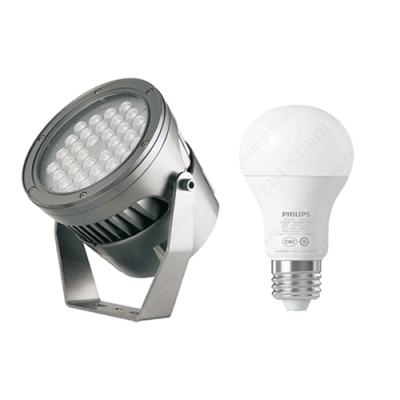 LEDs and Luminaire Test Solutions
 LM-79 and LM-80 Test Solutions
 LED Driver Test Solutions
 Household Appliances Test Solutions
 Mobile and Network Test Solutions
 Automotive Electronics Test Solutions
 Audio-Video and IT Test Solutions
 Cable and Wire Test Solutions
 Plugs and Sockets Test Solutions
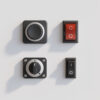 Power Switch Test Solutions
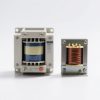 Transformer Test Solutions
 Electric Toys Test Solutions
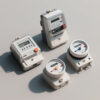 Energy Meter Test Solutions
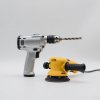 Motor-Operated Tool Test Solutions
Select an organization
to browse standards
Automobile parts have to be subjected to extreme environmental conditions that include road salt, moisture, changes in temperature, and factory pollutants. In order to achieve an effective long term durability, manufacturers use a salt spray test chamber whereby they recreate the corrosive environments in controlled laboratory conditions. The salt spray fog test is very popular during automotive qualification tests because it tries to recreate environments of salt-contaminated atmospheres that hasten the corrosion processes that are normally experienced during actual driving conditions. It is important that proper chamber requirements in meeting are made so that corrosion performance data would represent realistic field exposure as opposed to unrealistic or unrepresentative laboratory conditions.
Corrosion protection of the automotive industry does not confine to just the visible body panel. Structural parts, fasteners, electronic cases, and brake systems and underbody parts are all components that demand tested resistance to salt-based corrosion. Properly constructed and functioning salt spray test chamber gives engineers the ability to test protective and surface treats, and choices of materials, repeatedly, and reliably, as well as traceable.
The automotive corrosion tests are interested in determining the performance of materials and protective systems under the condition of extended salt environments. Severe air exposure like road de-icing salts, coastal weather and driving conditions in winter are the conditions that cause the greatest corrosive exposure, which can considerably decrease the life of the vehicle unless mitigated.
The salt spray fog test hastens these conditions by keeping up a continuous spray of saline which weighs salt fairly evenly on the test specimen. Such controlled exposure indicates a breakdown of coating, corrosion of substrate, blistering, and underfilm attack in a fraction of the time that natural weathering takes place.
An automotive salt spray test chamber should be able to reproduce these conditions every time. Unless there is stringent management on the parameters of tests, corrosion behavior can be overstated or understated resulting in inaccurate duration tests and incorrect design judgment.
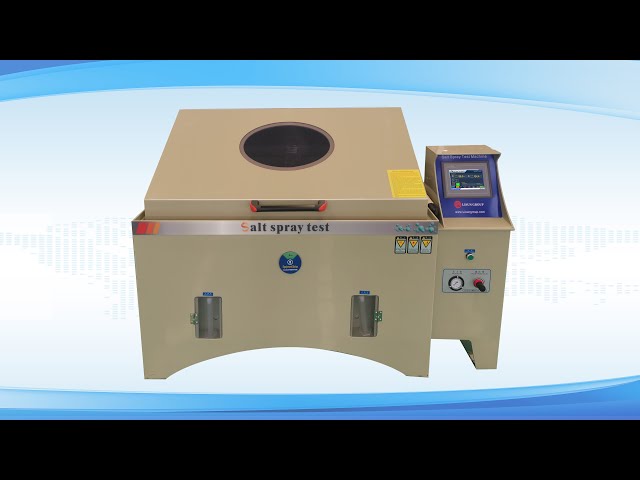
Correct corrosion assessment is based on precise environment management of the salt spray test chamber. One of the most critical requirements is temperature stability because the reaction of corrosion is temperature-sensitive. Automotive standards normally provide a temperature range of operation which is quite narrow to provide consistency in salt deposition and electrochemical activity.
It is also important to have uniform distributions of mists. The salt spray mist test should be able to produce a fine sprayed mist that spreads uniformly to display all the available surfaces without favoring any direction.
The airflow in the chamber has to aid in suspension of mist without causing turbulence to carry away salt on the surfaces of the specimens. The design of the chamber shall ensure that the mist is generated, air flows and condensation are controlled in order to preserve a constant corrosive environment during the time of the test.
Contemporary chamber designs made by manufacturers including LISUN are aimed at the optimization of the airflow geometry and nozzle arrangement to obtain the uniform distribution of salt mist throughout the test volume.
The corrosion degree depends on the chemical properties of the salt solution. Salt concentration and pH have to be carefully regulated in automotive corrosion testing to reproduce standardized exposure conditions.
Salt spray Test Chamber should be able to support correct preparation and delivery of solutions. Any change in concentration distorts the rate of corrosion and may compromise any diagnosis between materials or coating systems. Chamber systems must also provide that during the mist generation no concentration or dilution of the solution takes place.
Another requisite is stability of pH. Acidity modifications can drastically change corrosion processes particularly of coated steel and aluminum objects. Consistent chamber systems are used to sustain solution chemistry during extended test periods, providing a consistent exposure at the beginning of the test period to the end.
The components of automobile have different sizes, shapes, and are constructed of different material. Different geometries of specimens should be allowed to be practiced in the salt spray test chamber without affecting the coherence of exposure.
The mount of fixtures needs to fix specimens with no obstructing of contact with the salt fog. Inappropriate mounting may generate shadows which conceal some parts and hence do not allow proper corrosion assessment.
There is also orientation in the chamber. Components should be mounted so as to create real exposure angles which occur as a vehicle is driven. This is done so that patterns of corrosion in tests are representative of the behavior in the field.
Corrosion protection in automobiles is measured in the period of prolonged exposure. Depending on the criticality of the components and standard requirements, test periods can be as little as hundreds of hours up to thousands of hours.
An automotive testing salt spray test chamber should be able to stay stable during long periods without drifting. The lack of continuity or discontinuity during testing undermines the validity of the results, and frequently requires retesting.
Cyclic exposure is also an option with some automotive protocols to switch between salt fog exposure, drying phases and humidity levels. Although the salt spray fog test is a continuous exposure test, the chamber should blend into the rest of the corrosion testing programs in which repeatability across cycles is a critical factor.
Components are examined after exposure to detect corrosion traits including red rust, blistering, delamination as well as attack on the substrate. These failure modes can be identified clearly with respect to the consistency of the test environment.
The operation of reliable salt spray test chamber is an assurance that corrosion patterns are observed to be representing the actual material behavior and not test variation. This enables engineers to compare the objectively coating and substrate and protective system.
Traceability and regulatory inspection is supported by proper recording of the conditions of chambers during the test. The car manufacturers usually need elaborate test records in order to assist in supplier qualification and warranty determination.
Car corrosion tests involve great requirements on testing devices. The presence of salt mist continuously is inherently hostile and materials used in the chambers should be resistant to internal corrosion and be capable of working.
Good salt spray test chambers have construction materials that are resistant to corrosion, strong sealing systems and hardened internal parts in order to be reliable over a period of time. The ill-constructed chambers lose their quality with time bringing in contamination and instability in control that affects outcomes.
The LISUN salt spray test chamber systems are designed to last long without breaking down and the repeated automotive testing program can be done again without compromising on accuracy and reliability.
The use of salt spray test is not alone in the world of car development. It is part of a larger validation scheme, consisting of mechanical testing, thermal cycling and vibration tests.
An all-purpose salt spray test chamber will be an excellent addition to this system as it provides reliable corrosion test data which can be coupled with other durability tests. The combined method allows the manufacturers to make wise choices concerning materials, coating and design strategies during developmental stages.
Assessment of automotive corrosion protection must adhere to specified conditions of undertaking the test and as such, the salt spray test chamber is an important instrument of durability validation. The salt spray fog test is effective in giving valuable information on the behavior of automotive parts in corrosive environments through controlled temperature, consistent spray mist distribution, and consistent solution chemistry and predictable performance.
Manufacturers comply with these chamber terms to make sure that the results of the corrosion test are real-life resultant, as opposed to the laboratory inconsistency. Having a powerful solution offered by various providers like LISUN, automotive testing laboratories will be in a position to carry out effective corrosion testing that will aid in product quality, regulation and durability of vehicles.
Your email address will not be published. Required fields are marked *

 English
 中文简体
中文简体 English
 Русский
 Español
 Português
 Türkçe
 العربية
 Deutsch
 Polski
 Italiano
 Français
 한국어
한국어 ไทย
ไทย Tiếng Việt
 日本語
日本語