LM-79 Moving Detector Goniophotometer (Mirror Type C)
LSG-6000
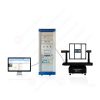
High Precision Rotation Luminaire Goniophotometer
LSG-1890B
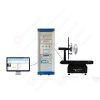
High Precision Rotation Luminaire Goniospectroradiometer
LSG-1890BCCD

Goniophotometer for Automotive and Signal Lamps
LSG-1950
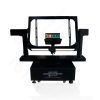
Goniophotometer for Traffic Signal Lamps
LSG-1950S
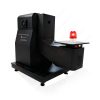
VAD Fire Alarm Visual Alert Device Goniophotometer
LSG-1930
Compact Goniophotometer
LSG-1200A
LED Goniophotometer
LSG-1100
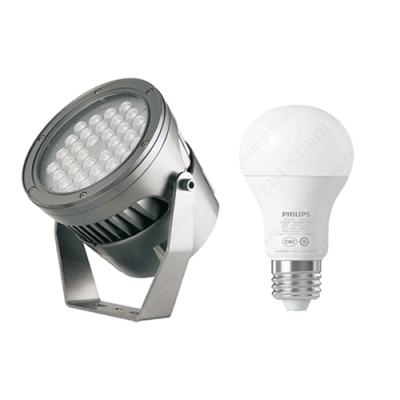 LEDs and Luminaire Test Solutions
 LM-79 and LM-80 Test Solutions
 LED Driver Test Solutions
 Household Appliances Test Solutions
 Mobile and Network Test Solutions
 Automotive Electronics Test Solutions
 Audio-Video and IT Test Solutions
 Cable and Wire Test Solutions
 Plugs and Sockets Test Solutions
 Power Switch Test Solutions
 Transformer Test Solutions
 Electric Toys Test Solutions
 Energy Meter Test Solutions
 Motor-Operated Tool Test Solutions
Select an organization
to browse standards
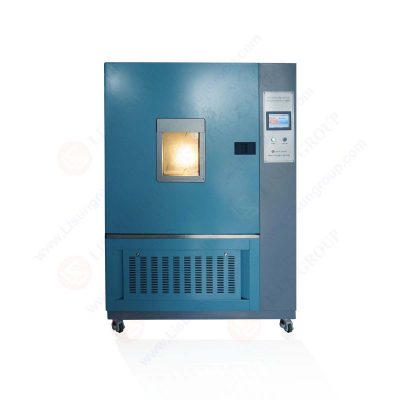
The conditions in the modern automotive and aerospace systems are so harsh that they subject materials, electronic and mechanical assemblies to the supreme strain. Temperature variations, pressure, vibration and protracted exposure to adverse weather conditions may all degrade performance in case parts are not validated appropriately. A fundamental instrument in this validation process is environmental chamber since it will enable the engineers to simulate controlled conditions in the environment within a laboratory. These chambers when coupled with thermal shock test tools are used to detect a weakness generated by sharp temperature variation that the components undergo in the real-world scenario.
A failure is not a solution in both automotive and aerospace industries. Even the slightest performance deterioration may result in safety hazards, expensive recalls or failure of the mission. Environmental testing gives assurance to components that they will be in reliable use during its service time, be it on a passenger car, commercial flight, or space vehicle.
The demand in automotive and aerospace applications is on a high reliability that is much high than a normal consumer product. Components should be capable of withstanding years of exposure to temperature variations, vibration, humidity and pressure variations without the functionality to be impaired. Environmental chambers give a flexible method of simulating these conditions repeatedly and forecast long-term conduct.
Environmental validation through laboratories will remove unknown variables unlike in field testing. Specific stress factors can be isolated, applied regularly and engineered response to components. This repeatability is necessary to design, qualification test, and regulatory compliance.
Environmental chambers are also used to favour accelerated life testing whereby components are subjected to exaggerated conditions to reflect years of working life in a reduced period of time. This model can be used to develop products quickly without loss of confidence regarding the durability of products.
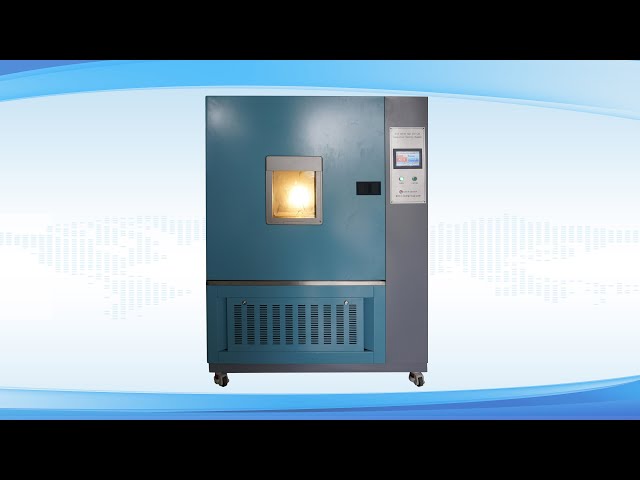
When used in real life, automotive components continue to be subjected to numerous stresses in the environment. Electronic control units are exposed to heat in engine compartments, cold weather in winter, and shaking by the road conditions. The sensors and connectors should be able to perform well even in a moist, dusty and temperature pacing environment.
These conditions are modeled in environmental chambers by recirculating temperature with prescribed ranges with constant humidity or pressure. Thermal cycling exposes solder joint fatigue, material expansion discrepancies, and connector decay that will not be evident in steady-state temperature conditions.
In automotive validation, thermal shock testing is of special importance. Dramatic changes in high and low temperatures are revealed and demonstrate deficiencies in material and assembly. Elements that do not react to rapid changes in temperature, including rapid heating or cooling of vehicles, might fail during rapid variations in temperature such as driving of a cold vehicle into a hot garage or quick changes in engine loads.
Aerospace parts are subjected to even more serious conditions. Aviation should be able to work under low temperatures and air pressure in the low altitude. Other challenges that are presented by space applications include exposure to the vacuum and severe thermal gradients.
Aerospace environmental testing of chambers, chambers may combine various stress factors together. To approach the imitation of the high-altitude flight, temperature change can be matched with a low pressure to replicate this flight. The equipment used in the thermal shock test is used to assess the action taken by the components to the sudden change in temperature conditions that occur during ascent, descent, or orbital operations.
Such tests indicate problems like cracking of insulation, material, embrittlement and electronic instability due to rapid thermal expansion and contraction. The aerospace validation is not concerned with only the survival, but rather stability in the performance during repeated stress cycles.
A comparison of thermal shock testing and standard temperature cycling is that the former focuses more on transition speed instead of dwell-time. The components move quickly between the extremes causing mechanical stress on an interface where various materials have different rates of expansion or contraction.
In automotive systems, thermal shock tests test the parts which must withstand high temperature in the engine and then drop to lower temperatures. During aerospace systems, when a component passes through sunlight or shadow or during high-altitude changes thermal shock may happen.
Thermal shock test/equipment that is located within the environmental chambers has the ability to accurately control transition rates and temperature extremes. Such accuracy also makes sure that test conditions are familiar with real-life situations and not arbitrary assumptions in a laboratory.
Environmental chambers are critical in the validation of materials that are used in the automotive and aerospace manufacturing. The different responses to environmental stress differ in plastics, composites, metals and adhesives. The cyclical exposure to temperature conditions may lead to the development of microcracks, delamination or the loss of the mechanical strength.
Environmental chambers enable testing materials to test the long run performance after which the engineers may allocate the production. This lessens the chances of in-service failures and helps in making wise choices of materials. Housings, brackets and enclosures are also validated so that they have dimensional stability.
The current day vehicles and planes are heavily dependent on electronic systems to control, navigate, and provide safety. Environmental chambers are also able to provide functional testing of electronics under stress which guarantees that performance should not be compromised during and after exposure. The method detects intermittent faults, which can only manifest in a combination of temperature or pressure.
Manufacturers like LISUN offers environmental chamber solutions to facilitate such stressful validation needs with an adaptation in terms of stable control, precision in monitoring, and dependability over time with regard to critical testing operations.
The vehicle and airplane parts cannot pass the strict new regulations and start working. Environmental chamber testing gives written records that the parts meet the relevant standards.
The data produced by the tests as a result of chamber tests are used in certification and to prove due diligence during design validation. Traceable data makes sure that the outcomes can be studied and checked by the regulatory bodies.
The environmental chambers are also useful in enabling manufacturers to be consistent in production batches.
Environmental chamber testing best applies when used throughout the product lifecycle. Early testing is designed to detect the flaws in a design, continuous testing ensures that it is fixed, and last-minute testing is applied to determine a prototype to be prepared to be manufactured.
The ongoing validation scheme decreases the expensive redesigns and enhances the general quality of products. It also gives a better balance of performance, cost and durability to teams.
Modern environmental chambers can easily fulfill changing test requirements, addressed by flexible control systems and programmable test profiles, which are used in the development and quality assurance activities.
An environmental chamber is a mandatory device that can be used to test automotive and aerospace components in real and extreme conditions. Replicating the case of temperature variation, pressure variations, and other environmental pressures, the systems disclose the vulnerabilities, which would otherwise be unnoticeable until the field operation. Environmental chambers when coupled with thermal shock test equipment give a clue of how components will respond to sudden changes in temperature that puts the material integrity and electronic soundness at test.
Other manufacturers like LISUN persist in improving the technology of environmental chambers, and they allow the accurate, consistent, and reliable testing of the challenging industries. In designing an automotive or aerospace structure, safety, performance, and durability calculations are part of the comprehensive environmental verification that helps the engineers to develop the parts so that they are able to live up to their expected terms of operation.
Your email address will not be published. Required fields are marked *

 English
 中文简体
中文简体 English
 Русский
 Español
 Português
 Türkçe
 العربية
 Deutsch
 Polski
 Italiano
 Français
 한국어
한국어 ไทย
ไทย Tiếng Việt
 日本語
日本語