LM-79 Moving Detector Goniophotometer (Mirror Type C)
LSG-6000
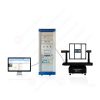
High Precision Rotation Luminaire Goniophotometer
LSG-1890B
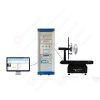
High Precision Rotation Luminaire Goniospectroradiometer
LSG-1890BCCD

Goniophotometer for Automotive and Signal Lamps
LSG-1950
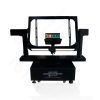
Goniophotometer for Traffic Signal Lamps (Economical Model)
LSG-1950S
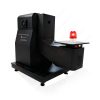
VAD Fire Alarm Visual Alert Device Goniophotometer
LSG-1930
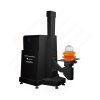
Goniophotometer for Airfield Lighting
LSG-1940
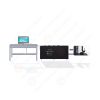
Compact Goniophotometer
LSG-1200A
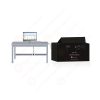
LED Goniophotometer
LSG-1100
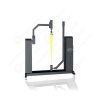
Near Field Moving Detector Goniophotometer
LSG-1900B
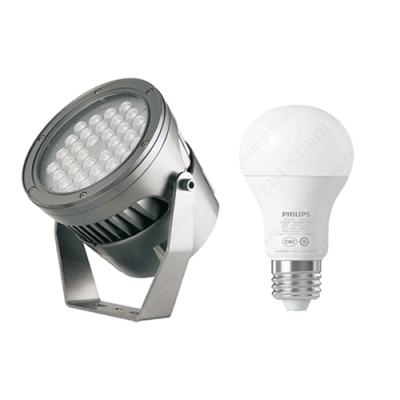 LEDs and Luminaire Test Solutions
 LM-79 and LM-80 Test Solutions
 LED Driver Test Solutions
 Household Appliances Test Solutions
 Mobile and Network Test Solutions
 Automotive Electronics Test Solutions
 Audio-Video and IT Test Solutions
 Cable and Wire Test Solutions
 Plugs and Sockets Test Solutions
 Power Switch Test Solutions
 Transformer Test Solutions
 Electric Toys Test Solutions
 Energy Meter Test Solutions
 Motor-Operated Tool Test Solutions
Select an organization
to browse standards
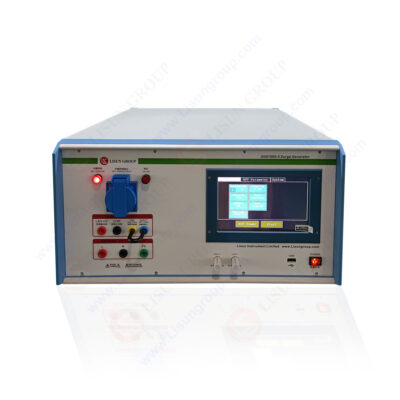
The contemporary electronic equipment should be usable in the conditions when electric problems cannot be avoided. Any activities involving switching of power, lightning-induced transients, relay activities and inductive loads trigger voltage surges on sensitive circuits in the short term that may cause circuit brown-out or damage. A burst surge generator is a specially constructed device to recreate these disturbances within a controlled laboratory system where the engineers develop a standardized method of surge testing using a machine approach. The test procedure of transient surge immunity as specified in IEC 61000-4-5 provides that products subjected to actual electrical networks are capable of sustain high-energy impulse transfers without failures and deterioration.
The difference between transient surges and steady-state overvoltage conditions is that transient surges are sudden and have much energy in micro-seconds. The devices might be seen to be strong in normal mode but the same devices fail unexpectedly when put under speedy transient pressure. Burst surge testing is intended to expose these latent vulnerabilities by imposing routine, ultimately defined surge waveforms that replicate the actual disturbances of the grid.
It measures the behavior of equipment subjected to high-energy impulses which are usually due to lightning strikes or switching in the power system. The standard establishes the shapes, voltage, and other coupling techniques as well as repetition rates, to bring uniformity worldwide in the various laboratories.
The automatically specified surge of the standard typically encodes the voltage wave of 1.2/50 microseconds and the current wave of 8/20 microseconds. These parameters are the properties of rise and decay which we observe to occur in actual surges. To be able to get meaningful results, a burst surge generator should reproduce these waveforms without error. Any variation in rise time, peak voltage or energy content would give false inferences concerning equipment immunity.
A burst surge generator has the advantage that it stores electrical energy in capacitors with high voltage and then releases the energy in a controlled network of discharges. The discharge route incorporates accuracy resistors, inductors and switching elements, which modify the form of the waveform to the IEC standard. Upon the surge trigger, the stored energy is applied to the device under test by coupling networks which model real power or signal line conditions.
The generator should be very keen in timing and voltage regulation. Under burst testing various surges are repeated in sequence, frequently with set intervals. This repetitive stress is the analysis of not one event of immunity but the addition of cumulative effects which may be the case when a power interruption is frequent. Repeated surges in output need stability therefore to ensure precise testing.
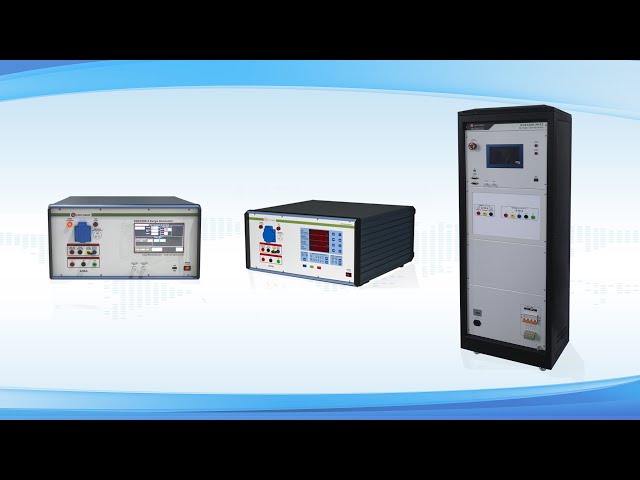
The second thing that is of great significance of the surge testing is the continuity of the impulse into the equipments being tested. IEC 61000-4-5 describes power line coupling, communication line coupling and signal interface coupling. The surge is injected by coupling devices and the decoupling components ensure the auxiliary equipment is not harmed and the surge does not spread outside the test set-up.
The burst surge generator is provided along with coupling and decoupling networks to make sure that the surge energy is sent in to the circuit only where it is intending to. Incorrect coupling may under-stress the equipment, or may subject non-related equipment to destructive energy. Correct set-up will guarantee that the test results are a true measure of equipment immunity not set-up artifacts.
One of the most difficult issues of surge testing is the waveform consistency. There are thermal and electrical stresses on the components within the generator in terms of repetitive operating cycle. The applied surge energy varies with time in case internal characteristics change. This compromises test validity particularly in assessing marginal levels of immunity.
Good quality generators have voltage feedback controls to maintain the output and counteract the variation in parts. LISUN manufactured systems are designed to have strength of energy storage components and computerized accuracy of switching circuits to preserve waveform accuracy during extended test sequences. This gives the assurance that every surge that is applied will not exceed IEC tolerances even after hundreds of applications.
In testing of IEC 61000-4-5, the device under test is common with a load on and functioning normally. Setpoints are set with different phase angles of the power cycle to test worst-case condition. The behavior of the equipment is constantly observed to identify the presence of resets, data corruption, output degradation, and permanent damage.
In order to have symmetrical immunity, the burst surge generator also applies positive and negative polarity surges. Different reaction to surge polarity can occur as a result of internal rectification paths or grounding design.
The success of the test does not imply that the equipment is not affected; it just must be able to satisfy certain set performance standards including, but not limited to, lossless equipment functional recovery following the inconvenience. The right application of the surges will make these criteria assessable in a consistent manner.
Grounding is important in accuracy of surge test. Ineffective grounding adds the undesirable inductance that distorts the surge waveform and changes the provision of energy. The test environment needs to have a low-impedance ground reference plane to make sure that standard definitions of applied surge are fulfilled.
The location of cable routes, the physical location of equipment and sizes of reference planes all affect test results. The burst surge generator depends on a decent grounding to provide the desired stress. A properly designed surge testing machine will not be able to counter a bad laboratory grounding practice.
Surge testing is also used to find problems that may not be part of the design of the device e.g. problematic filtering of the test setup or unwanted coupling due to auxiliary cables. To find out these problems, one needs to be attentive and experienced. Engineers should learn to identify actual vulnerabilities in the product and phenomena brought about by the configuration test.
The other issue is safety management. Surge testing is associated with high energy and voltage. The latest generators also have interlocks; emergency stop and discharge features to safeguard operators. The design of reliable equipment helps in reducing the risk and yet, it maintains efficiency in testing.
Burst surge testing is not limited to final compliance certification. Many manufacturers integrate Burst surge testing does not apply only to the final compliance certification. Surge testing is an early product development process employed by many manufacturers to discover weaknesses of a product design. This problem anticipates minimizes the cost of redesign and certification time.
A good burst surge generator enables engineers to test grounding techniques, designs of filters, and choice of components. Information gathered through development testing is used to make changes to the design that result in improved immunity throughout the product portfolio.
An overload tester that is utilized should be stable over time. Calibration routine is to keep the output within the acceptable tolerances. Internal elements like capacitors and switching devices must be equipped with the long service life in case of repetitive stress.
LISUN surge generators are designed to be durable and attractive and modular construction and high-grade components, which are easy to repair and maintain. This reliability has been particularly critical to those laboratories that do the usual compliance testing.
A burst surge generator is a needed device in the assessment of transient immunity related to the IEC 61000-4-5 regulation. It can reproduce high-energy bursts of electrical activity in a controlled and repeatable way that enables engineers to understand the competencies of machinery to electrical noise in the real world. The shaping and content of the waveform and repetition are maintained uniformly all through the test run as a result of a specific surges testing machine structure.
Surge testing provides insight into the weaknesses, which otherwise could not be observed until field deployment due to the accurate coupling, stable waveform generation, and proper grounding. The LISUN manufacturers and others are still developing the burst surge generator design to offer credible solutions to ensure compliance certification as well as the development of extreme products. Surge immunity testing in more complicated electrical environment is one of the key steps towards long-term equipment reliability and safety.
Your email address will not be published. Required fields are marked *

 English
 中文简体
中文简体 English
 Русский
 Español
 Português
 Türkçe
 العربية
 Deutsch
 Polski
 Italiano
 Français
 한국어
한국어 ไทย
ไทย Tiếng Việt
 日本語
日本語