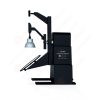
LM-79 Moving Detector Goniophotometer (Mirror Type C)
LSG-6000
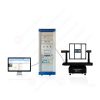
High Precision Rotation Luminaire Goniophotometer
LSG-1890B
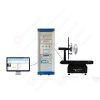
High Precision Rotation Luminaire Goniospectroradiometer
LSG-1890BCCD

Goniophotometer for Automotive and Signal Lamps
LSG-1950
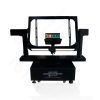
Goniophotometer for Traffic Signal Lamps (Economical Model)
LSG-1950S
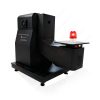
VAD Fire Alarm Visual Alert Device Goniophotometer
LSG-1930
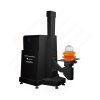
Goniophotometer for Airfield Lighting
LSG-1940
Compact Goniophotometer
LSG-1200A
LED Goniophotometer
LSG-1100
Near Field Moving Detector Goniophotometer
LSG-1900B
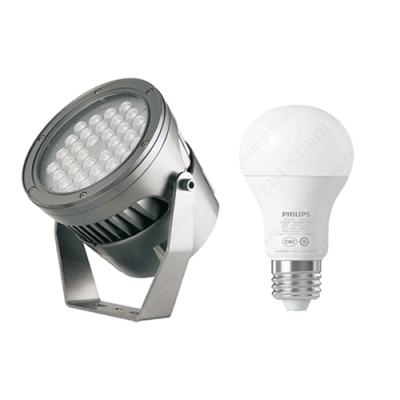 LEDs and Luminaire Test Solutions
 LM-79 and LM-80 Test Solutions
 LED Driver Test Solutions
 Household Appliances Test Solutions
 Mobile and Network Test Solutions
 Automotive Electronics Test Solutions
 Audio-Video and IT Test Solutions
 Cable and Wire Test Solutions
 Plugs and Sockets Test Solutions
 Power Switch Test Solutions
 Transformer Test Solutions
 Electric Toys Test Solutions
 Energy Meter Test Solutions
 Motor-Operated Tool Test Solutions
Select an organization
to browse standards
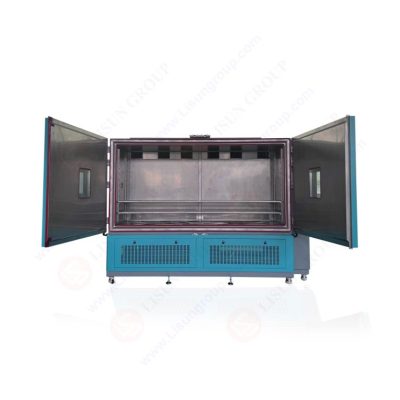
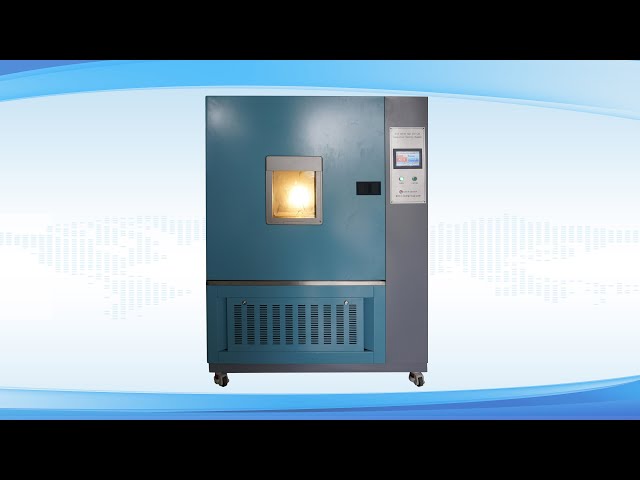
The contemporary product production needs testing in the real environment, rather than laboratory testing on its own, when controlled. Materials, electronics, mechanical structures, and coatings as well as sealing structures will respond differently to changing temperature, moisture, change in pressure and accelerated aging profiles. Industries are dependent on a climatic test chamber that recreates various stresses at a time in order to scientifically recreate these environments. Instead of simply heating or cooling the chamber handles long periods of time, ramp, humidity, and being stable such that the sample is exposed to the same effect that it would have in the field.
The modern expanded chamber application is employed in car parts, aerospace electronics, outdoor systems on solar power, packaging of medical instruments, industrial communication boards, and consumer equipment at large. They consider stamina prior to mass production avoiding expensive recalls and malfunction of operations in actual settings.
Exposure history of products relies on real-life product lifetime performance. A product may be functioning very well in its assembly level, but failure to perform in heat-cold cycling when used in conditions. This is why a climatic chamber intentionally causes the disintegration of materials such that it takes days instead of years to manifest weakness. The chamber repeatedly exposes the test sample to hot phases and the low-temperature intervals in rapid alterations and the mechanical joints grow bigger and smaller. In this expansion, gaskets change shape, adhesives become hard or soft, circuit solder joints wear out, and micro-cracks develop undercoats. These dispositions are not easily observable without cyclic exposure to the environment.
A climatic test chamber is now a predictive and not a failure-confirmation tool. Early observation of change allows engineers to modify design, choice of materials or process quality when a product is still in the field of deployment.
The most dominant variable of engineering reliability research is temperature change. The chamber regulates the controlled ramp rates in order that the temperature is not said to increase immediately. Realistic absorption of heat of internal components is achieved by a stable gradient. Fast thermal shock testing however causes latent weaknesses to be revealed a lot faster.
The long-term exposure to high temperature applies to plastics, solder joints, wiring insulation, polymer adhesives, coil varnish, encapsulant layers and confirms their endurance. A traditional oven is unable to provide atmospheric humidity and heat at the same time as a chamber does.
Indicatively, smart meter enclosures in the outdoor settings are under freezing conditions at night and extreme heat in daytime. When brittle polymer shrinks unevenly, the cracking will be found in the vicinity of terminals. It is in this chamber that the transition is simulated on a daily basis.
Humidity is also very crucial as moisture causes corrosion, insulation leakage, and swelling adhesive. At increase in humidity, there is structural discontinuity condensation particularly during cool-down cycles. This condensation stimulates the movement of ions and changes the insulation properties that cannot be observed in the conditions of a dry state.
A climatic test chamber adjusts humidity level without reference to temperature enabling humidity-controlled dwell phases to hold constant even when temperature changes. This accuracy cannot be recreated by conventional air conditioning.
The presence of moisture also promotes the growth of mold in long term packaging, wiring and medical housings. This property is observed by placing samples with long storage period in a humid environment and performing inspection subsequently.
The reliability of electronics does not just rely on the rating of the component; the surrounding environment of the electronics influences system reaction. When condensing, fine-pitch traces leak. The high humidity causes the electron drift over the insulating surfaces. The insulation copper adhesion becomes poor because of moisture penetration. Electrolytic capacitors and polymer connectors swell up during heating cycles.
The chamber determines the effect of humidity on unstable sensor values or internal resets, loss of data or flash errors. Analog offset distortion causes registration of an environmental drift in some industrial computing modules. The test chamber marks these drift areas so as to make changes in design, by way of adding better coating, protecting enclosure, or conformal film mountings, etc.
The chamber promotes durability forecasts. Warming causes internal air pressure to grow straining the seals and mechanical joints. During rapid cooling, the inner pressure decreases, and when future cooling takes place, external air enters. This effect of real-time breathing is essential in outdoor sealed enclosures like lighting fixtures, weather-proof control assemblies, or traffic monitors of the IoT type.
Climatic test chamber determines the points of leakage in an enclosure that are not known through any form of immersion or single directional airflow. Periodic cycles exhibit failure modes which would not emerge with homogeneous conditions.
Table: Representative test cycle parameters used in real climatic simulations
| Test Category | Typical Range | Real-World Applications |
| High-temperature dwell | +65°C to +125°C | Automotive dashboard modules, electronic drive units |
| Low-temperature soak | –20°C to –50°C | Outdoor control boxes, battery-operated sensors |
| Humidity variation | 40% RH to 98% RH | Polymeric enclosures, adhesive bond endurance |
| Rapid thermal cycling | 2°C/min to 10°C/min ramp rates | Power converters and high-density PCB validation |
| Long-duration exposure | 240–1500 hours | Accelerated life-simulation studies |
Initial results are less important than consistency of results. An area having sophisticated air circulation tracks avoids areas of local heat build-up. Internal partitioning will make airflow will not settle behind sample racks. The correct humidity adjustment is attained by use of dehumidification loops instead of the humidity injection by itself.
The temperature of low-grade devices is stable, and the moisture control is unstable, hence, higher grade environmental testing devices incorporate dual moisture control cycles. In such designs, the chamber monitors the content of water vapor and the dew-point level.
Constant air pressure discourages condensation of surface in the wrong places. Layers of internal condensation may falsify actual values of humidity during tests where control of humidity occurs. This, the chamber is off-set by providing differentiation in heating at corners and edges, and even accumulation is guaranteed.
Automotive systems are subject to erratic environmental trends- day-night variations and temperature changes in high conditions. Heated electronics are also stored inside cars without any ventilation. An aging test chamber indicates the aging behavior sooner than physical field testing. LISUN provides one of the best climatic test chambers.
Automotive engineers are not only concerned about the endurance of their components but also add diagnostics within the chamber. CAN-based recording of systems is done in the thermal cycling, which records mis-triggered interrupts or erratic changes in voltages. Once humidity in sealing points penetrates internally in board-to-board, corrosion will start prior to complete degeneration. That corrosion of metals does not happen in one cycle; it is manifested in successive cycles.
Storage performance is based on the packaging reliability. The packaging of medical equipment, food packaging, drug delivery and portable diagnostic equipment are examples of items that conform to climate-driven shelf-life analysis. Poor climatic conditions in the warehouse include monsoon areas with salty winds, and extended periods of high temperatures.
These storage conditions are replicated well in a climatic chamber. In case packaging film alters behavior, opens micro-cracks, loses adhesiveness, or alters printed labeling because of moisture, then provide feedback causes redesigning.
Likewise, the adhesive strength is influenced directly by moisture absorption. Certain adhesives are gummy in the presence of water. Loss of peel-strength is disclosed by a climatic chamber using a quantity test.
Aging of a product typically lasts the years, but simulated cycles reduce the duration to a week or a day. Exposure time is associated with product life estimated by engineers. Rather than long period monitoring, humidity-temperature mapping reduces validation.
As an example, coating which cracks during 18 months service may prematurely crack during 150 hours cycling. Embedded lubricants degrade more substantially in heat-humidity environment leaving bearings prone to wear through friction. This type of accelerated exposure facilitates informed choices of bearing lubrication or adherent polymers.
The climatic test chamber is at the center of environmental durability test. Instead of using separate stress loads, it simulates multi-variables real-world situations- high-temperature storage, cooling, saturating humidity, corrosion by condensation, mechanical expansion-contraction, etc. It also gives an engineer an opportunity to understand early degradation behavior, enclosure leakage, the strength of adhesive bonding, electronic tolerance changes, and long-term reliability long before the first product is actually put into the field.
Climatic chamber simulations with sophisticated environmental testing equipment will make sure that a decision is based not on prediction but the actual life-cycle results. This enhances design integrity, customer safety, weak warranty defeats and product maturity prior to release making climatic evaluation an engineering strategy instead of an engineering requirement.
Lisun Instruments Limited was found by LISUN GROUP in 2003. LISUN quality system has been strictly certified by ISO9001:2015. As a CIE Membership, LISUN products are designed based on CIE, IEC and other international or national standards. All products passed CE certificate and authenticated by the third party lab.
Our main products are Goniophotometer, Integrating Sphere, Spectroradiometer, Surge Generator, ESD Simulator Guns, EMI Receiver, EMC Test Equipment, Electrical Safety Tester, Environmental Chamber, Temperature Chamber, Climate Chamber, Thermal Chamber, Salt Spray Test, Dust Test Chamber, Waterproof Test, RoHS Test (EDXRF), Glow Wire Test and Needle Flame Test.
Please feel free to contact us if you need any support.
Tech Dep: Service@Lisungroup.com, Cell/WhatsApp:+8615317907381
Sales Dep: Sales@Lisungroup.com, Cell/WhatsApp:+8618117273997
Your email address will not be published. Required fields are marked *

 English
 中文简体
中文简体 English
 Русский
 Español
 Português
 Türkçe
 العربية
 Deutsch
 Polski
 Italiano
 Français
 한국어
한국어 ไทย
ไทย Tiếng Việt
 日本語
日本語