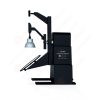
LM-79 Moving Detector Goniophotometer (Mirror Type C)
LSG-6000
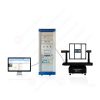
High Precision Rotation Luminaire Goniophotometer
LSG-1890B
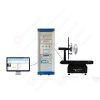
High Precision Rotation Luminaire Goniospectroradiometer
LSG-1890BCCD

Goniophotometer for Automotive and Signal Lamps
LSG-1950
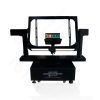
Goniophotometer for Traffic Signal Lamps (Economical Model)
LSG-1950S
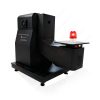
VAD Fire Alarm Visual Alert Device Goniophotometer
LSG-1930
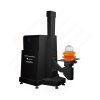
Goniophotometer for Airfield Lighting
LSG-1940
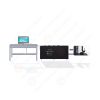
Compact Goniophotometer
LSG-1200A
LED Goniophotometer
LSG-1100
Near Field Moving Detector Goniophotometer
LSG-1900B
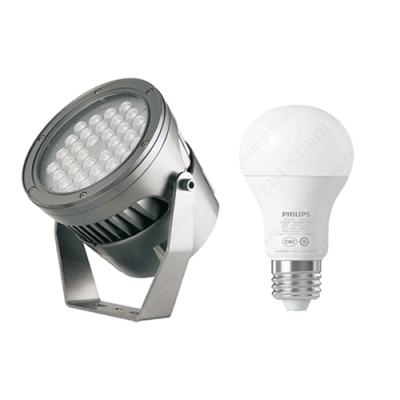 LEDs and Luminaire Test Solutions
 LM-79 and LM-80 Test Solutions
 LED Driver Test Solutions
 Household Appliances Test Solutions
 Mobile and Network Test Solutions
 Automotive Electronics Test Solutions
 Audio-Video and IT Test Solutions
 Cable and Wire Test Solutions
 Plugs and Sockets Test Solutions
 Power Switch Test Solutions
 Transformer Test Solutions
 Electric Toys Test Solutions
 Energy Meter Test Solutions
 Motor-Operated Tool Test Solutions
Select an organization
to browse standards
Thermal stress analysis is an important tool in establishing the behavior of materials, electronics, and mechanical assemblies at excessive temperatures. The temperature test chamber will be set in such a way that controlled heating and cooling cycles are applied to the chamber which simulate harsh operating conditions during actual operation. These systems are nowadays used as a laboratory-specific type of environment chamber, which is specialized in specific thermal regulation, as opposed to a mixture of humidity and pressure. Such testing is not just about exposing the products to high or low temperatures, but also to regulate the rate at which the temperature varies, the even distribution of heat as well as the stability of the observed conditions during the long periods of exposure.
Thermal control is necessary on a precise basis since material behavior is not just responsive on the basis of temperature value but also on the rate of change. Extremely fast heating will introduce thermal expansion strain whereas slow cooling can permit materials to resort to relaxation in varying ways. A temperature chamber should thus be able to control the ramp rates correctly, evenly circulate the air inside and avoid localized hot or cold areas that would interfere with the results. These performance specifications make a real testing room and not a mere heating or cooling device.
The core of any temperature test chamber is the closed-loop control mechanism that is used to constantly check the internal conditions and regulate the output. The temperature sensors are fitted in strategic areas of the chamber giving real time feedback to the controller. These sensors are sensitive to air temperature instead of surface temperature and, as a result, the control decisions represent the conditions of the chambers, but not local impact of the test sample.
Refrigeration systems exist in conjunction with heating elements to reach the setpoint. Electric heaters work slowly or rapidly to increase the temperature of internal air (heat) during heating cycles, based on programmed ramp requirements. As the refrigeration is cooling, the heat is removed by refrigeration compressors and expansion valves. The controller regulates these elements in order to prevent excessively large overwarming, which can cause unwanted thermal shock. Precise control is such that when a test is given a dwell temperature of a specific temperature, it is held constant and does not fluctuate over time with deviation as tolerated.
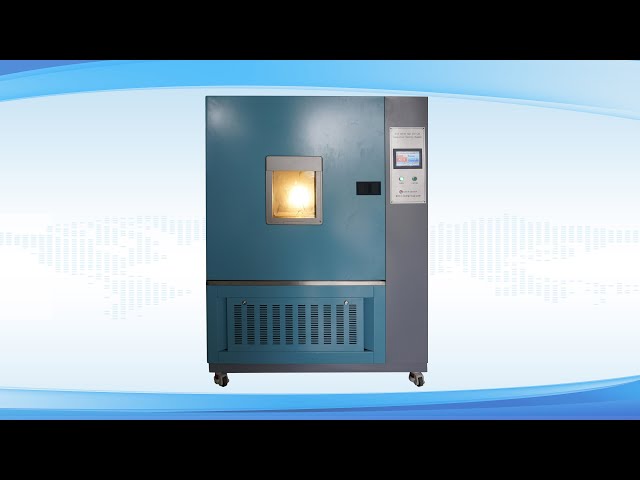
One of the crucial performance indicators of a temperature chamber is the so-called thermal uniformity. Although the average temperature may be appropriate, the stress across samples may not be uniform by just random sampling the temperature within the test volume. To avoid this, forced air circulation is employed by high efficiency fans in the chambers. The pattern of the airflow is designed in such a way that the hot and cold air is dispersed well before it reaches the test zone.
Airflow channels are designed, the position of the fan and the position of the internal baffles decide the distribution of heat. This circulation is poor hence stratification takes place because warm air will be present close to the surface whereas the cold air will be present close to the ground. Quality systems eradicate this gradient. Such manufacturers like LISUN pay much attention to airflow engineering, so the temperature deviation throughout the chamber is moderate even in the cases of aggressive ramping.
Equal airflow also does not allow condensation during cooling. Slowness of movement of air may cause moisture to settle on the side walls of a chamber or sample and alter the results of thermal stress. Circulation is also controlled providing steady temperature conditions without adding any other effects to the environment.
The stress due to heat does not take place in extreme temperatures but also in transitions. A temperature test chamber should have the capability of managing its velocity of transition between setpoints. Fast ramp rates are used to mimic abrupt exposures to the environment, e.g. equipment that is transported between a hot indoor classroom and cool outdoors. Gradual rate of ramps reflects gradual seasonal variations or prolonged operating periods.
Heating, as well as cooling systems has to coordinate to have precision in controlling ramps. In case ramping is too violent the chamber would be out of range and result in unintentional stress. In case ramping is slow, then the test would not be representative of reality. Greater control algorithms also use dynamically regulated power output to hold the programmed slope to achieve constant application of stress.
Tests of thermal cycling usually have hundreds or thousands of temperature changes. Even minor errors keep accumulating over the years to become major errors. A chamber that is designed well ensures that the ramp behavior across long sequence of tests is consistent and a given stress profile is applied by every cycle.
Stability in temperature depends on how the samples are located in the chamber. Big samples or dense samples will take in heat more slowly than smaller parts, and it will affect the rate at which the setpoint is achieved. This is offset by temperature test chamber that also adjusts control response according to thermal load.
To prevent the circulation paths, operators should take into account airflow clearance about samples. In case of a limited airflow, local temperature increases results in inaccurate tests. The guidelines on chamber operation include good spacing, choice of racks and positioning of sample to ensure uniform exposure.
The chamber controller is progressive in responding to thermal mass changes and, as a result, it guarantees that the temperature value does not deviate when samples are heating up or cooling down at varying lengths of time.
Sensor accuracy is important to precision control. The thermal cycling, mechanical vibration, and age cause changes in temperature sensors. Constant calibration makes the readings reflect reality. Majority of the chambers employing high-performance are platinum resistance thermometers or other sensors with known longevity.
Calibration procedures make comparisons between internal sensor readings and reference standards that are traceable. Deviance is rectified by adjusting the controllers. This further guarantees that in an instance where a test requires a certain temperature the real environment is digitally correct.
Certification Environmental test chambers should be traceable. Test findings do not have credibility without having been verified. This is particularly important in controlled sectors like automotive, aerospace, medical gear and electronics product makers.
Thermal stress tests process tends to take days or weeks uninterrupted. The compressors, heaters, fans and the control electronics are taxed by round the clock operation. A good temperature test chamber has been designed to be long-lasting whereby its components have been chosen to last long under cyclic conditions.
Stable insulation eliminates wastage of heat, cutting down the energy consumption and enhancing control accuracy. Seals on the doors are reinforced to ensure that the inside remains air tight, avoiding leakages in temperature. Control systems observe the performance parameters at the inside and inform operators of abnormalities before failures set in.
Manufacturers such as LISUN design their systems to have high accuracy in control even when used over long test duration to ensure that the accuracy of control is not compromised by long-term exposure to thermal effects.
In the contemporary chamber operation, there is extensive logging of data. Continuous recording of temperature profile, ramp rate, dwell time and deviation events takes place. This data will enable confirmation that tests had been carried out as desired. The logs are examined by engineers in order to ensure that no unintended excursions have happened in critical test phases.
Failure analysis is also backed by data records. When a product eventually fails following the testing process, the engineers look at the temperature history to find out whether failure was due to the inability of the design or due to the environmental variation. Confidentiality of test conclusions is increased by accurate records.
A temperature test chamber can be used to perform an accurate thermal stress testing by integrating both accurate control systems and uniform airflow control, adaptive ramp control, and long-term stable operation. Being a specialized type of test chamber involving the environment, it offers controlled temperature exposure which displays the response of products to extreme conditions and cyclic thermal conditions. Exact operation makes stress to be put in a constant form, and the engineers can detect the weak areas and advance the designs and can trust the performance.
Tags:GDJS-015BYour email address will not be published. Required fields are marked *

 English
 中文简体
中文简体 English
 Русский
 Español
 Português
 Türkçe
 العربية
 Deutsch
 Polski
 Italiano
 Français
 한국어
한국어 ไทย
ไทย Tiếng Việt
 日本語
日本語