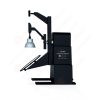
LM-79 Moving Detector Goniophotometer (Mirror Type C)
LSG-6000
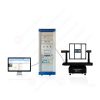
High Precision Rotation Luminaire Goniophotometer
LSG-1890B
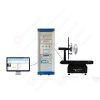
High Precision Rotation Luminaire Goniospectroradiometer
LSG-1890BCCD

Goniophotometer for Automotive and Signal Lamps
LSG-1950
Goniophotometer for Traffic Signal Lamps (Economical Model)
LSG-1950S
Goniophotometer for Airfield Lighting
LSG-1940
VAD Fire Alarm Visual Alert Device Goniophotometer
LSG-1930
Compact Goniophotometer
LSG-1200A
LED Goniophotometer
LSG-1100
Near Field Moving Detector Goniophotometer
LSG-1900B
 LEDs and Luminaire Test Solutions
 LM-79 and LM-80 Test Solutions
 LED Driver Test Solutions
 Household Appliances Test Solutions
 Mobile and Network Test Solutions
 Automotive Electronics Test Solutions
 Audio-Video and IT Test Solutions
 Cable and Wire Test Solutions
 Plugs and Sockets Test Solutions
 Power Switch Test Solutions
 Transformer Test Solutions
 Electric Toys Test Solutions
 Energy Meter Test Solutions
 Motor-Operated Tool Test Solutions
Select an organization
to browse standards
Abstract
In the design and manufacturing of modern electrical and electronic products, the enclosure protection rating is a core indicator for assessing their reliability, safety, and environmental adaptability. Specifically, IEC 60529 Waterproof Testing: The Role of IPX1 and IPX2 Drip Boxes is to provide a standardized, repeatable verification method for a product’s ability to resist dripping water from vertical or tilted directions. This article aims to systematically analyze the specific requirements and testing principles for IPX1 and IPX2 grades as defined in the IEC 60529 standard. It details how a drip test chamber, through its precise drip plate structure, stable water flow control, and strict sample placement, enables accurate evaluation of the waterproof performance of enclosures for products like LED luminaires and control cabinets. Using the core component of the LISUN JL-X Waterproof Test System—the JL-12 Drip Test Chamber—as a technical example, the article dissects how its design and functions ensure testing accuracy and efficiency. It further explains its foundational position and extensive application value within the entire IP protection rating testing framework.
1. Introduction: The Necessity of Enclosure Protection and Standardization
Electrical and electronic products are widely used in various complex environments, from indoor households to outdoor industrial sites, inevitably exposing them to conditions like moisture, dripping, or even spraying water. To prevent internal circuit short circuits, component failures, or safety hazards caused by water ingress, product enclosures must possess corresponding protective capabilities. The International Electrotechnical Commission’s IEC 60529 standard establishes a globally recognized system for enclosure protection ratings (IP Code). Within this system, IEC 60529 Waterproof Testing: The Role of IPX1 and IPX2 Drip Boxes is particularly fundamental and critical. It is specifically designed to simulate a product’s resistance to condensation, vertical rainfall, or dripping water from a slightly tilted direction. Understanding the role of this test is the first step in ensuring products meet minimum waterproofing requirements, pass compliance certification, and gain market trust.
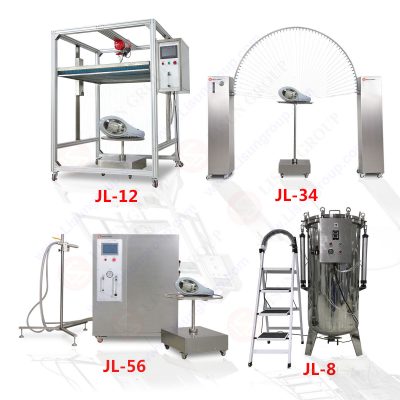
waterproof test Equipment JL-X
2. Analysis of IPX1 and IPX2 Grades in IEC 60529
The IP Code consists of the letters “IP” followed by two characteristic numerals. The first numeral indicates protection against solid object ingress, and the second numeral indicates protection against water ingress. IPX1 and IPX2 refer to the first and second grades of waterproof protection, respectively.
2.1 Test Conditions and Requirements
IPX1 (Vertical Dripping Water): This grade simulates a vertical dripping water environment, such as condensation. The test requires the sample to be placed in its normal use position and subjected to vertically falling water droplets from the top of the drip test chamber. The test duration is 10 minutes. After the test, no harmful quantity of water should have accumulated inside the enclosure.
IPX2 (Tilted 15° Dripping Water): This simulates vertical dripping water when the enclosure is tilted up to a maximum of 15° from its normal position. During the test, the sample must be exposed to dripping water sequentially in four fixed tilted orientations (or using a slow turntable), for 2.5 minutes per tilted position, resulting in a total test duration of 10 minutes.
2.2 Testing Principle and Key Parameters
The core testing principle for both IPX1 and IPX2 is to generate uniform, stable water droplets through a standardized “drip plate.” The standard strictly specifies:
• Drip Hole Diameter: 0.4 millimeters.
• Hole Spacing: 20 millimeters.
• Water Precipitation Rate: By controlling the water flow, the precipitation rate within the drip plate area must reach 1.0 ±0.5 mm/min. These stringent geometric and hydrological parameters ensure that IPX1/X2 tests conducted in any laboratory worldwide are comparable and repeatable, lending authority to the test results.


| Test Item | IPX1 (Vertical Dripping) | IPX2 (Tilted 15° Dripping) |
|---|---|---|
| Protection Meaning | Protection against harmful effects of vertically falling water droplets. | Protection against harmful effects of vertically falling water droplets when the enclosure is tilted up to 15°. |
| Sample Position | Normal use position (upright). | Tilted up to 15° from the vertical in four directions. |
| Water Direction | Vertically downward. | Vertically downward (relative to the horizontal plane). |
| Test Duration per Position | 10 minutes continuous. | 2.5 minutes per tilted orientation, 10 minutes total. |
| Drip Plate Parameters | Hole diameter 0.4mm, spacing 20mm, precipitation 1.0±0.5 mm/min. | Hole diameter 0.4mm, spacing 20mm, precipitation 1.0±0.5 mm/min. |
| Pass/Fail Criteria | No harmful quantity of water inside the enclosure. | No harmful quantity of water inside the enclosure. |
3. Technical Implementation and Core Role of the Drip Test Chamber
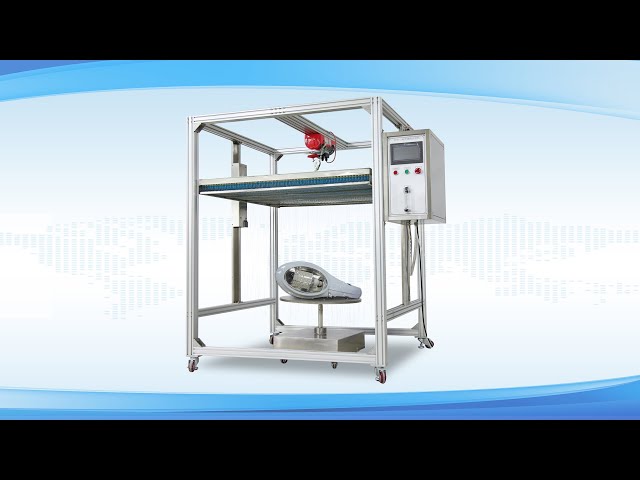
A professional drip test chamber that complies with standards is the physical foundation for accurately executing the test defined by IEC 60529 Waterproof Testing: The Role of IPX1 and IPX2 Drip Boxes. LISUN’s JL-12 Drip Test Chamber is a typical example of such a design.
3.1 Precision Drip Plate and Water Supply System
The core of the JL-12 is a drip plate manufactured strictly according to the standard. The precisely arranged hole diameters and spacing ensure uniform distribution of falling water droplets. The supporting constant-pressure water supply system and flow regulation device can stably maintain the precipitation rate within the standard range of 1.0 ±0.5 mm/min over long periods, which is the fundamental guarantee for valid test results.
3.2 Sample Placement and Load Capacity
The test chamber is designed with sufficient space (800x800x45mm) to accommodate the sample under test. For IPX2 testing, the equipment typically integrates or is compatible with a sample holder or slow turntable capable of precise angle control (15°). The JL-12 supports samples weighing up to 150kg, enabling it to test a wide range of products from small controllers to large luminaires or electrical cabinets.
3.3 Foundational and Extensible Role
The role defined by IEC 60529 Waterproof Testing: The Role of IPX1 and IPX2 Drip Boxes extends beyond completing these two basic grade tests. It serves as the starting point for the entire waterproof testing framework and is a mandatory entry-level safety test for many products. Furthermore, as part of LISUN’s JL-X Comprehensive Waterproof Test System, the JL-12 works alongside higher-grade equipment for spray, jet, and immersion testing to form a complete IP protection verification solution.
| Parameter Category | Technical Specification | Standards Compliance & Design Significance |
|---|---|---|
| Compliant Standards | GB 4208 (IEC 60529) Clause 14.2.1-14.2.2 & Figure 3. | Meets domestic and international standard requirements for IPX1 and IPX2 grade testing. |
| Chamber Dimensions | 800mm (L) × 800mm (W) × 45mm (H). | Provides a standard test area, ensuring the dripping water coverage above the sample meets regulations. |
| Key Drip Plate Parameters | Drip hole diameter: 0.4mm; Hole spacing: 20mm. | Core component directly determining water droplet form and distribution; basis for test consistency. |
| Sample Load Capacity | Maximum 150kg. | High load capacity allows testing of large, heavy industrial products, offering strong versatility. |
| Test Control | Integrated high-precision timing and flow control system. | Ensures precise control of the 10-minute duration and standard precipitation rate, guaranteeing test severity. |
| System Integration | A core component of the JL-X Open Waterproof Test System. | Can work in conjunction with other system equipment (swing tubes, spray guns, immersion tanks) for a full suite of tests from IPX1 to IPX8. |
4. Application Scenarios and Testing Value
The role defined by IEC 60529 Waterproof Testing: The Role of IPX1 and IPX2 Drip Boxes manifests in several key industry areas:
• Product R&D and Design Verification: Validating the effectiveness of enclosure sealing structures (e.g., gaskets, drainage holes) during the design phase to avoid major redesigns later due to insufficient waterproofing.
• Production Line Quality Control: Serving as a sampling or 100% inspection item before shipment to ensure consistent waterproof performance across mass-produced items and prevent non-compliant products from reaching the market.
• Third-Party Testing and Certification: Authoritative bodies like SGS, TÜV, and CQC use such equipment to issue test reports based on standards, which are necessary for products to obtain market access certifications like CCC, CE, and UL.
• Standards Compliance Declaration: By passing the tests, manufacturers can explicitly claim their products meet IPX1 or IPX2 protection ratings, providing credible technical support for product specifications and enhancing customer confidence.
5. Conclusion
In summary, the role defined by IEC 60529 Waterproof Testing: The Role of IPX1 and IPX2 Drip Boxes is far more than a simple “drip” experiment. It is a highly standardized, quantifiable scientific evaluation process and the first, essential technical line of defense for electrical and electronic products against the most basic hazards posed by liquid water. Professional drip test chambers, exemplified by the LISUN JL-12, translate standard clauses into executable, precise tests through their accurate, reliable, and efficient design. They provide indispensable technical tools for enterprises to ensure product safety, meet compliance requirements, and enhance market competitiveness. In an era increasingly focused on product reliability and safety, deeply understanding and effectively utilizing this foundational test is a mandatory subject for all relevant manufacturers, testing institutions, and R&D personnel.
Your email address will not be published. Required fields are marked *

 English
 中文简体
中文简体 English
 Русский
 Español
 Português
 Türkçe
 العربية
 Deutsch
 Polski
 Italiano
 Français
 한국어
한국어 ไทย
ไทย Tiếng Việt
 日本語
日本語