LM-79 Moving Detector Goniophotometer (Mirror Type C)
LSG-6000
High Precision Rotation Luminaire Goniophotometer
LSG-1890B
High Precision Rotation Luminaire Goniospectroradiometer
LSG-1890BCCD

Goniophotometer for Automotive and Signal Lamps
LSG-1950
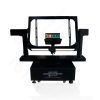
Goniophotometer for Traffic Signal Lamps (Economical Model)
LSG-1950S
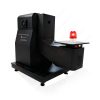
VAD Fire Alarm Visual Alert Device Goniophotometer
LSG-1930
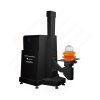
Goniophotometer for Airfield Lighting
LSG-1940
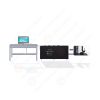
Compact Goniophotometer
LSG-1200A
LED Goniophotometer
LSG-1100
Near Field Moving Detector Goniophotometer
LSG-1900B
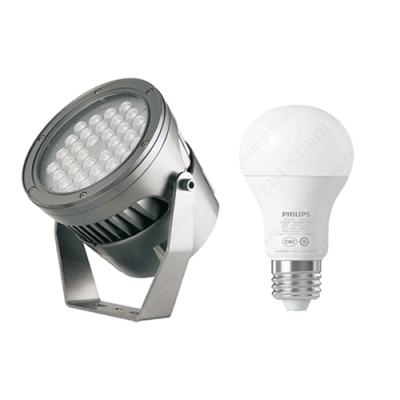 LEDs and Luminaire Test Solutions
 LM-79 and LM-80 Test Solutions
 LED Driver Test Solutions
 Household Appliances Test Solutions
 Mobile and Network Test Solutions
 Automotive Electronics Test Solutions
 Audio-Video and IT Test Solutions
 Cable and Wire Test Solutions
 Plugs and Sockets Test Solutions
 Power Switch Test Solutions
 Transformer Test Solutions
 Electric Toys Test Solutions
 Energy Meter Test Solutions
 Motor-Operated Tool Test Solutions
Select an organization
to browse standards
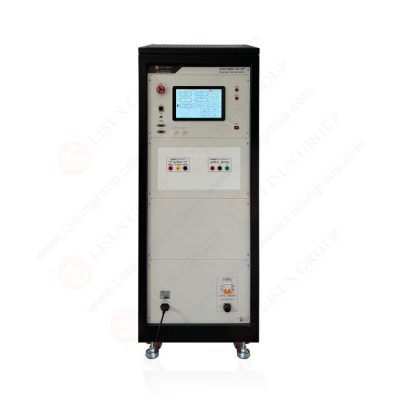
Electronic equipment installed into real-world conditions is often vulnerable to transient overvoltage conditions due to lightning strikes, switching of power grids, interrupting inductive loads, and electrostatically couple with impractical ground. To ensure that the products will not fail and get away during such events, engineers use a surge wave generator that recreates standardized high-energy voltage surges in a regulated laboratory environment. In listing testing This equipment is commonly deployed in combination with a surge current generator, which permits voltage stress to be concurrently considered with current response. The combination of the tools gives a plausible examination of the overvoltage withstand capacity of a device.
Surge testing differs with steady-state electrical testing in that surge events are short-duration, high-energy events which happen randomly in the field. These temporary surges may many times exceed normal operating voltages in microseconds. These conditions are applied in a repeatable way by a surge wave generator, which allows an engineer to measure the behaviour of protective components, insulation systems and circuit layouts at extreme electrical stresses.
Overvoltage occurrences are the cases when the outside intruders introduce unnecessary energy into an electrical system. Surges generated as a result of lightning are one of the most destructive, however, power switching processes that one undergoes on a daily basis can also produce harmful transients. Through power lines, signal cables, and grounding systems, these events spread to delicate circuits of the electronics.
The overvoltage damage is not necessarily quick and evident. Semiconductor interfaces can become weak, insulators can partially deteriorate and safeguarding parts can become ineffective. Surge testing is used to test catastrophic failure and latent damage which may diminish reliability in the long term.
These conditions of stress are simulated with standardized waveforms that represent actual energy transfer in the world as opposed to ideal voltage spikes.
The main purpose of a surge wave generator is to produce a surge waveform with specified rise time, peak voltage and content of energy. These parameters are strictly defined and specified in international standards so as to accompany consistency and relevance.
The waveform usually comprises of a rapid increase in voltages and a slower decrease, which is a representation of the introduction and dissipation of energy in the actual surge incident. This waveform is formed inside the generator and it is carried through by high-voltage capacitors, resistors, and switching elements.
The surge wave generator when attached to the machine under test is using this output applied on determined terminals. The aspect of surge current generator makes sure that the generated current flow is similar to actual surge conditions as well, and this enables the comparison of voltage insulation as well as current carrying ability.
The overvoltage withstand capability cannot be evaluated by only measuring peak voltage tolerance. Real surge events include a large amount of current flow which puts stress on the conductive paths, protective devices and grounding structures.
A surge current generator is used to measure and regulate the amount of current that runs during the surge. This enables the engineers to determine the ability of protective circuit elements, including varistors, gas discharge tubes and transient voltage suppressors, to safely divert energy, without overheating and breaking.
Through the addition of voltage and current testing, Surge testing shows whether a device can simply withstand a surge, or whether it can be used safely with energy without long-term losses in value.
Surge wave generators are working based on documented test protocols that stipulate waveform shape, amplitude, polarity, and repetition. The standardized conditions make the results of these tests meaningful and comparable between laboratories.
Several levels of the surges are used to mimic various levels of severity. Lower levels are the indirect exposure and higher levels are the simulation of a direct coupling of lightning or switching events. The two poles are utilized positively and negatively since the behaviour of a circuit is frequent to vary with the direction of the current.
Through repeated surges, engineers assess cumulative stress impacts and detect progressively degraded results which may not be evident following one occurrence.
Surge protections are achieved in multi-layers in the modern electronic devices. They can be external protection devices, internal suppression components and PCB layout plans. Surge testing is a test to determine the interaction of these elements under stress.
A surge wave generator subject the device to controlled surge waves and engineers observe and test voltage clamping behavior, current flow paths, and functional behavior. Efficient protection contains the internal voltage levels and diverts the surge energy safely to the ground.
Testing goes on to show that protection performs to the right levels and that it does recover properly following the occurrence. Lack of proper coordination of elements of protection will result in partial failures, although the component components may be within specification.
Not only does a surge test require avoidance of body damage. How well he/she functions during and after the surge is also important. Devices can be temporarily disrupted, reset or have their performance impaired.
Surge testing measures the safety of the operation of the device, whether it recovers or not, or involves human intervention. Uncontrolled data loss/reset is deemed unacceptable at minimum of hardware damage even if there is none.
Through behavior observation during the test sequence, engineers obtain the understanding of system robustness and user impact.
The manner in which the surge is used is as important as the surge itself. The various coupling techniques mimic various real-life conditions. Power line coupling, signal line coupling and ground coupling all provide a stress on various parts of the device.
These cases are reflected by a number of coupling modes supported by a wave generator of surge waves. Genuine test configuration guarantees that dynamism energy gets into the apparatus in a natural way as opposed to avoiding vital safeguarding causes.
Laboratories with many years of experience have paid special attention to the arrangement of tests in order not to receive misleading data due to incorrect grounding or routing of cables.
Surge testing is applied on product lifecycle. The preliminary testing assists in the identification of the poor areas on the protection design. Before finalizing hardware, engineers can change the choice of components, layout, or grounding approach.
Design- Before submitting the design to the certification laboratories, pre-compliance testing is performed to ensure the design meets the immunity targets. Final compliance testing will be documented evidence of the device meeting the required levels of surge withstand.
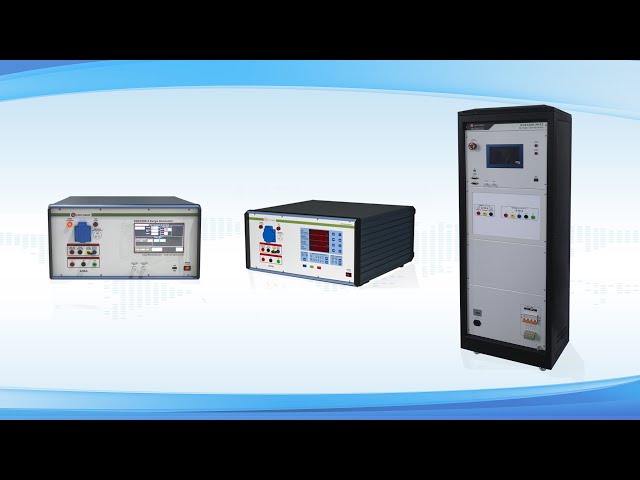
The manufactures like LISUN come up with surge wave generator systems which aid in all the phases of this process and provide a constant waveform generation and proper measurement under extreme test conditions.
Surge testing is also one of the most useful features because it exposes latent damage. A machine can withstand preliminary test functions but end up failing prematurely in the market because of the worn-out parts.
Engineers can identify the trend of degradation by using repeated surges and track the performance over the time. This enables design enhancements that increase long term reliability as opposed to just short-term survival.
Testing of the Surge wave generator, therefore, is very much involved in compliance, durability of the product and customer satisfaction.
A surge wave generator is an important device that is used in the test of the overvoltage withstand capability of electronic equipment under transient realistic conditions. It can be used together with the functionality of a surge current generator to assess fully the behavioral characteristics of voltage stress and energy handling. Standardized waveforms, controlled application, and repeatable testing using surge testing reveal the behavior of devices to the real-world electrical disturbances.
Engineers are now able to test the protection design with reliability through manufacturers like LISUN and ensure firmness and meet international standards. Surge wave generator testing is an important part of the provision of safe, reliable, and resilient electronic systems by uncovering weaknesses in products before they are deployed to the field.
Your email address will not be published. Required fields are marked *

 English
 中文简体
中文简体 English
 Русский
 Español
 Português
 Türkçe
 العربية
 Deutsch
 Polski
 Italiano
 Français
 한국어
한국어 ไทย
ไทย Tiếng Việt
 日本語
日本語