LM-79 Moving Detector Goniophotometer (Mirror Type C)
LSG-6000
High Precision Rotation Luminaire Goniophotometer
LSG-1890B
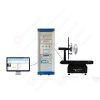
High Precision Rotation Luminaire Goniospectroradiometer
LSG-1890BCCD

Goniophotometer for Automotive and Signal Lamps
LSG-1950
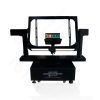
Goniophotometer for Traffic Signal Lamps
LSG-1950S
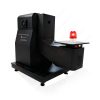
VAD Fire Alarm Visual Alert Device Goniophotometer
LSG-1930
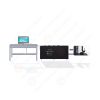
Compact Goniophotometer
LSG-1200A
LED Goniophotometer
LSG-1100
 LEDs and Luminaire Test Solutions
 LM-79 and LM-80 Test Solutions
 LED Driver Test Solutions
 Household Appliances Test Solutions
 Mobile and Network Test Solutions
 Automotive Electronics Test Solutions
 Audio-Video and IT Test Solutions
 Cable and Wire Test Solutions
 Plugs and Sockets Test Solutions
 Power Switch Test Solutions
 Transformer Test Solutions
 Electric Toys Test Solutions
 Energy Meter Test Solutions
 Motor-Operated Tool Test Solutions
Select an organization
to browse standards
Dust test chambers play a critical role in verifying the environmental reliability of electrical and electronic products by simulating real-world dust ingress conditions. This comprehensive analysis examines the fundamental principles, technical standards, and engineering applications of dust test chambers, with particular focus on IEC 60529 compliance and IP protection ratings.
The study explores testing methodologies for IP5XK and IP6XK classifications, equipment design requirements, and practical implementation strategies. Through detailed technical examination, this research provides engineers and quality assurance professionals with essential insights into dustproof performance validation, ensuring product reliability in harsh industrial and environmental conditions. The investigation reveals the importance of precise control over dust concentration, airflow dynamics, and testing duration in reproducing authentic dust exposure scenarios. Furthermore, the paper addresses critical engineering considerations for dust test chamber selection, installation, and operation, offering valuable guidance for establishing effective environmental testing protocols.
Environmental reliability testing has become increasingly critical as electrical and electronic products are deployed in diverse operating conditions ranging from industrial manufacturing floors to outdoor installations. Dust ingress represents one of the most pervasive threats to equipment longevity and operational safety, potentially causing short circuits, mechanical degradation, and thermal management failures. According to industry statistics, approximately 15% of electronic equipment failures in industrial environments can be attributed to dust contamination and particulate matter intrusion.
This challenge has driven the development of sophisticated dust test chambers capable of simulating realistic dust exposure scenarios with precise control over environmental parameters. The global market for environmental test chambers continues to expand, projected to reach $1.2 billion by 2025, with dust testing equipment representing a significant segment driven by increasing quality assurance requirements across automotive, aerospace, and consumer electronics industries.
This paper aims to provide a comprehensive technical analysis of dust test chambers, covering testing standards, equipment design principles, practical implementation strategies, and future technology trends. The primary objectives include examining the IEC 60529 standard framework for dust ingress protection, analyzing technical requirements for dust test chamber design, and evaluating best practices for conducting reliable dustproof performance tests.
Additionally, this research seeks to equip engineers with practical guidance for selecting appropriate dust test chamber solutions, understanding operational parameters, and implementing effective quality assurance protocols. By synthesizing technical standards with practical engineering applications, this study serves as a complete reference for professionals seeking to establish or enhance dust testing capabilities in their organizations, ensuring products meet rigorous reliability requirements through validated dust test chambers.
The IEC 60529 standard, first published in 1989 and subsequently amended in 1999 and 2013, establishes the international framework for degrees of protection provided by enclosures (IP Code). This standard emerged from the need to create uniform classification systems for ingress protection against solid foreign objects and water, enabling consistent product specifications across global markets. The IP code system uses two characteristic numerals: the first digit indicates protection against solid objects (0-6), while the second digit indicates protection against water (0-9).
For dust testing specifically, the first digit classifications IP5X and IP6X represent dust-protected and dust-tight enclosures respectively, with the X indicating that no water protection rating is specified. The K suffix in IP5XK and IP6XK designations refers to specific testing conditions for automotive applications, defined in the DIN 40050-9 standard. The evolution of these standards reflects increasing industry requirements for more precise environmental protection specifications, particularly in automotive electronics where dust exposure conditions are more severe than typical industrial environments.
IEC 60529 defines two distinct dust testing methodologies: IP5X (dust-protected) and IP6X (dust-tight) tests. The IP5X test uses talcum powder with particle sizes not exceeding 75 microns, suspended in a test chamber for 8 hours, during which the equipment under test is operated according to its normal working conditions. Classification as IP5X requires that dust does not penetrate in sufficient quantity to interfere with satisfactory operation of the equipment or impair safety. The more stringent IP6X test employs the same talcum powder but extends the testing duration to 8 hours in a vacuum environment (typically 20 mbar below atmospheric pressure) to simulate severe dust ingress conditions. For IP6X classification, no dust penetration must be detected.
The automotive-specific IP5XK and IP6XK tests, defined in DIN 40050-9, utilize quartz sand rather than talcum powder and incorporate more aggressive air circulation parameters to simulate on-vehicle exposure conditions. These tests require dust test chambers capable of maintaining precise dust concentrations (2 kg/m³ ± 0.5 kg/m³), airflow velocities (1-5 m/s), and temperature control (23°C ± 5°C) throughout the testing duration.
The fundamental technical challenge in dust test chamber design lies in achieving uniform dust distribution while maintaining consistent particle concentration throughout the test volume. Modern dust test chambers employ sophisticated dust generation systems utilizing compressed air atomization to create consistent dust clouds. The dust feed mechanism typically consists of a vibratory feeder or screw conveyor that delivers dust particles at a controlled rate into a high-velocity air stream (typically 15-20 m/s) where they are dispersed into fine particles. Critical design parameters include the dust feed rate (typically 50-200 g/min for IP5X/IP6X testing), atomization air pressure (0.3-0.6 MPa), and the number and placement of injection nozzles to ensure homogeneous distribution.
The dust particle size distribution must be carefully controlled to meet IEC 60529 specifications, with 99% of particles not exceeding 75 microns and a mean particle size of 30-40 microns. Advanced systems incorporate ultrasonic dust monitoring probes that provide real-time feedback on dust concentration, enabling closed-loop control to maintain target density within ±10% of the specified value. The integration of HEPA filtration systems for air recirculation enables sustainable operation while maintaining test consistency.
Effective dust testing requires precise control over airflow patterns to ensure uniform dust exposure across all test specimen surfaces. The test chamber geometry and airflow management system are engineered to create turbulent yet controlled circulation that prevents dust settling while maintaining consistent exposure conditions. Key airflow parameters include circulation velocity (typically 1-3 m/s for general IP testing, up to 5 m/s for automotive IPXK testing), air exchange rate (10-15 changes per hour), and the number and placement of circulation fans.
The computational fluid dynamics (CFD) analysis is frequently employed during chamber design to optimize airflow patterns and eliminate dead zones where dust might accumulate without reaching the test specimen. For IP6X vacuum-assisted testing, the chamber must incorporate sealed penetration points for vacuum connections while maintaining the specified pressure differential (20 mbar below atmospheric pressure). Advanced dust test chambers feature variable frequency drives (VFDs) on circulation fans, enabling programmable velocity profiles that can simulate varying environmental conditions such as dust storms or steady industrial exposure.
While dust testing primarily focuses on particulate ingress, temperature and humidity conditions significantly affect dust behavior and test specimen characteristics. IEC 60529 specifies standard test conditions of 23°C ± 5°C with no specific humidity control requirements, but many applications require testing at elevated or reduced temperatures to simulate actual operating environments. Temperature conditioning systems in dust test chambers typically employ electric heating elements (2-5 kW capacity depending on chamber size) and refrigeration systems (0.5-2 kW) capable of maintaining temperature ranges from -20°C to +80°C. Humidity control is increasingly important for comprehensive environmental testing, particularly for electronic equipment where condensation can combine with dust ingress to create corrosive or conductive deposits.
Modern chambers incorporate humidification (steam generator or ultrasonic) and dehumidification (desiccant wheel or condensing coil) systems capable of maintaining relative humidity from 10% to 95%. The interaction between temperature, humidity, and dust behavior requires sophisticated control algorithms that balance multiple environmental parameters while maintaining dust concentration within specifications.
Table 1: Technical Specifications for IP5X/IP6X Dust Testing
| Parameter | IP5X Value | IP6X Value | Standard | Unit |
| Dust Type | Talcum Powder | Talcum Powder | IEC 60529 | – |
| Particle Size | ≤75 | ≤75 | IEC 60529 | μm |
| Dust Concentration | 2±0.5 | 2±0.5 | IEC 60529 | kg/m³ |
| Test Duration | 8 | 8 | IEC 60529 | hours |
| Vacuum Pressure | – | 20 | IEC 60529 | mbar |
| Temperature | 23±5 | 23±5 | IEC 60529 | °C |
Accurate measurement and monitoring of test parameters is essential for reliable and reproducible dust testing results. Modern dust test chambers incorporate comprehensive sensor arrays and data acquisition systems that record environmental conditions throughout the test duration. Primary measurement parameters include dust concentration (measured via optical particle counters or gravimetric sampling), temperature (multiple platinum RTD sensors throughout the chamber), relative humidity (capacitive sensors), airflow velocity (anemometers or Pitot tubes), and vacuum pressure (absolute pressure transducers for IP6X testing).
The sampling frequency typically ranges from 1 Hz to 10 Hz depending on parameter criticality, with data logged to non-volatile memory for post-test analysis. Advanced chambers feature automated result assessment capabilities that compare measured parameters against acceptance criteria and generate pass/fail determinations based on ingress protection classification. Calibration requirements are stringent, with dust concentration sensors requiring calibration at least annually using certified reference materials and temperature sensors requiring traceable calibration to national standards. The integration of remote monitoring capabilities enables operators to supervise test progress from outside the test chamber enclosure, reducing exposure to dust while maintaining test integrity.
The construction materials for dust test chambers must withstand continuous exposure to abrasive dust particles while maintaining dimensional stability and corrosion resistance. The chamber enclosure typically employs stainless steel (AISI 304 or 316) with a minimum thickness of 1.5 mm for structural integrity, while the interior chamber surfaces may feature hardened coatings or liners to resist abrasion from circulating dust particles. The observation windows require impact-resistant tempered glass or polycarbonate with anti-fog coatings to maintain visibility throughout the test duration, typically with minimum thickness of 8 mm and IP65 protection rating.
All seals and gaskets must be dust-impermeable yet flexible enough to accommodate thermal expansion, with silicone rubber being the preferred material due to its temperature stability (-60°C to +200°C) and dust resistance properties. The circulation system components including fan blades, ducting, and diffusers must be constructed from abrasion-resistant materials such as hardened aluminum alloys or coated steel, with rotating elements dynamically balanced to minimize vibration. The dust feed mechanism requires materials compatible with the test dust composition, typically stainless steel with polymer bushings to prevent contamination and ensure consistent feed rates over extended operation periods.
The structural design of dust test chambers must prioritize operational safety, ease of specimen access, and maintenance requirements while maintaining test integrity. The chamber enclosure should incorporate interlocking safety systems that prevent operation with doors or access panels open, with fail-safe mechanisms that immediately stop dust generation and circulation upon safety activation. Access doors must feature multi-point latching systems with pressure sealing capability of at least 2000 Pa to maintain the required vacuum for IP6X testing. The internal chamber volume must be sized to accommodate the maximum test specimen dimensions while maintaining adequate clearance (minimum 200 mm) for uniform airflow around all surfaces.
The dust collection and filtration system requires accessible filter housings with quick-release mechanisms for rapid filter replacement, typically incorporating HEPA filters with 99.97% efficiency at 0.3 microns. Emergency dust extraction systems must be provided for rapid chamber evacuation following test completion or in case of equipment malfunction, with exhaust ports equipped with explosion-proof venting where combustible dusts may be tested. The structural frame must be designed to support the chamber weight when filled with dust (typically 500-2000 kg depending on chamber size) while maintaining level alignment within ±2 degrees to ensure proper dust distribution.
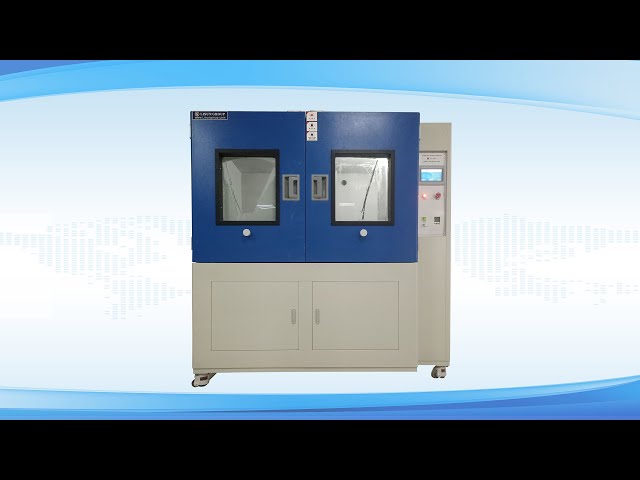
The SC-015 Dustproof Test Chamber represents a comprehensive solution for dust ingress protection testing, available in multiple configurations to accommodate diverse testing requirements. Standard chamber models include benchtop units with internal volumes of 100-200 liters for small component testing, floor-standing units with 500-1000 liter capacity for medium-sized products, and custom-configured chambers exceeding 2000 liters for large equipment testing. Each model incorporates the fundamental testing capabilities required for IEC 60529 IP5X and IP6X compliance, with optional enhancements including temperature conditioning (-20°C to +80°C), humidity control (10-95% RH), and automotive IPXK testing modes with quartz sand capability.
The modular design approach allows for field upgrades as testing requirements evolve, with add-on modules such as extended vacuum systems for IP6X testing, integrated measurement instrumentation, and automated specimen rotation mechanisms for enhanced test uniformity. Product variants include specialized configurations for specific industry applications, such as automotive electronics testing chambers with enhanced dust recirculation capabilities and aerospace testing chambers with altitude simulation features for combined environmental stress testing.
The technical capabilities of modern dust test chambers are defined by comprehensive performance specifications that ensure reliable and reproducible testing results. The SC-015 series chambers feature internal volume options ranging from 150L to 1500L, with dust concentration control accuracy of ±0.2 kg/m³ and the ability to maintain target concentration within ±10% throughout extended test durations. Temperature control capabilities span from -20°C to +80°C with uniformity of ±2°C throughout the chamber, while optional humidity control extends the environmental simulation range to 10-95% RH with ±3% accuracy.
The airflow control system achieves velocity ranges of 0.5-10 m/s with programmable profiles for varying test conditions, supporting both standard IEC 60529 testing and automotive DIN 40050-9 requirements. The vacuum system for IP6X testing achieves pressure differentials up to 200 mbar below atmospheric pressure with stability of ±2 mbar, meeting the stringent requirements for dust-tight certification. The control system features programmable test profiles with up to 100 steps, real-time data logging with 1-second sampling intervals, and integrated compliance checking against IEC 60529 acceptance criteria.
Table 2: SC-015 Dust Test Chamber Technical Specifications
| Parameter | Specification | Unit | Standard |
| Internal Volume | 150-1500 | Liters | Manufacturer |
| Temperature Range | -20 to +80 | °C | Manufacturer |
| Humidity Range | 10-95 | %RH | Optional |
| Airflow Velocity | 0.5-10 | m/s | Manufacturer |
| Vacuum Capability | 0-200 | mbar | IP6X |
| Dust Concentration Control | ±0.2 | kg/m³ | IEC 60529 |
| Power Supply | 220V/380V | VAC | 50/60Hz |
Dust test chambers find extensive application across diverse industries where product reliability in dusty environments is critical. The automotive sector represents one of the largest application areas, with manufacturers conducting comprehensive dust ingress testing on electronic control units, sensors, lighting systems, and electrical connectors to ensure reliable operation throughout vehicle lifecycles. Consumer electronics companies utilize dust testing to validate the sealing integrity of smartphones, tablets, and wearable devices, particularly for products targeting outdoor or industrial applications. Industrial automation and control equipment manufacturers subject their products to rigorous dust testing to prevent premature failure in factory environments where airborne particulates are prevalent.
Aerospace and defense applications include testing of avionics, mission-critical electronic systems, and ground support equipment to ensure functionality in desert operations and other challenging environments. The renewable energy sector employs dust testing for solar inverters, wind turbine control systems, and energy storage components deployed in locations with high dust exposure. Medical equipment manufacturers also conduct dust testing for devices operating in clinical environments where dust contamination could compromise sterility or equipment functionality.
Selecting the appropriate dust test chamber requires careful evaluation of multiple technical and business factors aligned with specific testing requirements and operational constraints. Primary considerations include the maximum test specimen dimensions, which determine the minimum internal chamber volume required, with general recommendations specifying at least twice the specimen volume to ensure adequate airflow circulation. The required test standards (IEC 60529, DIN 40050-9, or custom specifications) significantly influence chamber selection, as automotive IPXK testing requires specialized features not needed for standard IP5X/IP6X testing. Testing throughput requirements influence the decision between single-chamber and multi-chamber configurations, with high-volume testing environments potentially benefiting from parallel chamber installations to maximize utilization.
Budget constraints must balance initial acquisition costs against long-term operational expenses, including dust media consumption, filter replacements, calibration services, and maintenance requirements. Future-proofing considerations should anticipate potential testing requirement expansions, selecting chambers with upgrade capabilities for additional environmental parameters or extended capacity needs. The technical support infrastructure from the equipment manufacturer, including availability of calibration services, spare parts, and technical training, represents a critical long-term selection factor often overlooked in initial acquisition decisions.
Establishing effective dust testing protocols requires attention to operational practices that ensure test reliability while maximizing equipment longevity and operator safety. Regular maintenance procedures are essential, including daily inspection of seals and gaskets for wear, weekly cleaning of dust feed mechanisms to prevent clogging, and monthly calibration verification of critical measurement sensors. The quality and storage of test dust significantly impact test reproducibility, requiring procurement from certified suppliers and storage in climate-controlled environments to prevent moisture absorption and particle agglomeration. Specimen preparation protocols must ensure consistent initial conditions, with particular attention to cleaning procedures that remove surface contaminants without affecting specimen sealing characteristics.
Test parameter selection should reflect realistic operating conditions rather than defaulting to standard values, potentially including accelerated dust exposure profiles for life testing applications. Data management practices should establish comprehensive record-keeping for traceability, storing test parameters, environmental data, and inspection results in secure databases with appropriate backup and retention policies. Operator training programs must cover not only equipment operation but also safety procedures, emergency response protocols, and interpretation of test results relative to acceptance criteria.
Practical implementations of dust test chambers across various industries demonstrate the technology’s value in ensuring product reliability and regulatory compliance. Automotive electronics manufacturers have reported significant reduction in warranty claims related to dust-related failures following implementation of comprehensive dust ingress testing programs, with one major manufacturer achieving 40% reduction in sensor failures after enhancing dust testing protocols to include IPXK testing conditions. Consumer electronics companies targeting outdoor markets have utilized dust testing to differentiate products through proven durability claims, with smartphone manufacturers achieving IP5X certification for rugged models and experiencing increased market share in construction and industrial sectors.
Industrial automation equipment suppliers have employed dust testing to validate extended maintenance intervals, demonstrating through accelerated dust exposure testing that properly sealed components can operate reliably for extended periods in particulate-laden environments, reducing total cost of ownership for end users. Aerospace applications have utilized dust testing combined with other environmental stresses to simulate mission conditions for deployed military equipment, enabling more accurate prediction of field performance and informing design improvements for enhanced dust protection. These case studies illustrate how proper dust testing implementation contributes to product quality improvement, risk reduction, and competitive differentiation across diverse market segments.
The evolution of dust test chamber technology continues to advance in response to emerging testing requirements and technological innovations. Current development trends focus on enhanced automation capabilities, including automated specimen handling systems that reduce operator exposure to dust while improving testing consistency and throughput. Advanced sensing technologies incorporating optical particle counters with real-time size distribution analysis enable more sophisticated characterization of dust behavior during testing, providing insights beyond simple concentration measurement.
The integration of machine learning algorithms for predictive maintenance and test optimization represents an emerging trend, with systems learning from historical test data to identify potential equipment degradation before failures occur and recommend optimized test parameter adjustments for specific specimen types. Energy efficiency improvements are driving development of more efficient dust recirculation and filtration systems, reducing operational costs while maintaining test quality.
The combination of dust testing with other environmental stresses such as temperature cycling, vibration, and humidity in multi-stress chambers enables more comprehensive simulation of real-world conditions, particularly valuable for accelerated life testing applications. Future developments may include expanded capabilities for testing with combustible dusts requiring explosion-proof designs, and integration with digital twin technologies for virtual testing and test protocol development before physical testing.
Dust test chambers represent essential equipment for validating environmental reliability across diverse industries, providing standardized methodologies for assessing product protection against particulate ingress. This comprehensive analysis has examined the technical foundations of dust testing based on IEC 60529 standards, equipment design requirements, operational best practices, and emerging technology trends. The importance of precise control over dust concentration, airflow dynamics, and environmental parameters has been established as fundamental to achieving reliable and reproducible test results.
As product deployment environments become increasingly demanding and regulatory requirements continue to evolve, the role of dust test chambers in quality assurance and product development programs will continue to expand. Future technological advancements in automation, sensing, and multi-stress testing capabilities will enhance the value and effectiveness of dust testing operations.
By implementing the technical principles and operational practices outlined in this study, organizations can establish effective dust testing capabilities that contribute to improved product reliability, reduced field failures, and enhanced competitive differentiation. The continuous evolution of dust test chamber technology, coupled with ongoing refinement of testing standards and methodologies, ensures that this equipment will remain a critical tool for environmental reliability validation in the foreseeable future.
Tags:SC-015Your email address will not be published. Required fields are marked *

 English
 中文简体
中文简体 English
 Русский
 Español
 Português
 Türkçe
 العربية
 Deutsch
 Polski
 Italiano
 Français
 한국어
한국어 ไทย
ไทย Tiếng Việt
 日本語
日本語