LM-79 Moving Detector Goniophotometer (Mirror Type C)
LSG-6000
High Precision Rotation Luminaire Goniophotometer
LSG-1890B
High Precision Rotation Luminaire Goniospectroradiometer
LSG-1890BCCD

Goniophotometer for Automotive and Signal Lamps
LSG-1950
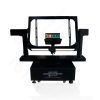
Goniophotometer for Traffic Signal Lamps
LSG-1950S
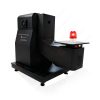
VAD Fire Alarm Visual Alert Device Goniophotometer
LSG-1930
Compact Goniophotometer
LSG-1200A
LED Goniophotometer
LSG-1100
 LEDs and Luminaire Test Solutions
 LM-79 and LM-80 Test Solutions
 LED Driver Test Solutions
 Household Appliances Test Solutions
 Mobile and Network Test Solutions
 Automotive Electronics Test Solutions
 Audio-Video and IT Test Solutions
 Cable and Wire Test Solutions
 Plugs and Sockets Test Solutions
 Power Switch Test Solutions
 Transformer Test Solutions
 Electric Toys Test Solutions
 Energy Meter Test Solutions
 Motor-Operated Tool Test Solutions
Select an organization
to browse standards
Abstract
This paper systematically elucidates the technical principles and standardized methodologies for the IPX3 and IPX4 water ingress testing, which are critical assessments within the ingress protection (IP) rating system for electronic enclosures. A detailed interpretation of the stringent requirements stipulated in the international standard IEC 60529 and its national counterpart, GB/T 4208, is provided, covering core parameters such as spray angle, flow rate, water pressure, test duration, and distance. Subsequently, the Spraying Nozzle and Splashing Water Hand-held Test Device (model JL-34S) from LISUN Electronics is presented as a quintessential example of a standardized testing tool. The analysis delves into how this apparatus accurately fulfills the test conditions defined by the standards and offers a comprehensive operational guide encompassing equipment setup, parameter configuration, and test execution. This article serves as a technical reference with both theoretical depth and practical utility for R&D engineers, quality assurance personnel, and industry researchers, clarifying the paramount importance of correctly performed IP water ingress tests for ensuring product reliability and safety.
1. Introduction
In the design and manufacturing of modern electrical and electronic products, the Ingress Protection (IP) Rating code stands as the core metric for evaluating an enclosure’s ability to protect against the intrusion of solid foreign objects (e.g., dust) and liquid moisture. Among these, water resistance is directly critical to a product’s operational reliability and service life in damp or rainy environments such as outdoors, kitchens, bathrooms, and vehicular applications. Within the IP water resistance hierarchy, IPX3 (protection against spraying water) and IPX4 (protection against splashing water) are two of the most widely applicable grades, defining a product’s defense against water projected from specific angles and intensities. To ensure the global comparability and authority of test results, standards like IEC 60529 and its national derivatives (e.g., China’s GB/T 4208) prescribe highly detailed specifications for test equipment and methods. Performing compliant IPX3/IPX4 water ingress testing hinges on utilizing a device capable of precisely replicating the water spray defined by the standards. The hand-held spray nozzle, due to its operational flexibility and uniform coverage, has become the standard tool for conducting such tests. This article provides an in-depth analysis of the testing standards and uses LISUN’s JL-34S Spraying Nozzle and Splashing Water Hand-held Test Device as a case study to detail its technical principles and the standardized methodology for hand-held spray nozzle operation.
2. Technical Standard Interpretation for IPX3 and IPX4 Grades
The second characteristic numeral “3” and “4” in the IP code represent specific water test conditions. Understanding these conditions is prerequisite to conducting tests correctly.
2.1 Definition and Differentiation of Test Methods
According to GB/T 4208-2017 (identical to IEC 60529:2013):
The core distinction lies in the spray angle: IPX3 is up to 60° from vertical on each side, while IPX4 is up to 180°, requiring complete overhead coverage of the product. In practice, swaying tube test equipment is suitable for small, regular samples. However, for large, heavy, or installed equipment, the hand-held spray nozzle offers irreplaceable flexibility.
2.2 Core Test Parameters
Whether using a swaying tube or a hand-held nozzle, the following strict technical parameters must be met to ensure consistent test severity:
| Parameter | IPX3 (Spraying Water) | IPX4 (Splashing Water) | Common Requirement |
|---|---|---|---|
| Spray Angle | Up to 60° from vertical on each side | Up to 180° from vertical on each side | — |
| Nozzle Hole Diameter | 0.5 mm | 0.5 mm | The spray head shall contain 121 holes of 0.5 mm diameter evenly distributed over a Φ100 mm circle. |
| Flow Rate per Hole | 0.07 L/min (±5%) | 0.07 L/min (±5%) | — |
| Total Flow Rate | Flow per hole × 121 holes ≈ 8.5 L/min | Flow per hole × 121 holes ≈ 8.5 L/min | Achieved by adjusting water pressure to the standard value. |
| Test Duration | Based on enclosure surface area: 1 minute per square meter, minimum 5 minutes. | Based on enclosure surface area: 1 minute per square meter, minimum 5 minutes. | Surface area calculation excludes any mounting surface. |
| Water Pressure | Adjusted within the range of 50 to 150 kPa to achieve the specified flow rate. | Adjusted within the range of 50 to 150 kPa to achieve the specified flow rate. | Must be monitored using a pressure gauge. |
| Nozzle Distance | Approximately 300 mm to 500 mm from the nozzle to the enclosure surface. | Approximately 300 mm to 500 mm from the nozzle to the enclosure surface. | Spray coverage should be uniform at this distance. |
3. Advantages of the Hand-held Nozzle Solution & Analysis of the JL-34S Device
For large cabinets, outdoor luminaires, charging stations, or fixed installed equipment, traditional swaying tube test stands are often unsuitable. In such cases, a compliant hand-held spray nozzle solution becomes the only viable option.
3.1 Traditional Challenges and the Standardized Solution
Non-standard watering devices (e.g., ordinary hoses) cannot guarantee the precision of 0.5 mm hole diameter, the distribution uniformity of 121 holes, or stable water pressure and flow, leading to invalid test results that fail to reflect true product protection. Therefore, employing a dedicated test device like LISUN’s JL-34S is fundamental to obtaining authoritative, repeatable test data.
3.2 Technical Characteristics of the JL-34S Test Device
This device is designed explicitly to meet the requirements of GB/T 4208-2017, clauses 14.2.3~14.2.4 and Figure 5. Its core design philosophy is to translate abstract standard clauses into intuitive, controllable physical operations:
This apparatus simplifies IPX3/IPX4 testing from a complex laboratory engineering task into a clearly defined, parameter-controllable, field-executable procedure.
4. Operational Procedure for Conducting Tests with a Hand-held Nozzle (Using JL-34S as an Example)
4.1 Pre-Test Preparation
4.2 Calibration & Parameter Setting (Critical Step)
4.3 Test Execution
4.4 Post-Test Inspection & Result Evaluation

5. Test Precautions and Device Maintenance
To ensure test validity:
6. Conclusion
IPX3 and IPX4 water ingress testing form the cornerstone for verifying an electronic product’s ability to withstand everyday spraying and splashing water. The reliability of these test results is directly dependent on strict adherence to international and national standards like IEC 60529 and GB/T 4208. This article has systematically outlined the technical essence of these tests and demonstrates that employing a standardized hand-held spray nozzle solution is an effective approach for addressing diverse and large-scale Equipment Under Test. The JL-34S Spraying Nozzle and Splashing Water Hand-held Test Device from LISUN Electronics, as a representative example of such standardized tools, translates complex standard requirements into a precisely executable operational procedure through integrated pressure control, a standard spray head, and ergonomic design. This significantly ensures the rigor and efficiency of water ingress testing. For R&D and quality teams committed to enhancing product outdoor suitability, safety, and market competitiveness, a deep understanding of the testing standards and the procurement of compliant, reliable test equipment like the JL-34S are essential choices for fortifying product quality defenses.
Your email address will not be published. Required fields are marked *

 English
 中文简体
中文简体 English
 Русский
 Español
 Português
 Türkçe
 العربية
 Deutsch
 Polski
 Italiano
 Français
 한국어
한국어 ไทย
ไทย Tiếng Việt
 日本語
日本語