LM-79 Moving Detector Goniophotometer (Mirror Type C)
LSG-6000
High Precision Rotation Luminaire Goniophotometer
LSG-1890B
High Precision Rotation Luminaire Goniospectroradiometer
LSG-1890BCCD

Goniophotometer for Automotive and Signal Lamps
LSG-1950
Goniophotometer for Traffic Signal Lamps (Economical Model)
LSG-1950S
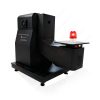
VAD Fire Alarm Visual Alert Device Goniophotometer
LSG-1930
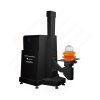
Goniophotometer for Airfield Lighting
LSG-1940
Compact Goniophotometer
LSG-1200A
LED Goniophotometer
LSG-1100
Near Field Moving Detector Goniophotometer
LSG-1900B
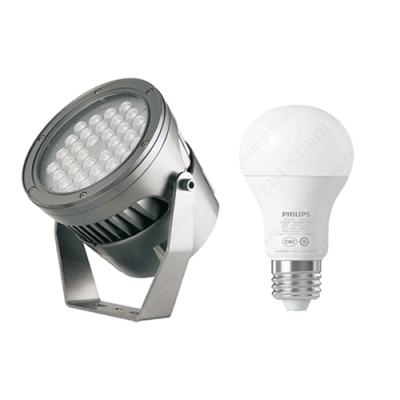 LEDs and Luminaire Test Solutions
 LM-79 and LM-80 Test Solutions
 LED Driver Test Solutions
 Household Appliances Test Solutions
 Mobile and Network Test Solutions
 Automotive Electronics Test Solutions
 Audio-Video and IT Test Solutions
 Cable and Wire Test Solutions
 Plugs and Sockets Test Solutions
 Power Switch Test Solutions
 Transformer Test Solutions
 Electric Toys Test Solutions
 Energy Meter Test Solutions
 Motor-Operated Tool Test Solutions
Select an organization
to browse standards
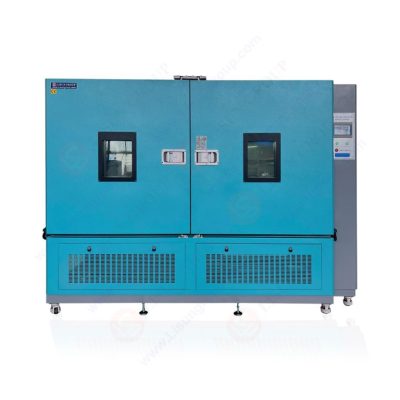
Environmental test program qualifies electronic components as a basic condition that they should be able to work under various operating and storing conditions. Electronics in modern application suffer at the ends of the temperature range humidity vibration electrical bias and long duty cycles which increase the rate of most degradation mechanisms solder fatigue corrosion dielectric breakdown and parameter drift. Constant temperature chamber allows a controlled platform on which these stresses can be applied systematically and repeatably in order to enable engineers detect the weak points of the products in advance prior to their entry into the field.
Qualification is not a one-time exposure as a series of tests that are developed to recreate the physics of the failure that is applicable to the application. An environmental test campaign must be well planned to form a confidence margin instead of just having to provide a demonstration of survival. In this method, chambers are required to provide tight control long duration- operation and detailed data recording in such a way that outcomes can be traced to prescribed stress-histories.
Practical use of environmental qualification makes use of a number of types of chambers that are then chosen to deal with a certain stress factor. Most programs rely on temperature chambers since almost all materials and processes related to electricity are influenced by temperature. Constant temperature chamber is used to provide a steady thermal environment to steady state aging tests (high temperature operating life or low temperature storage). Such tests indicate material embrittlement through diffusion based degradation and long term drift which cannot be observed within short term cycling.
Cyclic temperature chambers expose repeated expansion and contraction to shorten the fatigue duration of solder joints connectors and bonded interfaces. Profiles used in cycling are custom designed to component manufacturing and anticipated service rates and dwell times. Humidity on humidity temperature chambers exposes components to humidity-induced mechanisms such as: corrosion insulation resistance loss; and swelling. Temperature and humidity should be controlled orchestrated to prevent the unwanted condensation or impractical dry periods.
Further levels of qualification can include the use of a thermal shock chambers which plates extreme temperature changes beyond normal cycling limits. Although no substitute of steady state tests thermal shock is useful in disclosing hidden flaws on interfaces and materials. Reduced air density Chambers It provides a simulated low air density environment in pressure or altitude chambers that are used in aerospace and high altitudes. All of the types of chambers bring forth original understanding and combine to create an overall environmental testing plan.
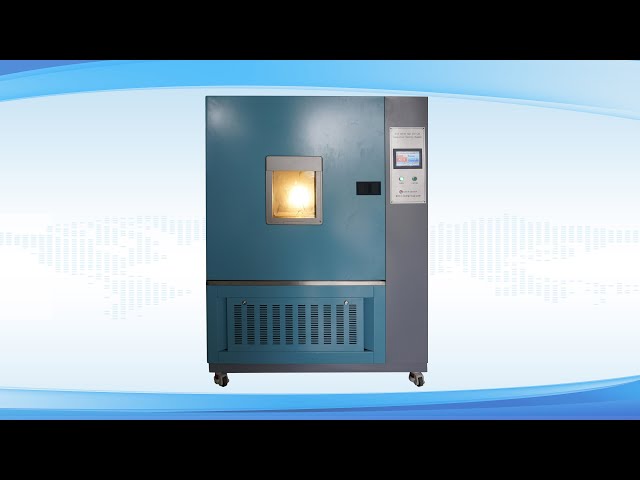
The validity of the results of environmental tests lies in the accuracy of chambers to replicate the conditions as specified. Control fidelity refers to stability in ramp accuracy in temperature uniformity and control in humidity throughout the usable test volume. A minor variation can cause changes in the rates of failures and lead to a lack of comparison between designs or suppliers.
Uniformity mapping confirms that the stress under which consistent specimens are subjected to do not depend on their position in the chamber. This is especially essential to highly populated rack or massive assemblies. Heating cooling and humidification loops need to be synchronized using control systems to make sure that there is no overshoot and oscillation. In constant temperature work stability over weeks, months, is important since drift invalidates aging assumptions.
Another requirement is calibration readiness. These sensors need to be available to check and the traceable calibration periods need to be proportional to the severity of the use. When failures are encountered, the audit requirements would be supported by the presence of chambers in which extensive recording of environmental parameters takes place and the analysis of the root cause of failures is straightforward. Assessing the suppliers engineers must consider not only the headline specification, but also the long campaign control performance.
Environmental testing can only make sense in instances where the specimens are a reflection of actual production situation. Proper packaging coating and features are also a part of component preparation. Drying or baseline electrical characterization are preconditioning steps that determine baseline values in comparison with post test results.
Fixturing and mounting have an effect. The fixtures must be passive and not heat sinks or moisture proofs. The importance of orientation causes the gravitating influence on condensate flow and thermal gradients. Constant temperature chamber tests fixtures should consist of constant airflow so that parts are in true thermal equilibrium.
Service conditions are usually necessitated to be replicated using operational bias. Activation of the components during exposure increases some processes such as electromigration leakage and dielectric stress. Feedthroughs needed to be electrically rated to maintain chamber integrity, as well as not create undesirable heat paths. An operational data and environmental logs are important to strengthen the worth of the test in terms of analytics.
Environmental test chambers bring about massive data and have to be interpreted with great caution. Body accelerated conditions do not directly be translated to field life without validated models. The results in place point to relative robustness margins and overpowering failure modes. Absolute prediction of life may also be uncertain but comparing designs on similar histories of stress can offer practical guidance.
The analysis of failure after exposure to chambers is very important. Microscopic examination of a visual inspection and electrical testing of the images, as well as at times a destructive examination of the failures, indicate whether material choice process variance is cause or design form is cause. The connection of such findings to the environmental stress profile assists in the designing improvements.
Confidence is improved through incorporation with other qualification activities. A combination of environmental test results, electrical overstress vibration, or chemical exposure data is a common way of constructing a complete picture in reliability. The test relevance is confirmed and refining profiles in future programs is informed by cross correlation with field return data.
Choosing the environmental test chambers is an effective move that laboratories and manufacturers make. Long term effectiveness relies on the capacity control accuracy flexibility and service support. The over specified chambers are more expensive and difficult whereas the under specified units restrict the test realism and might require outsourcing.
System suppliers including LISUN offer various environmental chambers and accessories that assist in temperature humidity and combined stress testing. In assessing the options that engineers are supposed to take into consideration, the ability of the chamber to integrate with the current workflows data systems and calibration programs is to be considered.
Maintenance and expertise of the operators are what is needed in the long run. Control fidelity is maintained by inspecting seals refrigeration systems and sensors on a regular basis. Training will help in maintaining the same procedures being applied and also deviations are identified in time. Supported procedures and plans promote repeatability and readiness to audit.
The entire qualification of electronic components focuses on environmental test chambers. The way they facilitate the control of applying temperature and humidity and all combined stresses they expose failure processes that characterised real world reliability. Various types of chambers are utilized in a balanced environmental test program such as the constant temperature chamber which is used in the process of focusing on both steady state and cyclic degradation. By providing accurate control under proper documentation and a dependable performance at the end of the day, chambers make environmental testing an effective tool that forms the foundation of assured product qualification and continued operation.
Tags:GDJS-015BYour email address will not be published. Required fields are marked *

 English
 中文简体
中文简体 English
 Русский
 Español
 Português
 Türkçe
 العربية
 Deutsch
 Polski
 Italiano
 Français
 한국어
한국어 ไทย
ไทย Tiếng Việt
 日本語
日本語