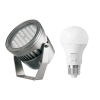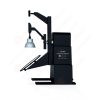
LM-79 Moving Detector Goniophotometer (Mirror Type C)
LSG-6000
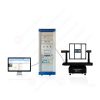
High Precision Rotation Luminaire Goniophotometer
LSG-1890B
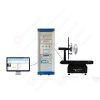
High Precision Rotation Luminaire Goniospectroradiometer
LSG-1890BCCD

Goniophotometer for Automotive and Signal Lamps
LSG-1950
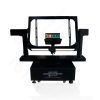
Goniophotometer for Traffic Signal Lamps (Economical Model)
LSG-1950S
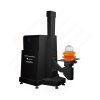
Goniophotometer for Airfield Lighting
LSG-1940
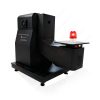
VAD Fire Alarm Visual Alert Device Goniophotometer
LSG-1930
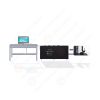
Compact Goniophotometer
LSG-1200A
LED Goniophotometer
LSG-1100
Near Field Moving Detector Goniophotometer
LSG-1900B
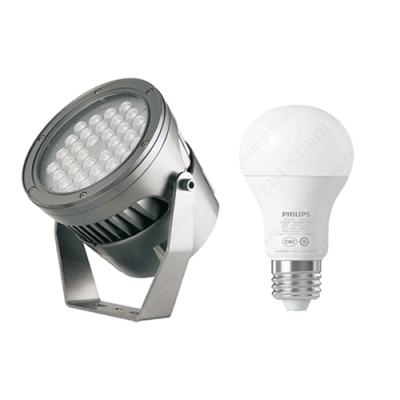 LEDs and Luminaire Test Solutions
 LM-79 and LM-80 Test Solutions
 LED Driver Test Solutions
 Household Appliances Test Solutions
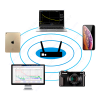 Mobile and Network Test Solutions
 Automotive Electronics Test Solutions
 Audio-Video and IT Test Solutions
 Cable and Wire Test Solutions
 Plugs and Sockets Test Solutions
 Power Switch Test Solutions
 Transformer Test Solutions
 Electric Toys Test Solutions
 Energy Meter Test Solutions
 Motor-Operated Tool Test Solutions
Select an organization
to browse standards
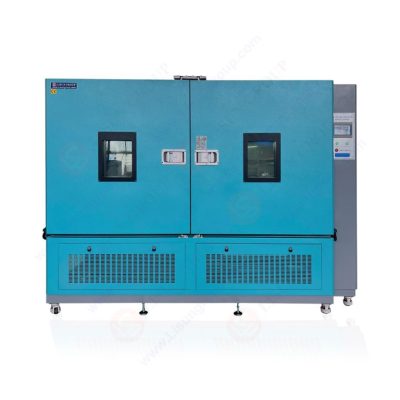
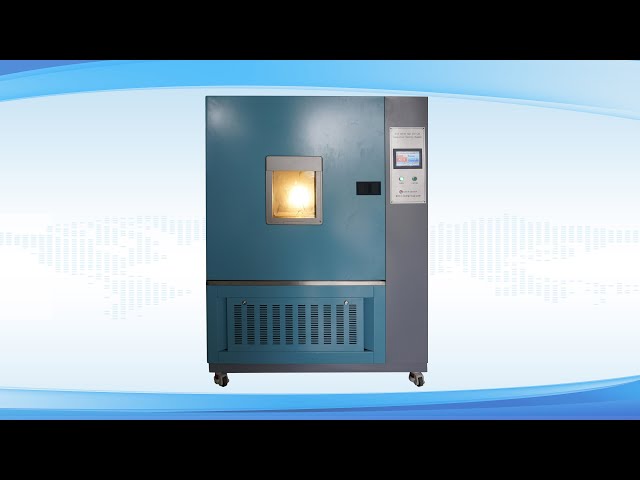
A climatic chamber is a major equipment in checking whether components are viable and can perform well in the case of combined temperature and humidity pressure. Contemporary products are used over a wide range of climatic conditions and duty cycles with heat increasing the rate of chemical reactions and moisture corrosion insulation breakage as well as swelling. Reliability programs are thus based on controlled exposure to environmental conditions in order to expose failures in advance prior to field use of the product. Single parameter tests offer some insight capacity whereas interaction impacts that prevail in the real-world degradation are reproduced by the combination of the procedure of interaction. Here the thermal shock test chamber is a contrived tool and not a mere enclosure and results obtained by processes used dictate the validity of conclusions.
Product screening and component reliability verification are different. Passing a fixed exposure in itself is not the goal but to learn about the trends in margins and sensitivities. The procedures should be in such a way that they emphasize on the relevant physics and do not add unrealist artifacts. Such balance is the difference between sound climatic testing and incidental qualification.
Chamber configuration and control fidelity is the initiation of the effectiveness of climatic testing. Loops associated with temperature and humidity need to be adjusted to collaborate due to the moisture control arising between air temperature and the airflow distribution. When the poor coordination is present then transient overshoot condensation or dry out occurs, which does not operate according to the intended profile. The chamber must be mapped regarding temperature uniformity and the distribution of humidity in the volume used before any reliability runs the chamber. Mapping ensures that sensors are reflective of specimen conditions instead of hot / cold localisations.
Calibration is a requirement and not a supplement. Humidity sensors temperature sensors temperature controllers and humidity sensors should have traceable calibration after some time depending on the severity of use. A small drift of even few percentage relative humidity or even a degree of Celsius, can alter the rate of corrosion and the polymer aging considerably. These processes ought to involve pre test verification checks and acceptance criteria that can stop the testing process in case physical control parameters fall out of tolerance.
Other configuration elements are airflow management. In uniform circulation, all the specimens are subjected to similar stress. Oversupply of air will make components cold unnaturally, and under supply will result in stratification. The loading of the chamber must comply with manufacturer instructions so that control authority is not lost and vents and sensors are not blocked.
The translation of the reliability questions into environmental stress is done through profile design. The method of constant temperature humidity exposure is presently helpful in the investigation of the steady state degradation like insulation resistance loss and hydrolysis. Cyclic profiles add expansion contraction and desorption of moisture which enhance the progression of mechanical fatigue and interface damage. To choose both ramp rates and a number of cycles, knowing the material in which components were made and how they would be used would be needed.
The amount of humidity should be selected. Relative humidity Near saturation causes a higher moisture ingress rate, but condensation can occur in low temperatures below the dew point. Condensation might be required to be made in some tests but should be deliberate and regulated. The procedures need to stipulate the dew point controls and stabilization intervals to ensure that the specimens come to the equilibrium point then the start of timing.
Other programs use a thermal shock test chamber to supplement climatic exposure with actions such as rapid temperature changes beyond that which would be achievable in practice with a ramp. Although thermal shock is a unique test that it usually succeeds or comes before humidity cycling to test joint damage. The coordination of these tests under a single reliability plan provides a deeper insight as compared to the isolated exposures.
The preparation of the sample has the same effect as the settings of the chambers. Elements must reflect state of production such as coating seals and linkages. To prevent masking effects of moisture, cleaning residues or protective films could be required. The pre-exposure assessment on electrical performance like mass of the electrical performances or insulation resistance gives reference points that can be comparative after the exposure.
The mounting fixtures have to be non-invasive and non-toxic. The fixtures are not supposed to create regions of heat sinks, moisture barriers and stress concentrations. The reason why orientation is important is that the gravity influence the direction of condensate flow and pooling. Orientation that is a matter of worst case exposure, as opposed to convenience, should be defined through procedures.
It may have to involve operational bias during exposure. Operating components at temperatures and humidity stress levels exposes electromigration leakage, timing drift which passive exposure would be blind to. Cable routing and electrical feedthroughs should not destroy the integrity of chambers, but they should not facilitate heat conduction, which will alter local conditions. Performance change can be correlated with stress and operational log synchronization with the environmental data.
Conclusions on reliability require the knowledge of specimen when they become steady state. Those parts that are huge or encased might take much time to stabilize to obtain internal temperature and moisture balances. Stabilization limit should be specified through procedures that entail installing auxiliary sensors on representative parts. Dwelling timing should only be instigated after stabilization.
Anomalies in the form of continuous monitoring will make it easy to detect them early. Note taking of the temperature humidity and component responses at suitable times forms a dataset that may be analyzed with time resolution. Parameters deviation has alarm to cover test validity and specimen. Root cause analysis on failures requires the accurate definition of environmental history before the incident.
Practices of data integrity are important. Unprocessed environmental records are to be stored together with summaries. The time-relationing of chamber controllers and measurement systems aids in eliminating confusion. With secure storage and version control, it is possible to store results in a way that they can be audited months or years after.
The outcomes of climatic chambers have to be interpreted. The direct proportionality of accelerated exposure to service life is absent in the absence of proven models. As opposed to results, relative robustness margins and dominant failure modes are identified. Comparison of variants in the same procedure shows the design sensitivities and directs the changes in materials or processes.
The conclusions are enhanced by correlation with field data. Where feasible compare climatic profile with known service stressors and compare findings with warranty or usage data. Additional tests are corrosion chambers vibration or thermal shock that enhance the knowledge of combined effects.
Long term success depends on equipment selection and support. The laboratories enjoy that the system has robust control full logging of processes and application instructions. The suppliers have provided climatic solutions and accessories like LISUN that facilitate disciplined procedures and traceable operation, in temperature humidity and combined stress testing.
Successful reliability testing in the presence of temperature and humidity changes requires strict climatic chamber tests, and not exposure tests. The failure to make accurate control think through profile design representative specimen preparation, and practice strict data is used to ensure that failed observations are indicative of actual vulnerability. A combination coupled with complementary techniques such as a thermal shock test chamber climatic testing is a potent decision-making tool which qualifies design validation and sustains continuous improvement with confidence.
Tags:GDJS-015BYour email address will not be published. Required fields are marked *

 English
 中文简体
中文简体 English
 Русский
 Español
 Português
 Türkçe
 العربية
 Deutsch
 Polski
 Italiano
 Français
 한국어
한국어 ไทย
ไทย Tiếng Việt
 日本語
日本語