LM-79 Moving Detector Goniophotometer (Mirror Type C)
LSG-6000
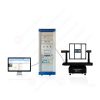
High Precision Rotation Luminaire Goniophotometer
LSG-1890B
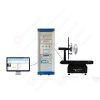
High Precision Rotation Luminaire Goniospectroradiometer
LSG-1890BCCD

Goniophotometer for Automotive and Signal Lamps
LSG-1950
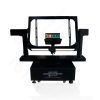
Goniophotometer for Traffic Signal Lamps
LSG-1950S
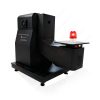
VAD Fire Alarm Visual Alert Device Goniophotometer
LSG-1930
Compact Goniophotometer
LSG-1200A
LED Goniophotometer
LSG-1100
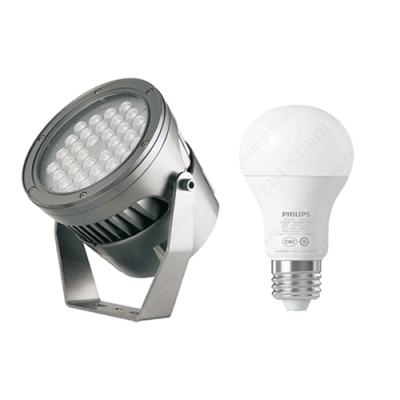 LEDs and Luminaire Test Solutions
 LM-79 and LM-80 Test Solutions
 LED Driver Test Solutions
 Household Appliances Test Solutions
 Mobile and Network Test Solutions
 Automotive Electronics Test Solutions
 Audio-Video and IT Test Solutions
 Cable and Wire Test Solutions
 Plugs and Sockets Test Solutions
 Power Switch Test Solutions
 Transformer Test Solutions
 Electric Toys Test Solutions
 Energy Meter Test Solutions
 Motor-Operated Tool Test Solutions
Select an organization
to browse standards
With the growth of faster, smaller, more interconnected electronic systems, the control of unwanted electromagnetic emissions has become a major task of engineers. It is crucial to know what is EMI and its impact on the efficiency of the system during compliance testing and the development of a product. An EMI spectrum analyzer is vital in this process as it allows an in-depth analysis of interference signals which cannot be observed using the simple equipment of measurement. The high-tech measurements are based on this tool to detect, describe and manage the emissions that can interfere with the surrounding machines or even exceed the rules.
An EMI spectrum analyzer is designed explicitly to fulfill the requirements of electromagnetic compatibility. It facilitates homogenous bandwidths, detecting modes, and accuracy of measurements required to have realistic assessment of emissions. This ability, in mature testing conditions, enables engineers to go beyond basic pass-fail tests and be able to intimately understand the behavior of interference.
Electromagnetic interference takes place when unwanted electrical energy is induced in circuits or radiated in the space around and disturbs normal operation. Sources of EMI can be switching power supplies, fast speed digital clocks, motor drives or communication interfaces. In order to know whatever is EMI in practice, then engineers should perform an analysis but not just the amplitude of the signal, but the frequency content of the signal, the modulation of the signal, and the pattern of repetition.
Time domain measurements offer little information on EMI since interference can also be wide frequency bands and may overlap functioning signals. EMIs spectrum analyzer transforms a time-varying electric activity into a spectrum of frequencies, showing the locations of the interference energy as well as how it changes with time.
The spectral viewpoint is necessary with sophisticated measurements to determine the prevailing noise sources, differentiating multiple sources of emissions, and evaluate the variation of the design on interference patterns.
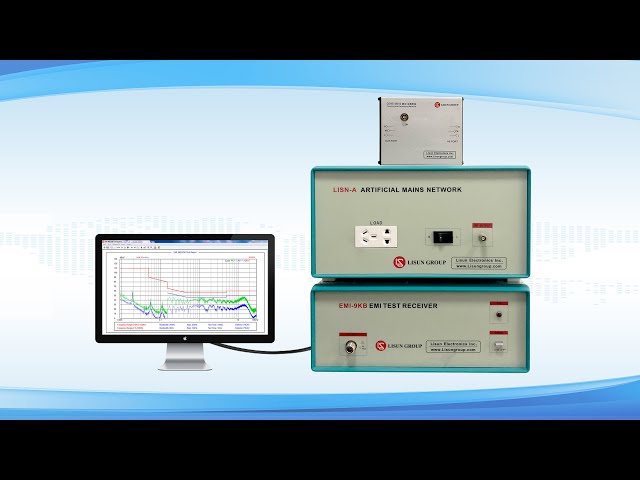
An EMI analyzer has various special functions, which it executes and make it distinguishable compared to an ordinary analyzer. It uses specified areas of resolution bandwidth which match regulatory specifications so that measured values represent compliance requirements and not arbitrary representation of signals.
The detection modes including peak, quasi-peak and average are applied to reflect the performance of interference to real-life receivers. Such detection techniques can be used to perform a sophisticated analysis of repetitive versus continuous noise behavior that is crucial in the interpretation of borderline emissions.
Another important function is frequency scan accuracy. A spectrum analyzer that involves EMI requires that its frequency calibration remains the same in large scans in order to determine that emission peaks are recognized properly. Compromised higher-level diagnostic work is due to drift or instability.
Systems based on LISUN provide combinations of these functions into high-quality EMI spectrum analyzer systems used in pre-compliance diagnostic and formal test systems.
High-level measurements EMI measurements are conducted at the higher levels both conducted and radiated. EMI spectrum analyzer in conducted testing measures the interference in the power or signal lines. This analysis aids the engineers to see how the noise spreads through the electrical connections and the causes of noise like switching regulators or digital interfaces.
In radiated testing, electromagnetic energy radiated into free space is measured using the analyzer. This is especially significant to products with high frequency operation or having fast edge transitions. Complex measurements are how emissions are visualized and this would be unknown in basic peak scans.
Frequency analysis and comparison of the mode of detection will allow engineers to distinguish between sporadic spikes and problems with persistent emissions. This understanding allows the specific mitigation of the process as opposed to generic design modifications.
The important part in pre-compliance testing depends on the sophisticated EMI spectrum analyzer measurements. The engineers analyze the margins of emissions and define the area of risk before they submit them to the certification.
The situation permits more advanced measurements to simulate compliance conditions but remain flexible to learn other alternatives. Engineers are able to monitor the real-time behavior of layouts, filtering, or shielding modifications to determine the emission behavior.
This will minimize the probability of unexpected failures during formal testing and minimizes the development cycles. The EMI spectrum analyzer is not only a measurement device, but also a diagnostic tool that is used to optimize design.
High measurement precision and repeatability are required with sophisticated EMI analysis. Minor fluctuations in the level of emissions can make or break a product on regulatory threshold. This means that an EMI spectrum analyzer should ensure it workstations under long-test conditions.
Internal noise floor, dynamic range and frequency stability are some of the factors that affect the quality of measurements directly. Measurement instruments made to do high-resolution measuring have low-noise signal paths and fine reference oscillators to ensure the accuracy.
It is the repeatability that is particularly required in comparing the outcomes of design changes or test phases. Consistent analyzers can be used to guarantee that differences in what is being measured show actual changes in design and not measurement errors.
EMI spectrum analyzer is rarely used alone. Further measurements may be combined with additional equipments like line impedance stabilization networks, antennas and preamplifiers among others.
To ensure signal integrity and measurement accuracy the analyzer should integrate with such components. Adequate integration also makes the whole test structure a functioning system and not a group of self-reliant instruments.
Manufacturers such as LISUN are specifying their EMI spectrum analyzers, which are compatible with a system, taking into consideration standardized interfaces and synchronized operation application in EMC test environments.
Some of the technical features affecting high performance EMI spectrum analyzer activity can be summarized in the following table:
| Technical Parameter | Importance in Advanced Measurements |
| Frequency range | Determines coverage of EMI sources |
| Resolution bandwidth | Aligns measurements with standards |
| Detection modes | Reflects real-world interference impact |
| Dynamic range | Enables detection of weak and strong signals |
| Frequency stability | Ensures accurate peak identification |
The mentioned features are all that characterize the effectiveness of an EMI spectrum analyzer in terms of diagnostic and compliance-oriented performance.
The spectral data arising due to advanced measurements are substantial. This data needs interpretation of the circuit behavior as well as knowledge of how it was measured.
The engineers examine trends in emissions in frequency bands, match peaks with the operating condition of the circuit, and assess the change of interference under various operating conditions. This more detailed study helps make knowledgeable decisions regarding filtering, grounding and shielding measures.
The EMI spectrum analyzer is therefore transformed to a knowledge-generation instrument instead of a measurement device because it facilitates engineers to gain an underlying insight into EMI mechanisms.
EMI challenges do not stop once the first certification takes place. New interference risks may be presented with product changes, replacement of components, and changes during manufacturing. The higher measurements with EMI spectrum analyzer help in the continuous quality assessment and life cycle tests.
Manufacturers also ensure compliance and reliability of products by having sustained ability to measure products with time as designs change. This economical worth in the long run undergoes pursuit to close-end investing in quality EMI measuring equipments.
An EMI spectrum analyzer has the unique role in sophisticated electromagnetic measurements of converting the complicated interference behaviour into useful frequency-domain understanding. It can be used to identify, analyze and control undesirable emissions by facilitating the realization of what EMI really means in practice by engineers.
Stable frequency estimation, precise detection modes and systems integration EMI spectrum analyzer assists in pre-compliance diagnostic and troubleshooting, as well as long-term product validation. The availability of good reliable solutions by well-known manufacturers like LISUN makes high-quality measurements on EMI a potent source of attaining regulatory compliance, design robustness, and the electromagnetic compatibility of ever-greater complex electronic systems.
Your email address will not be published. Required fields are marked *

 English
 中文简体
中文简体 English
 Русский
 Español
 Português
 Türkçe
 العربية
 Deutsch
 Polski
 Italiano
 Français
 한국어
한국어 ไทย
ไทย Tiếng Việt
 日本語
日本語