LM-79 Moving Detector Goniophotometer (Mirror Type C)
LSG-6000
High Precision Rotation Luminaire Goniophotometer
LSG-1890B
High Precision Rotation Luminaire Goniospectroradiometer
LSG-1890BCCD

Goniophotometer for Automotive and Signal Lamps
LSG-1950

Goniophotometer for Traffic Signal Lamps
LSG-1950S
VAD Fire Alarm Visual Alert Device Goniophotometer
LSG-1930

Compact Goniophotometer
LSG-1200A
LED Goniophotometer
LSG-1100
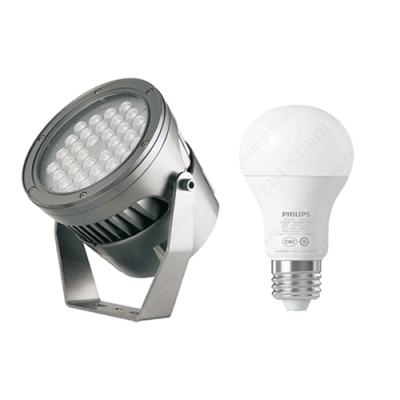 LEDs and Luminaire Test Solutions
 LM-79 and LM-80 Test Solutions
 LED Driver Test Solutions
 Household Appliances Test Solutions
 Mobile and Network Test Solutions
 Automotive Electronics Test Solutions
 Audio-Video and IT Test Solutions
 Cable and Wire Test Solutions
 Plugs and Sockets Test Solutions
 Power Switch Test Solutions
 Transformer Test Solutions
 Electric Toys Test Solutions
 Energy Meter Test Solutions
 Motor-Operated Tool Test Solutions
Select an organization
to browse standards
Electrostatic discharge happens to be one of the most frequently acquired but poorly understood threats to the electronic equipment. The ESD test is conducted as per internationally accepted standards in order to test immunity against such incidences. Before thinking of the definition of test levels, it is necessary to explain what is ESD in the real world. Electrostatic discharge happens when the stored statical electricity is abruptly discharged through contact or nearness of objects of varying electrical potential. This might appear insignificant but in delicate electronics it might cause fault, loss of information or cause irreparable damages. IEC 61000-4-2 identifies structured levels of tests so that the products are capable of enduring realistic electrostatic events that they can face during normal operation.
ESD testing is based on repeatable and quantifiable stress unlike random discharges in the real-world. Test level definition guarantees that the comparison of the immunity performance of products, laboratories, and markets are possible. These levels do not exist arbitrarily. They are based on actual human discharge conditions, industrial handling conditions and past failure record.
Defining ESD test levels is aimed at developing a universal level of immunity. Standard levels would allow manufacturers to test randomly and results would be arbitrary and not comparable. IEC 61000-4-2 sets regulated discharge voltage, discharge waveforms as well as application practices in a manner that immunity behavior is an example of actual application conditions and not laboratory convenience.
The levels of the tests are graded on rising levels of severity. The low levels replicate normal handling conditions under controlled environments whereas high levels are tougher industry or public exposures. The standard by classifying the products based on the application risk makes sure that no equipment is over-tested or under-protected.
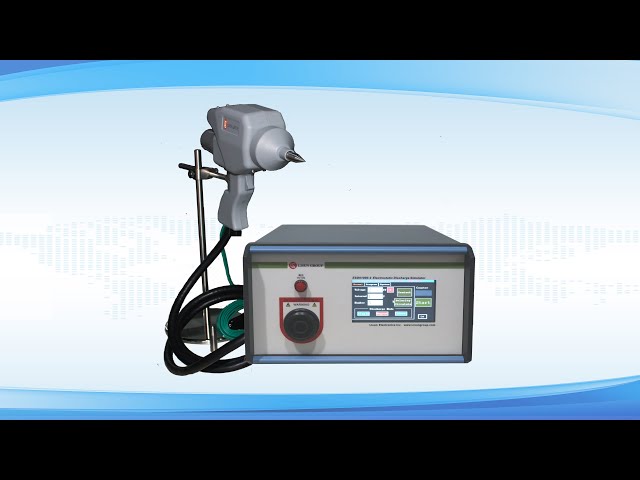
According to IEC 61000-4-2 there are two main methods of discharge; contact discharge and air discharge. Both methods indicate various real-life situations of ESD and have an impact on the use of test levels.
The most preferred, and more repeatable technique is contact discharge. Voltage is then applied and the discharge tip is laid against the test point. This strategy makes the transfer of energy steady and reduces oscillations due to the disintegration of air. Contact discharge test levels are thus set with more confidence and narrow tolerances.
Air discharge is applied in cases where contact discharge cannot be implemented like recessive or insulating surfaces. The voltage is applied and the discharge tip comes towards the test point till the point breaks. Air conditions do affect the breakdown behavior; therefore, air discharge results are more different than contact discharge, so the voltages of air discharge are indicated separately.
The level of immunity is established by the IEC 61000-4-2 according to discharge voltage. These levels are the severity of electrostatic stress levels and are applied to rank the product robustness.
| Test Level | Contact Discharge Voltage | Air Discharge Voltage | Typical Application Environment |
| Level 1 | ±2 kV | ±2 kV | Controlled environments |
| Level 2 | ±2 kV | ±4 kV | Office and residential |
| Level 3 | ±6 kV | ±8 kV | Light industrial |
| Level 4 | ±8 kV | ±15 kV | Harsh industrial and public use |
These levels are realistic discharge energies which are realized when humans interact and handle. The increased discharge Voltages in the air make up lost power in breaking down the air, and this ensures that the same stress is exerted on the device.
The assigned ESD test levels are measured on the model of human body which denoting the electrostatic cells of a charged human being. Human body voltages will easily reach in the kilovolt range in arid conditions. Stepping on artificial floor or doffing clothes can produce a great deal of charge.
Level 2, Level 3 testing Are typical tests involving handling of buttons, connectors or housings. Level 4 testing is used to simulate the worst-case conditions of equipment being interacted with by a user or subjected to industrial conditions.
These levels make sure that the products are tested at levels exceeding those of normal exposure and this will provide some safety margin which will reflect the variation of the environment.
IEC 61000-4-2 places a requirement on positive and negative polarity discharges being used in the ESD tests. This is important since electronic protection circuits can generally act differently in different directions with respect to current. There are components that are effective in one polarity and poor in the opposite.
Also, repetition is specified. There are several discharges to each test point to measure cumulative effects and repeatability. One that endures a single shock can be ruined on the next exposure because of stress through thermal or electricity.
Specified repetitions will guarantee that the assessment of immunity corresponds to the actual situation where a repetitive number of ESD incidents happens over a time frame.
It is not enough to define the levels of tests. Performance criteria in regard to the IEC 61000-4-2 also establish the product to pass or fail the ESD test. Such requirements are functional and not physical.
During testing equipment is required to be able to proceed normally or may be permitted to self-recover after the discharge. Failure is normally permanent failure of functionality, uncontrolled reset, or corruption of data. The standard guarantees the use of user impact scrutiny on the measurement of immunity by connecting test levels and performance criteria.
Choosing the correct level of ESD test is a design choice based on how the product is used and in which environment it should be used and the regulations on the same. Over testing adds complexity in terms of cost and design but decreases field failure risk whereas under testing adds complexity in cost and design.
Consumer electronics can need Level 2 or Level 3 immunity and industrial control equipment may need Level 4. Even more stringent internal validation than what is required of automotive and medical devices may be needed.
The appropriate test level helps in assuring that the immunity design is based on the real operating conditions and not some general assumptions.
The entire reliance of the application of ESD test levels depends upon the quality of test equipment. ESD generators need to provide constant waveforms, accurate voltage control and stable repetition. Deviation weakens the validity of immunity evaluation.
Manufacturers like LISUN have designed professional systems that are specified to the requirements of IEC 61000-4-2 waveforms and voltage accuracy. Constant discharge behavior provides that specific test levels would give you a corresponding stress on the test device.
Traceability and documentation should also be supported through reliable equipment and this is crucial in compliance and certification.
Determined ESD test limits are applied at times of the product lifecycle. Early development test is used to find out the weak areas prior to final layout and enclosure design. Pre-compliance testing would ensure margins of the design, and final compliance tests would be used to ensure that a design is ready to be certified.
Engineers come to better design protection strategies by learning about the definition and application of ESD test levels. This saves the redesigns and enhances the reliability of the products.
The defined levels of ESD test under IEC 61000-4-2 offers a clear and realistic basis of immunity to electrostatic discharge evaluation. The standard determines standardized and similar results in industries by clearly defining discharge voltages, methods, polarity, and repetition. Being aware of ESD and how its impacts can be modeled using specified test levels can enable manufacturers to come up with strong products applicable to their environments of operation.
These settled values can be converted into the trustworthy assessment of immunity, and not the abstract figures at the accurate test devices, such as those offered by LISUN. Correct usage of IEC 61000-4-2 ESD test levels enhances product stability, assists in conforming and finally the end users against unexpected failures due to the occurrence of electrostatic discharge.
Your email address will not be published. Required fields are marked *

 English
 中文简体
中文简体 English
 Русский
 Español
 Português
 Türkçe
 العربية
 Deutsch
 Polski
 Italiano
 Français
 한국어
한국어 ไทย
ไทย Tiếng Việt
 日本語
日本語