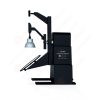
LM-79 Moving Detector Goniophotometer (Mirror Type C)
LSG-6000
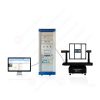
High Precision Rotation Luminaire Goniophotometer
LSG-1890B
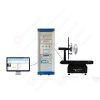
High Precision Rotation Luminaire Goniospectroradiometer
LSG-1890BCCD

Goniophotometer for Automotive and Signal Lamps
LSG-1950
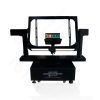
Goniophotometer for Traffic Signal Lamps (Economical Model)
LSG-1950S
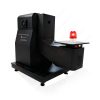
VAD Fire Alarm Visual Alert Device Goniophotometer
LSG-1930
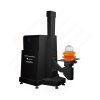
Goniophotometer for Airfield Lighting
LSG-1940
Compact Goniophotometer
LSG-1200A
LED Goniophotometer
LSG-1100
Near Field Moving Detector Goniophotometer
LSG-1900B
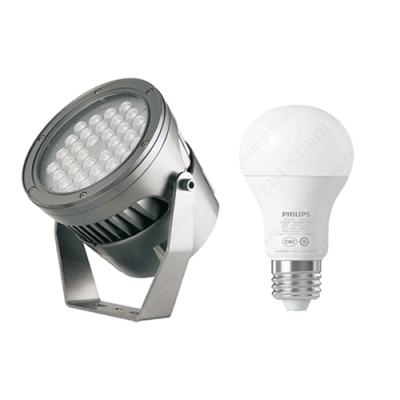 LEDs and Luminaire Test Solutions
 LM-79 and LM-80 Test Solutions
 LED Driver Test Solutions
 Household Appliances Test Solutions
 Mobile and Network Test Solutions
 Automotive Electronics Test Solutions
 Audio-Video and IT Test Solutions
 Cable and Wire Test Solutions
 Plugs and Sockets Test Solutions
 Power Switch Test Solutions
 Transformer Test Solutions
 Electric Toys Test Solutions
 Energy Meter Test Solutions
 Motor-Operated Tool Test Solutions
Select an organization
to browse standards
A correct photometric analysis not only involves optical sensors but also on the execution of measurement geometry in the process of testing. Goniophotometers are special equipment that measures the light distribution of the angle and its functionality is greatly affected by the movement of the detector and mechanical stability. In making comparisons on the type of goniophotometer, the arrangement on how the detector or luminaire is carried over on measurement decides whether it is accurate, repeatable, and applicable to various lighting products. This knowledge of the differences is crucial to laboratories and manufacturers in order to identify the appropriate system to develop, comply, or conduct production testing.
With the development of lighting systems into new levels of power and sophistication in optical designs, the old assumptions concerning the stability of measurements have been broken. Minor mechanical variations may error a test and especially when being tested asymmetrically or high-output luminaire. this renders detector move plan a primary point of focus and not a design aspect.
The goniophotometry is the luminous intensity versus angle. To do that the detector can be made to move around a fixed luminaire or the luminaire can be made to go on and the detector is fixed. All of the approaches present mechanical and optical issues.
The motion of the detector has a direct impact on alignment. When the detector passes through angular positions, a mechanical play, vibration or a non-mechanical positional drift alters the effective angular position of measurement. These are systematic errors that are summed up in hundreds or thousands of angular strides, which affect the shape of intensity distribution curves and the photometric parameters derived.
Constant eyeball movement allows every reading to be accurately aligned with the desired angular orientation. The accuracy is especially needed in cases of testing of luminaires where angular errors can also be extremely harmful when exhibiting sharp cut-off angles or complicated beam shaping.

In moving-detector goniophotometers, the luminaire is stationary and the detector has to rotate or move around the luminaire. Such a design reduces the tension on the test specimen and is therefore applicable to the heavy or large lamps that are hard to turn safely.
Since the luminaire is stationary, electrical connections, thermal behavior and mounting conditions are fixed during the course of the test. It is advantageous in applications where high-power fixtures are considered to have output that changes with the orientation or cooling conditions.
But, a moving-detector system requires very fine mechanical machining. The detector arm should have an accuracy under all angles of distance and alignment with the luminaire. What generates measurement uncertainty is any flexing or vibration of the arm. Quality systems deal with this by suppressing rigid structural design, minimizing bearings and regulating motion profiles.
The moving-luminaire goniophotometers have the detector stationary and the luminaire spins around one or more axes. This method makes the alignment of the detector easy and enables heavier or more complicated sensor assembly to be used.
The main obstacle is stability of luminaires in the rotating process. With movement of the luminaire, the force of gravity at any instant varies and may cause internal problems, optical performance or thermal characteristics. This effect is not significant in the case of a lightweight luminaire, but is important when dealing with larger types.
Rotational stability can be assured through accurate motor control, effectively mounted and hard rocker structures. Any angular movement or deviation distorts the angular relationship between the luminaire and detector with error. Cam high-resolution encoders and motion controlled by feedback are used by advanced systems to compensate.
Detector stability is the capability of the sensor to be in consistent position, orientation, and sensitivity during the measuring process. In devices with moving detectors, rigidity of machinery and smoothness of motion are important determinants of stability. In moving-luminaire systems, stability is relied on less to do with rotational balance and mounting accuracy.
Stability is also affected by the environmental factors like the vibration, temperature change and air movement. High-scale test arrangements would involve a controlled laboratory environment to reduce extraneous factors. Damping and thermal compensated systems enable the system to be accurate during long periods of measurement.
Other manufacturers like LISUN also spend a lot of money on mechanical stability engineering to guarantee that both detector and luminaire motion systems provide consistent results even when extensive or continuous testing is conducted.
A major parameter associated with a photometric testing method is repeatability. When a particular luminaire is subjected to identical conditions with a steady state goniophotometer, virtually identical results are achieved. Unstable conditions cause variability that makes decisions on design and compliance evaluation more complicated.
The stability of detector motion has a greater impact on repeatability than sensor sensitivity itself. Even a very sensitive detector will never be able to offset the problem of irregular placement. That is why the idea of system design is concentrated on the reduction of mechanical tolerance and the smooth motion.
In the case of laboratories that provide certification or quality assurance, the repeated outcome is necessary. Customers and regulatory authorities demand photometric data that can be repeated with significant consistency between various test sessions.
Goniophotometers have different types that may be applied to different testing. Moving -detector Luminaires These are typically used on heavy industrial luminaires, street lights, and high-bay. The fact that they allow the luminaire to stay in place is a risk reduction and conserves thermal behavior.
Smaller fixtures, lamps, and optical parts are typically powered by lighting systems that are moving-luminaires. They provide shorter measurement periods, and more straightforward mechanical design where their specimen size will safely be rotated.
In hybrid systems the elements of both methods are combined together; partial rotation of luminaires is utilized, with minimal movement of detectors. These designs are designed to provide stability, flexibility and speed of measurement.
The choice of the right system depends on the size of the product, its weight, the complexity of the optical test, and the purpose of the test instead of one optimal design.
High-resolution motion controllers and encoders are dependable in making measurements of angular position accurately. These elements capture mechanical motion to digital position measurements utilized to tag intensity measurements precisely.
Poor encoder resolution will result in quantization error, component angular variations. This restricts the possibility to describe narrow beams, or sharp cut-offs. High-resolution encoders at the closed-loop control are provided with advanced goniophotometers to have the right positioning.
Stability is also dependent on motion profiles. Vibration is brought about by sudden acceleration or deceleration. Fluid movement will decrease the mechanical stresses and increase the consistency of measurements.
Mechanical stability also has to be ensured, not only during a test, but also over the years of operation. Bearing, belting or gearing wear slowly impairs accuracy of motion. Frequent maintenance and calibration can be used to detect the early drift.
Strong-component and modular systems make it easy to maintain systems, therefore, increasing service life. LISUN goniophotometers are constructed with wear and tear and thus they last long in laboratories without the need to tweak them often.
Long-term reliability is especially one of the essentials of laboratories that perform routine compliance tests because a failure in such tests interferes with the workflow and raises the cost of operation.
The use of contemporary photometric analysis usually deals with automated processing of data, file creation, and simulation. The movement of detectors is stable to make sure that data supplied to these workflows is dependable. Unstable systems result in irregular files which alter the accuracy of lighting simulation.
Goniophotometers controlled motion Weakly controlled motion can be easily integrated with software applications and can be used to efficiently create standardized files of photometries used by designers and regulators.
A comparison of the goniophotometers on the basis of movement of detectors and stability explains that mechanical design is equally important as optical sensing in the photometric accuracy. Goniophotometers of various types have benefits with regard to the size of luminaires, testing conditions and limitations of the laboratory. Moving-detector systems are more stable with heavy fixtures whereas the moving-luminaire systems offer efficiency in small products.
Such aspects as detector stability, motion control accuracy and long-term mechanical stability directly affect repeatability and data reliability. Equipment in the lighting sector, including LISUN, is still developing goniophotometric designs that make use of modern lighting products to be accurately measured even when they are growing progressively more complex optically. The choice of the correct goniometer regarding the movement strategy and stability will guarantee significant, reliable photometric outcomes throughout the development, compliance, and production testing platform.
Your email address will not be published. Required fields are marked *

 English
 中文简体
中文简体 English
 Русский
 Español
 Português
 Türkçe
 العربية
 Deutsch
 Polski
 Italiano
 Français
 한국어
한국어 ไทย
ไทย Tiếng Việt
 日本語
日本語