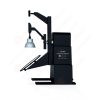
LM-79 Moving Detector Goniophotometer (Mirror Type C)
LSG-6000
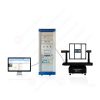
High Precision Rotation Luminaire Goniophotometer
LSG-1890B
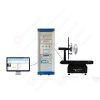
High Precision Rotation Luminaire Goniospectroradiometer
LSG-1890BCCD

Goniophotometer for Automotive and Signal Lamps
LSG-1950
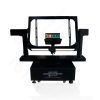
Goniophotometer for Traffic Signal Lamps (Economical Model)
LSG-1950S
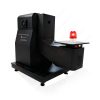
VAD Fire Alarm Visual Alert Device Goniophotometer
LSG-1930
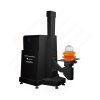
Goniophotometer for Airfield Lighting
LSG-1940
Compact Goniophotometer
LSG-1200A
LED Goniophotometer
LSG-1100
Near Field Moving Detector Goniophotometer
LSG-1900B
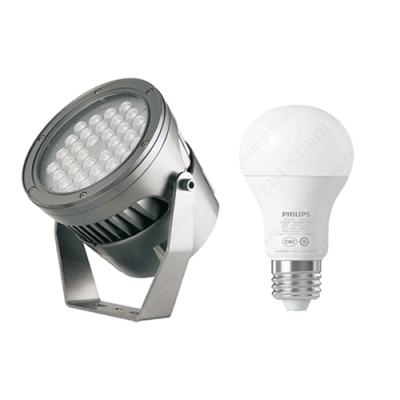 LEDs and Luminaire Test Solutions
 LM-79 and LM-80 Test Solutions
 LED Driver Test Solutions
 Household Appliances Test Solutions
 Mobile and Network Test Solutions
 Automotive Electronics Test Solutions
 Audio-Video and IT Test Solutions
 Cable and Wire Test Solutions
 Plugs and Sockets Test Solutions
 Power Switch Test Solutions
 Transformer Test Solutions
 Electric Toys Test Solutions
 Energy Meter Test Solutions
 Motor-Operated Tool Test Solutions
Select an organization
to browse standards
With the ever-increasing integration of electronics, composite materials and precision mechanical systems in modern products, there is an increased concern regarding reliability of these modern products in their overall environmental behavior. A climatic test gives a modulated and scientifically regulated manner of expressing the reaction of devices to quick or long-term temperature changes. The stability under extreme temperatures again has a direct effect on the safety, the life and the performance of products whether they are needed by the consumer, by the automotive or by the aerospace system or in industrial or in medical devices.
Laboratory climatic testing is faster than the conventional field testing, which may require months or sometimes years to accomplish the same, and can give quantifiable results in days. This paper describes the way climatic test procedures are established, the test phases, and the reason these tests are essential in testing the reliability of products at extreme temperature changes.
Changes in temperature affect the mechanical properties, electrical problems, chemical stability and the overall structural integrity. Expansion and contraction of materials may occur due to sudden thermal stress that results to cracks, seal failure, warping, or solder joint fatigue. Progressive exposure to long term temperature may lead to polymer degradation, insulation loss, electronic drift, or metal fatigue.
The climatic test simulates these thermal conditions and is repeated with repeatable test cycles to assist the engineer in developing weaknesses in the design early. Compliance with international standards of IEC, ISO, MIL and automotive environmental standards are also facilitated by testing. Manufacturers use climatic tests to test new materials, test product life test and test components performance under temperature extremes.
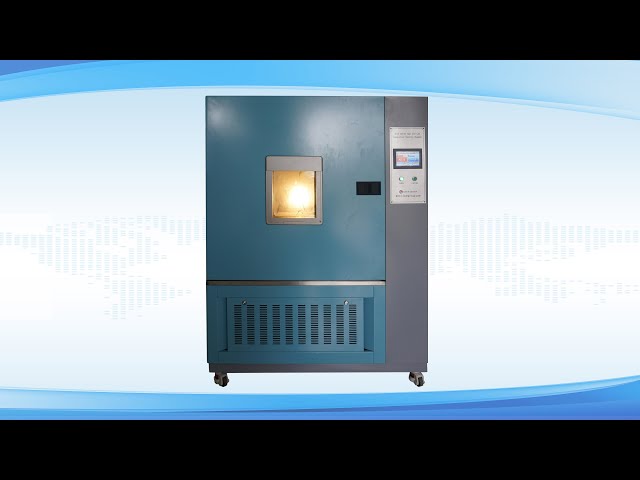
Environmental laboratory experiments A climatic test chamber maintains the temperature by using heating devices, refrigeration compressors, thermal insulation, and forced draft air circulation. Control of humidity can also be added although extreme tests to do with temperature variation tend to switch off the humidity control in order to avoid affecting the thermal stress.
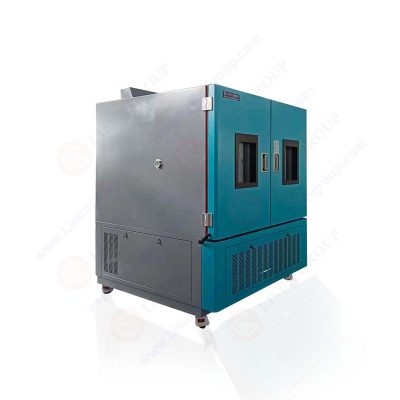
The high-end chambers supplied by LISUN employ the use of digital PID controls, multi-stage refrigeration, high speed fans with a high air circulation, and sophisticated sensors that make sure that the chamber maintains uniform temperatures. Internal construction is normally done in corrosive resistant steel, reinforced panels in insulation and airflow guidelines to create and hold constant conditions during sudden change in temperature.
The chamber has core capabilities comprising of:
• Achieving temperatures from −70°C to +180°C or higher
• Fast achievement of thermal stability
• Running programmed temperature programs
• Assurance of even distribution of temperatures
• Conducting long-term or cyclic thermal tests
These characteristics can enable the engineers to simulate the realistic stress temperature in transportation, storage, or operating the field.
These are some of the test procedures that are broadly used in industries. Such tests do not clap other humidity or stability tests and are specifically aimed at studying the behavior of the variation of the temperature.
Low temperature exposure
This test determines product performance at extreme temperatures of coldness. It measures brittleness, insulation resistance, startup, display capability and mechanical strength at the low temperature. Most plastics are brittle at freezing temperatures and electronic circuits can break because of alterations in carrier movement. Appliances are kept in the chamber till they achieve thermal equilibrium and then machinery checks.
High temperature exposure
The material deformation, component drift, chemical stability and mechanical stress are checked by high temperature climatic tests. Adhesives can become soft, polymers can distort and electronics can display erratic results. Products are subjected to continuous operation at high temperatures to test atypical conditions in a field.
Thermal shock test
Thermal shock is one of the most stressful procedures in climatic testing. Products are rapidly moved between two chambers or exposed to quick temperature cycles in a single multi-zone chamber. The sudden temperature swing forces materials to expand and contract quickly, revealing solder cracks, seal failures, and mechanical fatigue.
Temperature cycling
Tests of temperature cycling restart and repeat between low temperature and high temperature values. In contrast to thermal shock, the shift in temperature is slow. This test can be used in measuring long term fatigue, aging behavior, and tolerance to repeated changes of temperature throughout the lifetime of the product.
Operational temperature tests
Operational temperature tests are used to test functionality when the product is at work, instead of idle products, generating load, or moving, which is the work to be done by the product and, therefore, requires testing. This assists in identifying problems such as drift in circuit, stuttering during the movement and loss of accuracy during thermal conditions.
Climatic testing has been used in industries where the reliability is critical.
Automotive and transportation
Cars are exposed to harsh weather conditions such as the freezing and the hot desert zones. Climatic test chambers are used by the automotive manufacturers to test interiors, plastics, and metal-to-metal connections, dashboard, sensors, control modules, batteries, and wiring harnesses.
Aerospace and defense
The changes in temperature are high in a short period of time in aircraft and defence equipment’s when they are in the air or during land to air changes. Thermal cycling also helps in ensuring the existence of structural elements, avionics units, connectors, and sensors to performance under intense strain.
Industrial uses
Climatic test is needed in motors, drives, PLC systems, and sensor modules systems to ensure long term stability in systems since temperatures and ventilation conditions are not regular in an industrial site.
Medical devices
Medical equipment should be precise in any environment irrespective of temperatures of the environment. Climatic tests confirm that the accuracy, calibration, and power systems are maintained at different thermal conditions.
Table: Typical temperature cycling profile
An example of a typical temperature cycling test profile that could be used in the course of reliability evaluation is the simplified reference table below:
| Stage | Temperature | Duration | Purpose |
| Stage 1 | −40°C | 60 minutes | Cold soak stability check |
| Transition | Ramp to +85°C | 20 minutes | Thermal expansion stress |
| Stage 2 | +85°C | 60 minutes | High temperature endurance |
| Repeat Cycle | 100 to 500 cycles | Several days | Long term fatigue analysis |
A number of technical factors influence precision and reproducibility:
• Temperature uniformity: A good climatic testing chamber should have close uniformity to ensure that every part of the instrument is uniformly thermally exposed.
• Ramp rate control: State-of-the-art control must attain controlled temperature changes without overshoot.
• Thermal load capacity: Bigger devices must have high refrigeration efficiency, as well as maintain substantial airflow.
• Sensor accuracy: Precision sensors are those that maintain the temperature recorded in the chamber.
• Chamber insulation: Insulation of poor quality will result in heat loss and slow stabilization.
• Correct specimen placement: This is because, by blocking the airflow, unequal distribution of temperature can occur.
Labs with LISUN quality chambers tend to give higher stable performance due to good design, proper sensors and airflow control.
When the test cycle is completed, engineers consider physical and functional properties. The inspection includes:
• Structural deformation
• Cracks or microfractures
• Adhesive failure
• Power consumption abnormalities.
• Surface discoloration
• Solder joint integrity
In the electronics case, it would be beneficial to turn on the device as soon as it had been exposed to determine whether or not temperature cycles had left intermittent or permanent defects.
Climatic test is among the most significant assessment procedures of testing products in severe conditions of extremes in temperature changes. Through a highly precise climatic test chamber, the engineers are able to test cold, heat, high and low temperature cyclic conditions, and high levels of rapidity in temperature changes that expose the vulnerabilities in the choice of materials used, design structure, and the durability of the individual component. The automotive industry and aerospace as well as consumer electronics industry and the medical industry rely on climatic testing when they want to be assured of reliability as well as adherence to the standards in the world.
Lisun Instruments Limited was found by LISUN GROUP in 2003. LISUN quality system has been strictly certified by ISO9001:2015. As a CIE Membership, LISUN products are designed based on CIE, IEC and other international or national standards. All products passed CE certificate and authenticated by the third party lab.
Our main products are Goniophotometer, Integrating Sphere, Spectroradiometer, Surge Generator, ESD Simulator Guns, EMI Receiver, EMC Test Equipment, Electrical Safety Tester, Environmental Chamber, Temperature Chamber, Climate Chamber, Thermal Chamber, Salt Spray Test, Dust Test Chamber, Waterproof Test, RoHS Test (EDXRF), Glow Wire Test and Needle Flame Test.
Please feel free to contact us if you need any support.
Tech Dep: Service@Lisungroup.com, Cell/WhatsApp:+8615317907381
Sales Dep: Sales@Lisungroup.com, Cell/WhatsApp:+8618117273997
Your email address will not be published. Required fields are marked *

 English
 中文简体
中文简体 English
 Русский
 Español
 Português
 Türkçe
 العربية
 Deutsch
 Polski
 Italiano
 Français
 한국어
한국어 ไทย
ไทย Tiếng Việt
 日本語
日本語