LM-79 Moving Detector Goniophotometer (Mirror Type C)
LSG-6000
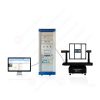
High Precision Rotation Luminaire Goniophotometer
LSG-1890B
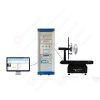
High Precision Rotation Luminaire Goniospectroradiometer
LSG-1890BCCD

Goniophotometer for Automotive and Signal Lamps
LSG-1950
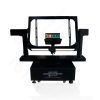
Goniophotometer for Traffic Signal Lamps (Economical Model)
LSG-1950S
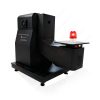
VAD Fire Alarm Visual Alert Device Goniophotometer
LSG-1930
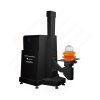
Goniophotometer for Airfield Lighting
LSG-1940
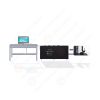
Compact Goniophotometer
LSG-1200A
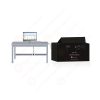
LED Goniophotometer
LSG-1100
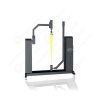
Near Field Moving Detector Goniophotometer
LSG-1900B
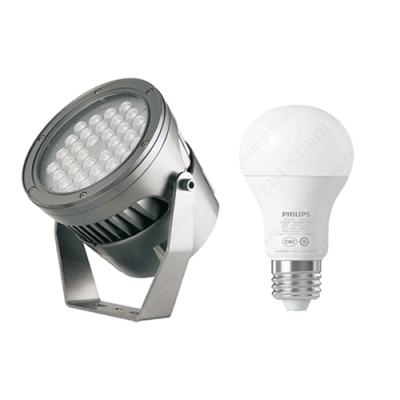 LEDs and Luminaire Test Solutions
 LM-79 and LM-80 Test Solutions
 LED Driver Test Solutions
 Household Appliances Test Solutions
 Mobile and Network Test Solutions
 Automotive Electronics Test Solutions
 Audio-Video and IT Test Solutions
 Cable and Wire Test Solutions
 Plugs and Sockets Test Solutions
 Power Switch Test Solutions
 Transformer Test Solutions
 Electric Toys Test Solutions
 Energy Meter Test Solutions
 Motor-Operated Tool Test Solutions
Select an organization
to browse standards
Abstract
How to perform a leakage current test? This is a core technical question that must be answered when assessing the safety performance of various electrical products such as household appliances, lighting equipment, and medical instruments. Leakage current testing, or touch current testing, aims to quantitatively evaluate the current intensity that could potentially flow through a human body upon accidental contact with accessible parts of equipment. It is a mandatory test item to prevent electric shock hazards and ensure product compliance with safety standards. This article systematically explains the generation mechanism and classification of leakage currents (e.g., earth leakage current, touch current) and provides a detailed analysis of the principles, methods, key steps, and compliance criteria for executing this test according to mainstream safety standards (e.g., GB 4706.1/IEC 60335-1, GB 7000.1/IEC 60598-1). Furthermore, the article explores the essential technical characteristics that modern Leakage Current Testers must possess for precise, efficient, and compliant testing. Using the LISUN WB2675D series equipment as an example, it illustrates how integrated, intelligent professional instruments can complete the entire safety assessment process—from laboratory R&D verification to production line batch quality inspection—providing crucial technical support for product design and quality control.
Introduction
Electrical safety is an inviolable red line in product design. Beyond basic requirements like insulation strength, the potential small current paths between accessible parts of equipment (e.g., metal enclosures, knobs) and the power source during normal operation or even under single fault conditions constitute a potential electric shock risk. How to perform a leakage current test? It is precisely designed to scientifically quantify this risk, ensuring it is controlled within human safety limits. This test is not a simple continuity check but a precise electrical experiment that simulates a human body impedance network to measure specific path currents under the equipment’s rated operating voltage. Understanding the underlying safety philosophy, standard stipulations, and correct operating methods is crucial for manufacturers, testing institutions, and R&D personnel. This article will delve into the complete logic chain of leakage current testing and introduce modern professional tools that enable this critical assessment.
1. Basic Concepts, Principles, and Standard Requirements of Leakage Current Testing
Leakage current refers to non-functional current flowing through insulation media or distributed capacitance (e.g., between transformer windings, from power line to earth) under the condition that insulation is not perfect. In the context of safety standards, the focus is primarily on the portion that could flow through the human body, typically subdivided into:
The human body’s response to electric current depends not only on its magnitude but also on factors like frequency and path. International standards (e.g., IEC 60990) define a standardized human body impedance model network to simulate the impedance characteristics of the human body under specific conditions. The Leakage Current Tester integrates this network (or its equivalent circuit). During testing, the Equipment Under Test (EUT) is placed under its rated operating voltage. By connecting this simulated human body network between the accessible parts of the EUT and a reference earth (or neutral), the current flowing through the network is measured. This current value is considered the potential touch current and is compared against the standard limit for compliance judgment.
Major safety general requirement standards for household and similar appliances strictly regulate leakage current testing:
Testing must be performed separately under both normal operating conditions of the equipment and possible single fault conditions (e.g., disconnected protective earth, reversed polarity) to comprehensively assess safety.
2. Standardized Operating Procedure for Performing Leakage Current Tests
Properly performing a leakage current test requires following a rigorous procedure to ensure accurate and reliable results. The main steps and key points are as follows:
Compare the measured maximum leakage current value against the limit specified in the applicable standard. If the measured value is less than or equal to the limit, the item is judged as compliant. Record in detail the test conditions, ambient temperature/humidity, all measurement data, and the conclusion.
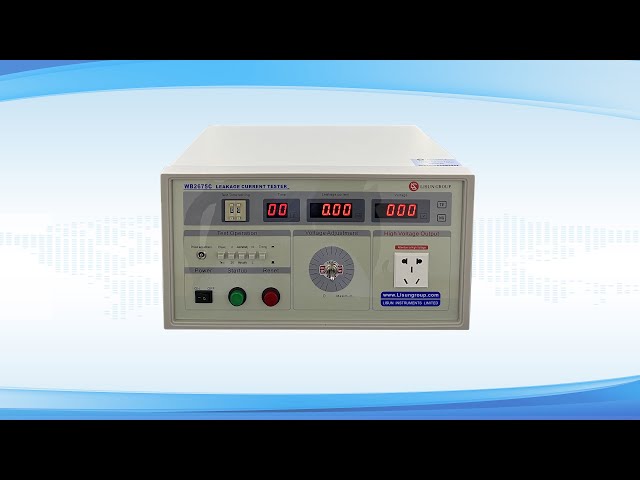
3. Key Test Equipment Requirements and Selection Guide
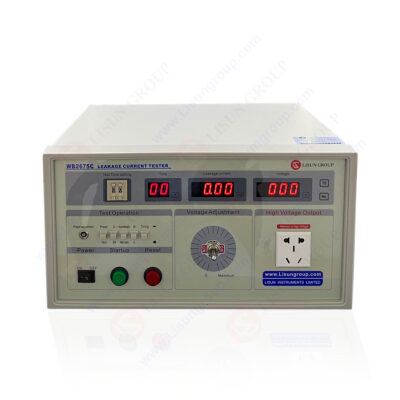
A standard-compliant Leakage Current Tester is the cornerstone for obtaining valid data. Its performance directly determines the compliance and efficiency of the test. Main considerations include:
| Parameter Item / LISUN Model | WB2675A | WB2675B | WB2675C | WB2675D | Selection Guidance |
|---|---|---|---|---|---|
| Test Current Range | 0~2mA / 20 mA | 0~2mA / 20 mA | 0~2mA / 20 mA | 0~2mA / 20 mA | The entire series covers standard testing needs for appliances, luminaires, etc. |
| Accuracy | ±5% | ±5% | ±5% | ±5% | Meets the basic requirements for measurement accuracy in safety tests. |
| Test Time Setting | 1~99s (timed/manual) | 1~99s (timed/manual) | 1~99s (timed/manual) | 1~99s (timed/manual) | Supports automated timed testing, improving production line efficiency. |
| Isolation Transformer Capacity | 500 VA | 1000 VA | 2000 VA | 5000 VA | Key selection criterion. Choose based on the maximum rated power of the product under test: • 500VA: Suitable for small appliances (e.g., kettles, hair dryers). • 1000VA: Suitable for most household appliances, small/medium luminaires. • 2000VA: Suitable for higher-power equipment, e.g., commercial appliances. • 5000VA: Suitable for high-power industrial equipment, large lighting systems, etc. |
| Typical Application Scenario | R&D, sampling for low-power appliances | Production line & lab for medium appliances, luminaires | Testing for high-power appliances, commercial equipment | Testing for industrial equipment, large system integration | Capacity should have at least 20%-30% margin to ensure stable test voltage. |
4. The Integrated Value of Modern Leakage Current Testers: Taking the WB2675D as an Example
The LISUN WB2675D, as the high-capacity model in this series, embodies the integrated and intelligent design philosophy of modern safety testers. It is not just an ammeter but a complete leakage current test solution:
Conclusion
How to perform a leakage current test? Its essence is to precisely measure the hazardous current potentially generated by electrical equipment under normal and fault conditions, using a standardized method under simulated human body impedance conditions. This process profoundly embodies the “prevention-first” philosophy of safety engineering. From understanding standard requirements and grasping test principles to standardizing every operational step, each is a rigorous link to ensure result validity and safeguard end-user safety. Choosing a performance-matched, fully-featured Leakage Current Tester like the LISUN WB2675D series not only enables efficient and accurate compliance verification but also provides reliable data feedback for optimizing product insulation design, fortifying the line of defense for electrical safety from the design source. Mastering the correct method for leakage current testing and effectively utilizing advanced tools is an essential core competency for everyone involved in the R&D, manufacturing, and quality inspection of electrical products, as well as a solid foundation for enterprises to fulfill their safety responsibilities and build market credibility.
Tags:WB2675DYour email address will not be published. Required fields are marked *

 English
 中文简体
中文简体 English
 Русский
 Español
 Português
 Türkçe
 العربية
 Deutsch
 Polski
 Italiano
 Français
 한국어
한국어 ไทย
ไทย Tiếng Việt
 日本語
日本語