Abstract
X-ray fluorescence spectroscopy is a highly efficient, non-destructive elemental analysis technique widely used in material identification, quality control, and resource exploration. While traditional benchtop x-ray fluorescence machines offer exceptional accuracy, their fixed laboratory nature struggles to meet the demands for rapid on-site testing. Advances in detector technology, micro-focus X-ray tubes, and computing power have enabled portable x-ray fluorescence machines to achieve unprecedented mobility and ease of operation without compromising analytical performance. This article systematically explains the fundamental principles of XRF analysis, with a focused comparison of the technical characteristics and application boundaries between laboratory and portable field instruments. Using the LISUN EDX-3 Portable x-ray fluorescence machine as a technical case study, it details the core technological configurations that enable “laboratory precision in the field.” Through multi-dimensional data tables, it demonstrates the instrument’s accurate and efficient performance across diverse scenarios such as alloy grade identification, precious metal testing, and environmental screening.
1. Introduction: The On-Site Revolution in Elemental Analysis
In industries such as manufacturing, mineral exploration, scrap recycling, and consumer goods inspection, obtaining rapid and accurate information about material chemical composition is fundamental for critical decision-making. While wet chemical analysis or large laboratory instruments provide authoritative data, they are time-consuming, costly, require complex sample preparation, and cannot fulfill the need for immediate results at production sites, during transactions, or in emergency situations.
The x-ray fluorescence machine analyzes elements by utilizing the principle that a material emits characteristic fluorescence when excited by X-rays. Its advantages—minimal sample preparation, fast analysis speed, and non-destructive nature—make it an ideal technology bridging the lab and the field. In recent years, the maturation of high-performance portable x-ray fluorescence machines has completely broken spatial constraints. It brings precision elemental analysis, once confined to the laboratory, directly to raw material warehouses, production lines, exploration sites, and even law enforcement scenes. This marks a fundamental shift from “sending samples to the lab” to “bringing the lab to the sample.”
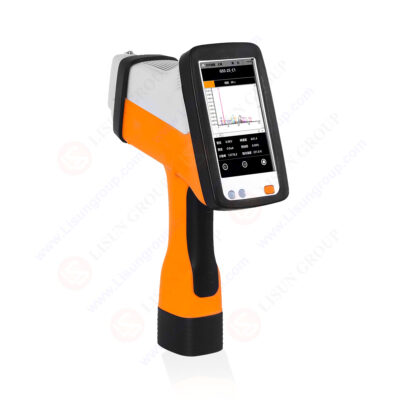
Portable X-ray Fluorescence Spectrometer | X-ray Fluorescence Machine | Alloy Gold TesterEDX 3
2. Core Principles of XRF Technology and the Challenges of Portabilization
2.1 Fundamental Principles: Excitation, Emission, and Identification
When high-energy primary X-rays irradiate a sample, inner-shell electrons are ejected, leaving the atom in an unstable, excited state. Outer-shell electrons then transition to fill these inner-shell vacancies, releasing secondary X-rays with energy (or wavelength) specific to that element—known as characteristic X-ray fluorescence. By measuring the energy (Energy Dispersive XRF, EDXRF) or wavelength (Wavelength Dispersive XRF, WDXRF) of this fluorescence, qualitative and quantitative analysis of the sample’s elements is achieved. Portable devices primarily employ energy-dispersive technology.
2.2 Key Technological Breakthroughs Enabling Portabilization
Achieving high performance in a portable format relies on the miniaturization and performance enhancement of three core components:
• Micro X-ray Tube: Must generate a stable, high-intensity, and finely focused X-ray beam within an extremely small volume and power budget to effectively excite the sample.
• High-Performance Detector: Silicon Drift Detectors (SDD) or electrically cooled Si-PIN detectors have replaced traditional liquid nitrogen-cooled systems. They enable high resolution (e.g., reaching 145eV) while allowing for room-temperature operation and miniaturization.
• Intelligent Software & Algorithms: Built-in powerful fundamental parameter algorithms, extensive material databases, and automatic spectrum deconvolution allow non-specialist users to obtain reliable qualitative and semi-quantitative results within seconds.

3. The LISUN EDX-3 Portable X-ray Fluorescence Machine: Realizing Field Precision Analysis
3.1 Core Hardware Configuration: Laying the Foundation for High Accuracy
The EDX-3’s core hardware directly defines the upper limit of its analytical capabilities:
• Excitation Source: Utilizes an integrated micro silver-target X-ray tube (50kV/200μA, power ≤4W), balancing excitation efficiency with the device’s requirements for compact size and low power consumption.
• Detector: Equipped with an imported high-precision Si-PIN detector boasting an energy resolution as high as 145eV. This ensures effective separation of adjacent elemental peaks, forming the physical basis for accurate identification and high detection precision.
• Computing Platform: Features an onboard quad-core 1.4GHz processor, no less than 4GB RAM, and 64GB of solid-state storage. This provides the computational power necessary for real-time high-speed spectral processing, storage of massive data (>200,000 datasets and spectra), and smooth touch-screen operation.
3.2 Intelligent Software & Database: Granting the Instrument “Experience”
If hardware is the body, software and databases are the brain and knowledge base. The EDX-3 comes pre-loaded with an alloy database containing over 400 standard grades and supports user-created custom databases for more than 1000 additional grades, meeting needs from general to specialty material identification. Its industrially customized operating system seamlessly integrates with common office software. Test reports can be generated with one click in formats including Excel, PDF, and CSV, and transmitted directly via USB, WiFi, or Bluetooth, creating a seamless workflow from testing to reporting.
3.3 Field-Optimized Ergonomics and Safety
• Operational Experience: Uses a fixed-angle, high-performance LCD touch screen no smaller than 5 inches, allowing responsive operation even in bright light or when wearing gloves, suiting industrial field environments.
• Endurance & Durability: Powered by a built-in >6000mAh lithium battery supporting over 8 hours of continuous operation, suitable for all-day fieldwork. The device weighs <1.8kg and has passed IP65 ingress protection and 1.5-meter drop tests, ensuring robustness and reliability.
• Radiation Safety: Incorporates multiple safety interlocks, such as automatic test cessation within 2 seconds if no sample is present at the front end, and a high-brightness status indicator displaying the radiation source’s operational status in real-time. Its radiation dosage strictly complies with national standards like GBZ 115-2002 and is backed by authoritative third-party certification reports, ensuring absolute safety for the operator.
| Category | Configuration Item | Specific Parameters & Performance | Technical Significance |
|---|---|---|---|
| Excitation & Detection System | X-ray Tube | Silver target, 50kV/200μA, integrated micro-focus, power ≤4W | Provides a stable, efficient excitation source, enabling device miniaturization and low power consumption. |
| Excitation & Detection System | Detector | High-precision Si-PIN detector, Energy Resolution ≤145eV | High resolution is core for accurately distinguishing elemental spectral peaks and achieving precise analysis. |
| Excitation & Detection System | Elemental Range | All elements from Sulfur (S) to Uranium (U) | Covers the vast majority of industrially relevant elements, enabling extremely wide application. |
| Performance Metrics | Analysis Speed | ~5 sec for grade ID, ~20 sec for accurate quantification | Meets dual needs of rapid field screening and precise quantitative analysis. |
| Performance Metrics | Detection Limit | Down to ppm levels | Capable of detecting trace elements and impurities. |
| Performance Metrics | Precision (RSD) | < 5% | Ensures high repeatability and stability of measurement results. |
| OS & Data Management | Processor & Storage | Quad-core 1.4GHz CPU, 4GB RAM, 64GB SSD | Ensures real-time operation of complex algorithms and storage of massive spectral data. |
| OS & Data Management | Report Output | One-click generation in Excel, PDF, BMP, CSV formats | Seamless integration with office and management systems, enhancing workflow efficiency. |
| OS & Data Management | Data Transfer | USB, WiFi, Bluetooth | Enables diversified, wireless, and fast data export. |
| Design & Safety | Battery Life | >6000mAh, >8 hours continuous operation | Supports all-day field or factory patrol inspection needs. |
| Design & Safety | Physical Specs | Weight <1.8kg, IP65 rated, passed 1.5m drop test | Excellent portability, environmental protection, and durability. |
| Design & Safety | Radiation Safety | Multiple safety interlocks, complies with GBZ 115-2002 | Ensures absolute operational safety, eliminating user concerns. |
| Application Industry | Typical Analysis Targets | Core Analytical Need | Solution & Value Provided by EDX-3 |
|---|---|---|---|
| Metal Processing & Manufacturing | Stainless steel, alloy steel, Ni/Co-based alloys, Ti alloys | Rapid Material ID (PMI), Incoming Inspection, Scrap Sorting | Identifies alloy grade in seconds, prevents material misuse, ensures product quality and safety. |
| Precious Metals & Jewelry | Gold, silver, platinum jewelry & scrap | Karat/Purity Analysis, Plating Thickness Measurement | Non-destructive, fast precious metal content analysis supports fair trade and authenticity verification. |
| Scrap & Recycling | E-waste, automotive shredder residue, mixed alloys | Rapid metal sorting and valuation | Enables on-site sorting of large scrap volumes, dramatically improving recycling efficiency and value recovery. |
| Geology & Mining | Ore samples, soil, drill cores | Multi-element field survey, preliminary grade assessment | Provides immediate elemental distribution data at exploration sites, guides drilling/sampling, reduces costs. |
| Environmental Monitoring | Soil, sediment, paint | Heavy metal contamination (e.g., Pb, Cd, Cr, As) screening | Allows rapid delineation of contaminated areas and preliminary risk assessment for timely decision support. |
| Consumer Product Safety | Toys, electronics, building materials | Compliance screening for regulations (e.g., RoHS) | Rapid, non-destructive screening for restricted elements (Pb, Cd, Hg, Cr, etc.) to ensure quality and safety. |
4. Expanding Application Scenarios
The value of high-performance portable x-ray fluorescence machines like the EDX-3 lies in their “anytime, anywhere” analytical capability:
• Manufacturing Quality Control: 100% screening of incoming materials on the production line and spot-checking of semi-finished products to ensure supply chain and process consistency.
• Third-Party Inspection & Trade Arbitration: Buyers and sellers can conduct immediate, impartial composition verification during goods handover, preventing disputes and building trust.
• Research & Education: Provides a powerful field analysis tool for scientific field expeditions, archaeological artifact analysis, and university-level materials science instruction.
• Public Safety & Regulatory Oversight: Used by environmental agencies for emergency soil contamination surveys and by market regulators for consumer product spot-checks. Its rapid screening capability greatly enhances regulatory efficiency and deterrence.
5. Conclusion
The portable x-ray fluorescence machine, particularly products like the LISUN EDX-3 series that integrate high precision, intelligence, ruggedness, and safety, is more than just an analytical instrument. It is a “data probe” that extends laboratory analytical power to every extremity of industry. It is a key enabling tool that pushes quality control upstream, accelerates decision-making, and improves operational efficiency.
Technological progress continues to blur the line between the laboratory and the field. Choosing a reliable portable x-ray fluorescence machine equips an organization with a “mobile lab.” The immediate data insight it delivers is reshaping operational models across numerous industries, making it an essential technological asset for maintaining a competitive edge.
Tags:EDX-3Your email address will not be published. Required fields are marked *

 中文简体
中文简体 English
 Русский
 Español
 Português
 Türkçe
 العربية
 Deutsch
 Polski
 Italiano
 Français
 한국어
한국어 ไทย
ไทย Tiếng Việt
 日本語
日本語