LM-79 Moving Detector Goniophotometer (Mirror Type C)
LSG-6000
High Precision Rotation Luminaire Goniophotometer
LSG-1890B
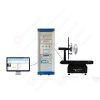
High Precision Rotation Luminaire Goniospectroradiometer
LSG-1890BCCD

Goniophotometer for Automotive and Signal Lamps
LSG-1950
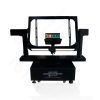
Goniophotometer for Traffic Signal Lamps (Economical Model)
LSG-1950S
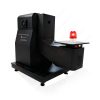
VAD Fire Alarm Visual Alert Device Goniophotometer
LSG-1930
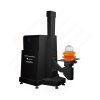
Goniophotometer for Airfield Lighting
LSG-1940
Compact Goniophotometer
LSG-1200A
LED Goniophotometer
LSG-1100
Near Field Moving Detector Goniophotometer
LSG-1900B
 LEDs and Luminaire Test Solutions
 LM-79 and LM-80 Test Solutions
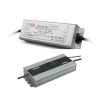 LED Driver Test Solutions
 Household Appliances Test Solutions
 Mobile and Network Test Solutions
 Automotive Electronics Test Solutions
 Audio-Video and IT Test Solutions
 Cable and Wire Test Solutions
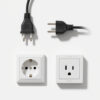 Plugs and Sockets Test Solutions
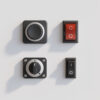 Power Switch Test Solutions
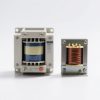 Transformer Test Solutions
 Electric Toys Test Solutions
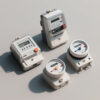 Energy Meter Test Solutions
 Motor-Operated Tool Test Solutions
Select an organization
to browse standards
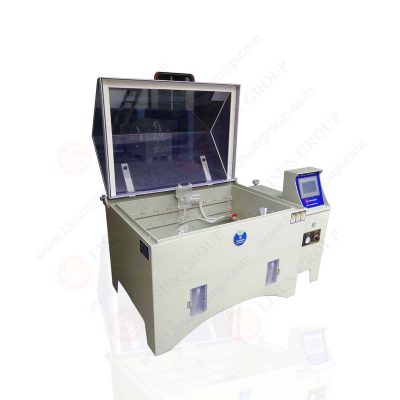
Corrosion testing will enable industries to know the behaviour of the materials when exposed to unfavourable conditions taken in the long term. The high stability, depth of constant density of the fog, and sound environmental control are important in long-duration tests, i.e. 240-hour or 500-hour and even 1000-hour test cycles. Salts spray cabinet serves as a key feature in this, since it enables the manufacturer to model corrosive atmospheres to reflect the corrosive seas, industry or chemically reactive settings. Nevertheless, long-period stability is difficult to stabilize because minor changes in temperature, diffused fog or solution are capable of bringing about significantly varying outcomes. The consistency of the test is highly reliant on factors associated with the design of the cabinet which will ensure uniform operation during the whole exposure duration.
With days and weeks of corrosion tests, even little instability interferes with the scientific value of the results. To illustrate, the difference in concentrations of the fog within the test chamber can give out false corrosion patterns, leading to the fact that, the surface on a given sample can corrode faster than the other attempt to due to uneven distribution of airflow patterns. Stable cabinet carries out these discrepancies and also makes sure that differences in performance of corrosion are caused by material behavior rather than equipment variation.
The state of correct corrosion assessment is based on constant correlation of fog allocation. The salt spray cabinets are geared with proper airflow channels that do not cause turbulence that can even push the fog in a single side of the cupboard. It is more stable when the fog is suspended evenly to cover all the test samples irrespective of their position. Lack of this uniformity will make testing engineers incapable of comparing samples.
Optimal designs of cabinets utilize equal injection of air to ensure equal saturation. Other manufacturers like LISUN have special air preparation modules that stabilize the pressure prior to getting to the atomizing system. This will ensure that the fog generated at the nozzle will not vary with external supply of air conditions. This stability over long-duration tests ensures there is a drift in the deposition rates which can be used to identify the result as scientifically meaningful.
There are time-dependent accelerating and slowing corrosion reactions. The rate of corrosion on a multi-day cycle does not provide a controlled environment when the temperature changes at a relatively low rate during the same cycle. Salt spray cabinet has internal temperature that is controlled by insulated walls, exact thermal sensors and self-regulating heaters.
The standards of salt chamber tests indicate thin temperature ranges since heat influences the speed of evaporation as well as the velocity of corrosion. When a sample has increased temperature on both sides of the chamber, different electrolyte film on the surface evaporates differently. The elimination of these thermal gradients is what determines predictability. This is done with high-grade cabinets that provide the thermal isolation of the exterior structure so ambient room temperature does not affect the chamber stability.
Temperature homogeneity also ensures that droplets of water do not develop on ceilings of chambers. Drops on samples may cause artificial acceleration of corrosion or isolated wet spots which are not reflective of actual corrosion by the mist.
Conducting testing in the same concentration of salt is one of the factors that are not counted during long-duration testing. A salt chamber test normally utilizes a specified ratio of sodium chloride and changes in concentration modify the aggressiveness of corrosion. The corrosive potential varies when concentration is altered as a result of evaporation. The quality salt spray cabinets reduce this variation by means of sealed reservoirs and properly regulated heating devices to avoid excessive evaporation.
Certain cabinet constructions have automated measurements of brine level to maintain a given composition of the solution within a certain range. Systems designed on LISUN, such as those, have accuracy of dosing systems that maintain the flow of the solution to the atomizing tower. This prevents drift that may be used when solution levels are set manually in long test cycles.
The use of equipment that can work in a corrosive environment over a long time provides the necessary equipment. The surfaces within a salt spray cabinet should also be impervious to corrosion concerned on their own; otherwise, the structural degradation will affect airflow, fog concentration or thermal uniformity.
The interior walls of high-end chambers are made of reinforced fiberglass, high-density PVC or specialized anti-corrosion polymers. The materials do not break down even when saturated with salt. The corrosive nature of a cabinet provides debris and contamination, which disrupts the repeatability of the tests. That is why much attention of manufacturers is devoted to the chamber materials, drainage systems and methods of sealing in order to provide a long period of working.
Safety is also enhanced by a corrosion-resistant building. In cases where exposure cycles take hundreds of hours, the corrosive mist should not escape in laboratory environment due to the use of cabinet insulation and seals.
A major problem during a salt chamber test is condensation. In case the condensation is too much on the inside surfaces, the water droplets can land on samples and distort the corrosion. To avoid this, cabinets are equipped with covers with forced heating or controlled air circulation that minimize the condensation of the ceiling.
Even the chamber drainage systems should be effective. Since fog will leave liquid, excess solution will be removed through drains to make the environment in the chamber consistent. Poor drainage leads to pooling that gives up localized vapor that can modify the saturation of fog. Designed cabinets eliminate this instability by helping the cabinets not to accumulate stagnant solutions and undergo continuous renewing loop of atomized mist.
The atomizers or spray towers produce salt mist and these parts should provide the uniform mist density throughout the entire test period. Low quality systems are characterized by clogging of the nozzles, uneven distribution of the droplet size, or variation due to wear on the pump. Even minor fluctuations in atomization performance form large deviations in corrosion rate even over long-duration cycles.
Contemporary designs are being given out with self-cleaning systems or a removable part that enable the operators to ensure the performance of the systems without disruption of test cycles. Mog density can be maintained within the necessary specification range when atomization is steady thereby giving a dependable exposure to corrosion.
The atomizing air should not be contaminated with oil, moisture and particulate matter. The introduction of air pressure change by external compressors is likely to influence the amount of fog. An unstable salt spray cabinet thus comes inbuilt pressure control mechanisms that make up for the external changes.
Stability of pressure proves to be very important during long-term tests; an erratic supply of airstrikes gives varying levels of mist and varying levels of mist give varying levels of corrosion. Suppliers, such as LISUN, do not only provide systems which contain air purification and stabilization units to provide clean airflow and maintain it through the whole duration of the test.
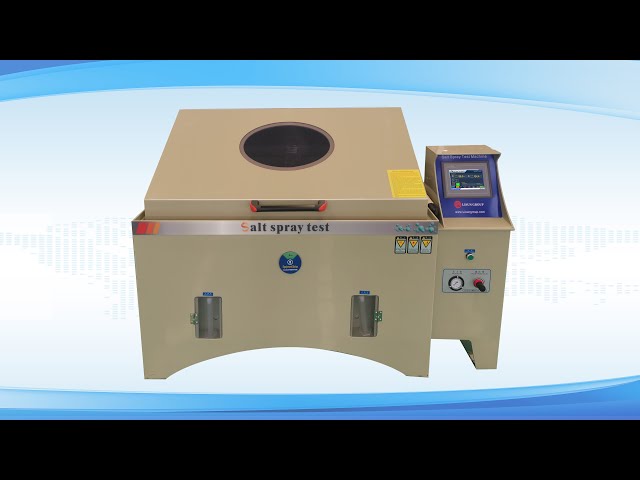
Permanent tests need not require people to handle them regularly. Whenever a chamber is broken the internal environment becomes destabilized. The heat control, salt solution dosing, automated pressure monitoring, and drainage decrease attendance by human beings. This will make sure that the chamber will operate within the specified curve regardless of operator habits or differences in timing.
Safety is also enhanced by automated control by minimization of contact with corrosive elements. The risk of contamination or unstable conditions is reduced because the manual adjustments are reduced.
A salt spray cabinet provides corrosion stability with considerable duration by comprising well-designed engineering factors like consistent distribution of the fog, control of the temperature, and the concentration of the brine, construction material that is resistant to corrosion, controlling the condensation, efficient drainage and stable atomization operation. A long-duration salt chamber test is only stable depending on whether the cabinet can retain the same conditions at the beginning of the cycle up to the end of a cycle.
Manufacturers who invest in more sophisticated chamber design, such as other systems following the LISUN, will have proper evaluation, confidence of data and reliability of results, that it is the actual performance of the material, and not equipment variation. Stability is not an accident but it is necessary in meaningful corrosion testing which can inform choices of material, protective coating development and durability performance.
Your email address will not be published. Required fields are marked *

 English
 中文简体
中文简体 English
 Русский
 Español
 Português
 Türkçe
 العربية
 Deutsch
 Polski
 Italiano
 Français
 한국어
한국어 ไทย
ไทย Tiếng Việt
 日本語
日本語