LM-79 Moving Detector Goniophotometer (Mirror Type C)
LSG-6000
High Precision Rotation Luminaire Goniophotometer
LSG-1890B
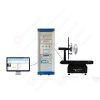
High Precision Rotation Luminaire Goniospectroradiometer
LSG-1890BCCD

Goniophotometer for Automotive and Signal Lamps
LSG-1950
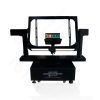
Goniophotometer for Traffic Signal Lamps (Economical Model)
LSG-1950S
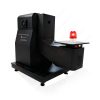
VAD Fire Alarm Visual Alert Device Goniophotometer
LSG-1930
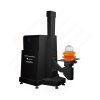
Goniophotometer for Airfield Lighting
LSG-1940
Compact Goniophotometer
LSG-1200A
LED Goniophotometer
LSG-1100
Near Field Moving Detector Goniophotometer
LSG-1900B
 LEDs and Luminaire Test Solutions
 LM-79 and LM-80 Test Solutions
 LED Driver Test Solutions
 Household Appliances Test Solutions
 Mobile and Network Test Solutions
 Automotive Electronics Test Solutions
 Audio-Video and IT Test Solutions
 Cable and Wire Test Solutions
 Plugs and Sockets Test Solutions
 Power Switch Test Solutions
 Transformer Test Solutions
 Electric Toys Test Solutions
 Energy Meter Test Solutions
 Motor-Operated Tool Test Solutions
Select an organization
to browse standards
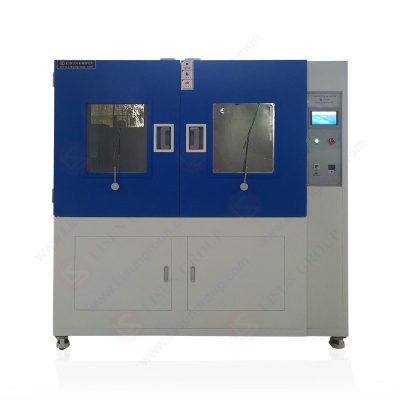
Outdoor and automotive designed products are constantly exposed to airborne particles that will undermine performance, safety and longevity. Enclosures may allow fine dust, sand and road debris to penetrate enclosures, cause damage to moving parts, block cooling routes as well as degrade electrical insulation. Sand and dust chamber is a controlled environment, which is used to test how products would survive under these conditions before they are released in the field. The IP6X test is of particular importance in the course of a reliability validation program since it ensures total protection against dust ingress, where no dust particles are introduced into the enclosure under specified airflow circumstances.
Compared to casual exposure testing, standardized test of sand and dust subjects are forced to precise airflow, exposure duration and concentration. This regulated method enables the engineers to measure the real-life durability though repeatability and traceability. Sand and dust chamber testing is important to product qualification in outdoor and automotive products, failure of which can result in safety or expensive recall.
The lighting fixtures used in the outdoor equipment or the charging stations, the control panels and communication devices used may come to use and may last years without need to be serviced in a dusty environment. The build-up of dust might not be a cause of concern at first, yet dust can lead to overheating, insulation, and corrosion during the long term when mixed with moisture.
Even worse conditions are presented to the automotive components. Cars move on dusty and sandy roads and construction areas with periodic stirs of dust and sand into the air. The sensors, connectors, electronic control units, and mechanical assemblies are meant to be operable even when exposed repeatedly. Sand and dust chamber would also recreate these conditions in condensed time so an engineer would be in a position to forecast future behavior.
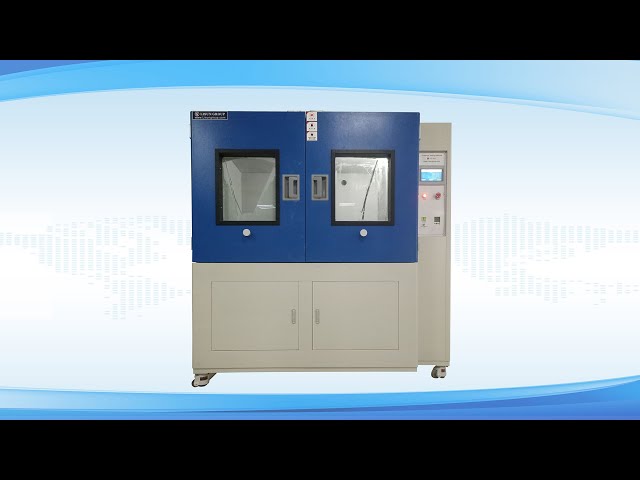
A sand and dust chamber is used to simulate exposure to airborne particulate, in which dust or sand is circulated in a test volume. The flow of the air is controlled, so that the particles are suspended and drawn to the test specimen, similar to penetration forces in reality. This test conditions seals, gaskets, vents, and mechanical interfaces with respect to steady and quantifiable conditions.
The chamber has a good solution of being able to manipulate particle size, velocity of airflow, and duration of exposure. These are necessary parameters in order to achieve meaningful results. Inadequate airflow causes the dust to settle too soon whereas surplus airflow causes an unrealistic erosion. Correct chamber functioning is needed to make the exposure match the real-life situations in service as opposed to extreme or deceptive conditions.
The IP6X test is the maximum of dust protection within ingress protection standards. It establishes that dust does not get into the enclosure in large amounts that may hamper the operation and safety. Known as a negative pressure, this negative pressure is frequently used during testing to provide the effect of pressure variation in response to changes in temperature or change in altitude.
A sand and dust chamber designed on the basis of IP6X tests assures the forcing of dust particles towards conceivable ingress provisions including cable points of entry, ventilation aimpoints, seals, and interfaces. The product is then inspected on internal contamination after exposure and functional degradation. Passing test proves that enclosure design is an effective way to block the ingress of particulate under realistic conditions.
Car systems depend on close adherence to technicalities and dependability of electricity. The ingress of dust may lead to an increase in connector resistance, optical sensor interference, and mechanical actuator destruction. One of the ways of detecting these weaknesses during the early stages of development is by subjecting the product to the sand and dust chamber test.
Such components as headlamp assemblies, lidar sensors, camera modules, and under-hood electronics are usually tested with the help of dust exposure tests. The performance of the engineers is monitored during and after the testing to identify intermittent fault, signal instability, or mechanical wear. Such information helps in making design corrections like improved sealing, choice of materials or protective coating.
Other than electrical reliability, mechanical components are affected by dust exposure. Sliding surfaces, bearings and gears are exceptionally vulnerable to abrasive particles. High-pressure tests are conducted in sand and dust chambers to determine the behavior of these parts under continuous stresses of particle.
In more automotive related applications, it is of great importance to components that are exposed to road dust and sand. Slow wear experienced in the real-life can be expedited during chamber testing enabling the engineers to estimate service life and modes of failure.
Thermal issues are likely to occur due to dust collection. Vents and heat sinks get partially blocked, which lowers the airflow and elevates the temperature of operation. The sand and dust chamber testing assists in assessing the ability of the products to handle heat in the presence of contamination by the particles.
To check the effectiveness of cooling systems, engineers conduct monitoring of temperature rise during and following exposure to the test on their functionality. This is of great importance to outdoor electronic and automotive control units where overheating may lead to unforeseen shutdowns or irreversible damage.
Repeatability is also one of the main benefits of a sand and dust chamber. Laboratory exposure can be replicated and this is not possible in field testing. This will enable engineers to juxtapose various design repetitions under the same circumstances.
As an example, the modification of gasket material or the design of a vent can be assessed instantly by repeating the identical dust exposure profile. The process is iterative, which enhances optimization of design and minimizes use of expensive field testing.
LISUN is one of the manufacturers of sand and dust chamber systems that are aimed at the consistent regulation of airflow and the consistent suspension of the particles in the gas, which will guarantee the reproducible outcomes through repeated testing.
Most outdoor and automotive applications of the product need to match the global specifications regarding the ingress insurance and environmental endurance. Chamber testing on sands and dust provide written evidence that goods are in standards with these requirements.
The resulting report of test performed in the IP6X testing process can be used in certification submissions as well as audits by customers. Verifiable records indicate that products are tested under multiple conditions that are defined unlike informal tests.
With compliance testing also, manufacturers are able to contain liability; they will be able to show that the products were designed and also tested to survive anticipated exposure of the environment.
Most effective Sand and dust chamber testing is done when it is incorporated throughout all the product lifecycle. Early-stage testing involves detection of design flaws, middle-stage testing involves checking of the enhancement and last stage testing involves testing of the readiness to go to production.
This analytical method minimizes the chances of failure happening in later stages and makes reliability an issue that is dealt with in advance. Through dust testing, the thermal, vibration, and moisture tests, engineers are able to have a detailed perception of the environmental durability.
The failure of products due to dust ingress may have random behavior that causes dissatisfaction to the customers and warranties. Sand and dust chamber validation mitigates these risks through making sure that the products can be used in life circumstances.
In the case of automotive producers, reliability can directly affect the brand name and safety image. In the case of outdoor equipment vendors, life span determines the customer confidence and future service expenses. Product success and technical performance in the market are facilitated by effective dust testing.
Sand and dust chamber is a very necessary equipment in ensuring reliability of products under outdoor and automotive conditions. It demonstrates the flaws that could be disclosed by simulating realistic exposure of particulate when tested under controlled conditions when it is impossible to use visual observation or make basic tests. The IP6X test is important in establishing the integrity of the enclosures so that they are fully protected against dust intrusion by the enclosures that might affect their operations or safety.
Sand and dust chamber testing can be used with consistent design choices and verification of compliance because of the ability to control airflow, repeatable exposure profile, and standard evaluation procedures. Other manufacturers like LISUN are still developing chamber technology and with this technology, the engineers are able to test the durability successfully in a more demanding working environment. By having such intensive dust tests, the products can be better suited to address the issues of real-world use performance, and thus provides credible service over its service life.
Your email address will not be published. Required fields are marked *

 English
 中文简体
中文简体 English
 Русский
 Español
 Português
 Türkçe
 العربية
 Deutsch
 Polski
 Italiano
 Français
 한국어
한국어 ไทย
ไทย Tiếng Việt
 日本語
日本語