LM-79 Moving Detector Goniophotometer (Mirror Type C)
LSG-6000
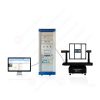
High Precision Rotation Luminaire Goniophotometer
LSG-1890B
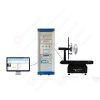
High Precision Rotation Luminaire Goniospectroradiometer
LSG-1890BCCD

Goniophotometer for Automotive and Signal Lamps
LSG-1950
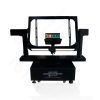
Goniophotometer for Traffic Signal Lamps (Economical Model)
LSG-1950S
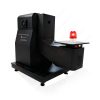
VAD Fire Alarm Visual Alert Device Goniophotometer
LSG-1930
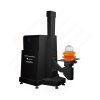
Goniophotometer for Airfield Lighting
LSG-1940
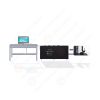
Compact Goniophotometer
LSG-1200A
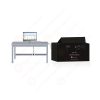
LED Goniophotometer
LSG-1100
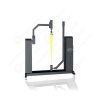
Near Field Moving Detector Goniophotometer
LSG-1900B
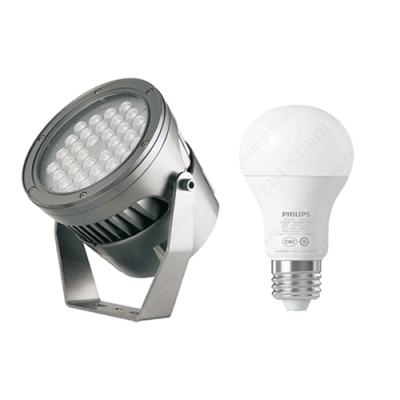 LEDs and Luminaire Test Solutions
 LM-79 and LM-80 Test Solutions
 LED Driver Test Solutions
 Household Appliances Test Solutions
 Mobile and Network Test Solutions
 Automotive Electronics Test Solutions
 Audio-Video and IT Test Solutions
 Cable and Wire Test Solutions
 Plugs and Sockets Test Solutions
 Power Switch Test Solutions
 Transformer Test Solutions
 Electric Toys Test Solutions
 Energy Meter Test Solutions
 Motor-Operated Tool Test Solutions
Select an organization
to browse standards
Environmental sealing is increasingly important in the manufacture of electrical, mechanical, automotive, and outdoor industrial products in order to be functional and safe. Since dust is a major pollutant during the field deployment in the harsh conditions of desert, mining, roadside installation, textile processing or agricultural zones, it is important to ensure that equipment can withstand exposure to the dust. A dust test chamber permits very close control of dust movement on product surfaces and the manufacturer can test the long-term reliability. Dust exposure levels, deposition periods, flow velocities and accuracy of measurement are defined by different testing standards. Knowing these standards assists the laboratories to operate reproducible and industry acceptable tests.
Ingress protection, mechanical sealing, airflow and contamination resistance are tested through the dust test process. Dust particles may have an impact on electronics by abrasion, bridging, insulation failure, tracking, electrostatic interference, or mechanical blockage. Due to this fact, there are standards which mean that a similar result be produced in the tests when it comes to manufacturers, certification labs and regulatory bodies.
The mixture of complex material structures in dust includes silica sticks, organic powder, textile lint, carbon residue, metallic filings, grains of sand, and dried mineral cohort. When these are deposited over contacts, connectors, bearings, or openings in a ventilation system, these layers start affecting performance.
In contrast to liquid ingress when failure is instant, dust-based degradation can be progressive and usually out-of-view. A component can be functioning correctly in the early hours, but over time there will be normative issues which can lead to switching errors, overheating, tracking arcing, or sensor drift. The dust sand test chamber evaluation standards assist in hastening that exposure so as to emulate years of field pollution.
The problems normally occur due to dust formation that occurs within ventilation channels which later distort the transfer of heat. This causes electronic drivers and power units to operate at elevated temperatures than anticipated reducing service life. Therefore, the capability to model the realistic intrusion of particles is still relevant in practice.
Certifications relative to dust exposure in industry are based on certifications institutions like IEC, ISO, GB, automotive associations and national telecommunications organizations. Although standards differ numerically, their essence is identical, and they guarantee products are not killed by suspended or settled contact of particulate.
Such a classification comprises the IP5X and IP6X levels that are dust-protected and dust-tight. The standard tells the operational sealing against the ingress, and the way particulate should be suspended.
A few more guidelines have rigor of testing, particularly in the case of automotive electronics, optical devices, industrial controllers, defense devices, and smart infrastructure systems.
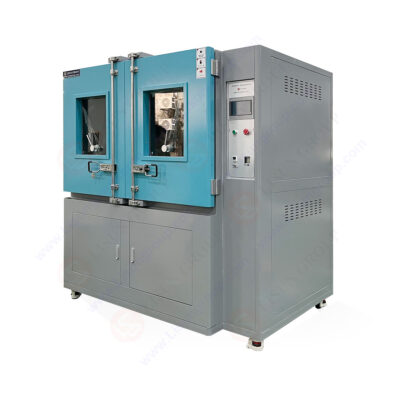
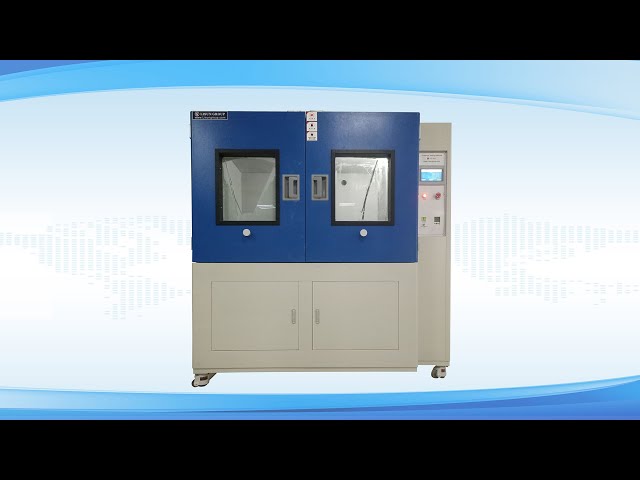
Regular dust inoculation chamber permits dust to rest. A moving detector dust test chamber however controls deposition by use of controlled agitation, induced particle movement, and regular measuring time. This helps to ensure that the fine dust does not gravity drop at the edges of the chambers.
The accuracy of measurement is dependent on the circulation velocity, type of dust to be used and length of test. Concentration alone is unimportant as compared to uniform exposure. In case of uneven settling of dust, there is sample evaluation bias.
Appropriate chamber design comprises of sealed air-tight chamber walls, transparent monitoring windows, internal airflow pumps, and programmable sequences of agitation. Any little leakage nullifies exposure homogeneity.
The chamber should not have local dust eddies of samples. Raised mount racks provide free movement of the particulate under the device. This is very different to the older and stagnant deposit chambers that this forces gravity into the lead.
• Stability of the particle size distribution
• Control of the relative humidity level.
• Periods of constant recirculation.
• Sample mounting alignment
• Surface reflectivity of the inside.
• Agitation cycle frequency
• Chamber sealing integrity
Precise standards of dust are defined. Examples of typical compositions include dry talcum powder, fine Arizona dust, or silica-based sand. Heavy talc imitates indoor dust pollution and fine talc brings mechanical abrasion which is similar to automotive braking conditions or construction occupational exposure. Selection of dust type removes the need of field trials as the exposure is made to replicate real environments. Besides this, certain standards demand mass of dust per volume of traceability to eliminate deviation of untested samples.
Particle charging is determined by humidity. Undue dryness accelerates the electrostatic adhesion in such a way that the dust sticks viciously. An increase in humidity minimizes airborne suspension and maximizes the settling. Standardization prevents absolute humidity to affect the severity of the tests.
The stability of temperature is important since vents of enclosures open and close. Internal pressure varies with change in temperature, dust flows easily through small holes. Dust penetration is hence a contamination and pressurization effect.
Stability of the air velocity is the difference between professional grade test chambers and improvised ones. The dust sand test chamber circulates particulates under a mechanical process, as opposed to falling due to gravity.
Tests that use ISO-based dust ingress techniques typically use settle time with circulation bursts thereby enabling dust to hang longer in the air. The standards around automotive like that of engine compartment controllers require a lengthy period of exposure since vehicles are normally located in close proximity to roadways that produce dust. Telecommunications test structures focus on closing life expectancy. They do not analyze immediate dust entry evaluation, but ones that build up over time.
There are standards on the intervals taken with insulation resistance checks. An example is that of power terminals, control circuits, and plated connections where post test leakage analysis of the sources of electrical leakage can be done.
Dust ingress testing is not a visual test all by itself. Groups can appear fine on the outside, but there are internal tracking courses. Auxiliary diagnostics are applied by engineers doing evaluation:
• Dielectric breakdown test.
• Weight gain inspection
• Analysis of microscopic cavity
• Checks of components removal
Since dust gathers in places that cannot be identified externally, there is the need to have indirect validation.
Contact impedance drift may occur in connector walls that are self-adhesive. The direct effects of adhesion on heat sink fins determine the convective dissipation. These are the compliance reporting secondary effects.
Sampling results are checked by certification bodies on a number of batches. A commercial quality moving detector dust test chamber guarantees that should the sealing of the product be maintained constant, the assessment generates the same exposure patterns. Repeatability is legally applicable at the time of resolving product disputes, and warranty claims investigations.
When asymmetrical sealing is used, malfunction in manufacturing is indicated by intrusion routes of dust. Certification teams ensure that ingress patterns are compared in order to understand whether failure of sealing is by improper installation, material shrinkage or loss of torque through gasket compression.
The contamination of dust causes also safety hazards, non-functional basic degradation. The airflow is blocked, thereby overheating certain power systems. Safety critical equipment like alarm equipment, emergency switches, signaling equipment in the railroad, and mining automation gears could have operational failures unless the accumulation of dust is tested.
The optical transparency is also altered by the dust particles. The lenses of LEDs become cloudy, the scanners have blurred windows, fiber alignment interfaces are misaligned. Appliances which need transparent optic surfaces are poor in sight.
Therefore, dust protection analysis is connected to electrical safety, communication reliability and continuity of industrial automation.
Environmental testing is so much more than cosmetic testing that uses dust. On the one hand, realistic and controlled loading on particles and long-term accumulation study is needed with complex sealing systems. A moving detector dust test chamber is used to provide uniform contamination irrespective of product samples, as the same contamination patterns are used on identical samples. IEC-based IP ratings and ISO dust penetration procedures are standards that ensure that real-world simulation is done as opposed to random powder exposure.
An effectively implemented compliance program in a properly designed dust sand test chamber is used to ensure sealing effectiveness, stability in performance and electrical resilience. Engineers verify structural protocols that provide enclosure integrity against the ingress of particulate over the years of active use.
Lisun Instruments Limited was found by LISUN GROUP in 2003. LISUN quality system has been strictly certified by ISO9001:2015. As a CIE Membership, LISUN products are designed based on CIE, IEC and other international or national standards. All products passed CE certificate and authenticated by the third party lab.
Our main products are Goniophotometer, Integrating Sphere, Spectroradiometer, Surge Generator, ESD Simulator Guns, EMI Receiver, EMC Test Equipment, Electrical Safety Tester, Environmental Chamber, Temperature Chamber, Climate Chamber, Thermal Chamber, Salt Spray Test, Dust Test Chamber, Waterproof Test, RoHS Test (EDXRF), Glow Wire Test and Needle Flame Test.
Please feel free to contact us if you need any support.
Tech Dep: Service@Lisungroup.com, Cell/WhatsApp:+8615317907381
Sales Dep: Sales@Lisungroup.com, Cell/WhatsApp:+8618117273997
Your email address will not be published. Required fields are marked *

 English
 中文简体
中文简体 English
 Русский
 Español
 Português
 Türkçe
 العربية
 Deutsch
 Polski
 Italiano
 Français
 한국어
한국어 ไทย
ไทย Tiếng Việt
 日本語
日本語