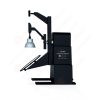
LM-79 Moving Detector Goniophotometer (Mirror Type C)
LSG-6000
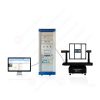
High Precision Rotation Luminaire Goniophotometer
LSG-1890B
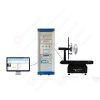
High Precision Rotation Luminaire Goniospectroradiometer
LSG-1890BCCD

Goniophotometer for Automotive and Signal Lamps
LSG-1950
Goniophotometer for Traffic Signal Lamps (Economical Model)
LSG-1950S
Goniophotometer for Airfield Lighting
LSG-1940
VAD Fire Alarm Visual Alert Device Goniophotometer
LSG-1930
Compact Goniophotometer
LSG-1200A
LED Goniophotometer
LSG-1100
Near Field Moving Detector Goniophotometer
LSG-1900B
 LEDs and Luminaire Test Solutions
 LM-79 and LM-80 Test Solutions
 LED Driver Test Solutions
 Household Appliances Test Solutions
 Mobile and Network Test Solutions
 Automotive Electronics Test Solutions
 Audio-Video and IT Test Solutions
 Cable and Wire Test Solutions
 Plugs and Sockets Test Solutions
 Power Switch Test Solutions
 Transformer Test Solutions
 Electric Toys Test Solutions
 Energy Meter Test Solutions
 Motor-Operated Tool Test Solutions
Select an organization
to browse standards
Abstract: Leakage current serves as a core metric for evaluating the integrity of insulation systems and electric shock protection in electrical equipment. Throughout a product’s lifecycle, whether in precision electronic devices or high-power household appliances, abnormal fluctuations in leakage current often indicate potential safety hazards.
This paper aims to conduct an in-depth analysis of what causes leakage current, by establishing equivalent circuit models, this article systematically examines the mechanisms through which capacitive coupling, resistive conduction, and EMI suppression components contribute to leakage current formation. Incorporating the technical characteristics of the LISUN WB2675D Leakage Current Tester, this paper demonstrates how precise measurement of touch current—supported by a high-capacity isolation transformer—can identify insulation breakdown and design defects. This analysis provides theoretical support and engineering guidance for compliance testing aligned with GB/T 4706.1-2024 and IEC 60335-1:2023 standards.
In electrical engineering and equipment safety compliance assessment, the causes and influencing factors of leakage current remain subjects of significant concern. Leakage current refers to the current flowing through insulation or via distributed capacitance to conductive enclosures and ground terminals under normal operating conditions (without fault). For users, leakage current exceeding perception thresholds (touch current) not only produces painful sensations but may also trigger fatal electric shock accidents.
With the widespread application of semiconductor technology and high-frequency power supplies, circuit structures in electrical equipment have grown increasingly complex, imposing higher demands on leakage current control. As an industry-leading supplier of testing equipment, LISUN has developed the WB2675D Leakage Current Tester, which features a massive 5000VA isolation transformer, providing robust assurance for precision measurement under complex operating conditions. This article explores the deep mechanisms of leakage current generation and testing methodologies from both theoretical and practical perspectives.
From a physics perspective, leakage current is not the product of a single path but rather a composite current formed by the superposition of resistive and capacitive currents.
Under AC operating conditions, distributed capacitance (stray capacitance) exists between internal conductors and metal enclosures/ground lines, allowing electrostatic energy to leak through these displacement current paths. According to the formula:

Where represents power supply frequency, represents distributed capacitance, and represents applied voltage. This demonstrates that high-frequency operation or large-area metal structures significantly increase capacitive leakage.
No insulation material (such as plastic enclosures, mica washers, or cable jackets) is absolutely non-conductive. Despite extremely high resistance values, microampere-level resistive leakage currents still occur under high voltage. Such currents are closely related to the material’s dielectric strength and surface cleanliness.
To satisfy electromagnetic compatibility (EMC) requirements, many electronic devices incorporate filters at their input stages. Y-capacitors bridging line/neutral to ground represent one of the primary sources of leakage current. Designers must strike a precise balance between EMI suppression effectiveness and leakage current limits.
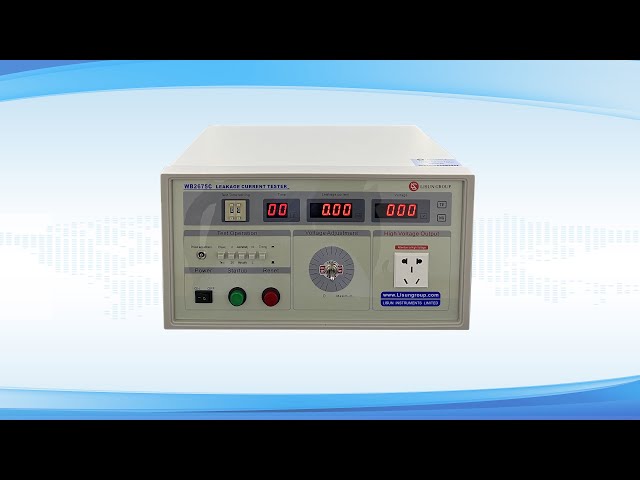
A thorough analysis of leakage current causes and contributing factors requires consideration of environmental impacts on insulation performance dynamics.
High-humidity environments cause insulation surfaces to adsorb moisture, creating conductive pathways. Additionally, accumulated dust and acidic gases in the atmosphere reduce creepage distances, inducing significant surface leakage currents.
According to Arrhenius’ Law, the electrical conductivity of insulation materials increases with temperature. Equipment operating continuously at elevated temperatures experiences thermal degradation of insulation layers, altering molecular dielectric constants and causing irreversible increases in leakage current.
During production and assembly, cables subjected to crushing or cutting by sharp edges may not immediately cause short circuits. However, localized thinning of insulation layers creates concentrated electric field intensity, manifesting as sudden anomalies in leakage current values during testing.
Addressing complex causes and contributing factors, the LISUN WB2675D achieves precise capture of minute current signals through advanced hardware architecture.
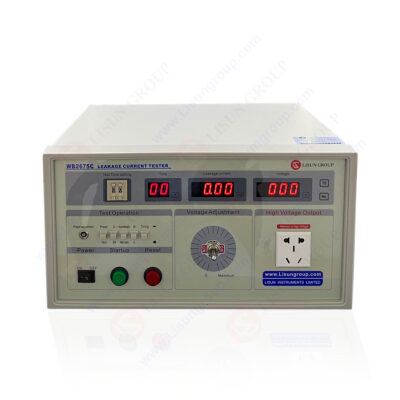
The following table lists the primary parameters of the LISUN WB2675* series, highlighting the WB2675D’s superior capabilities in high-load testing:
| Specification | WB2675A | WB2675B | WB2675C | WB2675D |
| Test Current Range | 0~2mA / 20mA | 0~2mA / 20mA | 0~2mA / 20mA | 0~2mA / 20mA |
| Measurement Accuracy | ±5% | ±5% | ±5% | ±5% |
| Test Time Setting | 1~99s (Timer/Manual) | 1~99s (Timer/Manual) | 1~99s (Timer/Manual) | 1~99s (Timer/Manual) |
| Isolation Transformer Capacity | 500VA | 1000VA | 2000VA | 5000VA |
| Application Scope | Low-power portable devices | Medium-power appliances | Industrial automation components | High-power medical/lighting systems |
The WB2675D features a 5000VA ultra-high-capacity isolation transformer. During leakage current testing, the tester must power the Equipment Under Test (EUT) to simulate actual operating conditions. The large-capacity transformer ensures voltage waveform fidelity when starting high-power loads (such as LED arrays or large motors), thereby guaranteeing measurement results comply with stringent requirements of standards including GB 7000.1-2023 and IEC 60598-1:2024.
For small appliances with direct skin contact such as electric kettles and hair dryers, leakage current must be limited to 0.75 mA. The WB2675D’s 0–2 mA high-precision range enables engineers to detect extremely subtle insulation degradation, preventing electric shock accidents.
LED luminaires, particularly outdoor street lights, contain extensive capacitive components in their internal power drivers. Leakage current testing requires operation at rated AC 220 V. The WB2675D stably applies voltage while displaying current, voltage, and power in real-time.
In fast-flow production environments, the WB2675D supports audio-visual alarm functions. Quality inspectors simply set test duration (1–99s) and threshold values; the instrument automatically determines product acceptance, significantly enhancing testing efficiency.
Based on analysis of the reason which causes leakage current, R&D personnel can implement the following strategies to optimize designs:
Leakage current generation results from the combined action of inherent physical characteristics of electrical equipment and external environmental stresses. Through systematic analysis of what causes leakage current, enterprises can optimize insulation design at the source, mitigating safety risks for market access.
The LISUN WB2675D Leakage Current Tester, through its high-precision measurement system, flexible dual-mode test timing, and industrial-grade 5000VA isolation transformer, provides a one-stop compliance testing solution for global electrical manufacturers. Whether addressing rigorous laboratory R&D validation or efficient production line full-inspection, the WB2675D serves as a robust defense line for ensuring product electrical safety and preventing electric shock hazards.
Tags:WB2675DYour email address will not be published. Required fields are marked *

 English
 中文简体
中文简体 English
 Русский
 Español
 Português
 Türkçe
 العربية
 Deutsch
 Polski
 Italiano
 Français
 한국어
한국어 ไทย
ไทย Tiếng Việt
 日本語
日本語