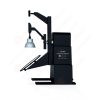
LM-79 Moving Detector Goniophotometer (Mirror Type C)
LSG-6000
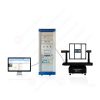
High Precision Rotation Luminaire Goniophotometer
LSG-1890B
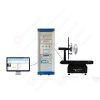
High Precision Rotation Luminaire Goniospectroradiometer
LSG-1890BCCD

Goniophotometer for Automotive and Signal Lamps
LSG-1950
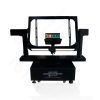
Goniophotometer for Traffic Signal Lamps
LSG-1950S
VAD Fire Alarm Visual Alert Device Goniophotometer
LSG-1930
Compact Goniophotometer
LSG-1200A
LED Goniophotometer
LSG-1100
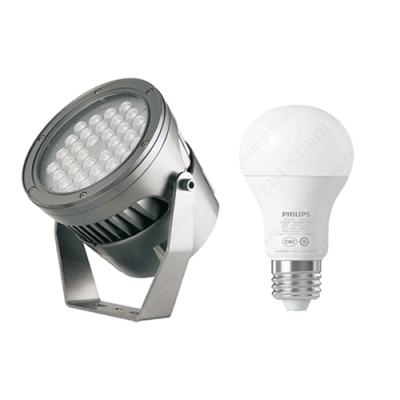 LEDs and Luminaire Test Solutions
 LM-79 and LM-80 Test Solutions
 LED Driver Test Solutions
 Household Appliances Test Solutions
 Mobile and Network Test Solutions
 Automotive Electronics Test Solutions
 Audio-Video and IT Test Solutions
 Cable and Wire Test Solutions
 Plugs and Sockets Test Solutions
 Power Switch Test Solutions
 Transformer Test Solutions
 Electric Toys Test Solutions
 Energy Meter Test Solutions
 Motor-Operated Tool Test Solutions
Select an organization
to browse standards
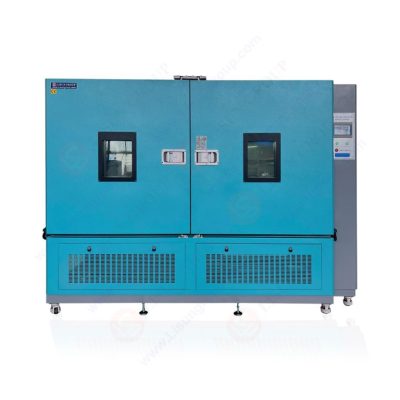
The climate test chamber is used to simulate controlled climatic conditions such as temperature and humidity that the product undergoes during storage transportation and operation. Climate simulation is not intended to reproduce weather but introduce repeatable stresses that cause moisture and thermal driven degradation processes. Fluctuations in temperature and humidity are of particular concern since their combination increases the insulation resistance loss due to corrosion as well as speeding up mechanical fatigue. When it is done right climate testing will expose the areas of weakness which steady state exposure would never identify and will aid in making informed design and qualification choices.
Scalability and cost are also a consideration of in practice laboratories during capability construction. The environmental chamber price is often a factor in judgements and the long term value has to do with whether the methods selected can reproduce realistic fluctuation profiles with stable control and data which can be traced.
Temperature oscillation procedures are associated with slow diurnal cycle to high ramping rate as an exploration of thermal responsiveness. Slow cycles relax the difference in day nights and provide materials with equilibrium. They can be applied in studying the effects of diffusion drift and relaxation of moisture. Quick ramps generate heat gradients which create stress on interfaces solder joints and bonded layers. To select ramp rates, one must have an idea of the manner in which a failure may be caused as over-aggressive ramps may propagate an effect of thermal shock that was not desired.
Strategy of control is essential. A climate test chamber should also attempt to maintain heating and cooling without overshoot or swinging to follow programmed profiles. The changes in overshoot abide in intensity and make interpretation difficult. Even airflow makes sure that the specimens in the usable part are exposed to similar conditions. Mapping exercises check consistency and must be repeated in case of change in loading pattern.
Dwell definition matters. When the air reaches setpoint a dwell should not start but only after the specimen has arrived at target temperature. Sensors put on representative specimens aid in the definition of criteria of stabilization and enhance consistency in methods.
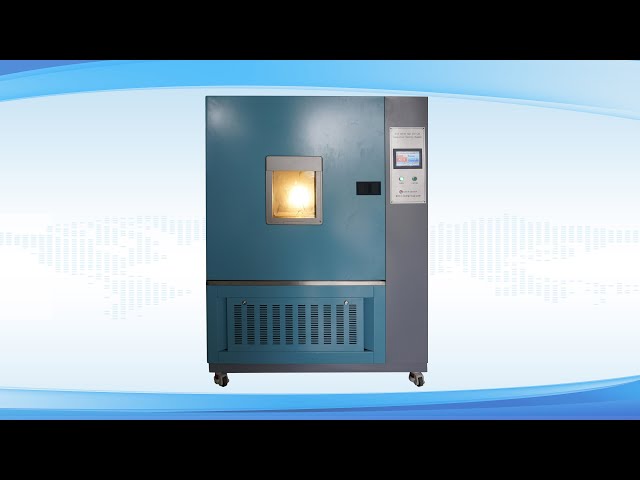
The humidity variation techniques bring about alternating wet and dry which promotes absorption and desorption. High temperature and constant humidity promote diffusion driven degradation whereas the cyclic humidity subjects interfaces to swelling and contraction. Amplitude rate and dwell duration determine the severity of a humidity cycle. Huge swings are both more susceptible and can be less realistic. The smaller repeated swings tend to give higher correlation to service behavior.
The key ingredient in method design is dew point management. Condensation is added and may prevail especially in cases of liquid water. Should condensation be involved in the requirement it must be premeditated or planned. A single climate test chamber that is capable of controlling temperature and humidity simultaneously can control the dew point accurately and avoid artifacts.
Accuracy is dependent on sensor selection. Capacitive sensors are fast and have to be calibrated and placed carefully. Demanding profiles are enhanced by chilled mirror references. Redundant sensing aids in the detection of drifts in the case of long tests.
The most informative techniques involve the use of temperature and humidity variations on synchronized cycles. An example is that humidity can be turned up to indicate warm humid weather and down during cool weather to indicate drying. The order and time have an influence on the movement of moisture and kinetics of the reactions. Interaction effects include corrosion acceleration at high temperature and humidity and crack initiation in the course of cooling together with combined profiles.
The use cases should be reflected in profile programming. Instead of seasonal cycles in the industry equipment, consumer electronics may be subject to high short cycles. The test time taken must be adequate to indicate trends and not an endpoint. Checks and measurements in between allow to define progress and recovery.
Verification is essential. Background tests ensure the stability of the chambers prior to testing. In the test alarms are used to protect validity in the case of parameter drift. The correlation between environmental response and the specimen response can be done through continuous logging.
The climate simulation is based on the level of specimen preparation. Components must be reflective of manufacturing status such as seals and packaging of coatings. Such preconditioning as drying sets a familiar state of moisture. Baseline measurements give points of reference of the trend.
The fixtures are to be inert and permit free air. Orientation has an effect on condensate behaviour and interface exposures. Comparison across samples enhances consistency. Latent concerns are usually exposed through operational bias during exposure. Electronics That are operating under conditions of humidity stress enhances leakage and electrochemical migration. Creep and stress corrosion cracking tendencies are brought out by mechanical loading and humidity.
Cable routing and Feedthroughs must ensure functionality of the chambers and prevent unintentional sinks of heat or moisture. Causal interpretation is enhanced by synchronization of functional monitoring and the environmental logs.
Climate test outcomes should be taken with caution. Condensed conditions will not simply alter to service life unless validated models are used. Instead techniques avail comparative threshold levels of rank and prevailing mechanisms. Even in the case where predicting absolute life is uncertain, a comparison of variants at the same profile provides actionable information.
The choice of methods is also economical. Laboratories trade off throughput and capital. Environmental chamber price whilst will act as the determinant of procurement power to operate stable programmable fluctuation profiles with minimal down time will establish overall charge of possession. Investment is secured by modular chambers, which are fluid to new ways.
Supplier support is a factor of success. Risk is mitigated by guidelines on calibration and maintenance of methods. As an example, LISUN offers climate test chambers and support applications which help the laboratories to standardize the application of reliable temperature and humidity variability techniques with predictable control and documentation.
A good simulation of changes in temperature and humidity requires rigorous approaches in an efficient climate test chamber. Careful choice of ramp rates community criteria dew point management and coupled cycling profiles display interaction driven degradation which is missed by steady state tests. With the appropriate monitoring of specimen preparation and data integrity these techniques provide excellent reliability information. Long term capability instead of price advantage of environmental chambers alone will make climate testing accurate dynamic over products generations.
Tags:GDJS-015BYour email address will not be published. Required fields are marked *

 English
 中文简体
中文简体 English
 Русский
 Español
 Português
 Türkçe
 العربية
 Deutsch
 Polski
 Italiano
 Français
 한국어
한국어 ไทย
ไทย Tiếng Việt
 日本語
日本語