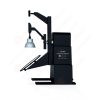
LM-79 Moving Detector Goniophotometer (Mirror Type C)
LSG-6000
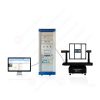
High Precision Rotation Luminaire Goniophotometer
LSG-1890B
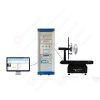
High Precision Rotation Luminaire Goniospectroradiometer
LSG-1890BCCD

Goniophotometer for Automotive and Signal Lamps
LSG-1950
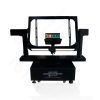
Goniophotometer for Traffic Signal Lamps
LSG-1950S
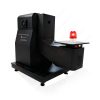
VAD Fire Alarm Visual Alert Device Goniophotometer
LSG-1930
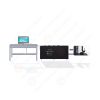
Compact Goniophotometer
LSG-1200A
LED Goniophotometer
LSG-1100
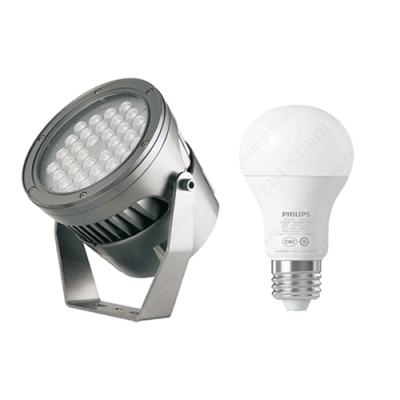 LEDs and Luminaire Test Solutions
 LM-79 and LM-80 Test Solutions
 LED Driver Test Solutions
 Household Appliances Test Solutions
 Mobile and Network Test Solutions
 Automotive Electronics Test Solutions
 Audio-Video and IT Test Solutions
 Cable and Wire Test Solutions
 Plugs and Sockets Test Solutions
 Power Switch Test Solutions
 Transformer Test Solutions
 Electric Toys Test Solutions
 Energy Meter Test Solutions
 Motor-Operated Tool Test Solutions
Select an organization
to browse standards
Any laboratory, which provides credible characterization of LED products, is dependent on lighting test equipment. The first question when you are designing a LED testing program is what do you want to prove by the measurements. Many projects require that for leading to occur, performance, color quality, temporal stability and electrical efficiency be answered in ways which are repeatable and reportable. Such a need implies the laboratory needs to integrate optical instrumentation, electrical metrology and environmental regulation into the same workflow procedure that each reported lumen or spectral curve or flicker measurement can be linked to an instrument calibration and to a documented test condition.
The two pillars of photometric and colorimetric examination are total luminous flux and spectral power distribution. Integrating spheres are still the preferred choice in cases when it is needed to have total flux independent of beam shape. The sphere itself is a radiometric integrator and therefore the size of the sphere, internal and port geometry coating reflectance all determine the measurement chain. Match the sphere with a spectroradiometer with known accuracy of wavelength and with stray light capability since spectral error is directly proportional to colorimetric error.
In the case of directional and spatially resolved data use a goniophotometer or an imaging photometer. The goniophotometer provides luminous intensity versus angle data that are used to support IES and beam shaping analysis generation and EULUMDAT files. A photometer or a colorimeter imaging, captures both luminaire luminance and chromaticity maps at two dimensions, which are of great value where the luminaire displays spatial non uniformity or mixed color sources. Narrow field Luminance meters give an accurate measurement of smaller hot spots like COB emitters.
Optical chain includes temporal behavior. Numerous LED drivers’ amplitude vary or drift at start up. Rise time, flicker and stroboscopic effects are best taken using a fast photodiode and digitizer with sufficient bandwidth. Flicker index and frequency spectra, percent flicker, time domain, and all of the metrics are computed and used to inform human factors and safety assessment as well as regulatory compliance.
Special care must be made of lenses, diffusers and secondary optics. In testing a luminaire when mounting the luminaire treat the system as a system. Attach the mount optics as they will be in the field. In modular test systems with numerous vendors has offered kits that certify mounting and thermal bonding. Laboratory manufacturers (LISUN) provide a collection of accessories allowing the replication of the conditions of production mounting in the laboratory and reducing the disparities in setups.
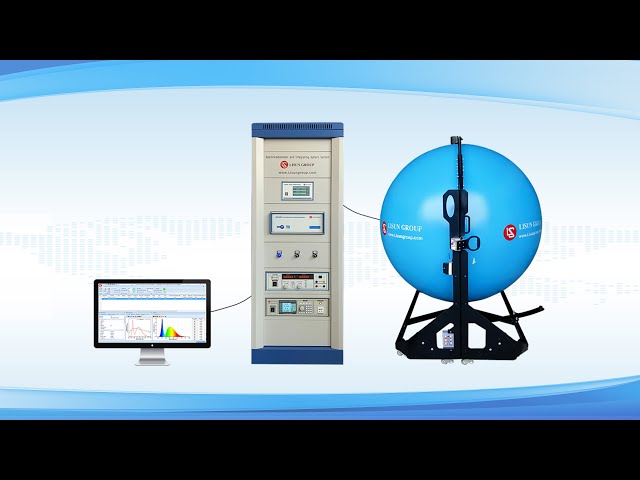
LED testing cannot be done precisely without electrical and thermal considerations. Power analyzers to measure the voltage current true power and harmonic distortion are required to calculate luminous efficacy and observe driver induced anomalies. Align electrical logging and optical with the acquisition assuring that all of the lumen readings are accompanied by the instant conditions of the drive.
The degree of temperature is also a factor. The spectral output and luminous efficacy vary with LED junction temperature. A trustworthy procedure inserts a temperature sensor on the case or defined Tc point and records steady state and then reports optical values. In the case of packaged LEDs and modules, thermal fixtures recreate the heat sinking during production whereas in full luminaires the thermal chambers recreate the conditions of the ambient. Humidity when humidity is important contains climate control since the combined influence of moisture and temperature enhances lumen depreciation and results in failures caused by corrosion.
Shadows and heat sinking of connector routes are common error sources which have not been adequately addressed. Wire route feeds to prevent the obstruction of optics. Install feedthroughs that do not compromise chamber integrity and keep conduction at a minimum level. Where measurement needs mains coupling take proper rated LISN accessories to introduce a known impedance and also isolate the test article on building noise.
Each instrument will add to the measurement error. Calibration A calibration program is a disciplined program that links spectroradiometers, photometers, power analyzers and temperature sensors to national or accredited laboratories. Calibration certificates should have mentioned uncertainties to enable the lab to develop an uncertainty budget to determine the amount of confidence in the reported lumens, chromaticity coordinates and efficacy values.
Always include a test of routine functionality after measuring every measurement campaign. Drift can be seen quickly with a stable reference source and can be detected before a formal test has started by a quick check with a stable reference source, detector saturation or software misconfiguration. Check the results and record verification and raw instrument output. Raw spectral Recording of spectra allows re-processing as new measurements or correction processes are added without re-processing physical samples.
Lighting test equipment is the glue that can incorporate lights testing in a coherent workflow, which is done through software. Select angular position, spectral sampling and power logging measurement suites that are synchronized. Export formats are to accept typical photometric files and retain metadata such as instrument serial numbers, calibration dates, ambient conditions and position of the fixtures. Checksum validation and version control of test scripts help avoid unintended silent alterations which corrupt a long-term data history. Secure backups take care of this.
Reporting standards matter. Cite relevant test norms on each report, with complete conditions of test. As an example, set drive waveform, ambient temperature, Tc, warm up time and calibration traceability. Color measurements should be reported with both spectral power distribution and not derived values only. The practice facilitates independent verification, as well as downstream computation like TM 30 indices based on the same data.
Design labs not headline specifications. Better fixtures and stable mount lead to a better repeat than a slightly higher resolution spectroradiometer. Use traceable sources of references, firmy thermal fixturing and quality cabling. Schedule spare parts and calibration cadence based on intensity of instrument use.
The transfer of methods is easier when one works with known vendors. Vendors like LISUN supply measurement hardware software and accessory ecosystems which ease integration friction and in many cases calibration support. In choosing the equipment consider documentation and service alternatives of vendors as well as inventory performance.
Lighting testing equipment constitutes the infrastructure which transform the physics of the devices into useful product specifications. Using instrument selection with measurement objectives that control electrical and thermal context and impose traceable calibration and data management includes that the laboratory transforms LED testing into a design and compliance benefit, as opposed to a source of doubt.
Your email address will not be published. Required fields are marked *
 English
 中文简体
中文简体 English
 Русский
 Español
 Português
 Türkçe
 العربية
 Deutsch
 Polski
 Italiano
 Français
 한국어
한국어 ไทย
ไทย Tiếng Việt
 日本語
日本語