LM-79 Moving Detector Goniophotometer (Mirror Type C)
LSG-6000
High Precision Rotation Luminaire Goniophotometer
LSG-1890B
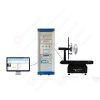
High Precision Rotation Luminaire Goniospectroradiometer
LSG-1890BCCD

Goniophotometer for Automotive and Signal Lamps
LSG-1950
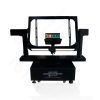
Goniophotometer for Traffic Signal Lamps (Economical Model)
LSG-1950S
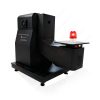
VAD Fire Alarm Visual Alert Device Goniophotometer
LSG-1930
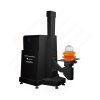
Goniophotometer for Airfield Lighting
LSG-1940
Compact Goniophotometer
LSG-1200A
LED Goniophotometer
LSG-1100
Near Field Moving Detector Goniophotometer
LSG-1900B
 LEDs and Luminaire Test Solutions
 LM-79 and LM-80 Test Solutions
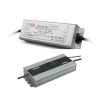 LED Driver Test Solutions
 Household Appliances Test Solutions
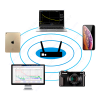 Mobile and Network Test Solutions
 Automotive Electronics Test Solutions
 Audio-Video and IT Test Solutions
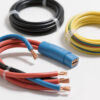 Cable and Wire Test Solutions
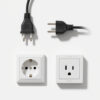 Plugs and Sockets Test Solutions
 Power Switch Test Solutions
 Transformer Test Solutions
 Electric Toys Test Solutions
 Energy Meter Test Solutions
 Motor-Operated Tool Test Solutions
Select an organization
to browse standards
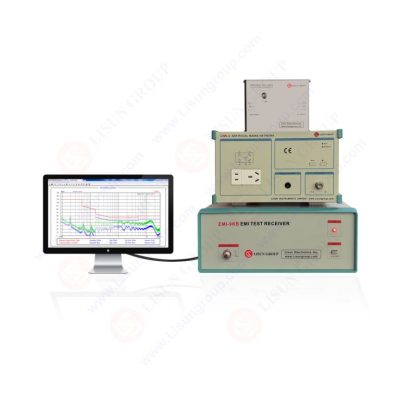
Proper measurement of undesired emissions is an essential need in the contemporary electronics. In compliance testing, the engineers are required to maintain emission within the limits required by legislations under standardized measuring conditions. An important constituent of this process is the electromagnetic test of interference, wherein the way of detection is indicated and evaluated in regards with how the emission signals are read. The tools that are necessary and of international standard are quasi-peak and average methods of detection, where certain devices like EMI-9KB are the means that determine the approach of reliably measuring an emission.
In contrast to single peak measurements, quasi-peak and average measurements depict the time-dependent impact of interference on actual electronic environments. Knowledge about the work of these detection methods and their application with the help of the EMI-9KB can make engineers analyze correctly test results and save engineers on a lot of unjustified redesign and commercial compliance.
The electromagnetic emissions hardly tend to be consistent or constant. The majority of sources of interference are impulsive, burst-like or modulated signals but not continuous waves. When based on the peak values to measure the emissions the products would seem to be emitting more than what they actually are due to their negligible effect.
Detecting techniques were invented to achieve the difference between the initial signal power and the subjective interference. The quasi-peak detectors and the average detectors prioritize variables by means of repetition rate and duration, giving test data consistency with the impact of interference in radio receivers and communication systems.
In compliance testing, auditory organizations use such detectors to provide equitable and equal assessment of products. The EMI-9KB puts the methods of all these types of detection to standard requirements to make sure that test results do not indicate the worst-case electrical noise.
The objective of quasi-peak detection should be the interest of emphasizing repetitive interference and deemphasizing non-repetitive or non-frequent events. Rather than reacting instantaneously to the amplitude of the signal, the detector includes charge and discharge time constants that are repetition-dependent.
The quasi-peak detector output is large when the interference pulses are of high frequency thus showing an increased tendency to have real interference. Rarely spaced pulses cause the detector to release between pulses giving a lower reading even when single pulses are strong.
This is a reflection of the way radio receivers invented by humans react to noise. Not sporadic but persistent or recurrent interference is much more disruptive than sporadic bursts. The quasi-peak detector is thus a balance of the severity of the interference instead of its sheer electrical magnitude.
Average detect is the average signal value of the signal with time. It is highly applicable to continuous emissions or very high duty cycle emissions. In contrast to the quasi-peak detection, average detectors do not focus on iteration but rather refer to the consistent energy input.
Averages limits are in most standards lower than quasi-peak limits as continuous emissions tend to be more likely to cause persistent interference. Mean detection in turn is a more competitive evaluation of equipment that produce consistent noise.
The EMI-9KB uses the average operation with optimal accuracy of digital processing, which provides consistent measurements with accuracy. This enables engineers to differentiate the products that only go beyond limits momentarily and those which emit too much energy continuously.
To have a high degree of accuracy, the EMI-9KB is designed to mimic standardized detector behavior. It has predetermined time constants, bandwidth, and measurement algorithm internal signal processing needed to be evaluated during regulation.
In quasi-peak mode, the instrument applies regulated charge and discharge responses which are in compliance with the standard. This will ensure the measured values match the accredited lab values as opposed to theoretical values.
The EMI-9KB processes signal energy across time in stable processing windows in the average mode. This will enable the proper analysis of continuous emissions without being distorted by peak discharge.
Produced by LISUN, the EMI-9KB is configured to ensure stability in the operation of the detector over long durations of measurements in cases where scans through large ranges of frequencies are needed in testing compliance requirements.
It is important to learn the behavior of a detector during the interpretation of test results. Any signal over peak values can still run quasi-peak and average values meaning satisfactory actual performance. On the other hand, a signal, which passes through peak detection but average detection failures, can be a pointer of an embedded emission problem.
Quasi-peak results are typically used by engineers to determine the effect of repetitive noise sources on an electronic circuit like switching power supply, digital clock, pulse-width-modulated circuits and other similar systems. Average measurements are used to detect continuous noise in oscillators, converters and bad filtered power rails.
The EMI-9KB enables the engineers to directly compare the detection modes and assists in isolating the emission properties and directs the mitigation measures.
Both conducted and radiated emission measurements are performed by the use of quasi-peaks and average detection. On conducted testing, they test noise on power and signal lines. They test electromagnetic radiations that are released to open space in radiated testing.
In an electromagnetic interference test, engineers may start with peak detection in order to determine the likely problem frequencies as soon as possible. Upon the identification of critical frequencies, formal assessment is done using quasi-peak and average-detection.
Such a step-by-step method enhances efficiency but at the same time final output is made to be in line with the compliance requirements. EMI-9KB has the capability of switching detection modes without any problems so as to complete a workflow easily in complex test conditions.
False conclusions may occur in case of wrong detection means. Peak detection can also lead to unwarranted changes in design and average detection can conceal ongoing emission problems that can lead to failure in certification.
Compliance testing involves very rigid adherence to laid down methods of detection. Standardized regulations do not condone any other forms of interpretation or measurement simplifications. Tools such as the EMI-9KB will keep the detection behavior within the appropriate specifications and minimal chances of misinterpretation are experienced.
Proper detection is also an enhancement of pre-compliance and final compliance testing correlation that saves on time and cost during product certification.
In addition to the pass or fail outcomes, detection technologies are also informative with regard to design. The behavior of quasi-peaks demonstrates the effect of emission repetition on the severity of interference to aid engineers in optimizing switching frequency, modulation scheme, and filtering strategy.
Average detection identifies slow sources of noise which might need better shielding, grounding, or layout optimization. Through the comparison of modes of detection, the engineers can be able to prioritize the design improvement better.
EMI-9KB- The EMI-9KB allows this analysis process by showing consistent and repeatable data by detection mode allowing an engineer to make informed decisions instead of trial and error solutions.
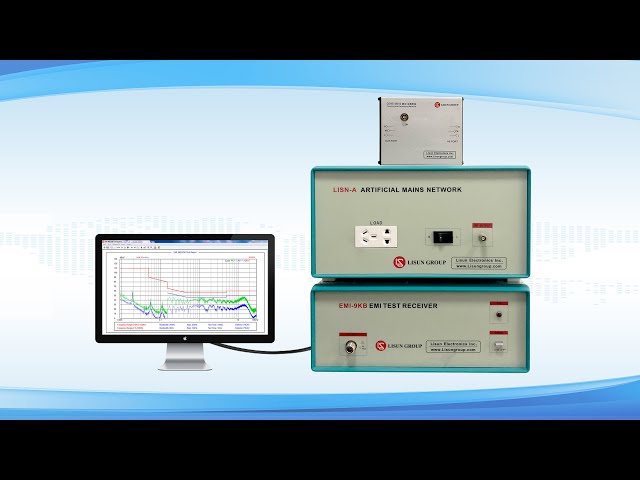
In compliance testing consistency is critical. Results of detection have to be reproducible in repeat runs and laboratories. Loss or variability of detector action compromises outcome belief.
The EMI-9KB guarantees that the detector is accurate even after some time, thus during a long scan and repeated test. This consistency promotes long term compliance programmes and quality assurance actions.
Under systems evinced by LISUN, laboratories can have confidence that detection behavior is consistent with the standards across the equipment lifecycle.
It is important that one learns the techniques of quasi-peak and average detection to ensure that the compliance testing is done accurately and that the electromagnetic interference test results are meaningful. These detection methods convert the raw data on the emission into a format that relates to the actual impact on the interference in the real world, enabling systematic and reasonable values.
The EMI-9KB can provide a more accurate determination of the repetitive and continuous emissions by applying standard detector behavior. The instrument with the support of high-quality engineering offered by LISUN offers a high level of detection performance that meets the regulatory requirements. By learning to detect such methods of emission, engineers can spot real risks of emissions, make their designs efficient, and get the compliance with certainty and not with doubt.
Your email address will not be published. Required fields are marked *

 English
 中文简体
中文简体 English
 Русский
 Español
 Português
 Türkçe
 العربية
 Deutsch
 Polski
 Italiano
 Français
 한국어
한국어 ไทย
ไทย Tiếng Việt
 日本語
日本語