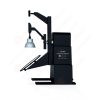
LM-79 Moving Detector Goniophotometer (Mirror Type C)
LSG-6000
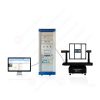
High Precision Rotation Luminaire Goniophotometer
LSG-1890B
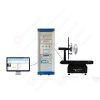
High Precision Rotation Luminaire Goniospectroradiometer
LSG-1890BCCD

Goniophotometer for Automotive and Signal Lamps
LSG-1950
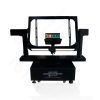
Goniophotometer for Traffic Signal Lamps (Economical Model)
LSG-1950S
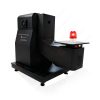
VAD Fire Alarm Visual Alert Device Goniophotometer
LSG-1930
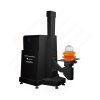
Goniophotometer for Airfield Lighting
LSG-1940
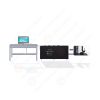
Compact Goniophotometer
LSG-1200A
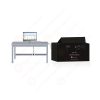
LED Goniophotometer
LSG-1100
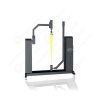
Near Field Moving Detector Goniophotometer
LSG-1900B
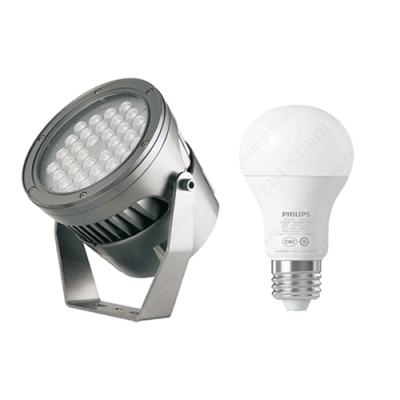 LEDs and Luminaire Test Solutions
 LM-79 and LM-80 Test Solutions
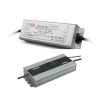 LED Driver Test Solutions
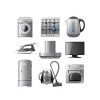 Household Appliances Test Solutions
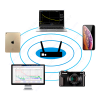 Mobile and Network Test Solutions
 Automotive Electronics Test Solutions
 Audio-Video and IT Test Solutions
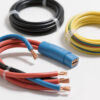 Cable and Wire Test Solutions
 Plugs and Sockets Test Solutions
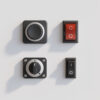 Power Switch Test Solutions
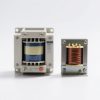 Transformer Test Solutions
 Electric Toys Test Solutions
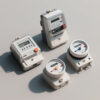 Energy Meter Test Solutions
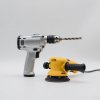 Motor-Operated Tool Test Solutions
Select an organization
to browse standards
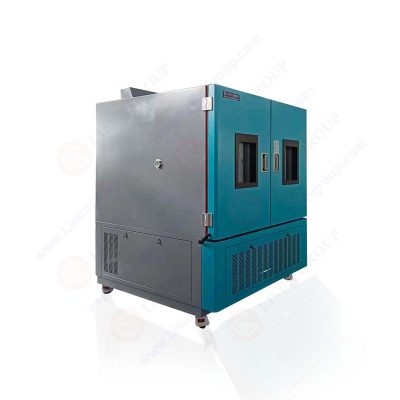
In real-life situations, the products are hardly subjected to constant temperatures. Rather, they are subject to unremitting fluctuation as caused by climate, operating load, and nearby systems. Reading a temperature chamber enables a professional to replicate these circumstances in a closed laboratory setup, permitting the organized testing of product conduct on a thermal force. Recent planning is full of comparison of specifications and even, they might even look at things like price of the thermal shock chamber but the real worth of a temperature chamber is that it will expose the points of performance before the products find themselves in the field.
Extreme temperatures impact materials, electronics, assemblies of mechanical components differently. Parts swell and shrink, electrical properties vary, and mechanical tolerances vary. Unless controlled thermal testing is conducted these effects can go unnoticed until failure at service. Temperature chambers offer a sure way to provide products with controlled high and low temperatures, controlled rise and fall rates, and proportional dwell times to simulate real situations of operation.
Extreme thermal test is aimed at measuring performance, survivability, and a product recovery when it experiences temperatures above normal operation levels. Such testing provides responses to important questions on reliability, safety and duration. Engineers evaluate the single product on whether it is still operating correctly or it has some temporary degradation or damage.
Repeatable exposure associated with temperature chambers isolates thermal effects of other environmental variables. Determining the exact conditions at which a change in performance occurs are achievable through controlled temperature, therefore engineers can tell the exact conditions of operation. The information will also be crucial in establishing safe operating limits and enhancing product designs.
The electronic parts are very sensitive to temperature. Depending on temperature variations, semiconductor conductivity varies with temperature in switching speed, leakage current, and signal integrity. Temperature chambers find extensive application to test printed circuit boards, power modules, sensors, and communication equipment on a series of specified temperature ranges.
At high temperatures, anomalies which include time error, drift, and early aging of components are detected. Low temperature test reveals issues on brittle materials, high response time, and low battery performance. Cycling of electronics occurs by subjecting them to high and low temperatures, and this helps engineers to observe intermittent faults which would not be easy to detect under normal operating conditions.
The temperature chamber solutions by manufacturers like LISUN offer a complete stable control in a wide temperature range that enables electronic performance to be accurately determined in both static and dynamic thermal conditions.
Different materials react to thermal stress in varied ways in response to the material composition and structure. Plastics can be softened or broken, metals can wear out and composite material can separate. Temperature chambers enable engineers to investigate these effects in an orderly manner.
Mechanical assemblies are also tested to confirm how they stay in dimension and alignment at extremes of temperature. Fasteners and seals and housings are also pretested to keep them intact as materials expand and contract. Such tests are necessary especially when dealing with products that have a strict tolerance like systems of optics and mechanical actuators.
Exposure to thermal conditions also hastens the aging mechanism, which enables engineers to forecast the long-term reliability at a shorter time in testing.
A lot of practical scenarios are those in which the temperature fluctuates repeatedly instead of the extremes. Tests Thermal cycling tests are tests that recreate the daily or operating temperature variation by swinging back and forth between high and low setpoints. Temperature environments can have controlled counts of cycles, ramp rate and dwell time.
Cyclic loads cause stress on fatigue that may expose system vulnerabilities in solder joints, adhesives and mechanical interfaces. Components which pass a test of not failing on a static exposure can fail on repeated expansion and contraction. At long term reliability and not short-term survival, temperature chambers are therefore needed.
Industries also use temperature chambers in testing their products on a specific environment before being released into the market. Automotive parts are put through cold-start tests, engine heat exposure tests and seasonal attitude. Aerospace gear is tested on high temperature coldness and fast changes. Industrial equipment is exposed to constant use either at a hot or a cold temperature.
The temperature chambers have different requirements based on each application. Precise temperature symmetry and reproducibility test results would be outcome of a realistic condition instead of unusual localization. This uniformity encourages significant comparison of designs and batches of production.
Although temperature chambers aim at controlled exposure of temperature, certain applications need quickly changed extreme conditions. The thermal shock testing presents yet another load by reducing the transition time. Though companies might consider available alternatives according to price of the thermal shock chamber, they should use test requirements, but not the cost, to make up their mind.
Temperature chambers are frequently provided with programmable ramp rates that can be used to simulate slow and fast changes in temperature. This ease allows the engineers to test a broad spectrum of thermal stress cases by using one system.
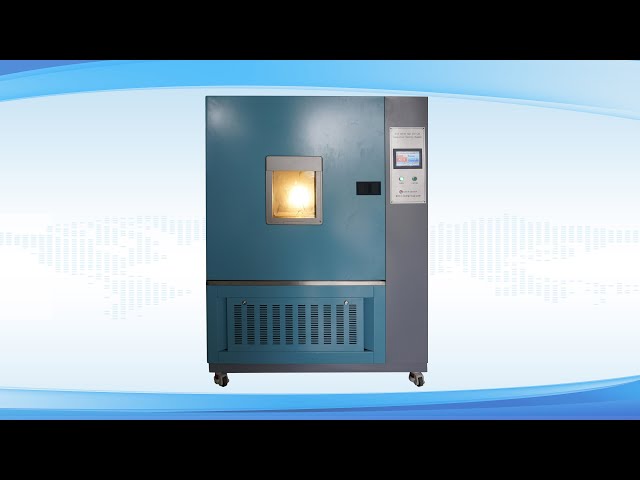
Temperature chambers are also significant in quality control besides development testing. Periodic testing of production samples is conducted to check the consistency of production and observe process drift. This aids in assuring reliability of manufacturers in the long run.
Quality control testing only checks that production units are functioning according to the expected levels by using the same thermal profiles applied during the qualification. When it fails, the systems need corrective measures put in place before total usage.
In modern temperature chambers, the data logging and monitoring system is built in which temperature profile, duration of test, and performance data is recorded. This data is examined by engineers to find out trends, failure points and performance margins.
Root cause analysis and design optimization are based on accurate data. It is also used to document the customer qualification, regulatory, and internal quality assurance.
Even temperature chambers need to be functional even in severe operational conditions. Prolonged high temperature, cyclic operations and constant use demand strain to components of the chambers. High quality systems are developed with high levels of accuracy and long serving life.
LISUN temperature chambers are designed with non-permeable insulation, stable controls, and other components that need to be robust/ durable, to ensure consistency in performance during the long running testing programs.
Temperature chamber is a necessary instrument to test the performance of the products in severe temperatures. It gives engineers-controlled exposure to high and low temperatures by which weaknesses can be determined, reliability can be established, and the safe operating limits can be defined. Price of thermal shock chambers can be considered as one of the factors to select equipment but the real worth of thermal testing is the truthful and consistent outcomes that depict real life behavior.
Temperature chambers aid in informed design decisions in the industries through electronic validation, material assessment and long-term reliability test. LISUN, with sophisticated solutions in the market, can enable engineers to be certain of calculating thermal performance and keeping their products resistant to the demands of operating in extreme conditions.
Your email address will not be published. Required fields are marked *

 English
 中文简体
中文简体 English
 Русский
 Español
 Português
 Türkçe
 العربية
 Deutsch
 Polski
 Italiano
 Français
 한국어
한국어 ไทย
ไทย Tiếng Việt
 日本語
日本語