LM-79 Moving Detector Goniophotometer (Mirror Type C)
LSG-6000
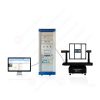
High Precision Rotation Luminaire Goniophotometer
LSG-1890B
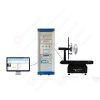
High Precision Rotation Luminaire Goniospectroradiometer
LSG-1890BCCD

Goniophotometer for Automotive and Signal Lamps
LSG-1950
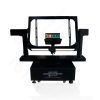
Goniophotometer for Traffic Signal Lamps (Economical Model)
LSG-1950S
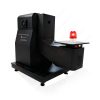
VAD Fire Alarm Visual Alert Device Goniophotometer
LSG-1930
Goniophotometer for Airfield Lighting
LSG-1940
Compact Goniophotometer
LSG-1200A
LED Goniophotometer
LSG-1100
Near Field Moving Detector Goniophotometer
LSG-1900B
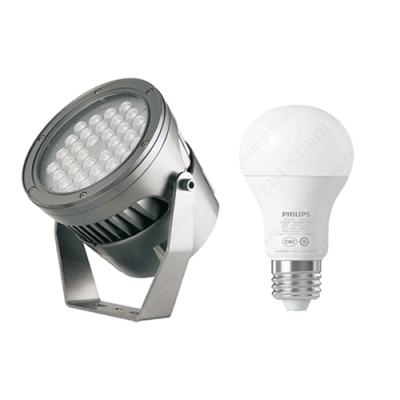 LEDs and Luminaire Test Solutions
 LM-79 and LM-80 Test Solutions
 LED Driver Test Solutions
 Household Appliances Test Solutions
 Mobile and Network Test Solutions
 Automotive Electronics Test Solutions
 Audio-Video and IT Test Solutions
 Cable and Wire Test Solutions
 Plugs and Sockets Test Solutions
 Power Switch Test Solutions
 Transformer Test Solutions
 Electric Toys Test Solutions
 Energy Meter Test Solutions
 Motor-Operated Tool Test Solutions
Select an organization
to browse standards
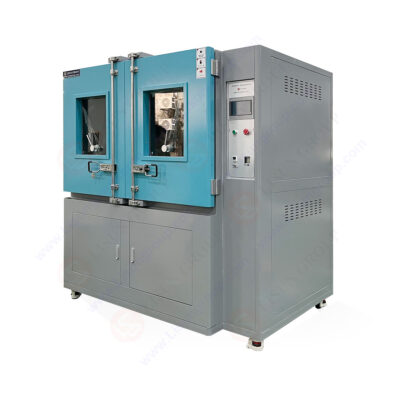
Devices that are electronic, industrial, car, battery-powered, and field-mounted often work in dusty environments. Small yet at first sight harmless, dust particles will eventually destroy insulation, mechanics, and surfaces of interfaces. After getting into an enclosure, dust is not passive and it can change over time, changing electrical behaviour, surface friction, airflow, and heat dissipation, and eventually long-term functional safety. To verify sealing strength prior to use, manufacturers use a specified laboratory procedure called dust ingress testing. This controlled process subjects’ products to dusts in the air in the standardized test chambers and the intrusion paths are identified rather than waiting when it fails in real practice.
Enclosure geometry, gasket compression, ventilation design, equalization of pressure between enclosures by membranes and the elements designed to seal the connector are all varied elements of dust entry mechanisms. Dust contamination is not necessarily an immediate malfunction; it may be manifested in gradual layers, which generate electrical leakage, sensors that are dead, intermittent resets, unstable wireless signals, weakening adhesives, and any noticeable accumulation of residue. Due to this reason, quality validation includes pre-deployment dust assessment.
The conditions in the field present uneven concentrations of dust, uncertain winds, and inaccurate changes in temperatures. Introducing sealing behaviour in uncontrolled conditions will not guarantee that the results will be repeatable. Standardized exposure is aimed to model the concentration of dust and air flow turbulence, agitation intensity, and agitation rate in order to determine rate of performance degradation in a scientific manner. Even within a dustproof testing machine, dust does not just rest at the bottom, it is suspended by air circulation patterns, and it resembles the continuous movement of the particles.
In operation, the process of sealing behavior has moderate changes. Higher heating cycles make polymer edges softer, and adhesives either shrink or harden, and sealing gasket compresses as time goes by. Normative evaluation points out changes in the initial stages of use that otherwise would not manifest themselves until months of actual use.
Dust never enters, due to particle attraction, it enters, due to a difference in internal and external pressure. On varying the enclosure temperature, there is expansion or contraction in internal air volume. During the process of contraction, external dust loaded air moves in through the microscopic pores. Dust ingress testing method thus replicates the change of pressure to additionally replicate the actual inhalation cycles.
Blower cycles are used under control to raise dust repeatedly in order that the intrusion pressure is maintained. The important consideration is consistency of exposure of the device irrespective of its mounting height or part. The consistency of this airflow permits batch to batch specimen comparison.
Dust is not handled abstractly but is categorised depending on the geometry and the density of particles. Fine talcum powder opens up the narrow gaps and coarse dust acts like abrasive grit. Depending on category of use, manufacturers select type of dust. Indoors consumer electronics Fine particles are better simulated by demonstrating sealing leakages. In the case of industrial components, coarse particles are indicative of mechanical flaws.
The stability of the concentration is maintained to ensure the sample is subject to equal loading as time progresses through the test. When the concentration decreases abruptly, one cannot compare the reliability among samples. In order to guarantee repetitiveness, professional dust systems are equipped with circulation timers, vacuolar filtration devices and internal agitators.
Confirmation of dust ingress is done by non-visual surface contamination but indirect way by showing deterioration. In case sensitive interfaces or electric terminals show the formation of residue, degradation starts instantly. Contact pads, switching modules, rotary shafts, optical lenses, keys and control indicators would lose precision performance due to and through the presence of particulate layers on them. Sealed enclosures are opened keenly during post-exposure inspection to avoid cross-contamination. To identify the intrusion pathway, the analysts keep records of the dust accumulation location, pattern, and volume.
There is a likely intrusion point on the cable entry points where the flexible material contacts on the rigid enclosure walls. Internal air contraction can occur which in the first place pulls dust through these junctions.
Airflow does not just cause dust to become active; it determines where to penetrate. Lacking a flow of air, dust does not settle in crevices of the chambers. Dust behaves in predictable turbulence patterns when airflow is caused through recirculation fan creating the test to be scientifically reproducible.
Airflow also provides the opportunity to have uniform exposure intensity of sample surfaces at all orientations. The dustproof test therefore, removes the characteristics of bias in placement by streamlining the patterns of flow around denoting the samples.
All the airflow conditions are not equal. Inadequate exposure to ingress is caused by weak turbulence. Too much turbulence will lead to a premature change of the dust without entry. The quasi-experimental method ensures effective exposure that is realistic.
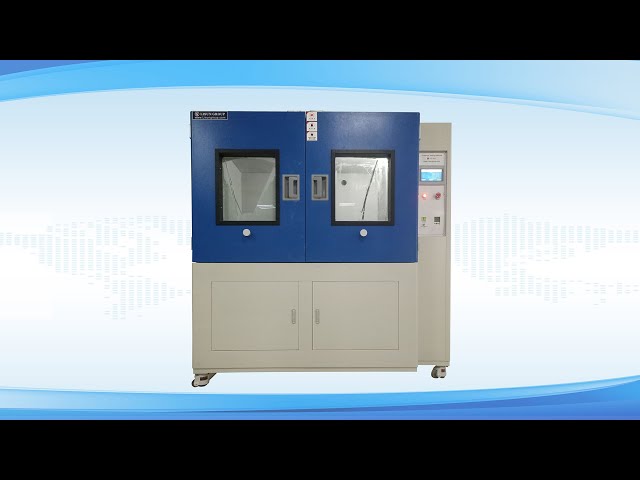
The dustproof testing machine has internal airtight design to isolate external drafts. The recirculation of air has no external effects, and the sources of uncontrolled contamination are removed. Floors of the chambers, side walls, and support of the test are not open to ensure the balance of concentration.
The racks are mounted in such a way that dust is moved under samples, over samples and around samples and does not sit on the highest part only.
Internal doors are sealed and this inhibits pressure damping. In the event of the appearance of vents in the chamber itself, the sealing of tests loses their reliability.
Where a device becomes hot inside, the edges of the gasket swell up. Gasket edges shrink when cooled which makes entry holes on a micro level. Repeated phases of sealing expansion and relaxation are simulated in dust ingress test. Sealing can eventually become permanently elastic. In the laboratory, this loss of strength is accelerated many times, and is the same as months of field aging.
Manufacturers then study the stress concentration areas through inspection under microscopes whereby the failure of sealing comes out as due to the assembly tolerances, material selection, and external handling.
The presence of moisture greatly interferes with the behaviour of dust. Low humidity levels even stick the dust between one another in terms of electricity due to the existence of electrostatic attraction. Adhesive performance is altered; sensor apertures get clogged and vent membranes become permeable
A properly designed assessment is simulated to expose the warm dust and then contracting cool air to create condensation attached to dust within the seams of the enclosures. Although moisture is not added on during testing, change in temperature causes trapped humidity behaviour.
Examples of outdoor solar energy-powered devices are roadside telematics units, irrigation controllers, and portable battery banks that are used in areas with numerous dusts. The failure modes are jamming of tactile switches, malfunction due to pressure-induced keypad, vents corroded charging tires, fogged indicator windows, deteriorated fan bearings, and internal overheating caused by blocked ventilation. Dust ingress testing does not need such long-field tests to determine such behaviors.
LISUN seal performance validation prior to shipment of models to high contamination industrial areas and lowering the service burden.
Dust ingress testing is a laboratory procedure that is used to establish the performance of enclosure sealing by subjecting it to controlled airflow, steady concentration profile, and reproducible exposure profiles. The test does not just assume the sealing strength: it exposes the products to field conditions. Distribution of particulate which is otherwise a process gaining momentum over months of time is reproduced meaningfully through air-borne dust.
It is aided with a dedicated dustproof testing machine so that the level of replicability can be provided by controlling the turbulence of airflow, stabilizing the concentration, removing directional bias, and accelerating the sealing fatigue impacts. Early performance validation allows the stable product reliability in severe field deployment and eliminates early field failure due to particulate intrusion.
Lisun Instruments Limited was found by LISUN GROUP in 2003. LISUN quality system has been strictly certified by ISO9001:2015. As a CIE Membership, LISUN products are designed based on CIE, IEC and other international or national standards. All products passed CE certificate and authenticated by the third party lab.
Our main products are Goniophotometer, Integrating Sphere, Spectroradiometer, Surge Generator, ESD Simulator Guns, EMI Receiver, EMC Test Equipment, Electrical Safety Tester, Environmental Chamber, Temperature Chamber, Climate Chamber, Thermal Chamber, Salt Spray Test, Dust Test Chamber, Waterproof Test, RoHS Test (EDXRF), Glow Wire Test and Needle Flame Test.
Please feel free to contact us if you need any support.
Tech Dep: Service@Lisungroup.com, Cell/WhatsApp:+8615317907381
Sales Dep: Sales@Lisungroup.com, Cell/WhatsApp:+8618117273997
Your email address will not be published. Required fields are marked *

 English
 中文简体
中文简体 English
 Русский
 Español
 Português
 Türkçe
 العربية
 Deutsch
 Polski
 Italiano
 Français
 한국어
한국어 ไทย
ไทย Tiếng Việt
 日本語
日本語