LM-79 Moving Detector Goniophotometer (Mirror Type C)
LSG-6000
High Precision Rotation Luminaire Goniophotometer
LSG-1890B
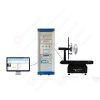
High Precision Rotation Luminaire Goniospectroradiometer
LSG-1890BCCD

Goniophotometer for Automotive and Signal Lamps
LSG-1950
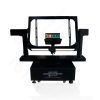
Goniophotometer for Traffic Signal Lamps (Economical Model)
LSG-1950S
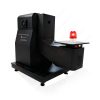
VAD Fire Alarm Visual Alert Device Goniophotometer
LSG-1930
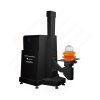
Goniophotometer for Airfield Lighting
LSG-1940
Compact Goniophotometer
LSG-1200A
LED Goniophotometer
LSG-1100
Near Field Moving Detector Goniophotometer
LSG-1900B
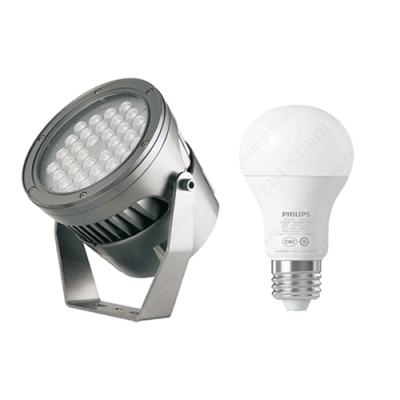 LEDs and Luminaire Test Solutions
 LM-79 and LM-80 Test Solutions
 LED Driver Test Solutions
 Household Appliances Test Solutions
 Mobile and Network Test Solutions
 Automotive Electronics Test Solutions
 Audio-Video and IT Test Solutions
 Cable and Wire Test Solutions
 Plugs and Sockets Test Solutions
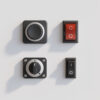 Power Switch Test Solutions
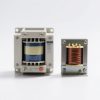 Transformer Test Solutions
 Electric Toys Test Solutions
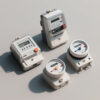 Energy Meter Test Solutions
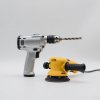 Motor-Operated Tool Test Solutions
Select an organization
to browse standards
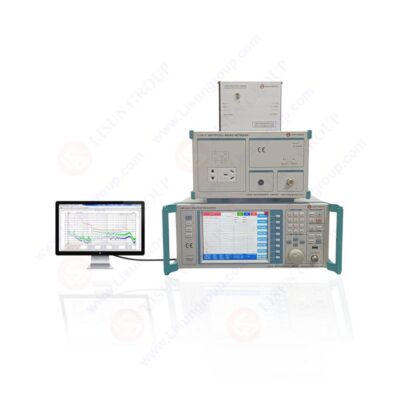
Conducted Emission measurement has a great dependence on electromagnetic compliance testing. Also, in laboratories testing switching power supplies, electronic appliances, industrial controls, medical systems, and automotive modules, the quality of the measurement is not only based on the quality of the receiver, but also based on hardware in the chain of the test. These supporting systems, among others, include EMI measurement equipment and, in particular, the artificial network to be applied in line impedance control. Once the performance starts to deviate or performance is not guaranteed, results turn deceptive and results are false failures, false pass, delayed certification cycles and wrong decision of improving design.
The phrase artificial network is used to describe a type of network that aims at providing a repeatable impedance between a power source and a device under test. The Emission conducted behavior varies dramatically without stable impedance.
An artificial network is needed to display a specified 50-ohm impedance across the frequency range given by conducted Emission measurement, usually in the range of 150 kHz to 30 MHz. With time, the internal components start to drift since capacitors age, resistors also change their tolerance, thermal cycling, internal terminal oxidation. The drift is not uniform and most commonly, the low or middle frequency regions move initially. This causes irregular curves of measurement.
In the event of this occurrence, noise peaks recorded during pre-compliance tests will be higher or lower than those at full certification testing, and design decisions triggering unnecessary technical fixes will result. To correct this, calibration to confirm magnitude and phase of impedance at various frequencies in a frequency band is required. Systems of professional grade use calibration fixtures which execute a swept impedance check in the LISN terminals. When deviation goes above accepted value, component blocks will be substituted instead of being changed using software correction.
EMI measurement instruments manufacturers suggest replacement times of equipment that works continuously in test laboratories since extended exposure to temperature causes drift. Capacitor ESR increase rate becomes a significant deviation when the components work with very high voltage.
An inappropriate bonding in between the chamber ground plan and artificial network ground reference is one of the most common causes of measurement variation. Small discontinuities in the ground field and carry current by differences in alternate conducts to join or cancel some undesirable noise. This issue is usually witnessed in the instances where the LISN is located on a movable table or whereby the LISN is connected by use of extension cords rather than bonded plates.
The remedy of this can be made by ensuring earth continuity resistance between artificial network chassis, earth reference of EMI receiver, and earth plane. Nevertheless, at EMI frequencies, a resonance path due to small changes in impedance values will change Emission peaks. Corrective strategy involves bonding of the LISN using low-inductance strapping, attaching mechanical contacts and removing floating rack positions.
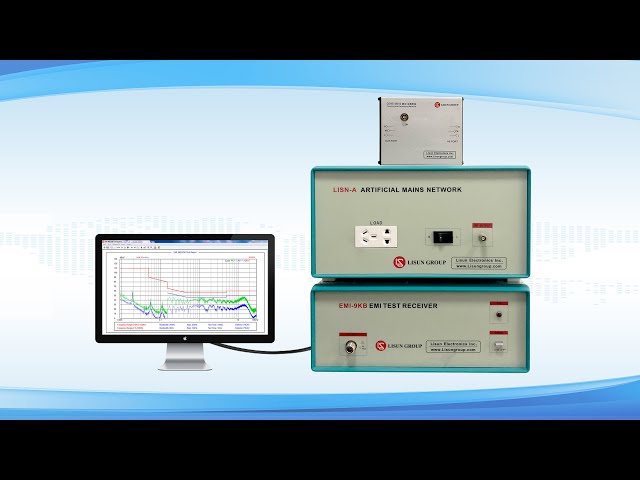
The DUT should not be allowed to give direct switching noise to the EMI receiver at levels beyond specified levels. In the case where the suppression sections of the artificial network fail, high-energy transients proceed directly to the receiver front-end and lead to unintended overload. When there is overload, the readings will not rise instead the spikes will disappear. This is wrongly perceived by engineers as Emission improvement.
This needs to be resolved by means of dynamic overload test. Rather than the measurement of a single load condition, the results should be compared at current-loaded and idle conditions. When curves that are being measured fail to collapse, the attenuation stages within the artificial network can be weakened.
Contemporary EMI measurement instruments also incorporate overload diagnostic functions which users can use to avoid corrupted results. Other networks have replaceable surge sections to ensure that the wear and tear do not affect the rest of the system.
Table: Typical fault symptoms and root-cause mapping for artificial networks
| Test Symptom | Likely Root Cause | Most Effective Fix |
| Abrupt flattening of noise peaks above 15 MHz | Overload entering receiver due to LISN attenuation failure | Replace suppression section or front-line capacitor bank |
| Peaks shifting frequency location repeatedly between measurements | Ground reference inconsistency or floating chassis | Reinforce low-inductance ground straps |
| Rising noise across entire spectrum during extended usage | Capacitor ESR aging in LISN input section | Replace aging capacitor blocks |
| Low-band Emissions changing drastically with load | Impedance variation due to resistor tolerance shift | Re-verify impedance calibration |
In Emission tests conducted, cable routing is a factor affecting radiated-coupled pickup as a conducted interference. When cables to DUT are put too near chamber walls, metallic fixtures, or working switching controllers the EMI patterns vary substantially. Shadow zones on the cable result in low readings and exposed areas on the cable results into amplified readings.
Routing of cables is always similar when EMI measurement equipment is employed with standardized supporting trays. Most of the failures develop due to operators moving cables between measurement cycles without capturing the changes. The remedy is to place cable layout diagrams in the test documentation and follow the same placing across the sessions.
Artificial networks that are located too far off on the input lines result in uncontrolled cable movement giving a large variation band.
In run times of long duration, and with power supply switching: internal temperature of the DUT increases the Emission profile. The engineers wrongly believe LISN or receiver is faulty. However, heat induced behavior is normal. A testing issue that leads to this is the overheating of the artificial network and alters internal impedance particularly near high loads.
In order to solve this, ventilation should be implemented not only directly around the DUT, but also around the artificial network. Heat cannot be eliminated when using several LISNs at the same time on loads of three phases. Professional test environments have isolated airflow channels that ensure that temperature is constant around EMI elements.
Other laboratories compare the outcome of different systems with different receivers, different networks, and the cable routing. This non-referent alignment of comparison is misjudging. All cycles of comparative measurement must be made on the same reference point, which is the artificial network.
This one has to be fixed by issuing one calibrated LISN to be the reference network. The data regarding the measurements should consist of the timestamp, calibration trend and reference identifier. EMI measurement instrument manufacturers add serial-tracking to software logs to ensure that the users cannot confuse test sources. LISUN provides the best EMI measurement equipment.
Switched frequency harmonics are accompanied by line-frequency noise generated by power electronics. With a resonance of the artificial network internal filter at the switching ripple frequency, harmonics change amplitude. These are not faults of DUT but it is the resonance of LISN. Engineers should be able to distinguish DUT artifact and network resonance.
The solution lies in the measurement comparison of two LISNs and repeatability. Resonance bias is observed when slightly different profiles are generated by the second LISN. The fix is to choose a network the internal frequency resonance of which is not at the same frequency as DUT switching frequency.
Point resistance is increased when oxidized mechanically. The effect of caused concentration of current which is induced shifts impedance at higher frequency somewhat. Micro-arcing at contact points, which are seen as broadband pulses in EMI measurement, is also produced by oxidized terminals.
The solutions to this problem include refurbishment of terminals and replacement of braiding straps. Others employ surface-conditioning paste, but again, manufacturers precautions are expected so that it does not leave behind as a form of contamination.
Defects in DUT are seldom a source of measurement errors during Emission validation carried out. In cases where the laboratories are dependent on valid EMI measuring equipment, the artificial network would be the reference element. Common causes of unreliable readings include impedance drift, improper grounding, overheating, oxidized terminals, cable routing errors and attenuation stage degradation. Troubleshooting involves determining the source of peculiarities to be the receiver, LISN, ground continuity, switching resonance or thermal effects.
Artificial networks can recover their usage in controlled impedance references in the event of a correction action done appropriately. True product behavior is then reflected in test decisions as opposed to equipment bias. Trustworthy performed Emission testing facilitates on-time design adjustments or modifications, proper certification and predictable behavior in the actual circumstances of power distribution systems.
Lisun Instruments Limited was found by LISUN GROUP in 2003. LISUN quality system has been strictly certified by ISO9001:2015. As a CIE Membership, LISUN products are designed based on CIE, IEC and other international or national standards. All products passed CE certificate and authenticated by the third party lab.
Our main products are Goniophotometer, Integrating Sphere, Spectroradiometer, Surge Generator, ESD Simulator Guns, EMI Receiver, EMC Test Equipment, Electrical Safety Tester, Environmental Chamber, Temperature Chamber, Climate Chamber, Thermal Chamber, Salt Spray Test, Dust Test Chamber, Waterproof Test, RoHS Test (EDXRF), Glow Wire Test and Needle Flame Test.
Please feel free to contact us if you need any support.
Tech Dep: Service@Lisungroup.com, Cell/WhatsApp:+8615317907381
Sales Dep: Sales@Lisungroup.com, Cell/WhatsApp:+8618117273997
Your email address will not be published. Required fields are marked *

 English
 中文简体
中文简体 English
 Русский
 Español
 Português
 Türkçe
 العربية
 Deutsch
 Polski
 Italiano
 Français
 한국어
한국어 ไทย
ไทย Tiếng Việt
 日本語
日本語