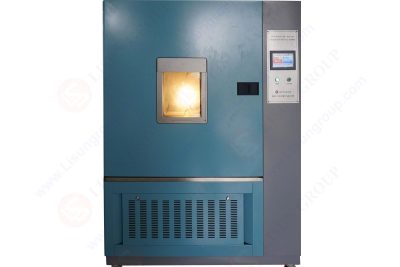
Abstract In the process of industrial product R&D, production quality inspection, and compliance certification, the environmental adaptability and reliability of materials and products are key factors determining their market competitiveness. As a core environmental simulation tool, the climate test chamber can accurately reproduce multiple climatic scenarios such as “low-temperature res...
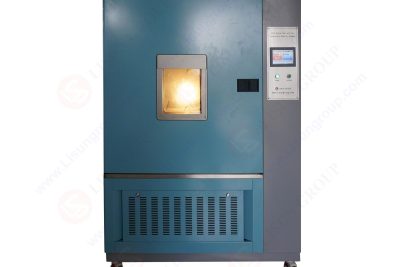
Abstract In the system of industrial product R&D, production quality inspection, and compliance certification, the environmental adaptability and reliability of materials and products are core indicators determining their market competitiveness and service life. As a key equipment for accurately simulating complex natural environments, climate chambers can accelerate the assessment of product ...
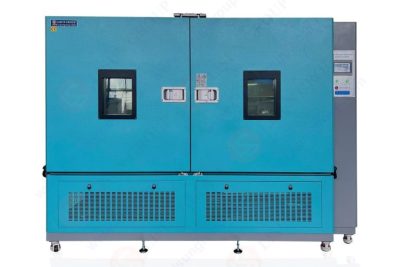
Humidity chamber is not a generic laboratory enclosure but it is a precision system that has a direct effect on the validity of reliability stability and compliance testing. Moisture forms interactions with materials and assemblages in complicated manners. It hastens the corrosion modifications mechanical qualities modifies electrical batteries and causes interface breakdowns that would not be evi...
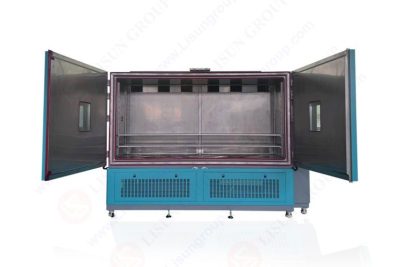
The thermal test chamber is a fundamental tool of accelerated aging and analysis of the heat stress due to the fact that the heat is among the most critical factors in the material and component degradation. Higher temperatures speed diffusion of chemical reactions as well as mechanical relaxation and temperature cycling causes expansion and contraction stress, which exposes fatigue as well as wea...
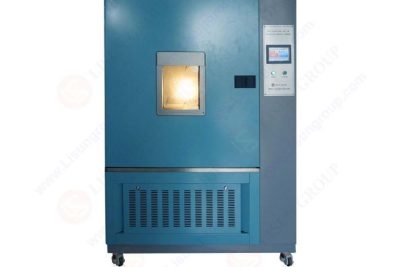
The climate test chamber is used to simulate controlled climatic conditions such as temperature and humidity that the product undergoes during storage transportation and operation. Climate simulation is not intended to reproduce weather but introduce repeatable stresses that cause moisture and thermal driven degradation processes. Fluctuations in temperature and humidity are of particular concern ...
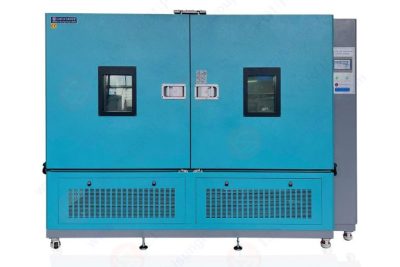
The use of high temperature test equipment is critical in whether materials would be able to survive and perform reliably under high thermal stress. Heat resistance cannot be just the ability not to fail immediately. It includes long term transformations like loss of mechanical strength and loss of chemical level as it relates to oxidation phases transformation. These impacts affect safety life an...
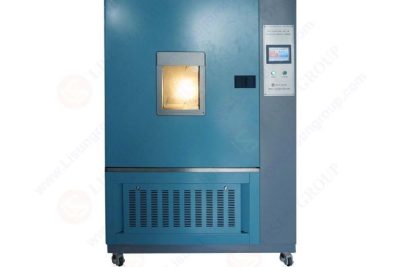
A mini temperature chamber has proved to be a necessity in laboratories requiring accurate thermal regulation and is less costly in footprint and at the same time consumes less power than a large system. During early validation, products are rapidly shrinking and the time taken to develop a product is bringing about faster product development due to the fact that engineers are testing modules more...
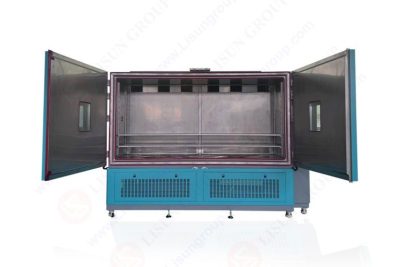
A humidity test chamber is one of the foundations of stability testing in which moisture-induced degradation is a believable risk. Water vapor undergoes interactions on its level of molecules and interface. It modifies the structure of polymers enhances corrosion speeds up, minimizes the level of insulation and changes mechanical properties during service. Stability programs are thus based on cont...
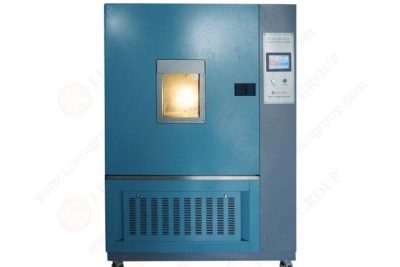
Environmental test program qualifies electronic components as a basic condition that they should be able to work under various operating and storing conditions. Electronics in modern application suffer at the ends of the temperature range humidity vibration electrical bias and long duty cycles which increase the rate of most degradation mechanisms solder fatigue corrosion dielectric breakdown and ...
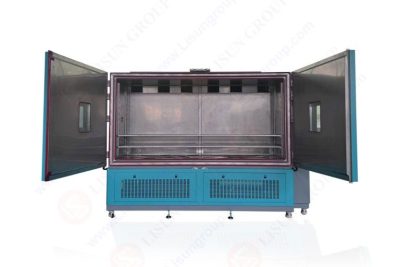
A climatic chamber is a major equipment in checking whether components are viable and can perform well in the case of combined temperature and humidity pressure. Contemporary products are used over a wide range of climatic conditions and duty cycles with heat increasing the rate of chemical reactions and moisture corrosion insulation breakage as well as swelling. Reliability programs are thus base...
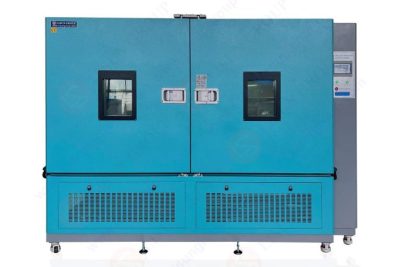
Environmental chamber lacks being just hot or cold. Qualification of current products involves concomitancy and simultaneous regulation of airflow temperature and humidity plus in certain cases electrical biasing of vibration or altitude to reproduce complex service conditions. Multi-parameter stress testing of the environment enables the engineer to discover the effects of interaction which is no...
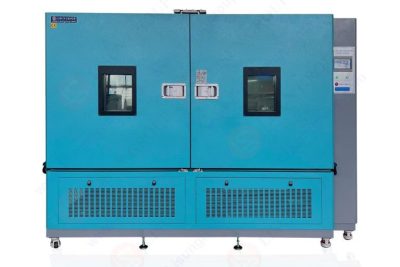
A thermal chamber is a key laboratory equipment that is utilized to analyze the product behavior under temperature stress. Diminished time, duration of thermal exposure In accelerated aging and durability tests fine control of ramps of temperatures and fine control of dwell times and cycling profiles to compress years of thermal exposure in weeks and months. Where humidity is also of great concern...

 中文简体
中文简体 English
 Русский
 Español
 Português
 Türkçe
 العربية
 Deutsch
 Polski
 Italiano
 Français
 한국어
한국어 ไทย
ไทย Tiếng Việt
 日本語
日本語