LM-79 Moving Detector Goniophotometer (Mirror Type C)
LSG-6000
High Precision Rotation Luminaire Goniophotometer
LSG-1890B
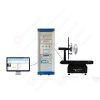
High Precision Rotation Luminaire Goniospectroradiometer
LSG-1890BCCD

Goniophotometer for Automotive and Signal Lamps
LSG-1950
Goniophotometer for Traffic Signal Lamps (Economical Model)
LSG-1950S
Goniophotometer for Airfield Lighting
LSG-1940
VAD Fire Alarm Visual Alert Device Goniophotometer
LSG-1930
Compact Goniophotometer
LSG-1200A
LED Goniophotometer
LSG-1100
Near Field Moving Detector Goniophotometer
LSG-1900B
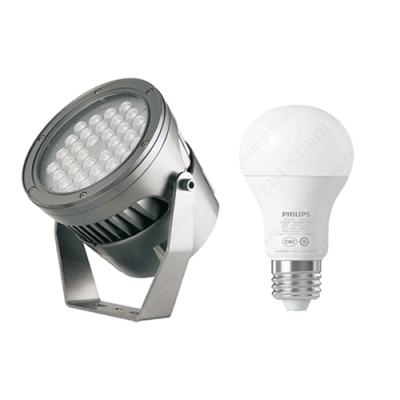 LEDs and Luminaire Test Solutions
 LM-79 and LM-80 Test Solutions
 LED Driver Test Solutions
 Household Appliances Test Solutions
 Mobile and Network Test Solutions
 Automotive Electronics Test Solutions
 Audio-Video and IT Test Solutions
 Cable and Wire Test Solutions
 Plugs and Sockets Test Solutions
 Power Switch Test Solutions
 Transformer Test Solutions
 Electric Toys Test Solutions
 Energy Meter Test Solutions
 Motor-Operated Tool Test Solutions
Select an organization
to browse standards
Abstract
Ground resistance testing is a fundamental and mandatory inspection for assessing the safety of electrical equipment and systems. A ground resistance tester evaluates the integrity of protective earth connections by injecting a standardized test current and accurately measuring the resultant resistance. This provides the critical quantitative data needed to prevent electric shock, lightning strikes, and electrical fire hazards. This paper outlines the operating principles of grounding systems and relevant safety standards, analyzes the core technical specifications of ground resistance testing and their impact on measurement accuracy. Using the LISUN WB2678A Ground Resistance Tester as a technical example, it details the design logic behind its dual-current (10A/25A) output, simultaneous three-parameter display, and programmable timed testing features. Furthermore, it provides an in-depth analysis of the instrument’s application methodology and compliance value across diverse sectors, including household appliances, lighting, information technology, medical devices, and industrial settings.
1. Introduction: Protective Grounding – The Last Line of Defense in Electrical Safety
Within electrical engineering, a protective earth (ground) connection is one of the most fundamental and effective measures for preventing electric shock and equipment damage. Its principle involves electrically connecting conductive parts of electrical equipment—such as metal enclosures and frames that are not live under normal operation but could become live under insulation failure—to the earth via a grounding conductor. When a fault such as insulation breakdown or a live-to-case short occurs, the fault current is directed to earth through this path. This action should promptly trigger protective devices like circuit breakers or residual-current devices (RCDs) to disconnect the power supply.
The efficacy of this safety mechanism depends entirely on whether the impedance of the grounding path is sufficiently low—that is, whether the ground resistance meets safety standard requirements. Excessively high ground resistance can prevent fault currents from reaching the trip threshold of protective devices or create hazardous touch voltages within the circuit, rendering the safety measure ineffective. Therefore, using a professional ground resistance tester to perform regular and precise measurements of an electrical device’s earth continuity is not an optional quality check. It is an essential procedure mandated to safeguard life and property and to comply with national and international compulsory safety standards such as IEC 60335, IEC 60598, and IEC 60601.

WB2678A Ground Resistance Testers
2. Technical Principles and Core Specifications of Ground Resistance Testing
2.1 Testing Principle: Simulating Real-World Fault Conditions
Unlike a simple continuity check with a multimeter, a professional ground resistance tester operates on a “high-current, low-voltage” measurement principle. The instrument applies a constant AC or DC test current, compliant with standard specifications (typically 10A or 25A), between the equipment’s earth terminal and a reference earth point. It then precisely measures the voltage drop across this path under the applied current and calculates the resistance value using Ohm’s Law. The purpose of using a high test current is to simulate the current conditions of an actual earth fault. This method effectively identifies hidden hazards like “micro-continuity” issues caused by contact surface oxidation, loose connections, or poor solder joints, which might remain undetected under low-current testing.
2.2 Analysis of Core Performance Specifications
The competency of a ground resistance tester is evaluated against several key specifications:
• Test Current and Measurement Range: The test current determines the instrument’s capability and application scope. A higher test current (e.g., 25A) provides greater detection sensitivity, which is crucial for applications with extremely high reliability requirements, such as medical devices or outdoor lighting. The corresponding measurement range must align with the test current to maintain accuracy across its full scale.
• Measurement Accuracy and Resolution: Accuracy directly determines the reliability and authority of the measurement results, forming the basis for laboratory certification and arbitration testing. High resolution aids in observing subtle changes in ground resistance
• Timed Test Function: Standards often require that the ground resistance remain stable for a specified duration (e.g., several seconds) under the applied test current. A programmable timed test function allows users to set a precise test duration. The instrument automatically executes the test and records the stabilized resistance value, eliminating the subjective error of manual operation and ensuring standardized, consistent, and repeatable testing procedures.

3. Technical Implementation and Application Design of the LISUN WB2678A Ground Resistance Tester
The LISUN WB2678A Ground Resistance Tester is a high-precision, high-efficiency instrument developed to meet the demands of modern electrical manufacturing and quality inspection agencies. Its design strictly adheres to GB and IEC safety standards, with technical features that address the core requirements of contemporary safety compliance testing.
3.1 Dual-Current Output and Wide Range Coverage
The WB2678A employs a dual-current output design (10A and 25A), providing comprehensive adaptability for testing electrical equipment of varying power ratings and safety standard requirements.
• 10A Range: With a measurement span of 0~600mΩ, this range is suitable for grounding tests on most household and similar appliances (e.g., rice cookers, computers) and information technology equipment. It fully complies with the test requirements of standards like IEC 60335-1 and IEC 60950-1 for general-purpose devices.
• 25A Range: Offering a measurement span of 0~200mΩ and stronger driving capability, this range is specifically designed for equipment and scenarios with stringent ground resistance requirements. Examples include medical devices (IEC 60601-1), lighting equipment for outdoor or harsh environments (IEC 60598-1), and industrial power distribution systems where lightning protection performance needs assessment.
3.2 Simultaneous Three-Parameter LED Display and Intelligent Features
The instrument moves away from traditional single-parameter cycling displays or complex menu navigation. It innovatively uses a three-window, high-brightness LED simultaneous display. During testing, the three core parameters—Ground Resistance (R), Real-time Test Current (I), and Elapsed Test Time (T)—are presented clearly and concurrently to the operator. This design provides immediate and complete visibility of the test status, allowing the operator to instantly verify that the applied test current matches the set target and to observe whether the resistance reading stabilizes over the timed duration. This integrated view significantly enhances testing efficiency, reduces operator error, and provides unambiguous operational clarity.
Furthermore, the WB2678A integrates several intelligent features that improve usability and safety:
• Programmable Timed Test (1~99 seconds): Users can preset the test duration according to standard requirements or internal procedures. The instrument automatically executes and completes the test, ensuring consistent conditions for every measurement.
• Preset Threshold Alarm: A high-limit alarm value for ground resistance can be set. The instrument triggers audible and visual alarms upon detecting an exceedance, facilitating rapid identification of non-conforming products.
• Manual/Automatic Control: It supports both manual start/stop and automatic timed modes, accommodating different workflows, from R&D debugging to high-volume production line testing.
3.3 Strict Standards Compliance and Safety Assurance
The design and calibration of the WB2678A are guided by a principle of standards compliance. Its testing methodology, current ratings, range, and accuracy are all benchmarked against the latest GB/IEC international safety standards. This ensures that every data set generated is compliant and credible. The instrument itself incorporates comprehensive over-current and over-temperature protection circuits and is structurally designed to ensure safe isolation between the operator and the high test current.
| Parameter / Function | Technical Specification | Design Purpose & Typical Application Scenario |
|---|---|---|
| Test Current Ranges | 10A, 25A (Two ranges) | Adapts to different standards and equipment power levels: 10A for appliances, IT equipment; 25A for medical, outdoor lighting, industrial equipment. |
| Ground Resistance Range | 10A range: 0~600mΩ; 25A range: 0~200mΩ | Covers safety standard limits: Critical applications often require <200mΩ, general applications <100mΩ or higher. The ranges provide full coverage. |
| Basic Accuracy | ±5% | Ensures data reliability: Meets requirements for measurement accuracy and traceability in third-party testing and lab certification. |
| Test Time Setting | Programmable from 1 to 99 seconds | Meets standard test procedures: Simulates sustained fault current conditions to assess the long-term stability and thermal performance of the ground connection. |
| Display Method | Three-window LED simultaneous display (R, I, T) | Enhances testing efficiency and transparency: Real-time monitoring of all key parameters prevents operational errors and misjudgment, ideal for fast production line inspection. |
| Typical Application Industries | Household Appliances, Lighting, IT, Medical, Industrial, Power, Quality Inspection Agencies | Addresses industry-specific needs: Provides tailored solutions for the ground resistance test clauses in various product standards (e.g., GB 4706.1, GB 7000.1, GB 9706.1). |
4. In-Depth Analysis of Cross-Industry Application Scenarios
The versatility of the WB2678A allows it to serve critical roles across various electrical safety domains:
• Household Appliance and Lighting Industries: On production lines, performing 100% testing on the earth terminals of every electric kettle, air conditioner outdoor unit, or LED street light (typically using the 10A range with a limit of 100mΩ). This is a core quality control step to prevent user electric shock from potential insulation failure and a prerequisite for obtaining safety certifications like CCC or CE.
• Information Technology and Medical Device Industries: The protective earth connection for a server chassis or a hemodialysis machine must be absolutely reliable. Testing with the WB2678A’s 25A range ensures the resistance is stably below 200mΩ or even stricter limits. This is crucial for ensuring normal equipment operation, preventing damage to sensitive circuits, and avoiding micro-shock risks in medical environments.
• Industrial Site and Power Facility Maintenance: Periodic testing of ground busbars in factory distribution cabinets or on motor enclosures (selecting 10A or 25A as needed) helps identify and rectify degradation in ground connections caused by corrosion or vibration. This prevents dangerous step and touch voltages during lightning strikes or short circuits, protecting personnel and assets.
• Laboratories and Authorized Inspection Agencies: As a tool for R&D verification or market surveillance sampling, the high accuracy and standards compliance of the WB2678A lend legal authority and credibility to its test reports. These reports serve as vital technical evidence for determining product safety liability.
5. Conclusion
Ground resistance testing, as the most fundamental yet critical aspect of electrical safety verification, has a direct impact on the safety baseline of end products. The LISUN WB2678A Ground Resistance Tester through its professional dual-current design, intuitive multi-parameter display, and programmable automated testing sequence, translates complex safety regulations into efficient, accurate, and reliable operations.
It is more than just an inspection step on a production line. It acts as a “safety guardian” throughout the entire product lifecycle—from R&D design validation and manufacturing quality control to installation acceptance and post-deployment maintenance monitoring. In an era of increasingly stringent electrical safety standards and clearer product liability, investing in and utilizing professional-grade ground resistance testers like the WB2678A is a necessary choice and a solid foundation for companies to fulfill their safety responsibilities, build superior quality systems, and earn market trust.
Tags:WB2678AYour email address will not be published. Required fields are marked *

 English
 中文简体
中文简体 English
 Русский
 Español
 Português
 Türkçe
 العربية
 Deutsch
 Polski
 Italiano
 Français
 한국어
한국어 ไทย
ไทย Tiếng Việt
 日本語
日本語