The Type C goniophotometer system is core equipment for optical performance testing of lighting products. It meets the strict requirements of the latest standards such as LM-79-24 for static testing of luminaires, making it the preferred solution for photometric testing in general lighting. As a typical representative of the Type C goniophotometer system, the LISUN LSG-6000 rotating probe vertical goniophotometer realizes automatic testing of 3D light intensity distribution curves, and the test distance can be customized according to customer needs. It is suitable for testing various light sources including LED light sources, grow lights, HID light sources, indoor and outdoor lighting, street lamps and floodlights. Based on the testing principle of the Type C goniophotometer system, combined with the technical parameters, product features and standard compliance of LISUN LSG-6000, this paper analyzes its application value in different lighting fields, providing technical reference for R&D, testing and quality control of lighting products.
The Type C goniophotometer system is a photometric testing device based on the principle of “luminaire stationary, probe/mirror moving”. It is the standard testing scheme specified by LM-79 for general lighting. Different from Type A for automotive lighting and Type B for floodlighting, it keeps the tested luminaire absolutely stationary at its burning position, while the probe and mirror rotate around the luminaire circularly or synchronously to achieve full-space non-dead-angle detection of optical performance. This design fundamentally avoids changes in the heat dissipation field caused by luminaire rotation and the influence of gravity on heat pipe cooling, effectively solving the problem of distorted test results caused by luminaire movement in traditional testing equipment. It is especially suitable for the photometric testing requirements under thermal stability specified in LM-79-24, becoming the mainstream technical solution for accurate optical performance testing in the lighting industry.
With the development of the lighting industry toward LED, intelligence and customization, parameters such as light intensity distribution, luminous efficiency and glare grade of light sources and luminaires directly determine product performance and application scenarios. The Type C goniophotometer system can realize integrated testing of multi-dimensional parameters such as light intensity, partial luminous flux and isocandela curves. Test data can be directly exported in standard formats such as CIE and IES, seamlessly connecting with lighting design software, providing complete photometric data support for luminaire R&D, production quality control and market access certification. As an upgraded product of this system, LISUN LSG-6000 inherits the core testing advantages of Type C and realizes functional upgrades such as customized test distance and automatic 3D light intensity distribution testing, further expanding its adaptability in multi-type light source testing.

LISUN LSG-6000 is a new-generation product of the Type C goniophotometer system, upgraded from LSG-5000 and LSG-3000. It fully complies with domestic and international standards such as LM-79-24, LM-79-19 and EN13032-1. Its technical design focuses on high precision, automation and multi-adaptability, making it a benchmark product of the Type C goniophotometer system.
LSG-6000 realizes fully automatic testing of 3D light intensity distribution curves. It can complete the collection of full-space light intensity data and curve drawing without manual intervention, solving the problems of low efficiency and large data errors in manual testing of traditional equipment. Meanwhile, the test distance of the equipment can be personalized designed according to the customer’s laboratory layout and specifications of tested luminaires, and the darkroom height can also match the requirements of different models, adapting to diverse testing scenarios from small laboratories to large testing institutions. In addition, the mirror and moving probe of the equipment can realize full-angle rotation of ±180° (or 0~360°), with an angle accuracy of 0.05° and resolution of 0.001°, which can accurately capture the optical performance data of the luminaire at every angle, providing a high-precision data basis for drawing 3D light intensity distribution curves.
To ensure the testing accuracy of the Type C goniophotometer system, LSG-6000 adopts high-end hardware configuration:
As a professional Type C goniophotometer system, LSG-6000 can realize integrated testing of multi-dimensional photometric parameters of lighting products, covering core parameters such as:
The test results of the equipment can be saved in standard formats such as CIE, IES and LDT, which can be directly imported into mainstream lighting design software such as DiaLux, realizing seamless connection from testing data to design application. Meanwhile, the equipment communicates with a computer through RS-485/USB interface, equipped with Chinese and English operating software, compatible with Win7 to Win11 systems, reducing the operation threshold.
LSG-6000 can be combined with LPCE-2 high-precision fast spectroradiometer to form LSG-6000CCD spatial spectroradiometric vertical goniophotometer. Its extended capabilities include:
According to different testing scenarios and specifications of tested luminaires, LISUN has launched four models of the LSG-6000 series Type C goniophotometer system. Each model complements each other in terms of tested luminaire size, load capacity and darkroom height, fully covering the testing needs of small, large and extra-large luminaires. The specific parameters are shown in the table below:
| Model | Tested Luminaire Size (D*T) | Max. Load | Measurable Power | Min. Darkroom Height | Application Scenario |
| LSG-6000/LSG-6000CCD (Standard) | Φ1600*600mm | 50kg | 600V/10A AC/DC | 4.1m | General indoor & outdoor lighting, LED lamps, HID light sources |
| LSG-6000L/LSG-6000LCCD (Extra Large) | Φ2000*900mm | 80kg | 600V/10A AC/DC | 5.2m | Large street lamps, high-pole floodlights, industrial lighting |
| LSG-6000B/LSG-6000BCCD (Large) | Φ1800*800mm | 60kg | 600V/10A AC/DC | 4.7m | Medium street lamps, stadium lighting, large grow lights |
| LSG-6000S/LSG-6000SCCD (Small) | Φ1200*500mm | 40kg | 600V/10A AC/DC | 3.0m | Small LED bulbs, household lighting, small grow lights |
All four models retain the core characteristics of the Type C goniophotometer system, namely the testing principle of “luminaire stationary, probe/mirror moving”, and all support automatic 3D light intensity distribution testing and standard format output of test data. Only differentiated designs are made in hardware adaptability to meet the needs of enterprises and testing institutions of different scales. For example, the small model LSG-6000S is suitable for laboratory testing of small household appliance enterprises, while the extra-large model LSG-6000L is suitable for full-category luminaire testing of third-party testing institutions and large lighting enterprises.

Figure: Type C goniophotometer
Relying on the core testing advantages of the Type C goniophotometer system and its own technical upgrades, LISUN LSG-6000 can meet the testing needs of various light sources and luminaires such as LED light sources, grow lights, HID light sources, indoor and outdoor lighting, street lamps and floodlights. It is widely used in lighting product R&D, production testing, third-party certification and other fields, becoming core testing equipment for the entire lighting industry chain.
LED light sources are the mainstream products in the current lighting industry, and their light intensity distribution and luminous efficiency directly determine lighting effect and energy saving. LSG-6000 can conduct 3D light intensity distribution testing on LED bulbs, LED panel lights, LED strips and other products, accurately draw light intensity curves, and test parameters such as luminous efficiency and EEI, providing data support for optical design optimization of LED lamps and ensuring products comply with national energy efficiency standards and LM-79-24 requirements.
Grow lighting is an emerging segment of the lighting industry. The spatial distribution of photosynthetic parameters such as PAR, PPF and PPFD directly affects plant growth. As an upgraded version of the Type C goniophotometer system, LSG-6000CCD can realize spatial distribution testing of special parameters for grow lighting, and export IES/LDT files, providing accurate data for layout design and power optimization of grow lighting fixtures, suitable for luminaire testing in greenhouse planting and plant factories.
Outdoor lighting fixtures such as street lamps and floodlights have strict requirements for light intensity distribution, glare grade and maximum allowable spacing-height ratio. The large and extra-large models of the LSG-6000 series can conduct full-space testing on large-size outdoor luminaires, accurately testing parameters such as downward luminous flux, isocandela curves and UGR, ensuring that the lighting range and brightness uniformity of luminaires meet road lighting standards while avoiding glare affecting driving safety.
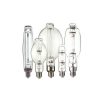
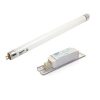
Industrial lighting, ultraviolet lighting and other special lighting have high requirements for equipment adaptability. LSG-6000 can realize light distribution testing of ultraviolet light sources by selecting special probes, and conduct high-precision photometric testing on large industrial lighting fixtures, meeting the testing needs of special light sources in industrial production, medical disinfection and other scenarios. Its combination function with spectroradiometer can also realize spectral color parameter testing of special luminaires, filling the technical gap in special lighting testing.
As an important part of market access for lighting products, third-party testing institutions have extremely high requirements for standard compliance and data accuracy of testing equipment. LSG-6000 fully complies with domestic and international standards such as LM-79-24, LM-79-19 and CIE S025, and its test data is authoritative and mutually recognizable. It can provide luminaire optical performance testing services for testing institutions such as SGS and CQC, helping enterprises pass international certifications such as CE and UL.
With the core testing advantage of “luminaire stationary, probe moving”, the Type C goniophotometer system has become the standard solution for photometric testing in general lighting, meeting the requirements of latest standards such as LM-79-24 for testing accuracy. As a typical representative of this system, LISUN LSG-6000 inherits the core testing principle and realizes functional upgrades such as automatic 3D light intensity distribution testing, customized test distance and expanded spectral testing. Through multi-model layout, it fully covers the testing needs of different types and sizes of lighting products.
Under the trend of intelligent, green and customized development of the lighting industry, the accuracy, comprehensiveness and efficiency of photometric testing have become core demands of industry development, and the technical value of the Type C goniophotometer system has become increasingly prominent. With high-precision hardware configuration, automatic testing functions and wide industry adaptability, LISUN LSG-6000 not only provides core technical support for R&D and quality control of lighting enterprises, but also provides authoritative data guarantee for certification services of third-party testing institutions. In the future, with the continuous updating of lighting standards and the sustainable development of the special lighting field, the Type C goniophotometer system will upgrade toward higher precision, more comprehensive parameters and more intelligent operation. As a benchmark product in the industry, LISUN LSG-6000 will continue to promote the innovation and development of lighting testing technology and help the high-quality upgrading of the lighting industry.
Tags:LMS-6000Your email address will not be published. Required fields are marked *

 中文简体
中文简体 English
 Русский
 Español
 Português
 Türkçe
 العربية
 Deutsch
 Polski
 Italiano
 Français
 한국어
한국어 ไทย
ไทย Tiếng Việt
 日本語
日本語