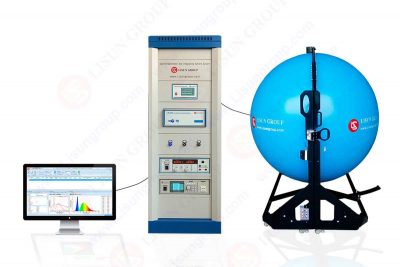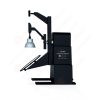
LM-79 Moving Detector Goniophotometer (Mirror Type C)
LSG-6000
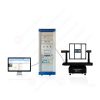
High Precision Rotation Luminaire Goniophotometer
LSG-1890B
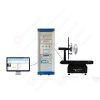
High Precision Rotation Luminaire Goniospectroradiometer
LSG-1890BCCD

Goniophotometer for Automotive and Signal Lamps
LSG-1950
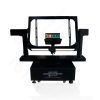
Goniophotometer for Traffic Signal Lamps (Economical Model)
LSG-1950S
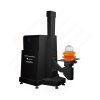
Goniophotometer for Airfield Lighting
LSG-1940
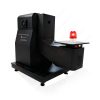
VAD Fire Alarm Visual Alert Device Goniophotometer
LSG-1930
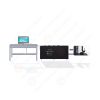
Compact Goniophotometer
LSG-1200A
LED Goniophotometer
LSG-1100
Near Field Moving Detector Goniophotometer
LSG-1900B
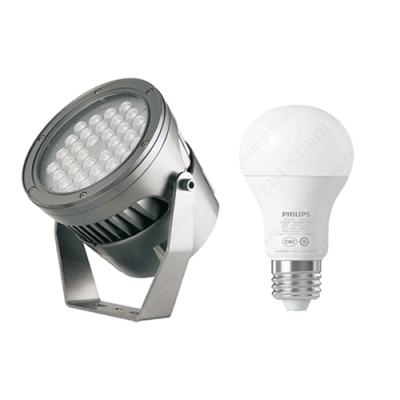 LEDs and Luminaire Test Solutions
 LM-79 and LM-80 Test Solutions
 LED Driver Test Solutions
 Household Appliances Test Solutions
 Mobile and Network Test Solutions
 Automotive Electronics Test Solutions
 Audio-Video and IT Test Solutions
 Cable and Wire Test Solutions
 Plugs and Sockets Test Solutions
 Power Switch Test Solutions
 Transformer Test Solutions
 Electric Toys Test Solutions
 Energy Meter Test Solutions
 Motor-Operated Tool Test Solutions
Select an organization
to browse standards
Abstract: Under high-current fault conditions, the insulating materials in electrical and electronic equipment often face fire risks initiated by arcing. High Current Arc Ignition (HAI), as a core metric for evaluating the arc resistance of materials, has criteria whose accuracy directly impacts the electrical safety design of products. This article aims to provide an in-depth analysis of the question: What is the standard for arc resistance?
Through a comparative study of international and domestic standards such as IEC 60947.1, UL 746A, and GB/T 14048.1, this paper explores key parameters including arc ignition current, ignition frequency, electrode geometry, and material ignition criteria. Combining the electromechanical integration features of the LISUN HCAI-2 High Current Arc Ignition Test System, the article elaborates on the technical value of its automated arc counting and high-definition monitoring system in enhancing test repeatability.
During the development of low-voltage apparatus, household appliances, and information technology equipment, assessing the reliability of insulating components under extreme fault arc conditions is a crucial measure for preventing electrical fires. Engineers and researchers frequently confront a core question: What is the standard for arc resistance? Particularly for high-current scenarios, the ignition characteristics of materials subjected to repeated arc strikes differ fundamentally from traditional tracking resistance.
High Current Arc Ignition testing simulates the impact of high-energy arcs generated during equipment faults on plastic or solid combustible components. The LISUN-developed HCAI-2 test system provides a quantitative basis for judging the arc ignition resistance of materials by accurately performing 200 repeated arc ignitions on the sample surface.
The determination of arc resistance must adhere to a strict standard framework to ensure the global mutual recognition of test results. The HCAI-2 system supports the following key standards and their corresponding clauses:
To accurately answer “What is the standard for arc resistance?”, one must deeply understand the arc ignition experimental parameters specified in the standards. The LISUN HCAI-2 system achieves closed-loop precision control of these parameters.
The standard requires the arc ignition current to be maintained at 33A ± 5A, and this current must be adjustable to meet energy requirements at different stages. The HCAI-2 is equipped with a 40A power meter capable of real-time display of current, voltage, power, and power factor, and features an over-threshold alarm function.
A typical benchmark for judgment is 200 repeated arc ignitions. The device’s default arc ignition frequency is 40 times/min, simulating the pulsed characteristics of arcs in real faults.
The table below summarizes the key parameters for arc ignition resistance testing based on standard requirements and the implementation by the LISUN HCAI-2:
| Technical Dimension | Standard Requirement & HCAI-2 Parameter | Corresponding Standard & Functional Description |
| Arc Ignition Count | 0–200 counts (adjustable, precision ± 1 count) | Benchmark count for determining material ignition |
| Arc Ignition Current | 33A ± 5A (adjustable) | Adapts to standard electrical energy requirements |
| Ignition Speed | 250mm/s ± 25mm/s | Ensures consistency of arc energy discharge |
| Power Factor | cos φ = 0.5 ± 0.05 | Simulates real-world electrical stress in low-voltage apparatus |
| Electrode Material | Stationary electrode: Copper / Moving electrode: Stainless steel | Meets IEC diagram material hardness requirements |
| Electrode Geometry | Stationary: 30° chisel tip / Moving: 60° conical tip | Conforms to GB/T 14048.1 appendix diagram requirements |
| Sample Dimensions | 130mm × 13mm × (2 ∼ 12)mm | Accommodates common electrical/electronic material specimens |
| Monitoring System | HD Industrial Camera + Flame Sensor | Automatically records ignition moment and arc count |
In practice, determining arc resistance is not merely a “pass” or “fail” but a quantitative process based on experimental data.
The HCAI-2 employs a horizontal clamping method compatible with sheet and block specimens, with positioning accuracy up to ±0.5mm. The electrodes are set at a 45° angle to the horizontal plane, strictly reproducing the layout shown in the standard appendices.
The device integrates a stable arc generation system and a combustion monitoring device. Through dual monitoring by an HD industrial camera and a flame sensor, the system automatically captures the instant of material ignition. If the sample sustains combustion during the 200 arc ignitions, the material is judged as failing under high-current arc conditions. The HCAI-2 supports video playback of the test process, providing a basis for analyzing the micro-physical processes at the moment of ignition.
Arc ignition resistance assessment plays a critical “gatekeeper” role in multiple industries:
Through this in-depth discussion, we can clearly define What is the standard for arc resistance? It is a comprehensive evaluation system encompassing arc ignition current accuracy (33A), electrode geometry, ignition speed (250mm/s), and the 200-count limit benchmark.
The LISUN HCAI-2 High Current Arc Ignition Test System, with its self-developed large LCD touchscreen interface, reliability ensured by key Schneider components, and dual monitoring technology, perfectly reproduces the test conditions required by IEC and GB standards. It is a professional detection tool for ensuring the safe operation of electrical and electronic products and mitigating the risk of electrical fires caused by insulation material failure. In the future global quality certification chain, such high-standard compliant testing equipment will continue to assist enterprises in overcoming technical trade barriers.
Tags:HCAI-2Your email address will not be published. Required fields are marked *

 English
 中文简体
中文简体 English
 Русский
 Español
 Português
 Türkçe
 العربية
 Deutsch
 Polski
 Italiano
 Français
 한국어
한국어 ไทย
ไทย Tiếng Việt
 日本語
日本語