LM-79 Moving Detector Goniophotometer (Mirror Type C)
LSG-6000
High Precision Rotation Luminaire Goniophotometer
LSG-1890B
High Precision Rotation Luminaire Goniospectroradiometer
LSG-1890BCCD

Goniophotometer for Automotive and Signal Lamps
LSG-1950
Goniophotometer for Traffic Signal Lamps (Economical Model)
LSG-1950S
VAD Fire Alarm Visual Alert Device Goniophotometer
LSG-1930
Goniophotometer for Airfield Lighting
LSG-1940
Compact Goniophotometer
LSG-1200A
LED Goniophotometer
LSG-1100
Near Field Moving Detector Goniophotometer
LSG-1900B
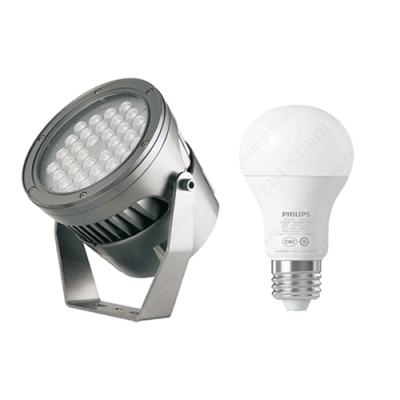 LEDs and Luminaire Test Solutions
 LM-79 and LM-80 Test Solutions
 LED Driver Test Solutions
 Household Appliances Test Solutions
 Mobile and Network Test Solutions
 Automotive Electronics Test Solutions
 Audio-Video and IT Test Solutions
 Cable and Wire Test Solutions
 Plugs and Sockets Test Solutions
 Power Switch Test Solutions
 Transformer Test Solutions
 Electric Toys Test Solutions
 Energy Meter Test Solutions
 Motor-Operated Tool Test Solutions
Select an organization
to browse standards
Abstract:
Electromagnetic interference has become a core disturbing factor in scenarios such as electronic equipment testing and classified information transmission. As a key device for electromagnetic protection, the Electromagnetic shielding cabinet directly determines the effect of electromagnetic isolation through its design and performance. Taking the LISUN SDR-2000B Electromagnetic Interference Shielding Room as the research object, this paper focuses on the core design principle of the electromagnetic shielding cabinet, analyzes the engineering application of the Faraday cage electromagnetic isolation principle, expounds the design key points of precision panel bolt fixing and high-conductivity mesh gasket sealing technology, and explores the shielding effectiveness and application scenarios of the electromagnetic shielding cabinet combined with product parameters and testing standards, so as to provide a reference for equipment selection in high-demand electromagnetic protection scenarios.
1. Introduction
In the equipment testing and production processes of electronics, military industry, automotive electronics and other industries, external electromagnetic radiation will interfere with the normal operation of precision instruments, and the leakage of internal sensitive signals will also cause potential information security risks. As a special device for constructing a closed electromagnetic clean space, the electromagnetic shielding cabinet realizes bidirectional electromagnetic isolation by reflecting, absorbing and attenuating electromagnetic waves, making it a key carrier for solving electromagnetic interference problems.Current mainstream electromagnetic shielding cabinets are all designed based on the Faraday cage principle. Combined with precision mechanical fixing and high-efficiency sealing technology, they achieve wide-band and high-shielding-effectiveness electromagnetic protection. As a typical representative of modular electromagnetic shielding cabinets, the LISUN SDR-2000B Electromagnetic Interference Shielding Room adopts 2mm galvanized cold-rolled steel plate as the core material, integrates multiple sealing and fixing technologies, and realizes efficient blocking of electromagnetic waves from 9kHz to 18GHz. Its design concept and performance indicators have important reference value for the R&D and application of electromagnetic shielding cabinets.
2. Core Design Principle of Electromagnetic Shielding Cabinet — Faraday Cage Electromagnetic Isolation
The Faraday cage is the design foundation of the electromagnetic shielding cabinet, and its principle originates from the electrostatic balance characteristics of conductors: when an external electric field or electromagnetic wave acts on a closed conductive metal structure, free electrons in the conductor will rapidly redistribute, forming an induced electric field on the metal surface opposite to the direction of the external electric field. The two cancel each other out, making the internal electric field intensity approach zero; for magnetic fields, metal conductors weaken their penetration ability through eddy currents, thus achieving isolation of electromagnetic waves.
Different from ordinary Faraday cages, industrial-grade electromagnetic shielding cabinets have engineered and optimized the Faraday cage principle. Taking LISUN SDR-2000B as an example, it uses 2mm high-quality galvanized cold-rolled steel plate as the conductive base material. The galvanized layer not only improves the rust resistance of the steel, but also enhances the conductivity of the conductor, making the movement of free electrons smoother and the formation of the induced electric field faster. At the same time, the shielding cabinet adopts a fully enclosed modular structure without redundant gaps, avoiding the leakage of electromagnetic waves from gaps, perfectly replicating the core characteristic of the Faraday cage — “a closed conductive structure counteracts electromagnetic radiation”, and realizing full-band electromagnetic isolation from low-frequency magnetic fields to high-frequency microwaves. In addition, the grounding design of the electromagnetic shielding cabinet allows induced charges to form a loop through the ground, avoiding secondary electromagnetic interference caused by charge accumulation and further improving the stability of electromagnetic isolation.
3. Key Structural Technologies of Electromagnetic Shielding Cabinet — Fixing and Sealing Design
The engineering realization of the Faraday cage principle relies on precise mechanical fixing and efficient electromagnetic sealing technologies. Together, they ensure the integrity of the closed structure of the shielding cabinet and are the core links to prevent electromagnetic leakage. The precision panel bolt fixing and high-conductivity mesh gasket sealing technology adopted in the LISUN SDR-2000B electromagnetic shielding cabinet represent the mainstream design direction of current electromagnetic shielding cabinets.
3.1 Precision Panel Bolt Fixing Technology
Bolt fixing is the core method for modular splicing of electromagnetic shielding cabinets, and its design key lies in the dual guarantee of “mechanical fastening” and “electrical continuity”. All cabinet panels of LISUN SDR-2000B are fixed by high-precision galvanized bolts. The specifications and spacing of the bolts are accurately calculated to ensure that there is no looseness or displacement between panels. Galvanized bolts not only have sufficient mechanical strength to bear the self-weight of the cabinet and the pressure of internal equipment, but also their conductivity ensures electrical conduction between panels, making the entire shielding cabinet form a complete conductor and avoiding “electromagnetic breakpoints” caused by poor panel contact.
Different from ordinary bolt connections, the bolt fixing of this shielding cabinet adopts a torque control process. Bolts are tightened to a specified torque, which not only avoids steel plate deformation caused by over-tightening, but also prevents panel gaps caused by over-loosening, ensuring maximum contact area between panels and minimum contact resistance, eliminating electromagnetic leakage channels structurally.
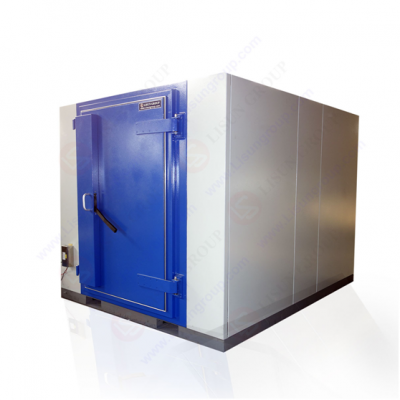
SDR-2000B/SDR-800S electromagnetic interference shielding room
3.2 High-Conductivity Mesh Gasket Sealing Technology
Sealing technology is critical in the design of electromagnetic shielding cabinets. Even a tiny gap of 0.1mm can become a main channel for electromagnetic leakage. LISUN SDR-2000B adopts high-conductivity mesh gaskets for sealing at panel joints and the junction between the shielding door and the cabinet body. High-conductivity mesh gaskets are woven from highly conductive metal fibers, combining elasticity and conductivity. When bolts are tightened or the shielding door is closed, the gaskets are compressed to perfectly fill tiny gaps between panels while achieving electrical continuity between components.
The elastic design of high-conductivity mesh gaskets gives them good wear resistance and aging resistance. They can maintain sealing performance after long-term use, ensuring the stability of the shielding effectiveness of the electromagnetic shielding cabinet. In addition, components such as ventilation waveguide windows and interface boards of the shielding cabinet are also sealed, forming an all-round sealing system with high-conductivity mesh gaskets to build a truly leak-free fully enclosed shielding space.
4. Performance Indicators and Reference Standards of LISUN SDR-2000B Electromagnetic Shielding Cabinet
4.1 Core Specifications and Shielding Performance
As a professional electromagnetic shielding cabinet, LISUN SDR-2000B meets high industrial requirements in specifications and shielding performance. The core parameters are shown in Table 1. Its shielding performance covers the full frequency bands of magnetic fields, plane waves and microwaves, and the shielding attenuation values of each frequency band reach high industry standards, achieving efficient electromagnetic blocking in the wide frequency band from 9kHz to 18GHz.
Table 1 Core Specification Parameters of LISUN SDR Series Electromagnetic Shielding Cabinet
| Model | Internal Dimensions (L×W×H / m) | External Dimensions (L×W×H / m) | Shielding Performance | Electrical System | Ventilation System |
| SDR-2000B | 2×1.2×1.8 | 2.2×2.3×2.3 | Magnetic field: 10kHz≥80dB, 100kHz≥100dB, 1MHz≥100dB; Plane wave: 100MHz≥110dB, 400MHz≥110dB; Microwave: 18GHz≥90dB | 1×LED lamp, 1×lighting switch, 5×sockets | 1×300×300mm waveguide window |
| SDR-5000B | 5×3×3 | 5.2×3.2×3.5 | Same as above | 1×distribution box, 2×LED lamps, 1×lighting switch, 10×sockets | 2×300×300mm waveguide windows |
| SDR-800S | 0.8×0.8×0.8 | 1×1.1×1.2 | Same as above | 1×LED lamp, 1×lighting switch, 5×sockets | 1×300×300mm waveguide window |
The shielding cabinet is also equipped with a 32A single-phase power filter, which can filter electromagnetic interference in the power grid and ensure clean power input into the cabinet. The wall adapter board includes interfaces such as N(f)-N(f) and SMA(f)-SMA(f), realizing isolated connection between the tested object and external equipment, which not only guarantees the convenience of testing, but also avoids electromagnetic leakage during signal transmission. The raised floor has a load-bearing capacity of up to 1000kg, which can meet the placement needs of various large-scale testing equipment.
4.2 Reference Standards
The design, production and testing of LISUN SDR-2000B electromagnetic shielding cabinet comply with authoritative domestic and international standards, covering multiple fields such as measurement of electromagnetic shielding effectiveness, engineering construction, and radio frequency disturbance limits. Its core reference standards include GB/T 12190-2021, GJB 5792-2006, IEEE Std 299-2006, MIL-STD-461, etc., which not only meet domestic industrial and military testing requirements, but also conform to international electromagnetic compatibility standards, ensuring the versatility and authority of the product.
5. Application Scenarios and Advantages of Electromagnetic Shielding Cabinet
The electromagnetic shielding cabinet designed based on the Faraday cage principle and precision sealing and fixing technology has the advantages of high shielding effectiveness, flexible layout and strong stability, and is widely used in industries with strict requirements for electromagnetic environment such as electronics, military industry and automotive electronics.
In the field of electronic equipment testing, the electromagnetic shielding cabinet provides a clean and repeatable standardized electromagnetic environment for radiation disturbance and immunity testing, avoiding the influence of external electromagnetic interference on test results and ensuring the accuracy of test data. In the military industry, it can effectively prevent signal leakage of classified information systems, protect information security, and isolate external electromagnetic interference to ensure the stable operation of military electronic equipment. In the automotive electronics field, electromagnetic compatibility testing of new energy vehicle batteries, motors and other components needs to be carried out in an electromagnetic shielding cabinet to simulate a real electromagnetic environment and detect the electromagnetic performance of components.
LISUN SDR-2000B electromagnetic shielding cabinet also has good compatibility, which can be seamlessly connected with EMI-9K series receivers and other brand receivers. It supports testers and equipment to conduct tests indoors at the same time, and can also realize external connection through interfaces, with flexible layout to meet the needs of different testing scenarios. At the same time, in addition to standard models, sizes can be customized according to customer requirements, further improving the applicability of the product.
6. Conclusion
As a core device for electromagnetic protection, the electromagnetic shielding cabinet’s design and performance directly determine the effect of electromagnetic isolation. Based on the Faraday cage electromagnetic isolation principle, combined with precision panel bolt fixing and high-conductivity mesh gasket sealing technology, a leak-free fully enclosed shielding space can be constructed to achieve wide-band and high-shielding-effectiveness electromagnetic protection. Through engineering optimization of core principles and precise application of key technologies, LISUN SDR-2000B electromagnetic shielding cabinet achieves efficient blocking of electromagnetic waves in the wide frequency band from 9kHz to 18GHz. Its specification parameters and design concept meet high industrial requirements, providing a reliable solution for electromagnetic protection in various industries.
In today’s increasingly complex electromagnetic environment, the R&D of electromagnetic shielding cabinets should further focus on improving shielding effectiveness and expanding application scenarios, combine new materials and processes to optimize fixing and sealing technologies, and improve the intelligence and modularization level of products to meet the diversified needs of electromagnetic protection in different industries. In the future, with the development of electronic equipment towards high frequency and high precision, electromagnetic shielding cabinets will play an important role in more fields and become a key carrier to ensure the stable operation of equipment and information security.
Tags:SDR-2000BYour email address will not be published. Required fields are marked *

 English
 中文简体
中文简体 English
 Русский
 Español
 Português
 Türkçe
 العربية
 Deutsch
 Polski
 Italiano
 Français
 한국어
한국어 ไทย
ไทย Tiếng Việt
 日本語
日本語