LM-79 Moving Detector Goniophotometer (Mirror Type C)
LSG-6000
High Precision Rotation Luminaire Goniophotometer
LSG-1890B
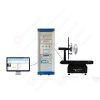
High Precision Rotation Luminaire Goniospectroradiometer
LSG-1890BCCD

Goniophotometer for Automotive and Signal Lamps
LSG-1950
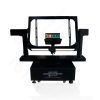
Goniophotometer for Traffic Signal Lamps (Economical Model)
LSG-1950S
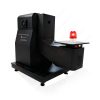
VAD Fire Alarm Visual Alert Device Goniophotometer
LSG-1930
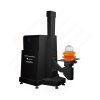
Goniophotometer for Airfield Lighting
LSG-1940
Compact Goniophotometer
LSG-1200A
LED Goniophotometer
LSG-1100
Near Field Moving Detector Goniophotometer
LSG-1900B
 LEDs and Luminaire Test Solutions
 LM-79 and LM-80 Test Solutions
 LED Driver Test Solutions
 Household Appliances Test Solutions
 Mobile and Network Test Solutions
 Automotive Electronics Test Solutions
 Audio-Video and IT Test Solutions
 Cable and Wire Test Solutions
 Plugs and Sockets Test Solutions
 Power Switch Test Solutions
 Transformer Test Solutions
 Electric Toys Test Solutions
 Energy Meter Test Solutions
 Motor-Operated Tool Test Solutions
Select an organization
to browse standards
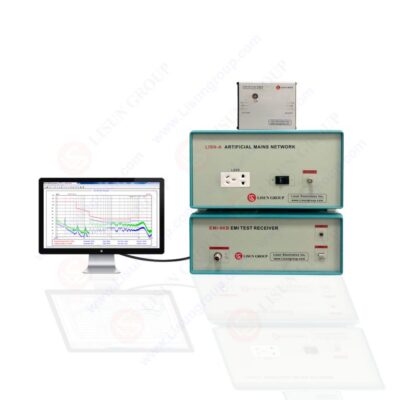
The most difficult of the electronics designs to design in terms of electromagnetic compatibility are switching power supplies and SMPS-based circuits. High switching frequencies, short edge transitions and small layouts tend to produce conducted and radiated noise which can readily exceed administrative limits. The EMI-9KB has taken significance in this regard since it enables engineers to detect the problems of emission early enough with professional equipment used in EMC tests before having to engage in expensive formal compliance tests.
Pre-compliance testing aims at gaining knowledge on the occurrence and the reason of the emission and not about a pass or fail. In the case of SMPS circuits switching nodes, transformer leakage, parasitic capacitances, and grounding paths may be a source of emissions. Regardless of a receiver that can reliably, consistently, and standards-based detect, they would go undetected until late verification. To fill this gap, the EMI-9KB offers the measurement behavior of full compliance receivers with one hand, and is still convenient to use in development laboratories.
Switching power supplies work by cycling semiconductor device causes in a few cycles (possibly with a frequency of tens of kilohertz up to a number of megahertz). A standard debugging tool like oscilloscopes and spectrum analyzers is one that can be seen, but and does not show the appearance of how the emissions would be measured by regulation standards. There would be need to use an EMI receiver-based method to generate noise measurement with the same bandwidths and detectors as per the regulations of EMC. To solve this need, the EMI-9KB enables the engineer to see the emissions the way they will look when going through the compliance testing and make design decisions much more confident.
One of the biggest strengths of the EMI-9KB is its standards architecture. It uses CISPR-specified resolution bandwidths and detection modes, unlike generic analyzers, which represent actual compliance conditions. In conducting emission assessment of SMPS circuits, this implies that measurements are in the same line with limits involved when certifying.
The receiver aids peak detection, quasi-peak and average detection which allows engineers to know how repeated switching nudges hit on detector response. Within SMPS designs, emissions which seem to be extreme during peak mode can be within the range during quasi-peak assessment. On the other hand, certain sources of noise that would be tolerable in peak measurements would be unsuccessful when repetition is put into consideration. These distinctions are clear in the EMI-9KB at pre-compliance phases.
SMPS emissions usually consist of not only narrowband components at the switching frequencies, but also of broadband noise due to rapid transitions. To have an accurate resolution, it is required to have a receiver with a low noise floor, and high overload protection. The EMI-9KB has an EMI front-end that is capable of responding to high dynamic range, without distortion.
This is necessary especially in the process of measuring SMPS circuits at varying levels of power. At light-load operation, noise can reduce greatly, whereas at full-load conditions, emission rates are likely to rise. The receiver has uniform sensitivity to these conditions such that trend of emissions are repeatable and observable.
LISUN developed systems put special focus on stability of the front end, which minimizes drift in measurements when maintaining long development sessions and lab test cycles.
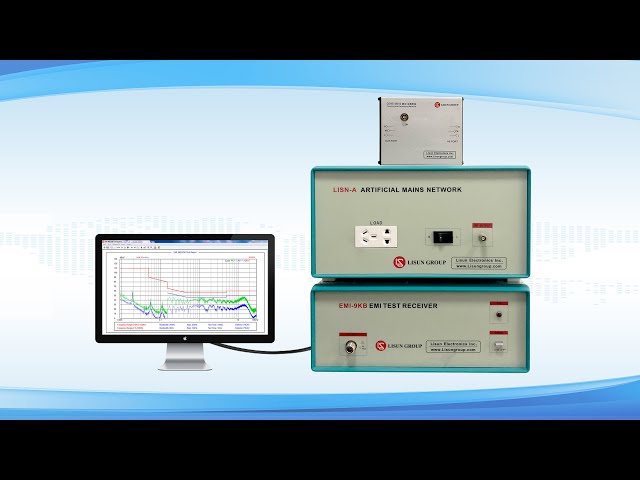
Pre-compliance testing should also be effective to facilitate quick design cycle. According to EMI-9KB, the scanning of this device is very fast with which engineers can scan the entire conducted emission frequency range in a relatively short period of time.
In case of a filter element, replacement or changes in layout, the engineer is able to remeasure instantly and note the effect. This instant feedback mechanism makes the process of optimization faster and minimizes the chance of redesign after the delay. When scanned faster, it is even possible to test in a variety of operating conditions, e.g. including various load conditions or input voltages, without committing a lot of time.
In the case of SMPS pre-compliance testing, the EMI-9KB is enhanced with line impedance stabilization networks that it can be integrated with. This arrangement ensures the provision of controlled environment of measurement which eliminates the presence of external noise factors in the device under test.
The fact that it can be directly connected to LISNs will make the test set-up simple and reduce uncertainty. Instead of spending time in the troubleshooting of measurement artifacts, engineers are able to concentrate on interpretation of results. That is why the EMI-9KB is not only suitable to the skill of an experienced EMC engineer but to the power electronics engineer new to compliance testing.
Among the greatest advantages on the use of the EMI-9KB are the robust correlation between the pre-compliance and the end certification. Due to the high adherence to principles of EMC measurement shown by the receiver, the level of emission is likely to be similar in development as the outcomes of accredited compliance laboratories.
This has a correlation that minimizes risk. The engineers are able to design confidentially as they can know that the passing margins noted when testing pre-compliance is not meaningless. It will also enable the teams of the company to have internal design targets that consider the variation of production and the effects of aging.
The following table brings out the advantages of using the EMI-9KB in assisting SMPS pre-compliance testing as opposed to generic measuring instruments:
| Parameter | EMI-9KB Performance | Typical Spectrum Analyzer |
| Detection modes | Peak, quasi-peak, average | Mostly peak only |
| Bandwidth compliance | CISPR-defined RBWs | User-defined, non-standard |
| Measurement repeatability | High and stable | Varies with settings |
| Correlation to compliance | Strong | Limited |
| Suitability for SMPS noise | Optimized | Requires interpretation |
In addition to the numbers, EMI-9KB helps engineers to determine the origins of emissions. Through noting the frequency patterns, the designer can correlate peaks to certain switching harmonics, control loops, or the resonance of the transformer. This understanding informs specific mitigation efforts, including snubber tuning, layout work, or shielding.
Since the receiver systems will be giving consistent and repeatable measurements, the engineers will be able to determine the actual improvements versus noise of the measurement. This lucidity is necessary when fine adjustments have to be made which could potentially lower the emission only a few decibels.
Pre-compliance testing may be repeated several times during a project lifecycle. The EMI-9KB is built to be used in laboratories continuously over a long time with little changes in calibration. The reliability minimizes any maintenance time offs and is able to perform uniform data throughout the projects.
The design philosophy of LISUN relied on high quality components and internal structure, so the receiver can be used both in development lab and quality control environment.
The EMI-9KB offers a much better way of testing pre-compliance on switching power supplies and other SMPS circuit by offering standards-aligned measurement behaviour in a form accessible on development boards. It acts as professional EMC test equipment, which means that engineers can detect the problem of emissions at an early stage, test mitigation strategies more accurately, and gain confidence prior to official certification.
The EMI-9KB enables the successful and efficient SMPS development through its stable detection, high scanning speed, high correlation to compliance results, and even flawless integration with LISN-based installations. It provides an ideal and commercially viable alternative to the high-frequency power electronics equipment environment of the times with the support of manufacturers like LISUN that enables it to reduce any EMC risk and also enhance overall product readiness.
Your email address will not be published. Required fields are marked *

 English
 中文简体
中文简体 English
 Русский
 Español
 Português
 Türkçe
 العربية
 Deutsch
 Polski
 Italiano
 Français
 한국어
한국어 ไทย
ไทย Tiếng Việt
 日本語
日本語