LM-79 Moving Detector Goniophotometer (Mirror Type C)
LSG-6000
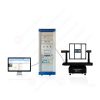
High Precision Rotation Luminaire Goniophotometer
LSG-1890B
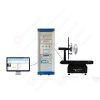
High Precision Rotation Luminaire Goniospectroradiometer
LSG-1890BCCD

Goniophotometer for Automotive and Signal Lamps
LSG-1950
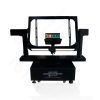
Goniophotometer for Traffic Signal Lamps
LSG-1950S
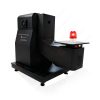
VAD Fire Alarm Visual Alert Device Goniophotometer
LSG-1930
Compact Goniophotometer
LSG-1200A
LED Goniophotometer
LSG-1100
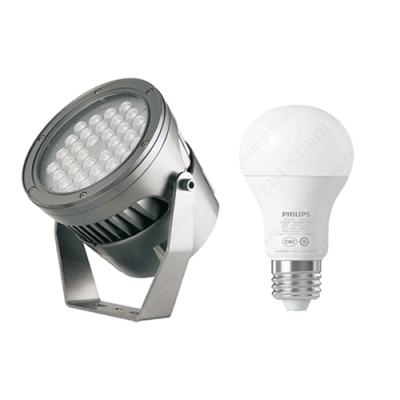 LEDs and Luminaire Test Solutions
 LM-79 and LM-80 Test Solutions
 LED Driver Test Solutions
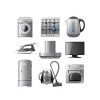 Household Appliances Test Solutions
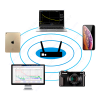 Mobile and Network Test Solutions
 Automotive Electronics Test Solutions
 Audio-Video and IT Test Solutions
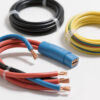 Cable and Wire Test Solutions
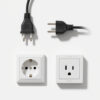 Plugs and Sockets Test Solutions
 Power Switch Test Solutions
 Transformer Test Solutions
 Electric Toys Test Solutions
 Energy Meter Test Solutions
 Motor-Operated Tool Test Solutions
Select an organization
to browse standards
IPX7 waterproof test chamber equipment constitutes an essential infrastructure for validating ingress protection ratings of electrical enclosures subjected to temporary water immersion. This study systematically examines the technical specifications, engineering design parameters, and operational protocols mandated by IEC60529 standard for reliable water resistance assessment. Through critical analysis of immersion depth precision, duration control mechanisms, and chamber construction requirements, this paper elucidates the fundamental engineering principles governing accurate IPX7 certification testing.
The investigation encompasses material selection criteria for corrosion resistance, structural sealing methodologies, and calibration procedures necessary for maintaining measurement traceability. Furthermore, the research evaluates commercial testing solutions, specifically analyzing the implementation of automated immersion systems in industrial quality assurance environments. These findings provide technical guidance for laboratory engineers and product safety professionals engaged in consumer electronics and industrial equipment certification, establishing standardized protocols for reproducible waterproof testing outcomes.
The proliferation of portable electronic devices and outdoor electrical equipment has intensified the necessity for standardized water ingress protection validation. Ingress Protection (IP) codes, standardized under IEC60529, provide internationally recognized classification systems defining the degrees of protection afforded by electrical enclosures against solid particles and liquid penetration. Among these classifications, IPX7 denotes a specific protection level ensuring device integrity during temporary immersion in water up to 1-meter depth for 30-minute duration.
The increasing prevalence of smartphones, wearable technology, and automotive electronics requiring such protection has elevated the significance of precise testing methodologies. Consequently, the IPX7 waterproof test chamber has emerged as a critical apparatus within quality assurance laboratories, necessitating rigorous engineering standards to ensure reproducible and authoritative testing outcomes that comply with international certification requirements.
IEC60529 establishes the international standard for classifying degrees of protection provided by enclosures for electrical equipment. The IP code structure comprises two numerical digits: the first indicating protection against solid objects (0-6), and the second against liquids (0-9). The designation “X” in IPX7 signifies that protection against solid objects is not specified, while the “7” denotes specific protection against the effects of temporary immersion in water. This standard mandates precise test conditions including immersion depth (1.0 meter ± 0.05 meter), water temperature differentials, and duration specifications (30 minutes minimum), ensuring consistent evaluation criteria across testing facilities worldwide.
IPX7 testing requires complete submersion of the specimen in water at a depth of 1 meter, measured from the bottom of the device to the water surface. The test apparatus must maintain this depth tolerance throughout the 30-minute exposure period while accommodating various specimen sizes and weights. Critical environmental parameters include water temperature stabilization (typically 15°C to 35°C) and minimal water movement to prevent dynamic pressure effects. The standard specifies that enclosures must prevent water ingress in quantities causing harmful effects when submersed under defined pressure conditions equivalent to 1-meter water column (approximately 0.1 bar hydrostatic pressure).
IPX7 waterproof test chamber engineering necessitates meticulous attention to structural integrity and measurement precision. The fundamental design incorporates a corrosion-resistant immersion tank constructed from 316L stainless steel to withstand prolonged water exposure and prevent electrochemical degradation. Critical dimensional specifications include adequate internal volume (typically 800×800×1000 mm for standard models) to accommodate diverse specimen geometries while maintaining precise water level control. The chamber must integrate automated lifting mechanisms with positional accuracy within ±5 mm to ensure consistent immersion depth across testing cycles. Advanced systems incorporate programmable logic controllers (PLC) with touchscreen interfaces, enabling precise duration timing (30:00 ± 0:01 minutes) and automated test sequence execution.
Standardized testing protocols require pre-conditioning of specimens at room temperature to prevent condensation artifacts. The specimen mounting methodology must ensure stable positioning without mechanical stress, utilizing non-conductive fixtures to avoid galvanic corrosion. Water quality management represents a critical parameter; demineralized or tap water with conductivity below 100 μS/cm prevents mineral deposition on test subjects. During immersion, the chamber must maintain hydrostatic pressure equivalent to 1-meter depth with minimal fluctuation (±2%). Post-test inspection protocols involve controlled draining, surface moisture removal, and functional testing to detect internal water ingress through disassembly or electrical continuity testing.
Accurate depth measurement requires calibration of water level sensors against traceable standards, with verification intervals not exceeding 12 months. Temperature monitoring systems must achieve accuracy within ±1°C, utilizing platinum resistance thermometers (PRT) or calibrated thermocouples. Uncertainty analysis must account for depth measurement error (typically ±0.5%), temperature variation effects on water density, and timing device accuracy (±0.1%). Regular calibration of lifting mechanisms ensures positional repeatability within ±3 mm, critical for maintaining the 1-meter specification across diverse specimen weights up to 50 kg.
Chamber construction demands austenitic stainless steel (AISI 316L) for all wetted surfaces, providing superior resistance to chloride-induced pitting corrosion compared to 304-grade alternatives. Non-metallic components require evaluation for hydrolytic stability, utilizing PTFE or EPDM seals capable of maintaining elasticity across repeated wet-dry cycles. Structural reinforcement through welded bracing prevents dimensional deformation under hydrostatic loading, while surface finish specifications (Ra ≤ 0.8 μm) facilitate cleaning and prevent biological contamination in water reservoirs.
The tank assembly must withstand hydrostatic pressure loading of 0.15 MPa (safety factor 1.5× operating pressure) without structural compromise. Gasket selection for viewing ports and access panels requires compression set resistance below 15% after 1000 thermal cycles. Drainage systems incorporate anti-siphon mechanisms and filtration to prevent environmental contamination while enabling rapid water exchange (complete turnover within 10 minutes) between test cycles.
Modern implementations utilize distributed control systems with redundant safety interlocks, including water level float switches and emergency stop mechanisms. Data acquisition systems record test parameters (depth, temperature, duration) at 1-second intervals, generating tamper-evident digital records compliant with ISO/IEC 17025 documentation requirements. Remote monitoring capabilities via Ethernet/IP interfaces enable centralized laboratory management system integration.
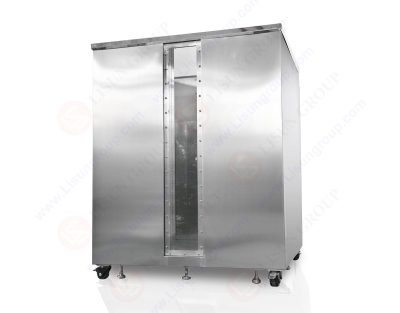
Contemporary commercial testing solutions demonstrate significant advancement in automation and precision capabilities. The JL-XC Series Waterproof Test Chamber exemplifies current industrial engineering standards, incorporating servo-driven lifting platforms with 0.1 mm positional resolution and integrated water circulation systems maintaining temperature uniformity within ±1°C across the test volume.
Technical specifications of this series include modular tank configurations ranging from compact 400×400 mm footprints for consumer electronics to 1200×1200 mm industrial-scale systems accommodating automotive components. The integrated control system features programmable test profiles supporting IPX5 through IPX9K protocols, enabling comprehensive ingress protection validation within unified hardware platforms. Construction utilizes full 316L stainless steel with optional passivation treatment for enhanced chemical resistance.
Application scenarios encompass smartphone manufacturing quality control, wearable device certification, automotive sensor validation, and marine equipment testing. The automated workflow reduces operator intervention, minimizing human error while increasing throughput to 20+ test cycles per eight-hour shift. Advanced models incorporate visual monitoring systems with underwater cameras for real-time ingress detection during immersion phases.
Table 2. JL-XC Series Technical Configurations
| Parameter | Specification / Description |
| Model Configuration | JL-XC400 (400×400 mm) to JL-XC1200 (1200×1200 mm) |
| Lifting Platform Resolution | 0.1 mm (servo-driven) |
| Temperature Uniformity | ±1°C across test volume |
| Test Protocol Support | IPX1,IPX2,IPX3,IPX4,IPX5, IPX6, IPX6K |
| Construction Material | 316L Stainless Steel (full wetted surfaces) |
| Throughput (8-hour shift) | 20+ cycles (automated operation) |
Laboratory procurement decisions must evaluate specimen dimensional requirements, production volume demands, and future testing scope expansion. Facilities conducting high-volume consumer electronics testing should prioritize automated lifting systems and rapid water exchange capabilities to minimize cycle times. Conversely, research laboratories handling diverse large-format equipment require customized tank geometries with adjustable depth capabilities extending beyond standard 1-meter specifications for IPX8 testing compatibility.
Calibration maintenance costs represent significant lifecycle considerations; systems utilizing ultrasonic level sensors require less frequent recalibration than float-based mechanisms but demand higher initial capital investment. Water treatment infrastructure, including deionization and temperature control systems, significantly impacts facility operating costs and must be integrated into laboratory planning phases. Regulatory compliance documentation, including ISO/IEC 17025 calibration certificates and measurement uncertainty budgets, necessitates selection of equipment from manufacturers providing comprehensive metrological support services.
The rigorous evaluation of electrical enclosure water resistance necessitates precisely engineered IPX7 waterproof test chamber systems capable of reproducing standardized immersion conditions with high fidelity. This analysis has delineated the critical technical parameters—including depth precision, material corrosion resistance, and calibration protocols—essential for IEC60529 compliance. The integration of automated control systems, exemplified by advanced commercial platforms such as the JL-XC Series, significantly enhances testing reliability while reducing operational variability.
Future developments in waterproof testing technology will likely emphasize enhanced automation, real-time ingress detection methodologies, and expanded compatibility with emerging high-power electronic device architectures. Implementation of the engineering principles and equipment specifications detailed herein ensures laboratory capability for authoritative, reproducible water resistance certification critical to product safety assurance in increasingly demanding electrical equipment applications.
Tags:JL-XCYour email address will not be published. Required fields are marked *

 English
 中文简体
中文简体 English
 Русский
 Español
 Português
 Türkçe
 العربية
 Deutsch
 Polski
 Italiano
 Français
 한국어
한국어 ไทย
ไทย Tiếng Việt
 日本語
日本語