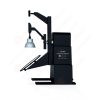
LM-79 Moving Detector Goniophotometer (Mirror Type C)
LSG-6000
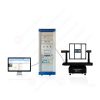
High Precision Rotation Luminaire Goniophotometer
LSG-1890B
High Precision Rotation Luminaire Goniospectroradiometer
LSG-1890BCCD

Goniophotometer for Automotive and Signal Lamps
LSG-1950
Goniophotometer for Traffic Signal Lamps (Economical Model)
LSG-1950S
Goniophotometer for Airfield Lighting
LSG-1940
VAD Fire Alarm Visual Alert Device Goniophotometer
LSG-1930
Compact Goniophotometer
LSG-1200A
LED Goniophotometer
LSG-1100
Near Field Moving Detector Goniophotometer
LSG-1900B
 LEDs and Luminaire Test Solutions
 LM-79 and LM-80 Test Solutions
 LED Driver Test Solutions
 Household Appliances Test Solutions
 Mobile and Network Test Solutions
 Automotive Electronics Test Solutions
 Audio-Video and IT Test Solutions
 Cable and Wire Test Solutions
 Plugs and Sockets Test Solutions
 Power Switch Test Solutions
 Transformer Test Solutions
 Electric Toys Test Solutions
 Energy Meter Test Solutions
 Motor-Operated Tool Test Solutions
Select an organization
to browse standards
Abstract
In the process of industrial product R&D, production quality inspection, and compliance certification, the environmental adaptability and reliability of materials and products are key factors determining their market competitiveness. As a core environmental simulation tool, the climate test chamber can accurately reproduce multiple climatic scenarios such as “low-temperature resistance, high-temperature heat resistance, humidity aging, and dry-wet alternation”. By simulating the dynamic changes of temperature and humidity in the natural environment, it accelerates the assessment of product performance stability and structural reliability under extreme or cyclic climatic conditions, and ultimately provides a scientific basis for determining whether the weather resistance of materials and products meets the expected application requirements. Taking LISUN GDJS-015B high-low temperature humidity and heat alternating test chamber as the research object, this paper elaborates on the working principle, core technical parameters, reference standards, application scenarios, and practical value of the climate test chamber. Combined with specific data and cases, it demonstrates its important role in industries such as LED lighting, electronic appliances, and components, providing a reference for product testing in related industries.
1. Introduction
With the transformation of the global manufacturing industry towards high-quality development, the service capability of products in complex natural environments has become the focus of enterprises. Climatic factors such as temperature fluctuations and humidity changes in the natural environment often lead to performance degradation and structural damage of products, directly affecting their service life and safety. Traditional natural environment testing has a long cycle, high cost, and is limited by geographical and seasonal factors, which cannot meet the efficient verification needs of industrial production.
The emergence of climate test chambers has effectively solved this problem. Through manual intervention, they can accurately simulate multiple climatic scenarios such as “low-temperature resistance, high-temperature heat resistance, humidity aging, and dry-wet alternation”, reproduce the dynamic change process of temperature and humidity in the natural environment, and quickly realize accelerated aging tests of products in the laboratory environment. As a professional R&D enterprise of environmental test equipment, LISUN has launched the GDJS-015B high-low temperature humidity and heat alternating test chamber, which has been widely used in product verification in various industries due to its core advantages such as wide temperature range coverage and high-precision temperature and humidity control. This paper will focus on this type of climate test chamber and deeply discuss its technical characteristics and application practice.
The core working principle of a climate test chamber is to simulate the law of temperature and humidity changes in the natural environment through the coordinated operation of temperature control system, humidity control system, circulation system, and safety protection system. By precisely regulating the temperature and humidity parameters inside the chamber, it realizes the switching of multiple climatic scenarios such as “low-temperature resistance, high-temperature heat resistance, humidity aging, and dry-wet alternation”, enabling products to experience climatic stress equivalent to several years or even decades in the natural environment in a short time. Thus, it accelerates the exposure of potential defects in product material performance and structural design, providing data support for the evaluation of product weather resistance.
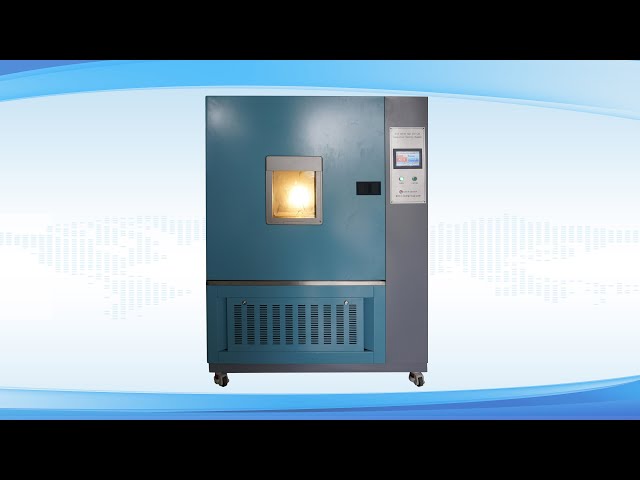
As a mature climate test equipment, the LISUN GDJS-015B high-low temperature humidity and heat alternating test chamber has significant advantages in structural design, control system, sensing technology, etc. The specific technical characteristics are as follows:
• Structural Design: The inner tank is made of SUS304 stainless steel, which has excellent corrosion resistance, is easy to clean and maintain, and can adapt to long-term humidity and heat test environments. The insulation layer adopts a composite structure of “polyurethane rigid foam + ultra-fine glass fiber”, and the door frame is equipped with a high-temperature aging silicone rubber sealing strip to effectively reduce temperature and humidity leakage and ensure the stability of the internal environment of the chamber.
• Control System: It adopts an independent temperature control instrument + PLC dual-core control mode, supports Chinese and English operation interfaces, and is equipped with multiple interfaces such as USB/RS-232/RS-485. It can be connected to a computer to facilitate users to perform remote monitoring and test data traceability, improving the convenience and data integrity of the test process.
• Sensing Technology: It is equipped with a Finnish Vaisala humidity sensor, which has higher measurement accuracy compared with traditional wet and dry bulb humidity measurement methods, and does not require regular maintenance, greatly reducing equipment operation and maintenance costs. The temperature sensor adopts platinum resistance PT100Ω/MV, which has the characteristics of high precision and anti-interference, ensuring the accuracy of temperature measurement data.
• Temperature and Humidity Control System: The heating system uses an independent nickel-chromium alloy electric heater, which has high heating efficiency and uniform heat generation, avoiding local overheating, and realizing precise temperature control with the cooperation of precise temperature control algorithms. The refrigeration system adopts a fully enclosed air-cooled single-stage compression design, equipped with an original French TECUMSEH compressor, which has stable refrigeration performance and convenient global after-sales support. The circulation system adopts a temperature-resistant and low-noise air-conditioning motor (operating noise ≤65dB) and a multi-blade centrifugal wind wheel to ensure the uniform distribution of temperature and humidity inside the chamber and improve the consistency of the test environment.
• Safety Protection System: It integrates multiple safety protection functions such as leakage protection, short circuit protection, heating tube overheating protection, motor overheating protection, and compressor overvoltage/overload/overcurrent protection, comprehensively ensuring the safety of equipment and test samples during the test process.
The technical parameters of the LISUN GDJS-015B climate test chamber directly determine its climatic scenario simulation capability and test accuracy. The specific core parameters are shown in the following table:
Table 1 Core Technical Parameters of LISUN GDJS-015B Climate Test Chamber
| Parameter Category | Specific Parameters |
| Working Chamber Size | 100cm×100cm×150cm |
| External Size | 245cm×160cm×231cm |
| Working Power | 16.5kW |
| Temperature Range | A: -20℃~150℃; B: -40℃~150℃; C: -60℃~150℃; D: -70℃~150℃ |
| Temperature Fluctuation | ±0.5℃ |
| Temperature Uniformity | ±2℃ |
| Temperature Rise Rate | 1.0℃~3.0℃/min |
| Temperature Drop Rate | 0.7℃~1.0℃/min |
| Humidity Range | 20%~98%RH |
| Humidity Deviation | 2%~-3% |
| Working Voltage | AC 380V±10% three-phase, supporting 50Hz/60Hz |
| Operating Environment Requirements | Temperature 5℃~30℃, humidity ≤85%RH (no condensation, well-ventilated) |
| Control Mode | Independent temperature control instrument + PLC dual-core control, supporting Chinese and English operation |
| Interface Configuration | USB/RS-232/RS-485 |
| Humidity Sensor | Finnish Vaisala humidity sensor |
| Temperature Sensor | Platinum resistance PT100Ω/MV |
| Heating System | Independent nickel-chromium alloy electric heater |
| Refrigeration System | Fully enclosed air-cooled single-stage compression, original French TECUMSEH compressor |
| Circulation System | Temperature-resistant and low-noise air-conditioning motor (≤65dB) + multi-blade centrifugal wind wheel |
| Safety Protection | Leakage, short circuit, heating tube overheating, motor overheating, compressor overvoltage/overload/overcurrent protection |
The design and manufacture of the LISUN GDJS-015B climate test chamber strictly comply with a number of domestic and foreign authoritative standards, ensuring the scientificity, accuracy, and versatility of its test results. The specific reference standards are shown in the following table:
Table 2 Reference Standards of LISUN GDJS-015B Climate Test Chamber
| Standards No. | Standards Name |
| IES LM-80-08 | Approved Method: Measuring Lumen Maintenance of LED Light Sources |
| IEC 60068-3-1:2023 | Environmental testing – Part 3-1: Supporting documentation and guidance – Cold and dry heat tests |
| IEC 60068-2-30:2005 | Environmental testing – Part 2-30: Tests – Test Db: Damp heat, cyclic (12 h + 12 h cycle) |
| IEC 60068-2-14:2009 | Environmental testing – Part 2-14: Tests – Test N: Change of temperature |
| IEC 60598-1:2024 | Luminaires – Part 1: General requirements and tests |
| AEC-Q102 REV A:2020 | Stress Test Qualification for Discrete Optoelectronic Semiconductors |
| ISO 16750-4:2018 | Road vehicles – Environmental conditions and testing for electrical and electronic equipment – Part 4: Climatic loads |
| GB/T 2423.1-2008 | 电工电子产品环境试验 第 2 部分:试验方法 试验 A:低温 |
| GB/T 2423.2-2008 | 电工电子产品环境试验 第 2 部分:试验方法 试验 B:高温 |
| GB/T 2423.4-2008 | 电工电子产品环境试验 第 2 部分:试验方法 试验 Db:交变湿热(12h+12h 循环) |
| GB/T 10586-2025 | 湿热试验箱技术规范 |
| GB/T 5170.2-2020 | 环境试验设备检验方法 第 2 部分:温度试验设备 |
| GB 7000.1-2023 | 灯具 第 1 部分:一般要求与试验 |
| GB/T 28046.4-2011 | 道路车辆 电气及电子设备的环境条件和试验 第 4 部分:气候负荷 |
Among them, the climate test chamber fully meets the requirements of the IES LM-80-08 standard, can carry out lumen maintenance rate testing for LED lamps, provides a long-term stable temperature and humidity control environment, and offers reliable support for product verification in the LED lighting industry.
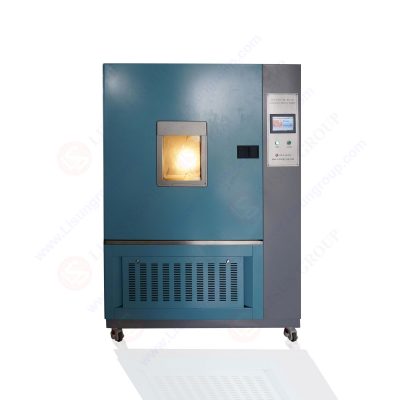
GDJS-015B Temperature Humidity Chamber | Thermal Chamber
With advanced software and hardware configuration, the LISUN GDJS-015B climate test chamber can accurately simulate four core climatic scenarios: “low-temperature resistance, high-temperature heat resistance, humidity aging, and dry-wet alternation”, reproducing the dynamic changes of temperature and humidity in the natural environment:
• Simulation of Low-Temperature Resistance Scenario: Through the refrigeration system composed of the original French TECUMSEH compressor and the precise monitoring of the platinum resistance PT100Ω/MV temperature sensor, it can realize the simulation of a low-temperature environment as low as -70℃, meeting the test requirements of different products for low-temperature resistance. During the test, the refrigeration system continuously outputs cooling capacity according to the instructions of the temperature control instrument, and the temperature inside the chamber drops steadily to the target value at a preset rate and remains constant, simulating low-temperature natural environments such as high latitudes and high altitudes.
• Simulation of High-Temperature Heat Resistance Scenario: The independent nickel-chromium alloy electric heater has efficient and uniform heating capacity, which can raise the temperature inside the chamber to a maximum of 150℃, with a temperature rise rate of 1.0℃~3.0℃/min. Through the closed-loop control of the temperature control system, it can accurately maintain the target high-temperature environment, simulate high-temperature working conditions such as tropical regions and poor heat dissipation inside equipment, and assess the performance stability of products in high-temperature environments.
• Simulation of Humidity Aging Scenario: The high-precision measurement of the Finnish Vaisala humidity sensor provides a foundation for humidity control. With the automatic water purification and supply system, it can achieve wide-range humidity adjustment of 20%~98%RH. In the humidity aging test, the climate test chamber can accurately maintain a constant humidity environment, simulate environmental conditions such as high-humidity marine climates and rainy seasons, and assess the mold resistance and corrosion resistance of materials and products.
• Simulation of Dry-Wet Alternation Scenario: In accordance with the requirements of standards such as GB/T 2423.4-2008 and IEC 60068-2-30:2005, the climate test chamber can set dry-wet alternation test programs with cycle periods such as 12h+12h. Through the coordinated operation of the temperature control and humidity control systems, it realizes the periodic alternation of temperature and humidity, simulates dynamic climatic processes such as day and night temperature differences and alternations of sunny and rainy weather in the natural environment, and comprehensively assesses the structural reliability and performance stability of products under cyclic climatic stress.
The test process of the LISUN GDJS-015B climate test chamber strictly follows scientific norms to ensure the accuracy and repeatability of test results. The specific process is as follows:
• Test Preparation: According to the characteristics of the test product and the requirements of the test standard, determine key parameters such as the test scenario (low-temperature resistance, high-temperature heat resistance, humidity aging, dry-wet alternation, etc.), target temperature and humidity parameters, and test cycle. Conduct appearance inspection and initial performance parameter testing on the test product, and record relevant data. Fix the product in the working chamber of the climate test chamber, ensuring a reasonable distance between the product and the sensors and air ducts inside the chamber to avoid affecting the uniformity of temperature and humidity.
• Equipment Commissioning: Turn on the climate test chamber, set test parameters through the Chinese and English operation interface, including temperature range, humidity range, temperature rise and drop rate, cycle period, etc. Connect the equipment to a computer using USB/RS-232/RS-485 interfaces, and start the remote monitoring and data recording functions. Start the equipment preheating/precooling program, and enter the formal test phase after the temperature and humidity inside the chamber stabilize.
• Test Operation: During the test, the dual-core control system of the climate test chamber real-time monitors the temperature and humidity parameters inside the chamber, and automatically adjusts the operation status of the heating, refrigeration, humidification, and dehumidification systems according to the preset program to ensure that the temperature and humidity parameters are accurately controlled within the allowable deviation range. At the same time, the multiple safety protection systems of the equipment continue to operate, real-time monitoring the equipment operation status and preventing safety risks such as leakage, short circuit, and overheating.
• Data Collection and Analysis: During the test, the computer terminal real-time records key information such as temperature and humidity data and product operation parameters, forming a complete test data report. After the test, wait for the temperature and humidity inside the chamber to return to room temperature and normal humidity, take out the test product, conduct appearance inspection and re-test of performance parameters, and compare and analyze with the initial data.
• Result Determination: Based on the test data and comparative analysis results, combined with relevant standard requirements, evaluate indicators such as the performance attenuation degree and structural integrity of the product under extreme or cyclic climatic conditions, and finally determine whether the weather resistance of the product meets the expected application requirements.
The LISUN GDJS-015B climate test chamber focuses on the core test needs of industries such as LED lighting, electronic appliances, and components, and has formed mature application cases in multiple fields:
• LED Lighting Industry: A certain LED lamp manufacturer needs to conduct lumen maintenance rate testing on its new LED lamps in accordance with the IES LM-80-08 standard. The LISUN GDJS-015B climate test chamber was used to simulate a high-temperature and high-humidity aging scenario (temperature 85℃, humidity 85%RH) for a continuous test of 6000 hours. During the test, the equipment accurately maintained the target temperature and humidity environment, and the computer terminal real-time recorded the luminous flux data of the lamps. After the test, the data showed that the lumen maintenance rate of the new lamps reached more than 90%, meeting the industry standard requirements, and providing a key basis for the product’s market access.
• Electronic Appliance Industry: To verify the performance stability of the capacitors it produces under extreme temperature environments, a certain electronic component enterprise used the LISUN GDJS-015B climate test chamber to conduct low-temperature resistance tests (temperature -40℃) and high-temperature heat resistance tests (temperature 125℃), with each scenario tested for 1000 hours. The test results showed that the capacitance change rate of the capacitors under extreme temperature environments was less than 5%, and the insulation resistance met the requirements, proving that they could work stably under harsh climatic conditions, providing reliable guarantee for the application of the components in outdoor electronic equipment.
• Automotive Electronics Industry: A certain auto parts enterprise conducted dry-wet alternation tests on its produced on-board navigation systems using the LISUN GDJS-015B climate test chamber (12h high-temperature and high-humidity + 12h low-temperature and low-humidity cycle, temperature range -40℃~85℃, humidity range 30%~95%RH), with a test cycle of 50 cycles. After the test, the functions of the on-board navigation system such as the display screen, buttons, and communication module were normal, and there was no loosening or deformation of the structure, meeting the requirements for climatic loads of electrical and electronic equipment of road vehicles specified in the GB/T 28046.4-2011 standard.
• Shortening Test Cycle: Traditional natural environment testing often takes several years to observe product performance attenuation and structural changes. However, through accelerated aging tests, climate test chambers can shorten the test cycle to days, weeks, or months, greatly improving the efficiency of product R&D and market launch.
• Reducing Test Costs: Climate test chambers can complete multi-climatic scenario simulation tests in the laboratory environment, without the need to invest a lot of manpower and material resources in the construction and maintenance of outdoor venues, effectively reducing test costs.
• Improving Product Quality: Through the precise testing of climate test chambers, potential defects in product material selection and structural design can be exposed in advance, providing a scientific basis for enterprises to optimize product design and improve production processes, thereby enhancing product quality and reliability.
• Assisting Compliance Certification: The LISUN GDJS-015B climate test chamber complies with a number of domestic and foreign authoritative standards, and its test results have a high degree of recognition and credibility. It can provide strong support for products to pass compliance certification, helping enterprises break trade technical barriers and expand market space.
6. Conclusion and Outlook
As a core equipment for simulating natural climatic environments and assessing product weather resistance, climate test chambers play an irreplaceable role in various links of industrial production. With its precise temperature and humidity control capabilities, rich climatic scenario simulation functions, perfect safety protection systems, and wide standard adaptability, the LISUN GDJS-015B high-low temperature humidity and heat alternating test chamber provides scientific and efficient product testing solutions for industries such as LED lighting, electronic appliances, and components. Through the accelerated aging tests of this climate test chamber, enterprises can quickly and accurately evaluate the performance stability and structural reliability of products under extreme or cyclic climatic conditions, providing key data support for product R&D optimization, quality control, and compliance certification.
With the continuous progress of science and technology, the requirements for environmental adaptability of industrial products will become increasingly high, and the development of climate test chambers will also show trends of higher precision, wider scenario coverage, and more intelligence. In the future, enterprises such as LISUN will continue to increase investment in technological R&D, further optimize the performance parameters of climate test chambers, expand their applications in emerging fields such as new energy, aerospace, and medical devices, and provide stronger support for the high-quality development of the global manufacturing industry. At the same time, relevant industries should also pay more attention to the application of climate test chambers, establish a scientific and complete product weather resistance test system, and promote the continuous improvement of product quality and reliability.
Tags:GDJS-015BYour email address will not be published. Required fields are marked *

 English
 中文简体
中文简体 English
 Русский
 Español
 Português
 Türkçe
 العربية
 Deutsch
 Polski
 Italiano
 Français
 한국어
한국어 ไทย
ไทย Tiếng Việt
 日本語
日本語