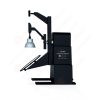
LM-79 Moving Detector Goniophotometer (Mirror Type C)
LSG-6000
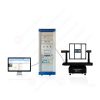
High Precision Rotation Luminaire Goniophotometer
LSG-1890B
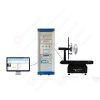
High Precision Rotation Luminaire Goniospectroradiometer
LSG-1890BCCD

Goniophotometer for Automotive and Signal Lamps
LSG-1950

Goniophotometer for Traffic Signal Lamps
LSG-1950S
VAD Fire Alarm Visual Alert Device Goniophotometer
LSG-1930
Compact Goniophotometer
LSG-1200A
LED Goniophotometer
LSG-1100
 LEDs and Luminaire Test Solutions
 LM-79 and LM-80 Test Solutions
 LED Driver Test Solutions
 Household Appliances Test Solutions
 Mobile and Network Test Solutions
 Automotive Electronics Test Solutions
 Audio-Video and IT Test Solutions
 Cable and Wire Test Solutions
 Plugs and Sockets Test Solutions
 Power Switch Test Solutions
 Transformer Test Solutions
 Electric Toys Test Solutions
 Energy Meter Test Solutions
 Motor-Operated Tool Test Solutions
Select an organization
to browse standards
Abstract
With the rapid development of new-energy technologies, the battery—being the core component of energy storage—has attracted increasing attention for its performance verification techniques. Among them, the Battery Tester serves as the key instrument for battery inspection and plays an irreplaceable role in quality control, maintenance and R&D. Taking the LISUN LS5562 Battery Tester as an example, this paper explains in detail the measurement theory, international-standard requirements and practical advantages of battery-internal-resistance testing, providing a technical reference for the battery-inspection industry
1. Introduction
Internal resistance is one of the most important parameters determining battery performance; it directly affects discharge efficiency, heat generation and cycle life. With the widespread use of electric vehicles, energy-storage systems and portable electronics, battery-performance requirements have become more stringent, and conventional inspection methods can no longer satisfy modern industry. The appearance of the Battery Tester offers a rapid, accurate and non-destructive way to evaluate battery performance.
According to IEC standards such as IEC 62620 (Industrial secondary lithium cells and batteries), IEC 62133 (Safety requirements for portable sealed secondary cells and batteries) and IEC 60086 (Primary batteries), internal-resistance measurement has become a mandatory item in battery-quality inspection. These standards clearly define the measuring method, accuracy requirements and acceptance limits for internal resistance.
2. Measurement Theory of Internal Resistance
2.1 Principle of Operation
Battery Testers usually apply the four-terminal AC method: a 1 kHz constant-current signal is injected into the cell, the resulting AC voltage is sensed, and the internal resistance is calculated by Ohm’s law. This arrangement eliminates the influence of lead and contact resistance and guarantees high repeatability.
The LISUN LS5562 Battery Tester adopts an advanced four-terminal AC scheme and offers a highest resolution of 0.1 µΩ for resistance and 10 µV for voltage, meeting the demand for high-precision battery inspection.

2.2 Technical Features
Modern Battery Testers are characterised by:
• High-precision 24-bit ADC sampling
• Auto-ranging according to cell characteristics
• Built-in temperature sensor for automatic compensation
• Large data-storage capacity and statistical analysis
• Communication interfaces such as RS-232 and USB for system integration
3. Requirements of International Standards
3.1 IEC 62620
For industrial lithium cells and batteries, IEC 62620 states that:
• AC internal resistance shall not exceed the value declared by the manufacturer
• DC internal resistance shall not exceed the declared value
• The test shall be performed at (25 ± 5) °C
• Test frequency shall be 1 kHz ± 5 %
3.2 IEC 62133
Focusing on safety, IEC 62133 treats internal-resistance deviation as an indicator of degradation:
• The variation shall not exceed a specified percentage of the initial value
• An abnormal increase may indicate structural deterioration
• Internal-resistance measurement shall be part of routine safety assessment
3.3 IEC 60086
The IEC 60086 series covers primary batteries and prescribes resistance limits and test methods for various electrochemical systems to ensure stable performance during service.
4. Product Specification Analysis
4.1 Display and Ergonomics
The LISUN LS5562 Battery Tester is equipped with a 4.3-inch colour LCD that simultaneously displays resistance (R) and voltage (V). The intuitive interface shortens the operator’s learning curve and improves throughput.
4.2 Range and Accuracy
Seven resistance ranges are provided, covering 3 mΩ to 3 000 Ω:
• 3 mΩ (max. 3.100 0 mΩ, 0.1 µΩ resolution)
• 30 mΩ (max. 31.000 mΩ, 1 µΩ resolution)
• 300 mΩ (max. 310.00 mΩ, 10 µΩ resolution)
• 3 Ω (max. 3.100 0 Ω, 0.1 mΩ resolution)
• 30 Ω (max. 31.000 Ω, 1 mΩ resolution)
• 300 Ω (max. 310.00 Ω, 10 mΩ resolution)
• 3 000 Ω (max. 3 100.0 Ω, 100 mΩ resolution)
Voltage is measured up to 60 V DC in two sub-ranges—6 V (10 µV resolution) and 60 V (100 µV resolution)—with an accuracy of ±0.01 % ±3 dgt.
4.3 Test Speed
Selectable sampling times—EX.FAST (4 ms), FAST (12 ms), MEDIUM (42 ms) and SLOW (157 ms)—enable a maximum test rate of 100 readings s⁻¹, satisfying high-speed automated sorting lines.
5. Application Scenarios
5.1 Production Quality Control
During mass production, 100 % inspection or statistical sampling is performed to:
• Detect internal structural defects
• Evaluate cell consistency
• Predict electrical performance
• Screen out non-conforming products
5.2 Maintenance Diagnostics
In service, periodical internal-resistance tests are used to:
• Assess state-of-health (SOH)
• Estimate residual life
• Identify latent failures
• Optimise maintenance schedules
5.3 R&D Verification
In research and development, the instrument helps engineers to:
• Benchmark new active materials
• Optimise cell structure and process parameters
• Verify design improvements
• Build performance databases

LS5562_Battery Tester
6. Comparative Technical Advantages
Table 1 compares the LISUN LS5562 with two mainstream models on the market.
Table 1. Key specifications of Battery Testers
| Parameter | LISUN LS5562 | Common Model A | Common Model B |
| Resistance range | 3 mΩ – 3 000 Ω (7 ranges) | 0.1 mΩ – 300 Ω (5 ranges) | 1 mΩ – 3 000 Ω (6 ranges) |
| Resistance resolution | 0.1 µΩ | 1 µΩ | 10 µΩ |
| Voltage range | 6 V / 60 V | 30 V | 60 V |
| Voltage resolution | 10 µV / 100 µV | 1 mV | 100 µV |
| Accuracy (R) | ±0.5 % rdg. ±5 dgt. | ±1 % rdg. ±10 dgt. | ±0.8 % rdg. ±8 dgt. |
| Display | 4.3-inch colour LCD | LED digits | Mono LCD |
| Max. test speed | 100 s⁻¹ | 20 s⁻¹ | 50 s⁻¹ |
| Interfaces | RS-232, HANDLER, USB | RS-232 | RS-232 |
| On-board memory | 50 sets + 500 on U-disk | 100 sets | 20 sets |
| Weight | 3.6 kg | 2.8 kg | 4.2 kg |
Evidently, the LS5562 outperforms the reference instruments in resolution, accuracy and speed, and its 0.1 µΩ and 10 µV resolutions satisfy the most stringent high-precision applications.
7. Automated Test Integration
The LS5562 provides HANDLER, RS-232C and USB ports and supports both SCPI and Modbus (RTU) protocols, allowing seamless integration into automatic sorting systems. On a battery grading line the instrument delivers:
• Automatic trigger and measurement
• Fast PASS/FAIL judgement
• Multi-bin sorting output
• Real-time data upload
• Remote parameter configuration
These features greatly increase throughput, reduce labour costs and guarantee consistent and traceable results.
8. Technology Trends
Driven by advances in battery chemistry and manufacturing, Battery Testers are evolving towards:
• Even higher accuracy to characterise next-generation cells
• Faster sampling to keep pace with high-speed lines
• AI-enabled diagnostics for intelligent SOH evaluation
• Multi-function platforms combining capacity, cycling and impedance tests
• Cloud-based data management for big-data analytics
9. Conclusion
As a key tool for battery evaluation, the Battery Tester plays a critical role in quality control, maintenance and R&D. With its high accuracy, wide range, high speed and rich communication capability, the LISUN LS5562 Battery Tester satisfies the full spectrum of modern battery-inspection requirements.
Continuous innovation and stricter international standards will push Battery Testers towards higher precision, higher speed and deeper intelligence. Selecting an advanced instrument that complies with IEC requirements is essential for improving product quality, ensuring operational safety and accelerating technological progress. Through on-going technical development and standardisation, the Battery Tester will provide even stronger support for the healthy growth of the battery industry and the prosperity of the new-energy economy.
Tags:LS5562Your email address will not be published. Required fields are marked *

 English
 中文简体
中文简体 English
 Русский
 Español
 Português
 Türkçe
 العربية
 Deutsch
 Polski
 Italiano
 Français
 한국어
한국어 ไทย
ไทย Tiếng Việt
 日本語
日本語